Is the Great Wall of China Really What You Think It Is?
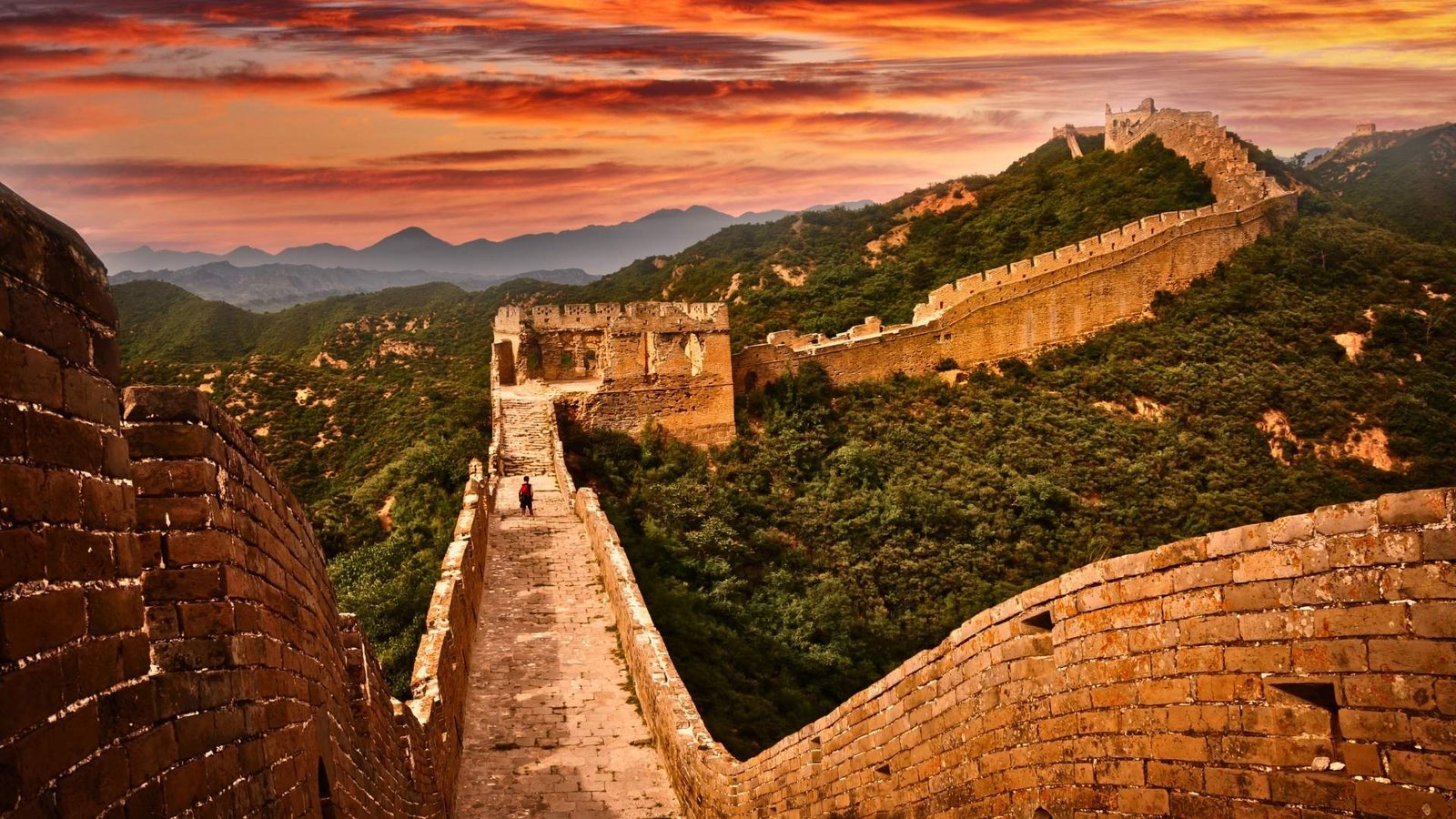
Picture the Great Wall of China and your mind probably creates a familiar image. You see one enormous stone ribbon winding across misty mountains. A powerful emperor built it to keep invading Mongols out. You may also remember hearing that astronauts can see it from the Moon.
It is a wonderful story, but almost every part needs adjusting. The monument we call the Great Wall looks very different from the tidy version found in schoolbooks, films and travel brochures.
The Great Wall does not form one unbroken structure. No single ruler designed it. Most sections do not resemble the handsome brick fortifications in holiday photographs. It also failed to stop many invasions. As for astronauts admiring it from space, that story belongs firmly in the myth department.
What we call the Great Wall is really a vast network. It includes walls, trenches, passes, forts, beacon towers and natural barriers. Chinese states built, repaired and abandoned these structures over roughly two thousand years.
The entire historical system stretches for more than 20,000 kilometres. China’s official survey calculated a total length of 21,196.18 kilometres. That figure includes branches, trenches and related defensive structures.
However, it does not describe one heroic walkway stretching neatly across China. Instead, it measures a scattered archaeological web. Different governments built its sections at different times and for different reasons.
Imagining the Great Wall as one building resembles treating Europe’s entire railway history as a single railway line. The idea sounds simple and memorable. It is also completely misleading.
Chinese states began constructing defensive walls long before a unified China existed. During the Warring States period, rival kingdoms built barriers against neighbouring states and northern nomadic groups.
These early walls did not simply divide China from outsiders. They also separated Chinese kingdoms from each other. At the time, the region looked more like a collection of competing states than a single country defending a fixed border.
Qin Shi Huang unified China in 221 BC. He then ordered existing fortifications to be connected, strengthened or extended. Later generations turned him into the Great Wall’s grand architect.
His reputation certainly helped the story. Qin Shi Huang liked projects on an imperial scale. He also treated human labour as an almost limitless resource.
Yet little of the Qin-era Wall survives today. Wind, rain, farming and construction gradually destroyed it. More than two thousand years of human interference also played a part.
The dramatic stone-and-brick Wall familiar from photographs mostly belongs to the Ming dynasty. The Ming ruled China from 1368 to 1644. They invested heavily in frontier defences after driving out the Mongol-led Yuan dynasty.
Ming rulers built watchtowers, fortified passes and substantial walls north of Beijing. These sections now dominate tourist brochures. They also shape the world’s mental picture of the monument.
Even then, builders did not follow one standard design. They used materials found nearby. Transporting huge quantities of brick and stone across remote mountains and deserts would have cost a fortune.
Mountain sections relied heavily on local stone. Across plains and deserts, workers compacted layers of soil into rammed-earth barriers. Some western sections also contained reeds, gravel and wood.
As a result, much of the Wall does not resemble a stone dragon. Some parts look like weathered ridges of earth. An inexperienced visitor could easily walk past them without noticing anything unusual.
Popular culture often presents the Wall as a giant medieval “Keep Out” sign. Its real military purpose involved much more than blocking cavalry or frustrating determined invaders.
Watchtowers allowed soldiers to observe movement. They could send warnings with smoke during the day and fire at night. Fortified passes controlled roads, trade routes and migration corridors.
Garrisons also monitored travellers and gathered intelligence. In some places, officials regulated commerce and collected taxes. The Wall helped governments manage the frontier rather than simply close it.
That difference matters because frontiers rarely separate two isolated worlds. Trade, diplomacy, migration and warfare constantly crossed the border.
Nomadic powers might fight a Chinese dynasty one year and negotiate with it the next. Soon afterwards, the same groups could trade horses, grain, cloth or luxury goods.
The Wall made raids more difficult. It also directed travellers and armies towards defended passes. However, it never created an impenetrable border.
Enemies could break through weak sections or bribe guards. They might exploit neglected areas or simply travel around the fortifications. No wall can defend every place at every moment.
In 1644, the Manchus entered through Shanhai Pass. Ming general Wu Sangui opened the gates during a political and military crisis. A wall can resist arrows, horses and ladders. It performs less well against civil war and someone with the keys.
This does not mean the Great Wall completely failed. It slowed enemies, protected strategic routes and improved military communication. It also helped governments concentrate troops at likely crossing points.
Yet it worked best as part of a wider system. That system needed soldiers, diplomacy, trade, intelligence and competent leadership. Stone and earth could not solve political problems on their own.
Then we arrive at the Moon, where the Great Wall’s most famous myth has been patiently waiting. The claim that people can see the Wall from space appeared before humans travelled there. An English antiquarian made a version of the claim in 1754. Confident speculation clearly flourished long before the internet arrived.
In reality, the Great Wall is extremely difficult to identify from low Earth orbit. It cannot be seen from the Moon with the unaided eye. Its narrow shape and natural colours blend into the surrounding landscape.
Astronauts can photograph certain sections under favourable conditions. They need magnification and must know exactly where to look. That differs from casually spotting the Wall through a spacecraft window.
The myth survives because it flatters human ambition. We like to imagine that one of our creations marks the planet so boldly that the universe must notice it.
In practice, cities, airports and reservoirs often stand out more clearly from orbit. Illuminated roads and urban networks can also appear far more visible. The Wall is long, but it remains narrow and similar in colour to the land around it.
Another popular tale claims that the Wall contains the bodies of countless workers. Ancient records and later folklore certainly describe brutal conditions, forced labour and widespread suffering.
Soldiers, prisoners, peasants and conscripted workers built different sections over many centuries. Working in distant mountains and deserts brought obvious dangers. Modern safety standards were not part of the arrangement.
However, archaeologists have found no evidence of routine burials inside the Wall. Bodies would also have weakened many forms of construction. The practice would have been both horrifying and technically unhelpful.
The legend may partly come from the story of Meng Jiangnü. Her husband supposedly died while working on the Wall. According to the tale, her grief caused part of the structure to collapse and reveal his remains.
The story became one of China’s best-known folk legends. It changed the Wall’s meaning. Instead of representing only imperial strength, it became a symbol of suffering, injustice and state cruelty.
That tension still shapes the monument today. The Wall can represent endurance, engineering and national unity. At the same time, it can symbolise coercion, militarisation and enormous sacrifice.
Modern tourism adds yet another layer. Badaling, the most famous section near Beijing, offers restored battlements, cable cars and souvenir stalls. It also attracts crowds taking almost identical photographs.
The restored sections provide an impressive and accessible experience. However, they can create a false impression. Visitors may assume the entire Wall remains intact, paved and ready for a comfortable walk.
Beyond the busiest tourist areas, many sections continue to crumble. Erosion, vegetation, farming and construction all cause damage. Vandalism and neglect add further pressure.
Some parts have almost disappeared. Others survive only as low ridges crossing remote landscapes. Their appearance bears little resemblance to the polished Wall seen in popular photographs.
In 2023, Chinese authorities arrested two people after an ancient section was damaged in Shanxi province. They had allegedly used an excavator to create a shortcut. Even one of humanity’s greatest monuments can lose an argument with someone in a hurry.
Preservation creates another controversy. Careful restoration can protect fragile sections and make them safer. Poor restoration can destroy original materials and erase historic character.
Leave the Wall untouched and nature slowly consumes it. Rebuild it too aggressively and it starts to resemble a recently opened theme park. Neither option provides a perfect answer.
Conservators must balance authenticity, safety, tourism and survival. That task becomes harder because the Wall covers thousands of kilometres. Its sections also come from different periods and use different materials.
Nature sometimes provides unexpected help. Researchers have studied biological crusts growing on earthen sections. These crusts contain mosses, lichens and microorganisms.
Rather than causing damage, some crusts strengthen the surface and reduce erosion. What looks like unwanted growth may act as a living shield. The Wall receives help from organisms that never submitted a conservation plan.
So, is the Great Wall really what you think it is? Probably not. The reality includes scattered walls, trenches, fortresses, military signals, folk legends and tourist attractions. It also includes slowly eroding ridges of earth.
It is not one wall but many, it does not belong to one ruler or one dynasty. Instead, it reflects centuries of changing states, technologies, enemies and fears.
The Wall never fully separated civilisation from supposed barbarism. Trade, diplomacy, migration and cultural exchange crossed the frontier in both directions. So did armies.
Nor does the structure survive as a perfect 20,000-kilometre promenade. Large sections have collapsed or disappeared. Others have blended so completely into the landscape that they barely look artificial.
Its greatness lies in this untidy reality. The Wall shows how governments respond to insecurity. It also reveals how geography shapes engineering and how later generations simplify complicated history.
The monument offers a lesson that still feels modern. Large infrastructure can influence behaviour, but it cannot replace competent politics. It also cannot compensate for weak institutions or poor leadership.
The Great Wall failed whenever rulers expected barriers to solve human problems. Yet it survived as something much larger than a military project.
Today, it forms a vast collection of ruins, reconstructions, myths and memories. It also remains a subject of argument. That version may feel less tidy than the postcard, but it is far more interesting.