How to Build an Empire and Call It Restoration
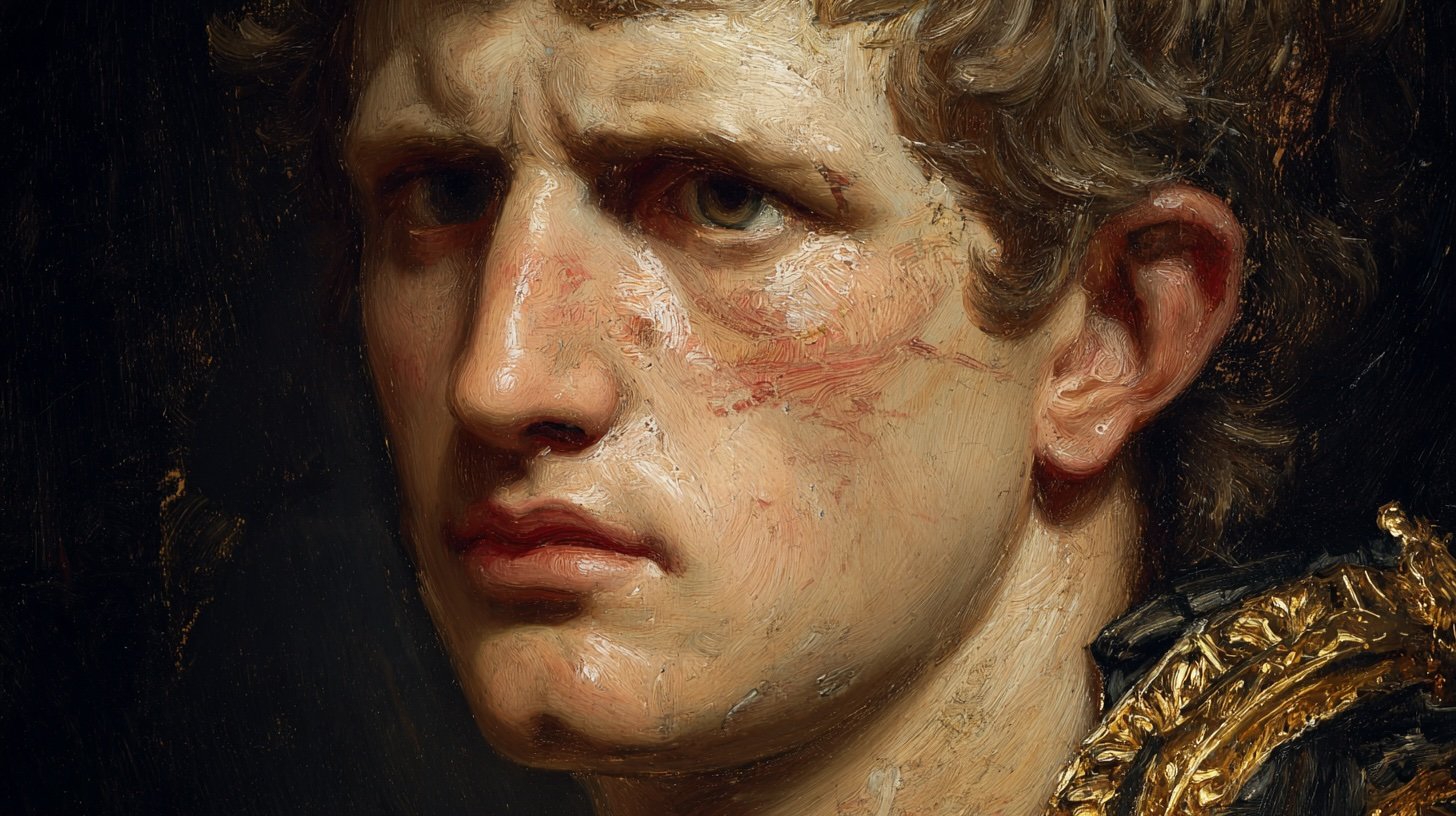
He did not look like a conqueror. Instead, he resembled a cautious administrator who worried about drafts and damp air. Yet Augustus transformed a blood-soaked republic into an empire that endured for centuries. Rome had already exhausted its ideals by the time he stepped forward. Generals marched on the city with alarming ease. Senators whispered in shadowed corridors. Citizens clung to rituals that no longer functioned. Meanwhile, a thin and frequently ill young man observed everything with unnerving patience.
Born Gaius Octavius in 63 BCE, he entered the world without obvious grandeur. However, family ties placed him within reach of Julius Caesar. The dictator recognised the boy’s intelligence early. When assassins struck Caesar down in 44 BCE, chaos seemed inevitable. Instead, Caesar’s will revealed an unexpected twist. The teenage Octavian emerged as adopted son and principal heir. Consequently, he inherited wealth, a formidable name and a dangerous opportunity.
At eighteen, he did not roar with indignation. Rather, he calculated his next move. He travelled to meet Caesar’s veterans and promised land and payment. Soldiers valued security more than rhetoric. Therefore, he offered tangible rewards instead of grand speeches. At the same time, he treated senators with studied respect. They noticed his youth. He noticed their vulnerabilities.
Soon afterwards, he formed the Second Triumvirate with Mark Antony and Lepidus. The alliance aimed at dominance, not friendship. Together they issued proscriptions, effectively legalised kill lists. Property shifted hands overnight. Political enemies disappeared with chilling efficiency. Cicero paid with his life. Rome trembled, yet the triumvirs consolidated control.
Nevertheless, three ambitious men rarely coexist peacefully. Tension steadily intensified between Octavian and Antony. Antony gravitated eastward and bound himself to Cleopatra of Egypt. Octavian recognised the strategic advantage this presented. Rather than label the conflict another civil war, he framed it as Rome against foreign decadence. He portrayed Antony as enthralled and reckless. He positioned himself as guardian of tradition. As a result, public sentiment tilted in his favour.
In 31 BCE, their fleets collided at Actium. Octavian’s forces prevailed decisively. Antony and Cleopatra later chose suicide over capture. Egypt fell under Octavian’s direct control, not as an ordinary province but as his personal domain. Consequently, he commanded vast wealth. More importantly, he removed his final rival from the board.
Power now lay firmly within reach. Yet he resisted the temptation of a crown. Romans detested kingship, having expelled their last monarch centuries earlier. Octavian understood political theatre intimately. In 27 BCE, he announced that he would return authority to the Senate and people. Senators protested with equal ceremony and insisted he retain command. They granted him the title Augustus, meaning revered one. Thus began a new political order disguised as restoration.
He avoided overtly monarchical labels. Instead, he preferred princeps, first citizen. Republican offices remained visible. Elections continued in form. The Senate still convened. However, he controlled the legions, key provinces and financial levers. Institutions survived outwardly, while real authority flowed through him. The republic persisted as appearance. The empire functioned as reality.
Beyond titles, he introduced structural reform. He reorganised the army into a permanent professional force. Soldiers served fixed terms and received reliable pensions. This arrangement reduced the temptation for generals to promise reckless rewards. In addition, he established the aerarium militare, a dedicated military treasury. Stability followed predictable payment.
He also created the Praetorian Guard to protect him within Rome. Initially, he dispersed them carefully to avoid alarming citizens. Later emperors would concentrate these troops and suffer the consequences. For Augustus, proximity meant security rather than threat. Even so, the precedent would echo through future reigns.
Meanwhile, he reshaped provincial governance. He divided territories into senatorial and imperial categories. He retained authority over volatile regions where legions stood ready. Senators governed quieter provinces and enjoyed prestige without decisive power. Tax collection improved markedly. Corruption persisted, yet oversight strengthened. Administration became more coherent across vast distances.
While bureaucrats refined systems, builders transformed the skyline. Augustus famously claimed he found Rome brick and left it marble. He restored numerous temples across the city. He constructed the Forum of Augustus with its Temple of Mars Ultor. He commissioned the Ara Pacis to celebrate peace under his leadership. Marble surfaces gleamed in sunlight and conveyed an unmistakable message of renewal.
Architecture functioned as silent persuasion. Visitors walked through redesigned spaces and absorbed the narrative without instruction. Rome appeared eternal. Augustus appeared central to that eternity. Even his grand mausoleum on the Campus Martius projected dynastic confidence.
At the same time, he invested in literature. Virgil composed the Aeneid, linking Rome’s destiny to heroic origins. Through epic poetry, Augustus seemed heir to mythic inevitability. Horace praised moderation and civic virtue in polished verse. Culture reinforced political messaging elegantly.
Yet patronage carried boundaries. Ovid’s wit eventually cost him dearly. Augustus exiled the poet to the Black Sea, citing a poem and a mistake. Historians continue to debate the true cause. Perhaps Ovid offended moral legislation. Perhaps he glimpsed court secrets. Regardless, the exile demonstrated that imperial favour remained conditional.
Moreover, Augustus pursued moral reform. Civil wars had destabilised elite households. Marriage rates among the upper classes declined. Therefore, he introduced laws encouraging wedlock and penalising adultery. Ironically, he exiled his own daughter Julia for scandalous behaviour. Public resolve outweighed private affection. The gesture underscored his seriousness, even as it revealed painful contradiction.
His legislation aimed to restore demographic strength and social discipline. Senators without children faced restrictions. Widows gained incentives to remarry. Compliance varied, yet the principle stood firm. Renewal required both marble monuments and orderly families.
Despite immense authority, he cultivated restraint. He dressed plainly and ate modest meals. Thunderstorms unsettled him, and he reportedly relied on protective charms. Superstition coexisted with calculation. Friends described him as courteous in manner and formidable in resolve.
Health seldom favoured him consistently. Recurring illness shadowed his adulthood. Nevertheless, his endurance reinforced perceptions of resilience. Romans observed a leader who persisted despite frailty. Gradual transition replaced abrupt upheaval.
However, early brutality cannot be ignored. The proscriptions stained his ascent irreversibly. Thousands perished for political expediency. Confiscated estates enriched allies and secured loyalty. Later peace rested upon foundations laid in fear.
Succession presented persistent anxiety. He prepared heirs carefully, including Marcellus and his grandsons Gaius and Lucius. Fate intervened repeatedly, removing each candidate prematurely. Eventually, he designated his stepson Tiberius as successor. Their relationship appeared strained, yet practicality prevailed. The system required continuity above sentiment.
When Augustus died in 14 CE at seventy-five, uncertainty lingered briefly. Would the structure collapse without its architect? Instead, transition unfolded with measured calm. The Senate declared him divine. Tiberius assumed authority without civil war. The Principate endured beyond its founder.
What explains this durability? Timing certainly assisted him. Citizens yearned for stability after decades of bloodshed. Nevertheless, timing alone cannot sustain institutions. Augustus mastered optics and incremental change. He preserved familiar forms while redirecting substance quietly. Consequently, Rome accepted transformation as evolution rather than rupture.
He composed the Res Gestae near the end of his life. In that inscription, he catalogued offices, benefactions and victories. He presented his career as service to the republic. Readers might detect careful framing. Even so, the document reveals how he wished posterity to judge him: guardian rather than tyrant.
Critics argue he extinguished genuine political freedom. Elections lost potency. Dissent risked consequence. Supporters respond that he ended relentless civil conflict. They emphasise infrastructure, trade expansion and relative peace. Both interpretations carry validity.
Indeed, the Pax Romana facilitated commercial growth across continents. Roads linked provinces efficiently. Merchants travelled with greater confidence. Cities flourished from Hispania to Syria. Peace did not eliminate inequality, yet it reduced existential uncertainty.
Furthermore, he standardised coinage and administrative practice. Economic predictability encouraged investment and long-distance exchange. Distant communities felt the impact of central coordination. Empire evolved into an integrated system rather than a loose collection of conquests.
On a personal level, he avoided ostentatious excess within Rome. He resided on the Palatine in comparatively modest quarters. Symbolism mattered profoundly. Visible restraint discouraged accusations of kingship. Tradition remained publicly honoured, even as power centralised discreetly.
Simultaneously, he suppressed conspiracies with efficiency. Authorities responded swiftly to threats. Public spectacles of political slaughter diminished compared with earlier decades. Citizens experienced a new rhythm of normalcy.
As years passed, younger generations matured under his governance. For them, imperial order felt customary. Memories of republican turbulence faded gradually. Habit solidified legitimacy.
Still, irony persists. The statesman who claimed to restore the republic replaced it fundamentally. The citizen who rejected monarchy established dynastic precedent. The moral reformer confronted scandal within his own household. Power seldom aligns neatly with rhetoric.
Yet effectiveness shapes legacy. Augustus constructed institutions resilient enough to survive flawed successors. Some emperors proved unstable. Others indulged extravagance. Nevertheless, the administrative core endured for centuries in the west and even longer in the east.
When stripped of marble and myth, a consistent pattern appears. He consolidated force early, then softened its appearance deliberately. He invested in visible improvements across the capital and provinces. He narrated authority as continuity with ancestral virtue. Above all, he recognised that legitimacy depends upon perception as much as coercion.
Rome did not awaken to sudden revolution. Instead, change accumulated through careful gestures. Titles shifted subtly. Buildings rose steadily. Laws reshaped behaviour incrementally. Consequently, empire emerged without dramatic proclamation.
Modern observers still examine his blueprint. Leaders continue to preserve institutional façades while adjusting substance. Augustus refined presentation with exceptional precision. He understood the stage and respected the audience.
According to tradition, his final words invited applause if he had played his role well. The remark suggests awareness rather than arrogance. In the end, a frail heir navigated chaos through patience and calculation. He dismantled a republic without spectacle. He constructed an empire without shouting. Rome remembered him as Augustus, the revered. History remembers him as the architect who proved that marble, myth and moderation can secure what swords alone rarely sustain.