How The British East India Company Accidentally Built an Empire
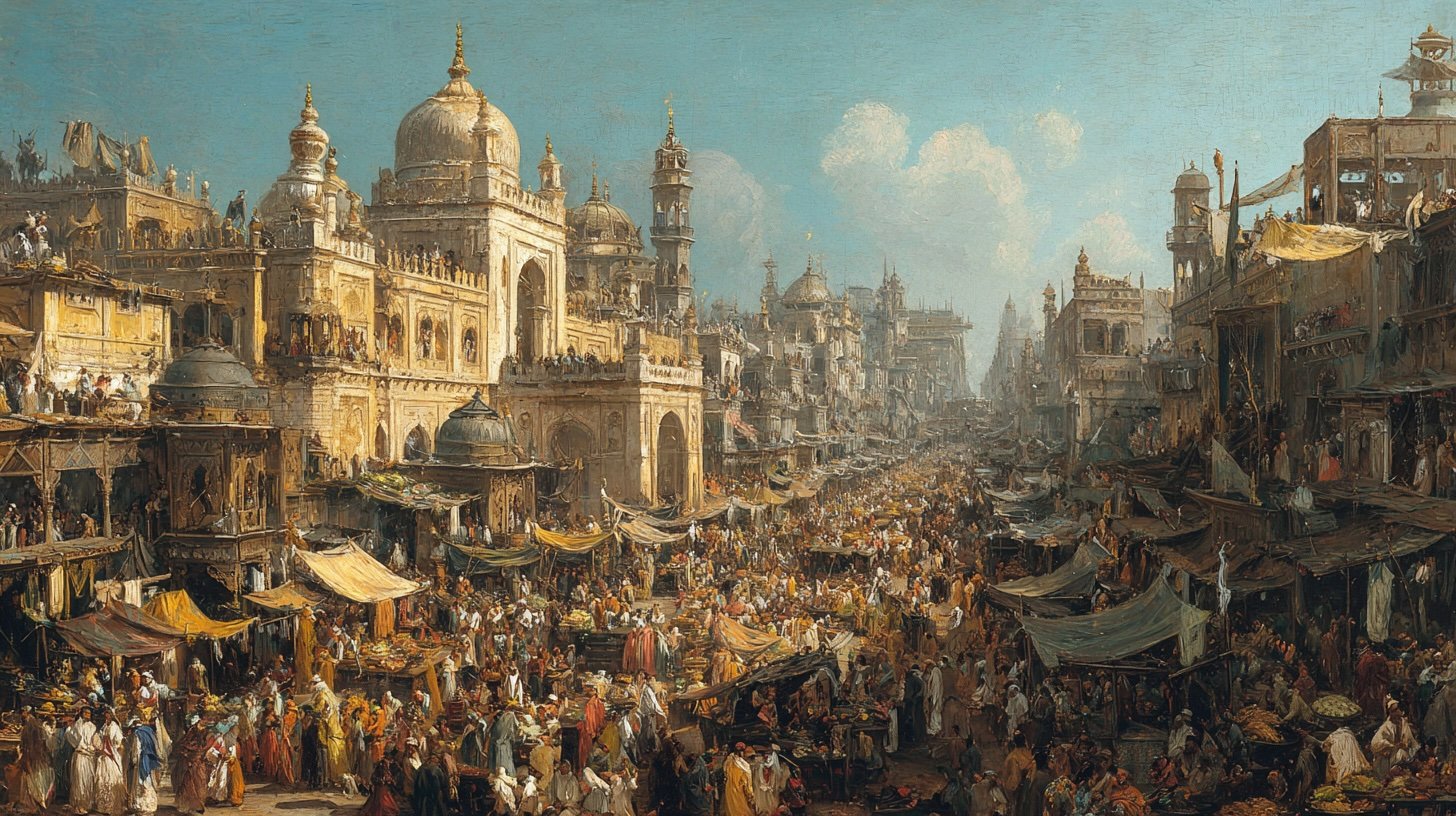
The British East India Company rarely behaves like a mere merchant in the imagination. It struts across history with the swagger of a corporation that thought nothing of reshaping entire continents while keeping the receipts neatly organised. People picture it as a tea‑scented juggernaut, but its story feels closer to a drama where ambition, bureaucracy and opportunism meet spice traders who suddenly decide they rather like the idea of running a country.
The Company began life in 1600 with a charter signed by Elizabeth I. A group of London merchants hoped to tap into the lucrative spice routes dominated by Dutch and Portuguese rivals. They set out as underdogs, dressed in wool and optimism, and sailed into waters where everyone else already knew the shortcuts, the seasons and the suspiciously good deals that somehow never reached newcomers. The English approach relied on perseverance and an ability to stay annoyingly patient. They waited for the right winds, the right alliances and the right moments to snap up opportunities. They never pretended to be romantic explorers. Money mattered more than heroics.
The early years felt chaotic, with voyages taking ages, coastlines appearing in the wrong place and negotiations occasionally collapsing because someone misread a royal protocol. The Company kept going because it understood something vital about the Indian Ocean world. Trade moved through relationships more than force. Ports like Surat operated as cosmopolitan hubs where Gujarati merchants, Armenian brokers, Arab sailors and assorted Europeans competed for space. The Company learned to fit in by offering reliable silver, punctuality and a willingness to follow local rules. Indian merchants, experienced and sharp‑eyed, taught them how business worked in practice.
As decades passed, the Company expanded into textiles. Indian cottons became the commercial miracle of the age. The British public adored the soft, colourful fabrics, even as domestic weavers panicked about competition. Parliament responded with predictable bans and restrictions, protecting home industries while British consumers quietly continued purchasing whatever the Company smuggled through fashion loopholes. Cotton prints shaped tastes, wardrobes and eventually entire imperial strategies. Company executives realised that relying solely on sail‑powered logistics made profits feel vulnerable, so they began negotiating for footholds on land.
The Mughal Empire still towered over the subcontinent during this period. It boasted organised tax systems, glittering urban centres and art that made the Company’s ledgers look painfully plain. The Company dealt with Mughal officials who expected tribute, respect and impeccable manners. In return, the British acquired trading privileges in Bombay, Madras and Calcutta. These settlements started small—warehouses, docks, a few fortified walls in case a rival arrived with cannons and bad intentions. No one planned to build an empire from these outposts. People simply wanted to ship cloth without pirates taking a cut.
Then the eighteenth century happened, and the Company discovered politics. Mughal authority weakened, regional powers asserted themselves, and European rivals sharpened their elbows. The Company recruited sepoys from local communities, offered salaries better than many kings could afford and built armies whose discipline startled opponents. The turning point came in 1757 at Plassey, where Robert Clive used a mixture of bribery, military strength and convenient treachery to defeat the Nawab of Bengal. Clive looked surprised to find he had just acquired one of the richest provinces in the world. The Company looked surprised to learn it now collected taxes rather than invoices.
Running Bengal required more than accountancy. The Company experimented with governance as if it were rolling out a new corporate strategy. Administrators struggled to understand agrarian cycles, complex land rights and regional politics. Mistakes multiplied. The Bengal Famine of 1770 devastated the population, and later critics pointed fingers at Company mismanagement, revenue demands and incompetence. Shareholders in London complained about financial losses while philosophers debated whether a corporation should have the right to rule millions of people. Edmund Burke practically built a second career railing against Company excesses.
Parliament responded by tightening control. The Regulating Act of 1773 forced the Company to report to London, while the 1784 India Act introduced the Board of Control, which ensured the government always had its nose in Company paperwork. That didn’t stop the Company from expanding. Mysore fell after grueling wars against Haidar Ali and Tipu Sultan. Maratha territories followed. Each victory added land, responsibility and administrative headaches.
The nineteenth century brought more ambition. The Company pushed deeper into the north, encountering Sikh rulers who refused to soften their stance. Battles raged across Punjab until the Company finally prevailed. Meanwhile, it poured resources into infrastructure. Roads, canals and telegraphs connected British priorities rather than local ones, but the scale of change transformed regions. New courts, land settlement policies and educational experiments tried to shape India according to British sensibilities. These policies provoked critics and admirers alike.
The Company’s downfall came from a combination of arrogance, cultural misunderstandings and loud rumours that ignited the 1857 uprising. Sepoys rebelled against their officers, civilians joined the resistance, and the conflict spread across northern India. The Company could not cope with a revolt of this magnitude. Parliament dissolved its rule in 1858 and transferred authority to the British Crown. The Company’s long, dramatic run ended with administrative paperwork and a long sigh of relief from practically everyone.
The British East India Company left behind a complicated legacy. It reshaped trade networks, reconfigured political structures and influenced global economics. It also caused upheaval, extracted wealth and created systems that continued shaping lives long after the Company shut down. Its rise and fall feel like a cautionary tale about what happens when commerce, ambition and overstretched bureaucracy collide with diverse cultures.
Today the Company serves as a reminder that corporations can behave like empires when left unchecked. People examine its archives to understand how global power structures formed. Others revisit its history to challenge romantic myths of tea clippers, exotic bazaars and red‑coated orderliness. The truth sits messier and more human. Decisions came from flawed people juggling profit expectations and political gambles.
The Company never planned to rewrite the map. It chased spices, textiles and dividends. History handed it armies, treaties and responsibilities it never managed with grace. That transformation from merchant guild to imperial force keeps historians busy and allows the rest of us to raise an eyebrow whenever someone claims business and politics shouldn’t mix.
The story still provokes admiration, discomfort and fascination. It stretches across centuries and continents, touching everything from global cuisine to military reforms. The Company’s archives contain mundane letters about missing shipments placed next to treaties that altered destinies. No other corporation amassed this peculiar combination of bookkeeping precision and geopolitical ambition.
People still debate how such a small group of London merchants carved out such influence. Geography helped, timing helped and rivals occasionally sabotaged themselves. But the Company’s greatest asset came from its ability to adapt. It listened, bargained, fought and sometimes blundered with spectacular flair. That mixture of persistence and opportunism shaped the modern world, for better and worse.
The British East India Company remains a chapter of history that refuses to stay politely in the background. Its tale reminds us that power rarely arrives announced. It tends to creep in disguised as commerce, wrapped in paperwork, carried by people who simply intend to make a living. Over time, ambitions stretch, borders shift and legacies settle like dust on an old warehouse ledger someone forgot to close.