How Buckwheat Went From Survival Food to Modern Darling
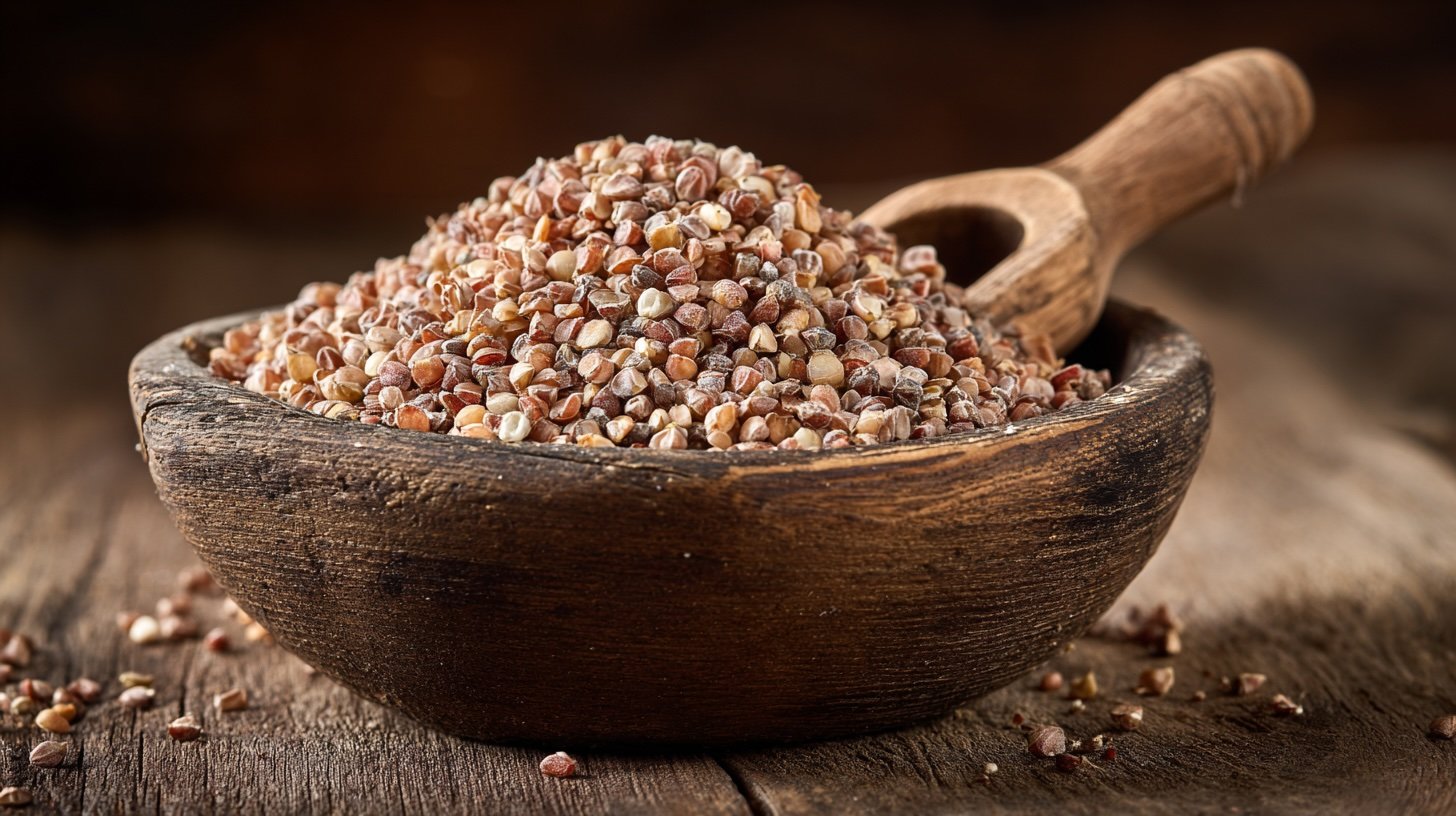
Buckwheat arrived in the world as the sort of plant that didn’t care much for prestige. Wheat had its empires, rice had its poetry, barley had its beer. Buckwheat, meanwhile, quietly sprouted on the rough, craggy slopes of southwestern China and eastern Tibet, minding its own business and doing a surprisingly good job of it. The seeds looked a bit like tiny dark pyramids, which must have delighted the first humans who discovered that these little things could actually feed a family. And so began a relationship that has lasted for roughly six millennia.
The odd thing about buckwheat is that it’s not really a wheat at all. Botanically, it hangs out with sorrel and rhubarb, which feels like it must make for interesting dinner parties in the plant kingdom. Someone, somewhere, decided that because the seeds resembled beechnuts and the flour behaved vaguely like wheat, the name should be a mash‑up of the two, and buckwheat ended up saddled with one of the more misleading titles in the pantry. Yet that slightly confusing branding didn’t stop the plant from embarking on an east‑to‑west migration across the Himalayas, into the steppes, over into the Middle East, and finally into Europe.
By the time it reached Eastern Europe, buckwheat had fully embraced its destiny as the people’s grain. It didn’t need pampering. It didn’t demand fertile soil, gentle summers or whatever else more delicate crops insisted upon. Farmers in Russia, Poland, Belarus and Ukraine discovered that it grew pretty well on land other grains would scoff at. Out of this modest agricultural triumph emerged kasha, the nutty, deeply comforting dish that still appears in kitchens today, often under the guise of a bowl that looks plain but delivers an unexpectedly wholesome punch.
The story ran differently in Asia. In Japan, buckwheat went to finishing school and reinvented itself as soba – thin noodles with enough cultural significance to earn themselves a New Year’s ritual. In Korea, roasted buckwheat morphed into a tea with a toasty aroma and the sort of ‘this might be good for me’ energy beloved by health‑conscious drinkers. China kept buckwheat closer to its rugged roots, using it in porridge, pancakes and as a crop of choice in high altitude regions. You can picture a Tibetan farmer looking at a wind‑swept hillside and thinking, there’s only one grain mad enough to thrive here.
Europe, meanwhile, took a little longer to fall in love. In Brittany, though, buckwheat found an enthusiastic welcome. It went straight into galettes – savoury pancakes that attract visitors who imagine themselves embracing Breton rustic charm. At some point during the Middle Ages, buckwheat fields spread across the region in what must have looked like a botanical rebellion against soils that refused to grow anything else. Then the twentieth century arrived, with industrial agriculture, yield‑obsessed policies and glossy cereal hybrids, and buckwheat rather fell out of fashion. Fields disappeared. Production shrank. Its genetic diversity, once vibrant, narrowed to a handful of favoured strains.
Yet trends never stay still. As modern Western diets became entangled with gluten avoidance, plant protein and an almost mystical reverence for ‘ancient grains’, buckwheat made a quiet comeback. Suddenly it sat beside quinoa and amaranth like an understated elder cousin. Bakers tried using it in bread and promptly discovered that buckwheat, lacking gluten, had no intention of behaving. It produced loaves with the density of a small neutron star unless coaxed with other flours. But in pancakes, porridges, noodles and biscuits, it excelled. Its slightly earthy, slightly nutty flavour became fashionable again, even among people who hadn’t grown up with it.
Nutrition researchers joined the party with a surprising amount of enthusiasm. Buckwheat, they discovered, contains a respectable amount of protein and fibre, along with minerals such as magnesium and manganese, and a compound called rutin. Rutin, in case the name sounds too much like an accountant from Yorkshire, is a flavonoid associated with antioxidant and anti‑inflammatory properties. Some studies have even suggested that buckwheat might support metabolic and cardiovascular health. This was probably predictable – any food that has spent six thousand years stubbornly growing in the world’s least comfortable conditions was bound to pack a bit of resilience.
But buckwheat has its quirks. The seeds rarely ripen in unison, which turns harvesting into a slightly chaotic affair. Some farmers swear it’s not worth the trouble on a large scale, especially if they are used to obedient crops that ripen on schedule. Then again, buckwheat was never bred for obedience. It historically belonged to communities who cared more about sustenance than agricultural elegance.
There’s also the matter of flavour. People either adore buckwheat or look mildly betrayed after their first mouthful. Its deep, earthy taste divides palates more sharply than one might expect for a crop so ancient. Some claim it tastes like the soil it grew in; others insist that it tastes like home. In Eastern Europe, it evokes childhood suppers. In Japan, a bowl of soba represents renewal, elegance and a touch of culinary minimalism. And in Brittany, it sits beside cider and salted butter, embodying countryside simplicity with just enough rustic swagger.
One of the most interesting aspects of buckwheat is how it straddles agriculture and ecology. It may not have the glamour of cash crops, but as a cover crop it performs impressively: suppressing weeds, feeding pollinators, improving soil structure and requiring almost no fuss. Bees adore buckwheat flowers, producing a dark, distinctive honey that tastes intense enough to start a minor argument at a breakfast table.
Culturally, buckwheat carries a sort of underdog charisma. It never conquered global markets like wheat or maize. It rarely appears in glossy advertisements. Instead, it represents something older and quieter – the kind of food that existed long before industrial supply chains, foodie Instagram feeds and celebrity detox diets. It fed nomads, peasants, monks, mountaineers and ordinary families who simply needed a reliable source of nourishment.
In the twenty‑first century, buckwheat’s renewed popularity feels like a small correction. People are rediscovering its versatility, its nutritional value and its long, slightly rebellious history. They appreciate that it grows on stubborn soils with an almost philosophical determination. They enjoy the irony of a plant named after wheat, related to rhubarb, and capable of producing noodles elegant enough for fine dining.
When you zoom out on buckwheat’s timeline, what emerges is not a story of glory but of endurance. It is the crop that survives neglect, thrives in adversity and turns modest fields into food. It has sat patiently at the fringes of human cuisine for centuries, waiting for the moment when modern tastes would catch up. And now, as conversations swirl around sustainable agriculture, biodiversity, old‑world grains, gluten‑free cooking and climate resilience, buckwheat suddenly makes perfect sense.
So what’s so special about buckwheat? Everything and nothing. It’s a humble seed with an ancient passport, a taste that inspires loyalty, a nutritional profile that feels surprisingly modern, and a personality that never aspired to be trendy. Its story is one of quiet triumph. And perhaps the most fitting way to celebrate it is not through grand declarations but through something simple: a warm bowl of groats, a plate of soba, or a Breton galette folded around whatever ingredients today’s mood demands.