Heracles: The Most Popular Demigod in the World
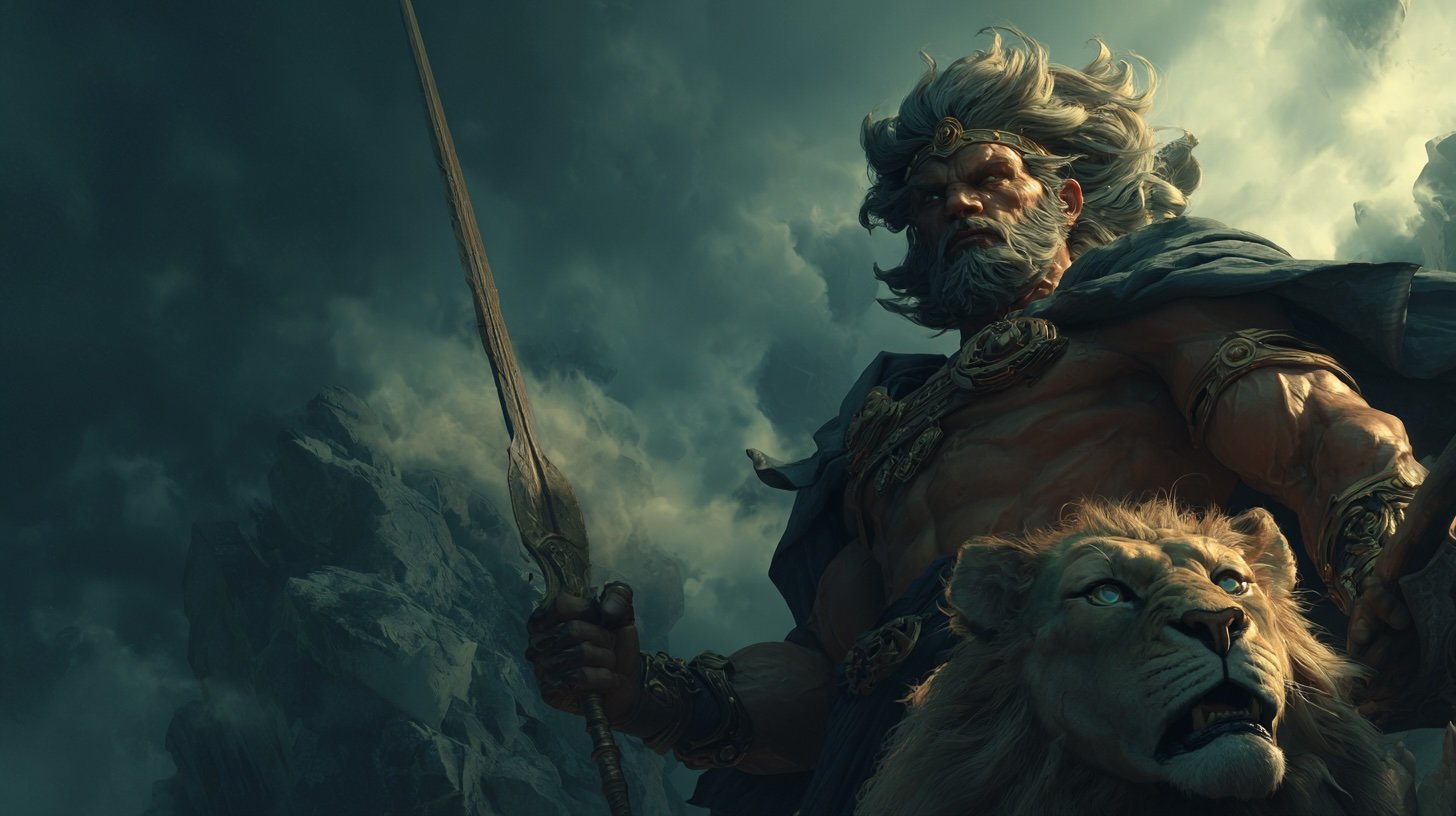
Heracles strides through ancient stories like someone who knows every room belongs to him. People in museums still stare at statues of him wrapped in a lion’s skin, gripping a club the size of a tree, and wearing that expression of a man who has already won the fight before the opponent even arrived. Yet once you start following his life, the whole thing turns into a chaotic mix of glory, personal disaster, family drama, impossible chores, and travel patterns that resemble the world tour of someone who keeps losing the map but never the attitude. That contrast turns him from a carved muscle machine into a surprisingly relatable hero, full of too‑human flaws and very superhuman ways of fixing them.
The story begins in Thebes, and things escalate immediately. Zeus visits Alcmene while disguised as her husband, and the result is Heracles. Hera hears about it and instantly adds him to her personal list of enemies. His name means something close to “the glory of Hera”, which feels like the ancient Greek equivalent of naming your cat after the neighbour who hates it. Hera does not find the joke amusing. She sends two snakes into his cradle, perhaps hoping to end the story before it begins, but baby Heracles deals with them using his tiny fists. People love to imagine this moment as a kind of divine hint that the child will grow into something magnificent. It also shows that his relationship with Hera starts at a level of hostility most families never reach.
He spends his youth training with the best tutors Greece can offer. They teach him archery, wrestling, music, horse riding and various noble pursuits expected of a well‑rounded hero. He tries his best, but sometimes everything around him crumbles under the weight of his enthusiasm. Imagine being the sort of teenager who could break training equipment without meaning to. He carries this mix of brilliance and clumsiness into adulthood, where Hera decides the time has come for something more dramatic than serpents.
She throws madness over him like a dark veil, and he kills his own children in the frenzy. The shock of this moment shapes the rest of his life, because he walks straight to the oracle at Delphi and asks for a way to repair the damage. The oracle sends him to King Eurystheus, a man who reacts to threats the way most people react to spiders on the ceiling: with panic, yelping, and a strong desire to hide in a jar. Eurystheus chooses twelve tasks for Heracles, hoping the hero will either fail or vanish somewhere along the way. Neither happens.
Heracles steps into his labours with the attitude of someone who expects trouble and intends to enjoy at least some of it. Each labour feels like a mythic test combined with an ancient attempt at worldbuilding. The Nemean Lion appears first, a creature with skin harder than any weapon. Heracles solves the problem by grabbing the beast and wrestling it into submission. Then he skins it with its own claws, proving that even monsters become accessories when you know what you’re doing. He wears the lion’s hide for the rest of his life, partly because it looks impressive and partly because it turns everyday clothing into armour.
The Hydra waits next in a swamp. Cutting off one of its heads only causes more to grow. Heracles deals with that by burning the necks before they have a chance to regenerate. The scene must have looked like a combination of battlefield and gruesome gardening. It requires teamwork, quick reflexes and enough conviction to believe that setting a monster on fire counts as a reasonable strategy.
Catching the Ceryneian Hind demands patience rather than brute force. This golden deer runs with shocking speed and belongs to Artemis. Not the sort of creature you want to harm. Heracles tracks it for a year, almost like someone chasing a rumour across the countryside. Eventually he brings it back alive, though Artemis catches up with him and raises an eyebrow sharp enough to cut stone. Heracles explains the situation, she accepts it, and the quest continues.
The Erymanthian Boar, enormous and furious, ends up caught in deep snow and dragged across the landscape like an oversized gift for a king who doesn’t want it. Eurystheus takes one look, squeaks, and dives back into his famous jar. Heracles waits for him to emerge, which takes a while.
Cleaning the Augean Stables presents a different problem. The place contains decades of filth from thousands of cattle. Heracles redirects two rivers through the stables, clears everything in an afternoon, and probably smells better than he has in years. People sometimes claim this labour reveals the practical side of the hero, but it also reveals the satisfaction of solving colossal problems with a single outrageous idea.
The Stymphalian Birds, man‑eating creatures with metal wings, take flight the moment he approaches. Athena hands him a pair of divine noisemakers. He rattles them, sends the birds into the air and shoots them down with methodical precision. It feels less like a myth and more like a bizarre training exercise for someone whose job description includes “occasional sky combat”.
The Cretan Bull leads to a wrestling match that leaves both hero and animal irritated but alive. Heracles drags it onto a ship and sails away without explaining anything to the locals. Soon after, he faces the mares of Diomedes, horses so violent they eat people. He sorts them out by feeding their owner to them, a decision that says a great deal about mythic logic and even more about the limits of Heracles’ patience.
Retrieving the girdle of Hippolyta sends him into the land of the Amazons. The queen welcomes him at first, clearly impressed by his reputation, but Hera intervenes again. She spreads a rumour that he intends to kidnap Hippolyta, and chaos erupts. By the time the dust settles, Heracles has the girdle but leaves behind an accidental battlefield. Nothing about this labour feels straightforward, but Greek myths rarely offer tidy solutions.
The cattle of Geryon live at the edge of the world. Heracles travels west, meets a giant with three bodies, strikes him down, and herds the cattle all the way back to Greece. The journey includes heat so intense that Heracles fires an arrow at the sun for mocking him. Helios, instead of taking offence, lends him a golden cup for easier travel. That moment summarises a great deal about ancient storytelling: when in doubt, present your complaints directly to the nearest god.
Stealing the apples of the Hesperides requires cleverness. Heracles tricks Atlas into retrieving them while he holds up the heavens in the titan’s place. When Atlas returns, he announces that he would prefer to deliver the apples himself and leave Heracles with the sky forever. Heracles agrees with suspicious enthusiasm, asks Atlas to hold the heavens for just a moment so he can adjust his cloak, and walks away with the apples. No monster defeated. No battle won. Just one perfectly executed plan.
The final labour demands a trip to the underworld to fetch Cerberus, the three‑headed guardian dog. Hades allows it on one condition: Heracles must handle the creature without weapons. He grasps the enormous dog with sheer strength and drags it upward into the sunlight. Mortals stare at the scene in disbelief. Even Eurystheus finally surrenders, realising nothing he throws at the hero will ever be enough.
After the labours, life continues to twist in unexpected directions. Heracles ends up serving Queen Omphale in Lydia as part of another purification. She swaps clothes with him for entertainment and assigns him domestic tasks. People in later centuries loved this image of the world’s strongest man spinning wool while a queen wears his lion’s skin. Despite the comedy, their time together softens some of his edges. He completes quests along the way, rescues friends, defeats giants, and manages to turn every region he visits into a stage for new stories.
Eventually he marries Deianira. She loves him deeply but trusts the wrong creature: the centaur Nessus. As he dies, Nessus gives her a so‑called love charm made from his blood. She believes it will secure Heracles’ affection. When she applies it to his tunic, the poison burns into his skin. He tries everything to stop the agony, but the damage reaches beyond healing.
He walks up Mount Oeta and asks his companions to build a pyre. They hesitate, unsure how to help, until his friend Philoctetes lights the fire. Flames rise, the mortal part of Heracles burns away, and Zeus brings him to Olympus. He becomes a god, marries Hebe, and steps into immortality with the same confident stride he carried during his labours.
His legacy spreads across the Mediterranean. Cities claim him as founder. Dynasties call themselves his descendants. Artists carve him into marble, paint him on vases, and keep retelling his story from every angle. People admire his strength, but they connect with his struggles even more. He makes mistakes, listens to the wrong advice, trusts too quickly, acts too boldly, and pays the price. Despite that, he keeps fighting, thinking, travelling and adapting.