Firearm Silencers: Courtesy Devices with a Terrible PR Problem
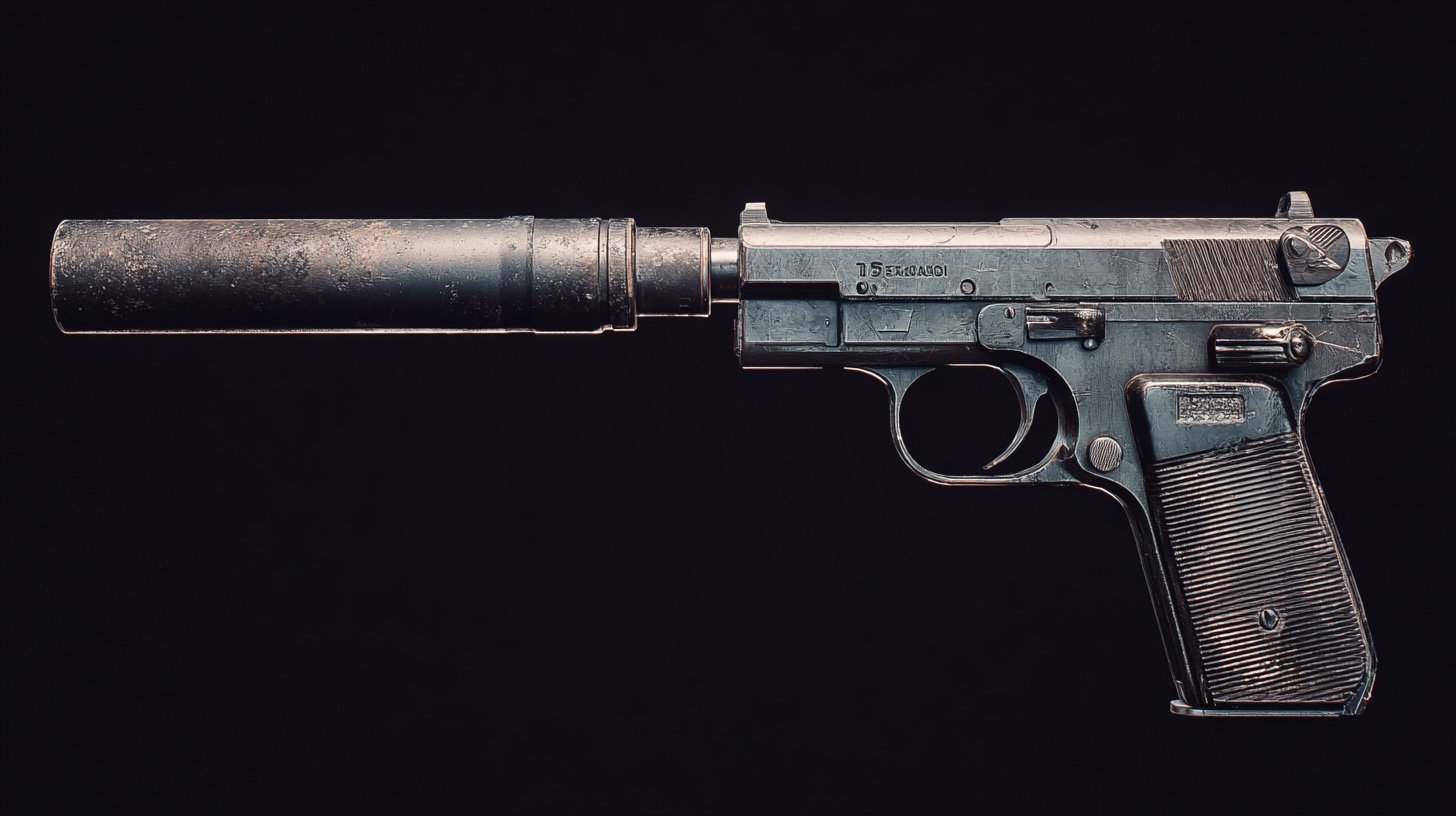
Firearm silencers carry the sort of reputation usually reserved for trench coats, mysterious briefcases, and men who insist on calling themselves “agents” during office away‑days. Yet the real story is far less cinematic and far more amusing. Long before Hollywood discovered its obsession with whisper‑quiet assassins, the world of silencers began with a man worrying about annoying the neighbours. A silencer, by the way, never actually silences anything. The name stuck because marketing departments tend to favour glamour over physics.
Hiram Percy Maxim, an inventor with a flair for self‑promotion and an enviable moustache, filed a patent in 1909 for what he called a Maxim Silencer. He pictured it as a household convenience, something you might pick up alongside a new rake. He sold them in catalogues, not covert alleyways. Imagine flicking through a hardware advert in the early twentieth century and stumbling upon a pleasant sketch of a man shooting quietly across a field while the local cows remain heroically indifferent. That was the original vibe. No noir intrigue, just pest control without ruffling feathers or waking sleeping babies.
Silencers would later end up in the hands of militaries, but that came much later and largely by accident. Early versions appealed mostly to gentlemen shooters and farmers who valued peace and quiet. You could buy one in a shop, pop it on the end of your rifle, and feel rather proud that you weren’t contributing to the local acoustic chaos. The world had yet to realise that anything involving a tube of metal attached to a firearm would, in time, become irresistible to film directors.
The idea behind the device isn’t complicated once you peel away the mystique. A gunshot is loud because burning powder creates hot gases desperate to escape. When they burst out of the muzzle, they do so with the subtlety of a tantrumming kettle. A suppressor tries to persuade those gases to calm down a little before entering the open air. Inside the device lives a series of internal chambers and baffles, each forcing the gases to twist, tumble, and lose enthusiasm. By the time they exit the far end, they’ve cooled, slowed, and grown significantly less dramatic.
Of course, something else can sabotage the quest for quiet: the bullet itself. If it breaks the sound barrier, it produces a sonic crack. That noise has absolutely no interest in cooperating with any suppressor. The solution came in the form of subsonic ammunition, which travels more discreetly by staying under the speed of sound. This magical combination – a suppressor, a subsonic round, and a shooter who fancies themself a ghost – gets you closest to the mythical movie whisper. Even then, it’s still more of a gentle thump than a delicate cough.
As the twentieth century marched on, the silencer began to pick up a new set of admirers. Special operations units realised that something which reduces both noise and muzzle flash comes in rather handy when sneaking about at night. During the Second World War, engineers produced some delightfully peculiar creations. The Welrod pistol became the poster child of clandestine engineering. It looked less like a firearm and more like a bicycle pump that had gone rogue. Soldiers adored it because it was quiet enough to avoid drawing attention and simple enough to fix with a screwdriver.
Another wartime celebrity, the suppressed Sten Mk II(S), made a name for itself with resistance fighters. They weren’t using it for the glamour. They were using it because it worked, even if it rattled in the hands like a collection of loose plumbing parts. Later still, the Heckler & Koch MP5SD entered the stage, an integrally suppressed masterpiece that became a favourite of counter‑terrorism units. It joined the long list of things Germany engineered with alarming precision.
Silencers gradually became associated with espionage, which did wonders for their reputation and nothing at all for public understanding. Hollywood settled on the charming but wildly inaccurate “pew‑pew” sound and never looked back. Why let reality intrude when tiny cinematic whispers are so much more dramatic? Real suppressors certainly reduce noise, but rarely to the point where anyone mistakes gunfire for someone dropping a stapler.
Meanwhile, in places like Finland and Norway, hunters embraced suppressors as simple hearing protection. They’re treated more like practical safety gear than secret gadgets. Wander through a Nordic forest and you may spot a relaxed hunter with a rifle that looks a little longer than usual. No drama, no spycraft – just someone trying not to go deaf.
The UK adopted a similarly pragmatic approach. Moderators, as they’re usually called, slot onto rifles with the bureaucratic grace familiar to British paperwork, but they’re frequently approved. Farmers appreciate being able to deal with foxes or rabbits without startling the entire county. Clay shooters prefer not to rattle their eardrums into early retirement. Somewhere in this, you begin to see the truth: silencers are far more about courtesy than conspiracy.
Elsewhere, regulation took a different turn. In the United States, the 1930s saw the National Firearms Act place suppressors under tight control. The government worried that criminals would adopt them en masse, despite there being little evidence of such trends. Eighty‑odd years later, suppressor‑related crime remains exceptionally rare, but the administrative machinery continues all the same. Owners must register them, pay for tax stamps, and wait months for approval, which has done nothing to deter enthusiasts and everything to discourage impulsive shopping.
Modern suppressors benefit from metallurgical wizardry that would make early designers positively swoon. Stainless steel, titanium, aluminium, and aerospace alloys such as Inconel handle heat and pressure that would have melted earlier models. These advanced materials allow shooters to fire rapidly without cooking the device into a molten embarrassment. There are even modular suppressors with removable baffles, adjustable lengths, and enough complexity to make a Victorian steam engineer nod approvingly.
Integral suppressors, where the barrel itself becomes part of the suppression system, take the concept further. The famous MP5SD is an example, using ports in the barrel to vent gases before the bullet escapes. The result: consistently subsonic performance even with ammo that would normally crack the air like a whip. It’s less a firearm accessory and more a beautifully orchestrated duet between engineering and physics.
There are also curious historical footnotes, like wipe‑based suppressors, which used soft rubber layers the bullet punched through. They started out delightfully quiet before degrading into unhelpful frisbees after several shots. Practical? Not really. Entertaining? Absolutely.
Fun facts abound in this world. One of the strangest involves the notion of “wet” suppression. Adding a few drops of water or gel into certain suppressors dramatically reduces sound for the first shot or two, as the liquid absorbs heat. Shooters describe the experience as equal parts effective and slightly chaotic, as though the suppressor has ideas of its own.
Another curiosity: a hot suppressor creates a shimmering heat mirage in front of your sight, giving the impression that the landscape is wobbling like a mirage on a summer road. It doesn’t make you feel particularly tactical, but it does explain why shooters pause awkwardly after several rounds.
Then there’s the counterintuitive reality that fitting a suppressor can actually improve accuracy. The extra weight at the muzzle reduces recoil and prevents the barrel from flicking upwards. Shooters often find their groups tightening, a result no one expected when silencers were still wandering around dressed as gardening equipment.
Attempts at digital suppression have also begun to appear, with experimental models adjusting gas venting electronically. They’re not yet common, but the very idea suggests a future where even muzzle devices might have software updates. One imagines a pop‑up announcing “v3.1 patch: improved gas turbulence stability.” The world may or may not be ready.
Hollywood may keep its whisper fantasies, but the truth about suppressors is more interesting. They’ve lived many lives: garden accessory, military tool, safety device, misunderstood prop, and engineering playground. They’ve been feared, regulated, embraced, mythologised, and occasionally misrepresented beyond recognition.
Today’s silencers sit at a cultural crossroads, equally at home in a gunsmith’s workshop, a Nordic hunting lodge, or the prop cupboard of a film set. They still spark fascination, and they still confuse people who expect cinematic miracles. At their heart, though, they remain what they always were: clever tubes full of baffles trying to coax hot gases into better behaviour.
The story of the firearm silencer isn’t about silence at all. It’s about taming violence of sound, navigating human misunderstanding, and demonstrating once again that engineers love to solve problems the rest of us didn’t realise existed. Somewhere out there, Hiram Percy Maxim is probably smiling, comfortable in the knowledge that his odd little invention is still causing both admiration and bewilderment in equal measure.