Rome was already a city with a worrying talent for catching fire. Long before Nero became history’s favourite imperial villain, the capital of the Roman Empire had all the charm and safety standards of a giant wooden tinderbox with marble ambitions. Its streets twisted through packed neighbourhoods. Its apartment blocks climbed dangerously high. The shops stored oil, cloth, timber, food, pitch, lamps and every other item a sensible fire inspector would remove while muttering darkly into a wax tablet. So when the Great Fire of Rome broke out in July AD 64, the real miracle was not that the city burned. The real miracle was that it had not done so even more often.
The fire began near the Circus Maximus, Rome’s great chariot-racing arena, where stalls and warehouses sat close together in a crowded commercial district. Flames spread quickly through the narrow lanes, helped by wind, poor planning and the usual Roman enthusiasm for building cheaply until something dramatic happened. Once the fire took hold, it became almost impossible to stop. Ancient Rome did not have a modern fire brigade in the comforting sense. It had organised firefighting groups, yes, but they faced a monster made from wood, heat, panic and architecture with a death wish.
According to the historian Tacitus, the fire raged for six days, died down, then flared up again and burned for three more. By the end, large parts of Rome lay in ruins. Temples, homes, shops, public buildings and entire districts disappeared. People lost families, property, savings and the everyday geography of their lives. Rome was not just damaged. It was traumatised. When a city that claims to rule the world cannot protect itself from fire, someone must be blamed. Conveniently, Rome had Nero.
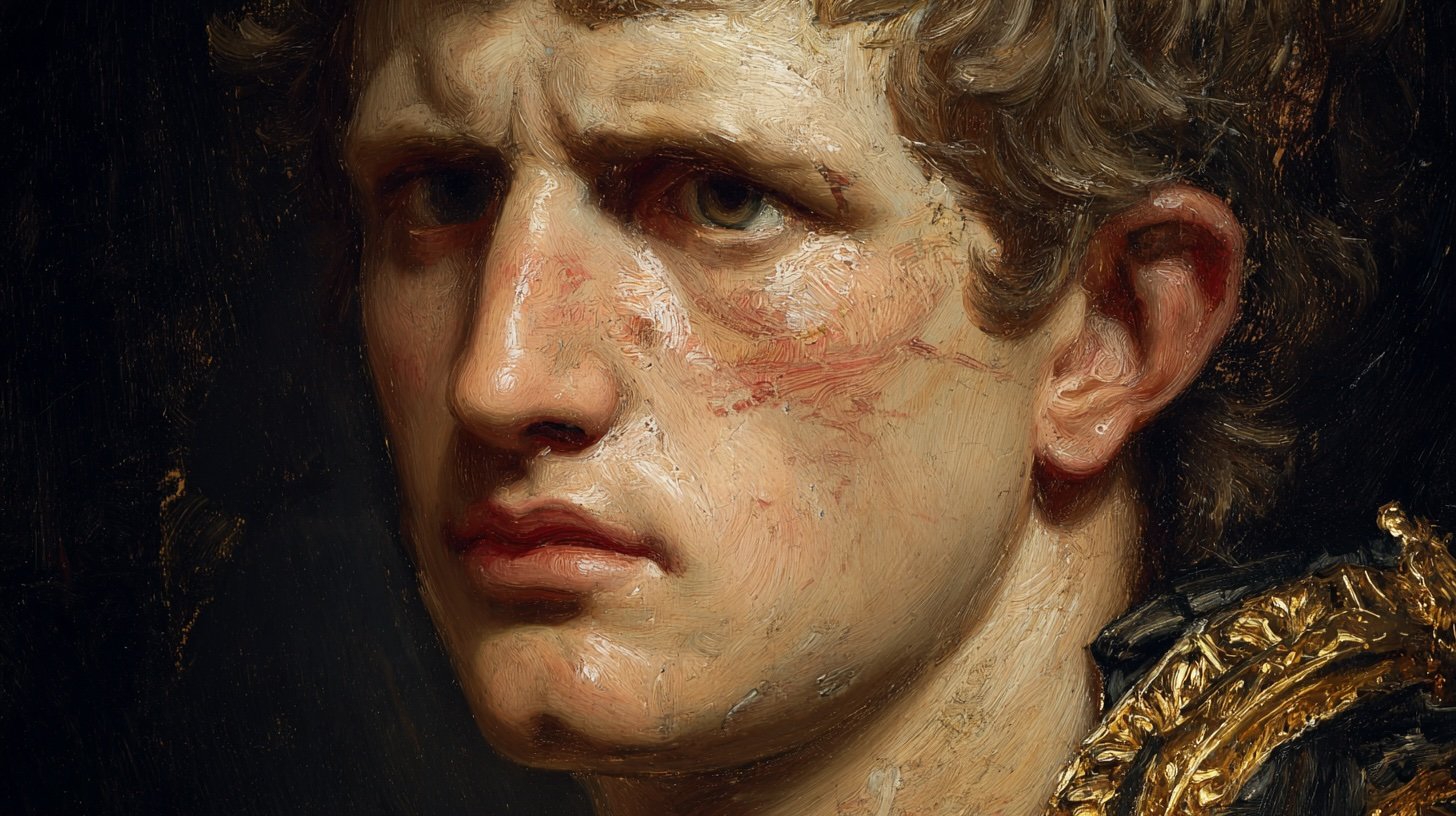
And Nero was not exactly a difficult man to dislike. He had already built a reputation for vanity, theatricality and suspiciously flexible ideas about family loyalty. He loved performance, music, poetry and spectacle. Unfortunately for him, Roman elites did not particularly admire an emperor who behaved like a celebrity desperate for applause. To aristocratic writers, Nero looked vulgar, self-obsessed and dangerously un-Roman. That mattered because those writers helped shape his legacy. History, rather unfairly but very efficiently, often belongs to the people with the best pens and the biggest grudges.
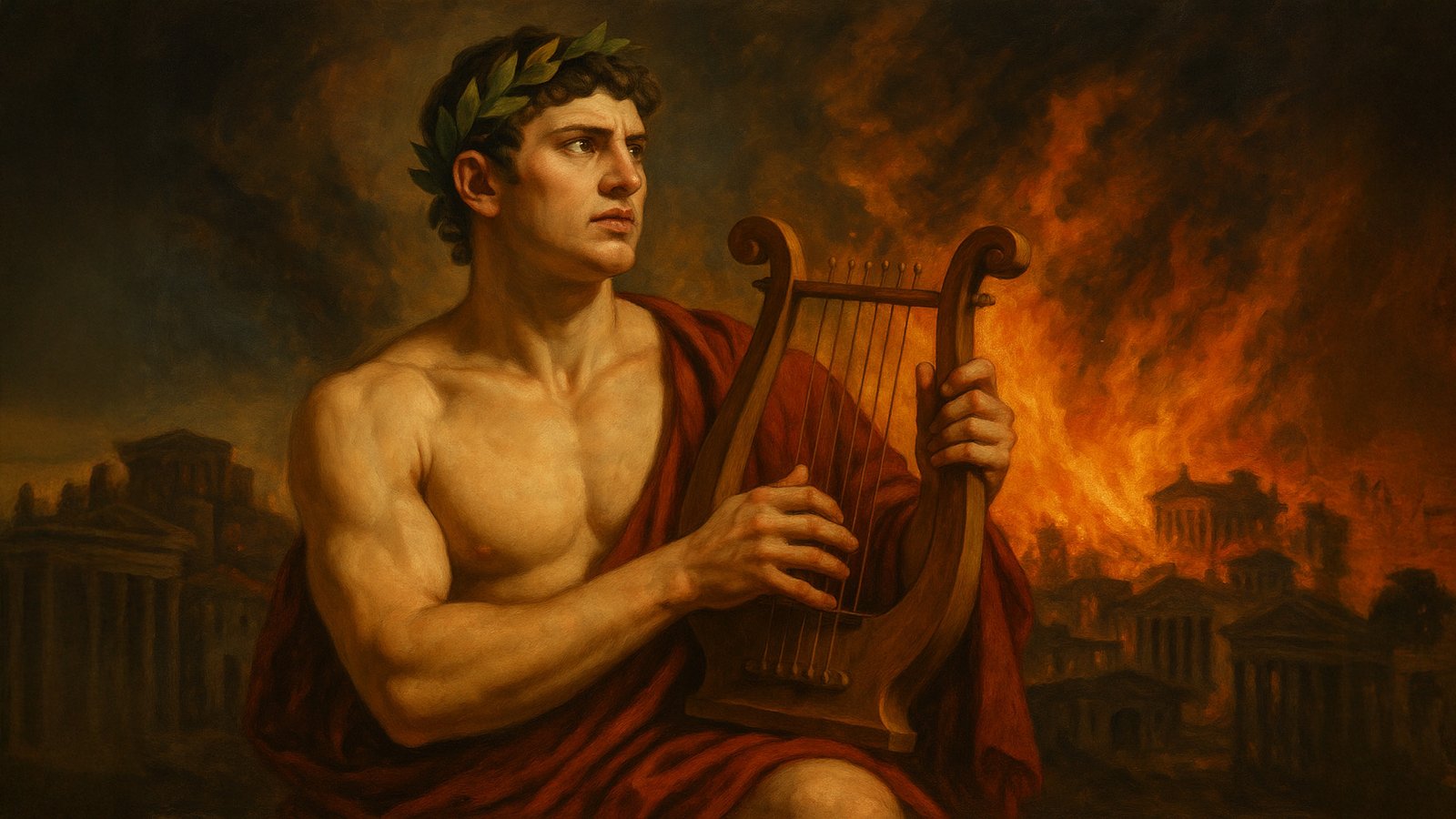
The famous story says Nero watched the city burn while playing the fiddle. It is a wonderful image, which is usually a warning sign. The fiddle did not exist in Nero’s Rome, so the scene collapses before it even reaches the stage. Some ancient accounts suggest he sang about the fall of Troy while Rome burned, which at least makes more chronological sense, though not necessarily more historical sense. Tacitus says Nero was actually away from Rome at Antium when the fire began. He returned to the city and, by that account, organised relief measures. He opened public buildings and gardens to the homeless, arranged supplies of food and tried to manage the crisis.
That does not make Nero a misunderstood angel in a laurel wreath. It simply complicates the cartoon. If he started the fire, he chose a strange way to enjoy the results. He damaged his own capital, endangered his regime and then had to spend money and political energy dealing with the catastrophe. Tyrants can be irrational, of course, and Nero had no shortage of unpleasant qualities. Yet the simplest explanation remains hard to ignore: Rome burned because Rome was extremely burnable.
Still, Nero’s behaviour after the fire did him no favours. He launched a vast rebuilding programme and introduced new urban rules, including wider streets, restrictions on shared walls and better use of fire-resistant materials. On paper, that sounds almost responsible. Then came the problem: the Domus Aurea, his Golden House. Nero built an enormous palace complex on land cleared by the disaster, complete with gardens, lakes, porticoes and a level of imperial self-indulgence that practically begged for hostile gossip. To Romans who had lost their homes, the timing must have looked grotesque. The emperor’s city burns, and the emperor gets a dream palace. Even if Nero had nothing to do with the fire, he behaved as if he had hired a public relations adviser from a rival dynasty.
This is where rumour becomes more powerful than evidence. People did not need proof. They needed a story that made emotional sense. The fire had been too enormous, too convenient and too humiliating. Nero already looked guilty in the public imagination because he seemed capable of almost anything. The Golden House gave the rumour a motive. His theatrical reputation gave it colour. His enemies gave it a long life.
Tacitus, writing decades later, gives us the most cautious version of the accusation. He reports that rumours blamed Nero but does not present firm proof. Suetonius and Cassius Dio, writing later still, offer darker and more dramatic portraits. Their Nero looks less like a flawed ruler and more like a monster specially designed for moral lessons. That does not mean they invented everything, but it does mean we must read them carefully. Ancient historians did not write like modern court reporters. They mixed evidence, rumour, political judgement, literary style and moral theatre. When they disliked a ruler, subtlety did not always survive the journey.
Then Nero found someone else to blame: the Christians. At the time, Christians formed a small, strange and unpopular minority in Rome. Many Romans misunderstood their beliefs and suspected them of antisocial behaviour, partly because they refused to join the usual religious rituals of civic life. Tacitus says Nero accused them of starting the fire and subjected them to brutal punishments. Some were covered in animal skins and attacked by dogs. Others were crucified or burned as human torches. Even by Roman standards, which were not exactly gentle, this was grim political theatre.
This episode matters because it helped shape both Nero’s reputation and early Christian memory. For Roman critics, it showed Nero’s cruelty. For Christians, it became part of a larger story of persecution and martyrdom. Over time, the fire, the executions and Nero’s villainy fused into one powerful historical image. Whether he started the fire almost became secondary. He had done enough afterwards to become the perfect villain.
Yet the case against him remains weak. There is no solid evidence that Nero ordered the Great Fire of Rome. There is no reliable eyewitness account catching him with an imperial box of matches. The most careful ancient source treats the accusation as rumour. The practical circumstances point towards accident, not conspiracy. Rome had suffered fires before, and it would suffer them again. Dense cities burn. Badly built cities burn more enthusiastically. Rome was both dense and badly built in precisely the wrong places.
So why does the myth survive? Because it is too good to die. “Nero fiddled while Rome burned” offers everything a memorable historical phrase needs: disaster, arrogance, decadence and a villain with excellent branding. It works as a political insult, a moral warning and a neat metaphor for leaders who perform while everything collapses around them. The fact that it is almost certainly inaccurate has barely slowed it down. Accuracy often walks; myth rides a chariot.
The more interesting truth is not that Nero definitely burned Rome, but that people were ready to believe he did. That tells us something important about power. When rulers lose trust, every crisis starts to look like a plot. Every coincidence becomes evidence. Every selfish decision confirms what people already suspect. Nero may not have lit the first flame, but he created the conditions in which suspicion could burn beautifully.
In the end, Nero probably did not set Rome ablaze. Rome was already a fire hazard waiting for its moment. But Nero turned disaster into legend through vanity, cruelty and spectacularly poor judgement. He gave his critics a palace, his victims a horror story and history a phrase it still refuses to retire. He may not have played music while Rome burned, but he certainly managed to look like the sort of emperor who might.