Fire Medicine to Firearms: The Chaotic Birth of Gunpowder
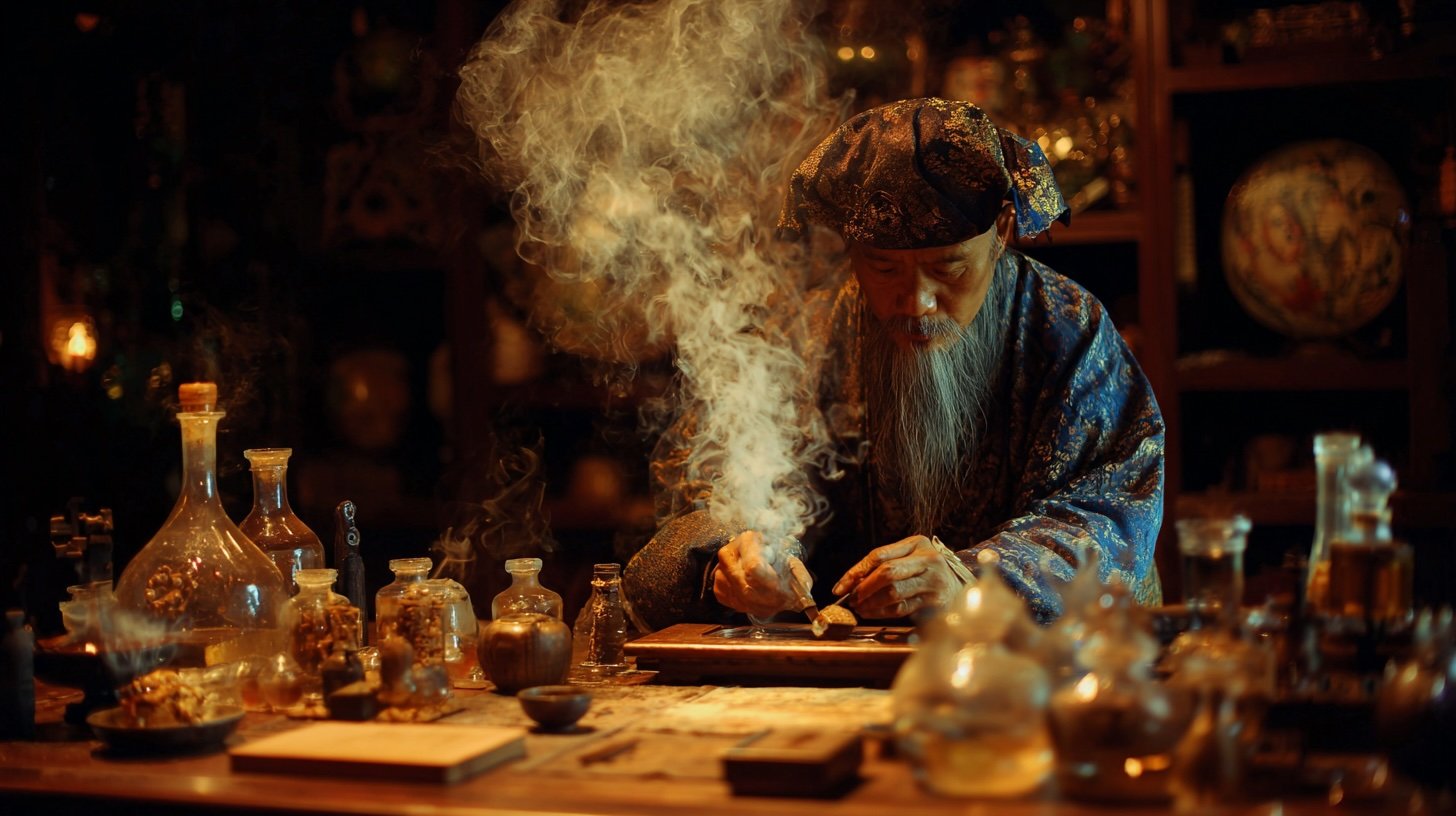
Gunpowder didn’t appear with a dramatic bang. It arrived through the sort of mischief only overconfident alchemists can produce. Picture a few scholars in ancient China, absolutely convinced they’re on the brink of inventing eternal life, mixing ingredients that really should have come with a warning label. They weren’t searching for a battlefield miracle. They were hunting immortality, as if the universe owed them a loophole. Then one day the mixture on the table fizzled, flashed and nearly blew their eyebrows off. Immortality suddenly looked overrated, but they had accidentally invented something far more disruptive.
Those early experimenters called it fire medicine. They thought it might heal, purify and perhaps extend one’s days on earth. A pleasant idea, except that the mixture tried to burn anything it touched. Word of its peculiar behaviour travelled quickly, partly because people love gossip and partly because any substance that loudly erupts tends to attract attention. Saltpetre, sulphur and charcoal were all common enough on their own. When shaken together, though, they behaved like rebellious teenagers, refusing to stay quiet.
Chinese scholars recorded the strange mixture in texts that date back to the ninth century. One manual even warned its readers not to grind these ingredients for too long because the combination might burst into flames. This felt less like advice and more like a thinly veiled suggestion to stop tempting fate. Curiosity won anyway. People kept grinding, experimenting and occasionally blowing up a shed. Society has always been driven by a certain kind of enthusiast.
Before weapons entered the picture, fire medicine found its place in entertainment. Festivals loved a bit of theatrical chaos. Early fireworks were more smoke than sparkle, but that didn’t matter. They hissed, crackled and lit up the sky just enough to make crowds gasp. Every holiday needs a bit of noise, and this invention delivered in abundance. Celebrations felt livelier, and alchemists finally had something to show for their efforts besides singed tunics.
Things changed when someone realised this energetic mixture could be put to work less gently. Armies of the Song dynasty started playing with possibilities. Fire arrows appeared first. These weren’t glamorous rockets swooshing across the heavens. They were ordinary arrows strapped with gunpowder pouches that burst into flames mid-flight. They made sieges slightly more dramatic and slightly more dangerous. Flaming lances followed—spears with gunpowder-powered blasts that startled enemy soldiers and sometimes the person holding them.
By the eleventh century, Chinese engineers were writing down what they knew. The Wujing Zongyao, a military manual from 1044, listed formulas for various gunpowder types. Nothing sells a recipe quite like the promise of tactical advantage. That manual reads like a cookbook for controlled explosions. Once a recipe reaches print, it becomes difficult to prevent curious readers from trying variations. Before long, engineers built the first true hand cannons. Tubes of metal spat fire and projectiles with enthusiasm, even if their accuracy suggested they were guided by the spirit of chaos.
The spread beyond China didn’t happen overnight. Ideas travelled with merchants, envoys and the occasional adventurer who liked to talk too much. Knowledge trickled through Central Asia and the Islamic world. Scholars and military leaders from these regions added their insights, refined the formulas and adapted them to their own needs. Gunpowder gained a reputation as a substance that didn’t behave politely but delivered results too useful to ignore.
Europe encountered gunpowder in the thirteenth century. At first, European chroniclers described the stuff with equal parts fascination and fear. Monks wrote about thunder-like noises heard on battlefields. Soldiers watched strange new cannons belch smoke and fling stones. Medieval Europe wasn’t known for embracing change without complaint, but gunpowder found its niche surprisingly fast. Castles that once seemed eternal suddenly looked vulnerable. Kings invested in artillery. Engineers tinkered with barrels, ignition systems and better blends of the powder itself.
Gunpowder changed warfare far beyond the battlefield. Once cannons and handheld guns became reliable, power structures shifted. Knights in shining armour discovered that shiny metal didn’t stand a chance against a well-aimed shot. Fortresses needed redesigning. Skilled archers became less central to military strategy. Gunpowder democratised destruction. A trained soldier could now deliver force that once required years of specialised martial discipline.
The substance even reshaped economies. Mines expanded to extract more saltpetre. States began regulating production with the same seriousness that modern governments reserve for strategic resources. Entire industries formed around firearms, artillery and ammunition. Workshops transformed into factories. Innovations in metallurgy followed, partly because nothing motivates research like the need to produce sturdier cannons.
Not all uses were military. Fireworks continued to flourish, evolving from crude bangs into dazzling choreographed displays of colour and light. These brought joy to festivals from Beijing to London. Gunpowder acquired a double life: one of destruction and one of celebration. People have always loved contradictions.
The global spread of gunpowder had another effect. It made empires possible on a new scale. The Ottoman Empire, Safavid Persia and Mughal India are sometimes called the gunpowder empires because they embraced the technology early and built states that thrived on its advantages. European colonial powers later used gunpowder weaponry to expand across continents, often with devastating consequences for local populations.
Over the centuries, chemists refined the original mixture. Black powder eventually gave way to smokeless powder in the nineteenth century, a cleaner and more efficient propellant. The shift meant firearms could fire more rounds without clogging their barrels with soot. Gunpowder had evolved, yet the core principle remained: the controlled release of energy carries extraordinary consequences.
There’s an irony in all this. The grand search for eternal life produced a substance that excelled at ending it. The alchemists who stirred those first batches might have laughed or cried had they known. They wanted to outsmart death, not hand future generals a new way to wage war. Yet innovation tends to steer itself. Once discovered, ideas take on lives of their own.
Gunpowder remains one of the most transformative inventions in human history. It accelerated the collapse of old hierarchies, spurred advances in science and engineering, and altered the course of nations. It gave us both fireworks and warfare, festivities and fortresses reduced to rubble. Few creations capture the dual nature of human ambition so vividly.
It all began with a few hopeful alchemists searching for immortality, only to stumble upon the explosive power that changed the world. Their accidental breakthrough turned into a force that shaped centuries, reconfiguring everything from warfare to festival nights. The mixture of saltpetre, sulphur and charcoal earned a place in history not because it fulfilled their dreams, but because it fuelled realities they never imagined.