Eyes on the Water: The Secrets of Maltese Luzzu
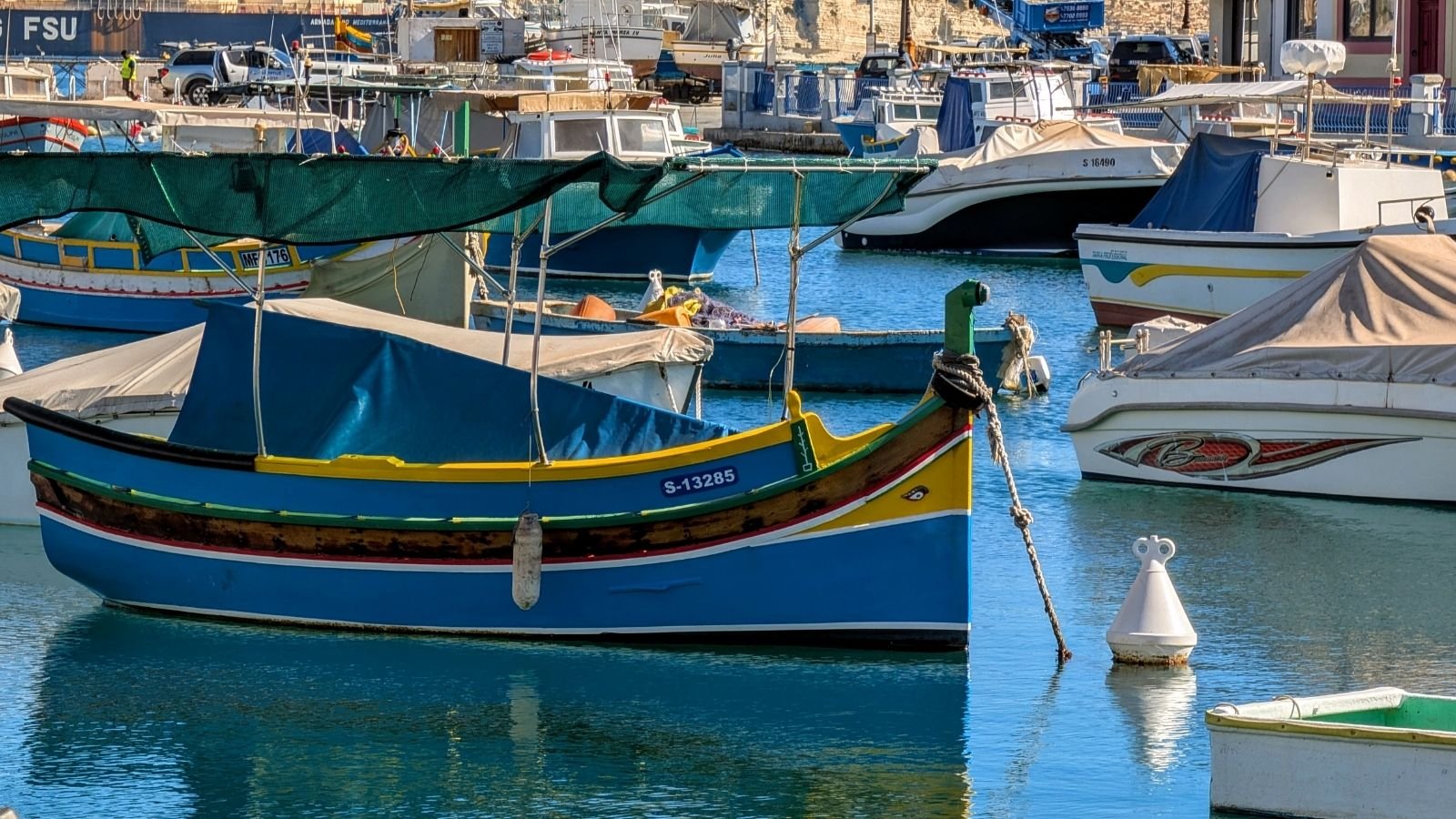
The luzzu waits for you long before you notice it. You stroll along a Maltese quay expecting the usual Mediterranean lineup of tourist boats and sun‑bleached fishing gear, and suddenly there they are: compact little vessels painted in colours that look borrowed from a festival poster. Then you realise they’re staring at you. Two painted eyes fixed on the horizon, or straight at you, depending on how guilty you feel about not having eaten enough fresh fish lately.
Locals barely register them anymore. Visitors usually think they’re cute. But the truth is, those eyes are older than Malta’s current language, older than most European borders, older even than the idea of Malta as anything other than a collection of very strategically placed rocks. The luzzu carries that kind of humour: cheerful on the outside, quietly ancient underneath.
The boats themselves sit somewhere between a stout fishing companion and a floating pop‑art installation. Builders shape them with a broad bow and a reassuring hull, the kind that takes choppy seas with the attitude of a farmer who’s seen too many storms to be impressed by another one. Wood still dominates their construction. Fibreglass tried to muscle in over the years, but tradition tends to hold its ground on these islands. The old skills depend on hands, patience and a willingness to spend an afternoon sanding something that looks perfectly fine already.
Colour comes next. Nothing about a luzzu happens in understatement. Yellow may line the edges, blue stretches across the sides, red slices through the middle, and green settles anywhere the painter decides needs a bit more cheer. Someone once said that seeing the boats clustered in Marsaxlokk at dawn feels like waking up inside a children’s picture book, and they weren’t wrong. Yet the palette isn’t random. Fishermen historically used certain colours to signal the harbour they came from. Tradition evolves, but the underlying instinct remains: to identify, to belong, to be recognised on the water long before anyone can read a name painted on the stern.
Now the eyes. They sit on the bow like quiet supervisors. Some are carved, some are painted, some look stern and protective, others suspiciously amused. Maltese lore often links them to the Eye of Osiris or the ancient Phoenician tradition of adding protective symbols to vessels. Malta’s past is a sort of cultural suitcase anyway, filled with Phoenicians, Romans, Arabs, Normans, Knights, French, British and whoever else decided to drop by over the centuries. Somewhere in that swirl, the custom of giving a boat a pair of eyes settled in and never left.
Ask Malta’s older fishermen and you’ll hear the same answer delivered with that half‑shrug people use when something simply is: the eyes protect the boat. They help it see danger. They bring luck. They ensure the fisherman returns home. Superstition on the sea isn’t a quirk so much as insurance, especially in a place where storms can curl around the islands without warning. The eyes stay because people trust them. No modern navigation app fully replaces the comfort of an ancient symbol that’s helped your grandfather and his grandfather before him.
When Malta still used its lira currency, the luzzu appeared on the coins. Tourists adored it. Locals quietly enjoyed how the rest of the world suddenly discovered a vessel they’d treated as part of the scenery for generations. Even today, postcards, shop signs, restaurant menus and Instagram hopefuls cling to the luzzu like it’s a mascot. The boats don’t seem to mind. They’ve always understood their appeal.
Marsaxlokk remains the best stage for them. On market mornings, the waterfront turns into a colour parade. The boats rest in tight clusters, their reflections rippling like stained glass. Fishermen prepare nets or tinker with engines while visitors take photos that all look effortless until you realise half of Malta is trying to photograph the same boat. The luzzijiet handle the attention with good grace. They’ve been the island’s most photogenic residents for far longer than smartphones have existed.
But beneath the charm sits a more complex story. Maintaining a wooden luzzu requires time, money and patience. Many fishermen now find themselves balancing tradition with tough economics. Some boats shift gradually into tourism work: short harbour trips, scenic rides, the occasional romantic sunset circuit where one notices the eyes again, this time glowing gently in the orange light. The boat becomes a storyteller for visitors rather than a workhorse for fishermen. Malta adapts, and so does the luzzu.
There’s also the curious detail of the mourning stripe. When a fisherman loses a family member, the usually bright moustache‑like band on the bow turns black. It’s subtle but unmistakable. A floating announcement of grief, shared openly among the community. The sea doesn’t care for long explanations, so people build a language out of colour instead.
Occasionally the boats sit out of the water for repairs, balanced on wooden blocks, looking almost embarrassed without the sea under them. Up close, you notice how heavy their timbers feel, how many layers of paint hide decades of weather. Craftsmen talk about the boats as though they have personalities. Some are stubborn. Some glide willingly. Some require extra persuasion, like toddlers refusing to wear their shoes. Ask anyone who’s restored one and they’ll assure you the boat remembers every knot and nail.
Stories drift around them too. The 1948 Gozo tragedy left a scar in local memory when an overloaded luzzu capsized, taking dozens of passengers with it. The incident shook the islands and reminded everyone that even the most trusted vessel has limits. Yet the boats continued their work afterwards, because life near the sea always moves forward. Today, the tale survives as a sombre footnote in an otherwise bright heritage.
Despite all their history, the luzzijiet aren’t museum pieces. They still head out early in the morning with engines grumbling and nets ready. Tourists capture them in soft sunrise light, imagining a life of gentle fishing rhythms, while fishermen focus on the day’s catch and the price they’ll get for it. The gap between romance and reality widens every year, but the luzzu seems unfazed. It has weathered empires; it can handle tourism.
That, perhaps, is the real reason the eyes matter. They’re ancient, but they’re also practical. They protect the vessel. They reassure the crew. They symbolise continuity in a world that keeps changing its mind about everything. When visitors pause to admire them, what they really see is Malta’s habit of carrying its past not as a burden, but as a companion.
So the next time you find yourself in a Maltese harbour, let the luzzu watch you back. It has centuries of practice. And its eyes, bright and unblinking, have seen far stranger things than an outsider stopping to take yet another photograph.