Darius the Great and the Art of Looking Legitimate
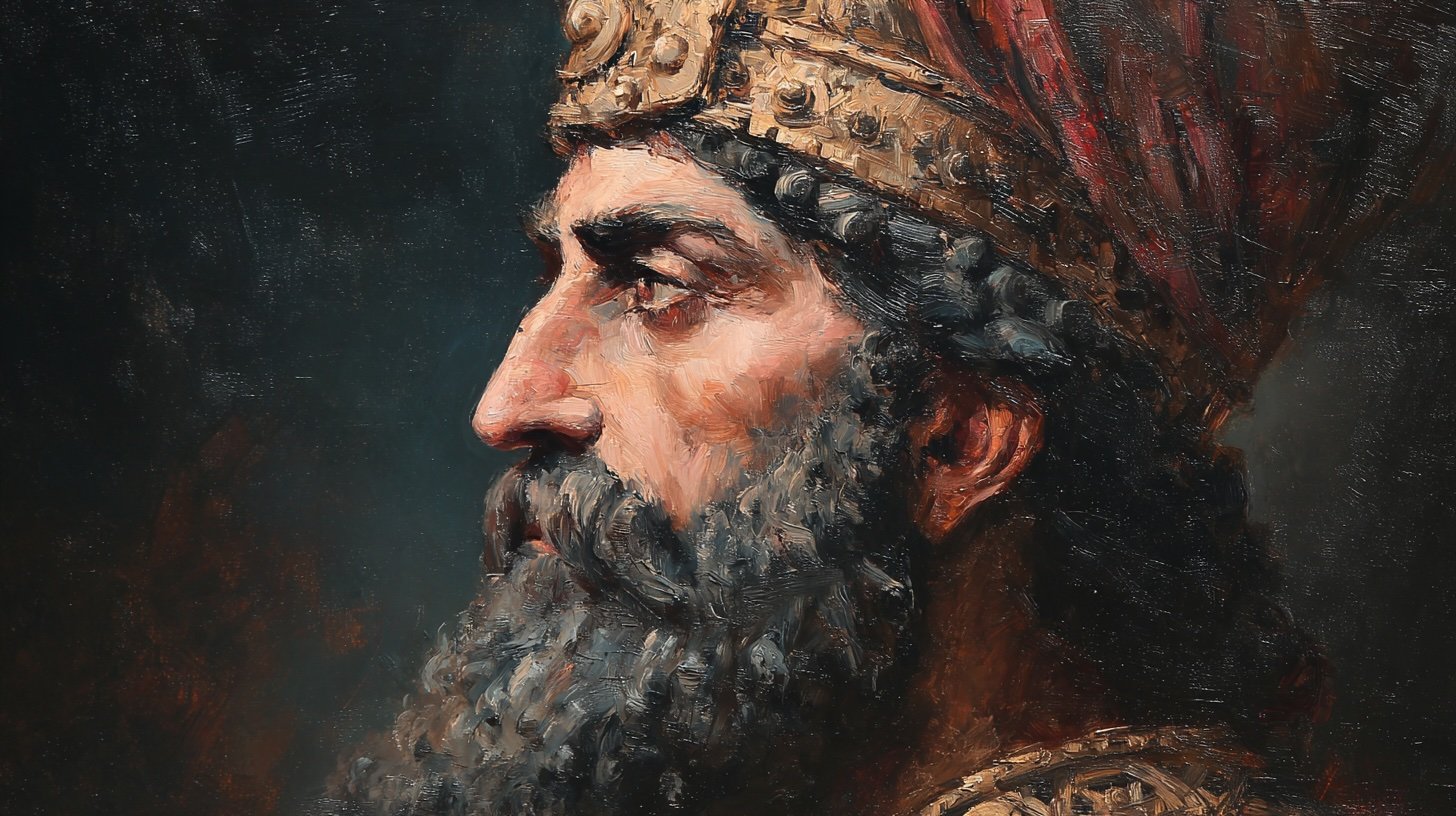
Darius the Great strides into history with the confidence of a man who knows future scholars will argue about him for centuries. He didn’t inherit the Persian throne in the cosy, predictable way royal genealogies prefer. He arrived with a story etched into a cliff, a sword fresh from the political chaos of 522 BCE, and an astonishing ability to persuade millions that everything had unfolded exactly as destiny intended. Kings usually like to keep their origin tales simple. Darius preferred something closer to an epic with footnotes.
The century before him brought meteoric rise, conquest, and a dynasty founded by Cyrus the Great that seemed unshakeable. Then came the cracks. Cambyses, Cyrus’s son, marched off to Egypt, left the empire to a brother he may or may not have accidentally murdered, and died on the return journey in circumstances suspicious enough to fuel three millennia of gossip. The vacuum that followed swallowed common sense. Into it stepped a man named Gaumata, who according to Darius was an imposter cleverly pretending to be Bardiya, the missing royal brother. Into it also stepped Darius, who according to Darius—conveniently—was the only one brave, pure, and divinely favoured enough to fix the situation.
The Behistun inscription remains Darius’s masterpiece. Picture the scene: a monumental billboard carved into a mountainside overlooking a major imperial road. You couldn’t miss it even if you tried. Travellers, soldiers, merchants, diplomats—everyone passed under its gaze. On it, Darius tells the story of how he saved the empire from lies, frauds, and people with suspiciously rebellious tendencies. He assembled the tale with the same artistic fondness for tidy structure that storytellers adore. One villain after another. One rebellion after another. One divinely sanctioned victory after another. At no point does the inscription include the line, “By the way, this is a brilliant piece of political spin, please read with caution.” It simply expects admiration.
Modern historians, however, tend to ruin a perfectly good royal story by asking awkward questions. They notice that Gaumata vanishes from the record the instant Darius removes him, leaving no independent trace behind. They wonder whether this supposed imposter might in fact have been Bardiya himself, and whether the official version reads less like eyewitness history and more like a coup narrative carefully rewritten after the fact. Scholars also point out that Darius stood outside the direct bloodline of Cyrus, and that Persian noble houses were well practised at dressing political takeovers in the language of divine correction. Then there is the small inconvenience that, shortly after Darius took the throne, revolts flared across the empire from Egypt to Elam. It is difficult to reconcile that level of unrest with the idea of a population joyfully welcoming a long-awaited restorer of order.
Yet this is also the moment when the story becomes more interesting. Anyone can seize power briefly. Holding it is what differentiates an opportunist from a statesman. Darius didn’t merely stabilise the empire; he reshaped it with a vision that feels startlingly modern. Administration became more systematic. Taxation, satrapies, record-keeping, road networks—everything gained structure. Where Cyrus and Cambyses had forged the empire through brilliant conquest, Darius consolidated it through governance. Empires thrive on glamour in their founding years, but they survive only when someone has the patience to handle receipts.
His reforms didn’t simply bring order. They created cohesion in a territory stretching from the Indus Valley to the Aegean. Darius understood that imperial identities rarely arise from bloodlines alone. They are crafted from stories, symbols, and the steady rhythm of predictable laws. His coinage, the daric, became one of the most trusted currencies of the ancient world. His administrative reforms outlived him. Darius’s ideology anchored later kings who, whether or not they adored him, certainly appreciated the scaffolding he built.
There is also the small matter of architecture. Walk through the ruins of Persepolis and you sense a mind that adored grand statements. Wide terraces, monumental staircases, reliefs packed with envoys bringing tribute—it’s difficult not to imagine Darius standing at the centre, enjoying the symmetry, checking angles, perhaps lightly adjusting a column because perfection had wandered a centimetre off course. Persepolis wasn’t just a palace. It was a worldview carved into stone: orderly, multi-ethnic, ceremonial, and very aware of its own magnificence.
The question of whether Darius the Great was a rightful king or a crafty usurper becomes tangled because ancient Persian kingship didn’t strictly care about hereditary purity. Persians valued legitimacy through ability, divine favour, and the restoration of order. If you succeeded at being king—if you quelled rebellions, honoured the gods, filled storehouses, upheld justice, and kept the empire from collapsing—you became legitimate by default. Victory drew a halo around you. Stability stitched your name into the cosmic fabric. Darius excelled at both.
His reign, once the turbulent early years settled, grew into one of prosperity. Trade routes stretched further. Naval ambitions expanded. He even attempted to tame Greece, although the Greeks declined the offer dramatically at Marathon. The Persians lost the battle but not the confidence; Darius began preparing a second, larger campaign when age intervened.
Curiously, the Greeks—occasionally prone to theatrical writing—portrayed him as a stern, inexorable ruler whose empire felt impossibly vast. Herodotus, with his usual affection for detail and digression, relayed Persian stories with a tone suggesting both admiration and mild bewilderment. Western memory absorbed Darius partly through these Greek lenses, contributing to an image of a monarch who loomed over the ancient world with collected composure.
When Darius called himself “King of Kings,” he wasn’t exaggerating. The title reflected genuine political architecture. The kings beneath him, ruling smaller nations and regions, were woven into a hierarchy that acknowledged his supremacy. This layering of sovereignty became one of Persia’s most influential contributions to political thought. It shaped how later empires conceptualised authority. It filtered into Armenian, Parthian, Sasanian, and even Byzantine frameworks. The idea of cascading layers of power ripples through history long after Darius’s tomb shut its heavy stone door.
Still, the mystery of his accession lingers. Imagine, for a moment, that the Behistun narrative is entirely true. Darius then becomes the resolute saviour of an empire threatened by fraud. Now imagine the opposite—that he engineered a brilliant aristocratic coup and rewrote events with such rhetorical finesse that succeeding generations accepted it as gospel. Either scenario highlights the same thing: his genius lay not merely in seizing power but in shaping how that seizure would be remembered. Kingship isn’t simply exercised on the throne. It is exercised in the record.
Behistun remains one of the most extraordinary monuments of political messaging ever created. Its trilingual nature wasn’t just practical; it was strategic. By presenting his narrative simultaneously in Old Persian, Elamite, and Babylonian, Darius ensured the message spread across the linguistic landscape of his empire. He understood that a story is only as strong as its ability to travel. And he made his travel exceptionally well.
There’s also a touch of theatricality in the imagery. The defeated rebels lie before him, bound and humiliated. Darius stands firmly, almost serenely, while Ahura Mazda hovers above, approving. If you tried to improve the scene for dramatic impact, you’d struggle. Every inch signals authority. Every figure reinforces his legitimacy. Each curve of the inscription whispers, “This is how it happened. Do not bother with alternative explanations.”
Yet alternative explanations insist on existing. Scholars continue to debate whether Darius’s claim to Achaemenid blood was genuine or genealogical embroidery. They investigate how the noble families may have collaborated behind the scenes, forming alliances that transformed a succession crisis into an opportunity. They examine how the rebellions of his early reign might reflect resistance from communities loyal to the old royal line. And they compare records from neighbouring cultures and piece together fragments that sometimes agree with Darius and sometimes contradict him in ways that would make a modern spin doctor wince.
All of this uncertainty, however, adds to Darius’s fascination. Few ancient rulers stand at the intersection of myth-making and statecraft quite like he does. His reign demonstrates that power emerges from narrative as much as from lineage. Rulers survive not because their blood is pure, but because they master the art of framing events. Darius framed them so effectively that even questioning his legitimacy feels like participating in the story he designed.
Some empires boast founders who dazzled with charisma, and successors who mostly tried not to break anything important. Darius falls into that rare category of leader who was neither the founder nor the lucky heir, but the architect who gave the whole structure its durable shape. He may not have had the romantic aura of Cyrus, but he had something arguably more valuable: the ability to transform political improvisation into institutional memory.
So was he a rightful king? In Persian terms, eventually yes—because he ruled successfully, because the empire prospered, and because he convinced people that order had returned. Was he a usurper? Perhaps. The evidence doesn’t settle the matter cleanly. But then again, usurpers who become great tend to lose the label over time. Achievement softens accusation. Narrative softens doubt.
Darius the Great stands precisely at that crossroads where suspicion and admiration meet. He may have climbed the throne by an unconventional route, but once seated, he governed with a vision that reshaped an empire. Whether he wore the crown by birthright or by opportunistic brilliance, he made sure he wore it convincingly. And in the end, history tends to remember the convincing more vividly than the correct.