Before Instagram, There Was the Daguerreotype
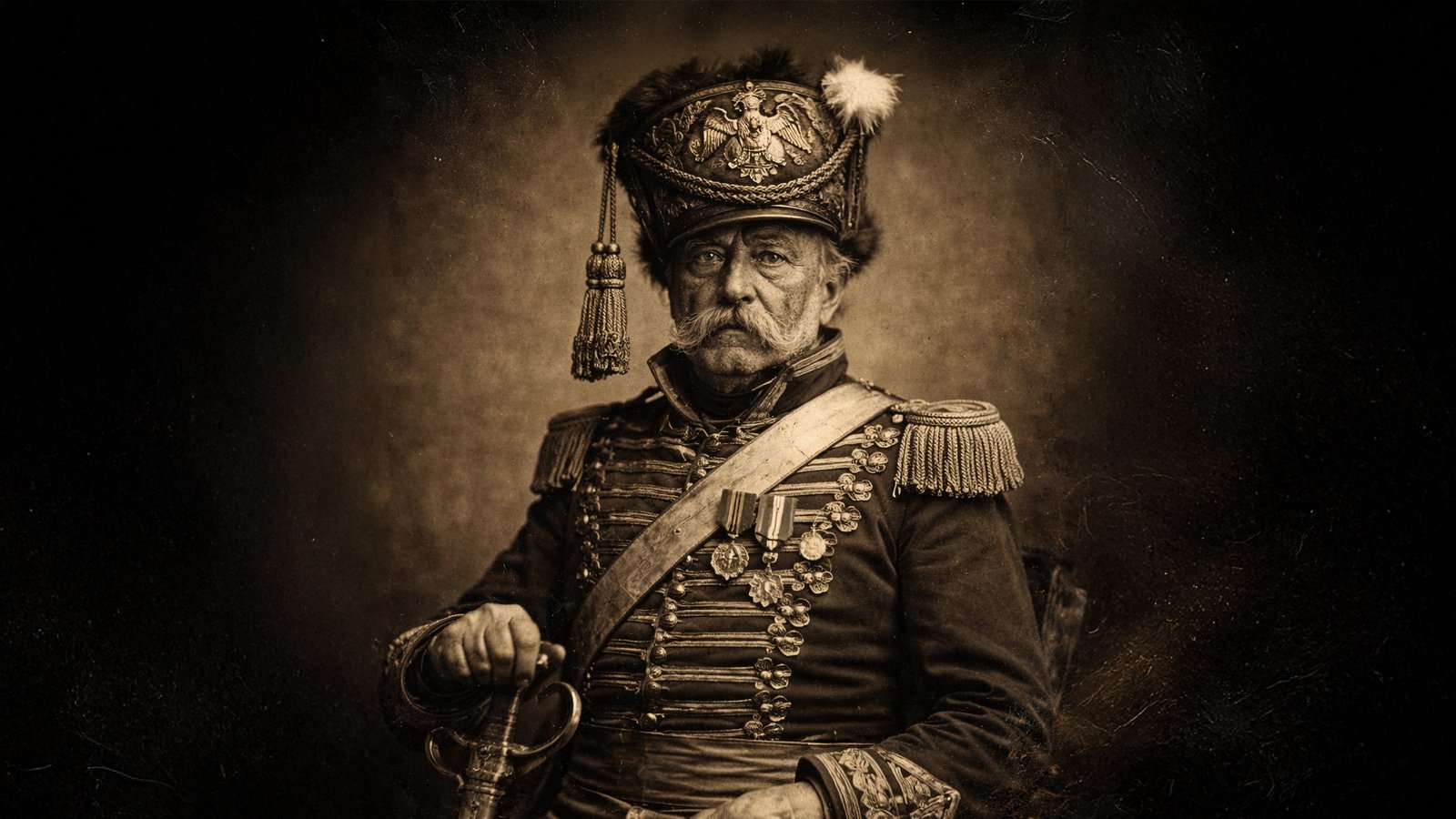
Long before anyone could slap a Valencia filter on a selfie and post it online for validation, people were queuing up in studios, wearing their absolute best clothes, and being told to sit perfectly still for up to an hour while a man pointed a wooden box at them. Welcome to the world of the daguerreotype — the Victorian-era ancestor of every photograph you have ever taken, liked, or accidentally sent to the wrong person.
The daguerreotype was formally announced to the world at the French Academy of Science on the 9th of January 1839, and the reaction was roughly what you would expect if someone had just announced free wine for life. When the full process was revealed publicly that August, people arrived three hours early to find the hall already full, with crowds lining the street outside. Within days, every chemist and optician in Paris had sold out of everything needed to make one. That is the 19th-century equivalent of a product launch queue snaking around the block, except nobody had to sleep on a pavement.
The man who got all the glory was Louis-Jacques-Mandé Daguerre — a theatrical scene painter and showman who had previously made his name running the Diorama, a sort of immersive experience where giant painted canvases were lit to trick audiences into believing they were watching day turn to night. Upon seeing one of his first successful photographs, Daguerre reportedly declared, “I have seized the light — I have arrested its flight!” Which is, frankly, one of the most dramatic things anyone has ever said in a laboratory, and the man deserves full marks for sheer theatrical flair.
Here, though, is where things get a bit thorny. Daguerre did not exactly work in isolation. In 1826, fellow Frenchman Joseph-Nicéphore Niépce had already taken what is considered the world’s first photograph — a picture of a barn, produced after an eight-hour exposure. The two men eventually partnered up, but Niépce died in 1833 before the daguerreotype was perfected. Daguerre carried on the work, named the process after himself, and collected the lifetime pension from the French government. Niépce’s son Isidore was rather put out by his father being sidelined, and eventually wrote a pamphlet defending his father’s rightful place in the story. History, as it turns out, has always had a soft spot for the person who arrived second but made considerably more noise about it.
The actual process of making a daguerreotype was not for the faint-hearted. A sheet of copper was plated with silver, polished to a mirror finish, sensitised with iodine and bromine vapours, exposed in a camera, then developed by placing it face down over heated mercury fumes until the image appeared. Mercury. Heated. In an enclosed studio. With no ventilation to speak of. Some photographers developed what contemporaries called “mad-hatter syndrome” — mercury poisoning, named after the hat makers who used the metal in felt production and were known for troubling neurological symptoms. So the early photographers were, quite literally, going mad for their art, though not in the romantic, metaphorical way the phrase usually implies.
The use of mercury in the first place was, fittingly, discovered entirely by accident. Daguerre reportedly left a number of seemingly blank exposed plates in a cupboard, only to return and find fully formed images on them. A process of elimination over several days revealed that beads of mercury had caused it. A happy accident with catastrophic long-term health consequences — rather on brand for the 19th century, all things considered.
Now, the portraits. This is where daguerreotypes become genuinely fascinating as a cultural artefact. Exposure times in the earliest days ranged from five to seventy minutes, which meant subjects were largely limited to things like bowls of apples or architecture. Portraits followed once the lenses improved, but even then sitting for one remained an ordeal. Sitters were propped against metal head rests and firmly instructed not to smile. Any movement risked producing two noses, three chins, and one eye in the final image. This explains a great deal about the haunted expressions staring back at us from Victorian portraits. They were not necessarily miserable people. They were simply doing their very best not to twitch.
When young children needed to be photographed, their mothers were sometimes hidden within the frame itself, just out of shot, to keep the children calm and still. Hidden mothers, lurking like anxious stagehands behind chairs and curtains, are now a recognised niche of photographic history. The images are equal parts tender and deeply unsettling, which feels about right.
Despite the inconvenience, the health risks, and the genuine possibility of ending up with a portrait that made you look as though you had been gently haunted, the daguerreotype became enormously popular, remarkably quickly. By 1853, an estimated three million daguerreotypes were being produced in the United States alone each year, with workers saving an entire day’s wages for the privilege of having a portrait made. For the first time in history, ordinary people could have their likeness recorded without commissioning a painter. When sitting for a portrait, people wore their absolute best clothes, and photographers often hand-coloured the finished image with pigments — adding a blush to the cheeks or gold tones to jewellery. The impulse to carefully curate your appearance in a photograph, it turns out, is not a modern affliction. It is as old as photography itself.
The technical achievements were remarkable, too. Daguerreotypes can be enlarged twenty to thirty times, a level of detail that would challenge even a high megapixel camera today. Scientists using modern nanotechnology later studied them and found that the unusual optical effects come from metallic nanoparticles in the plates, making them arguably the first realisation of plasmonic colour printing. Quite something for a process that involved heated liquid metal and a lot of optimistic guesswork.
The daguerreotype’s reign was relatively brief. By the mid-1850s, glass negatives and paper prints — with the considerable advantage of being reproducible — began to replace it. A daguerreotype was a one-off, a single unique object. No negative. No copies. No backup. In the age of mass production, that was always going to be a problem.
There is something quietly poignant about that, though. Every daguerreotype that survives is genuinely irreplaceable. The faces staring out of those tarnished silver plates — the stiff-backed mill workers in their Sunday best, the presidents, the poets, the anonymous mothers with babies on their laps — each one exists as a single fragile original. The French government declared the daguerreotype free to the world in 1839, a genuinely remarkable act of generosity for the time. One country gave photography to everyone. The world ran with it, and never really stopped.