Armadillos: Armour as a Lifestyle Choice
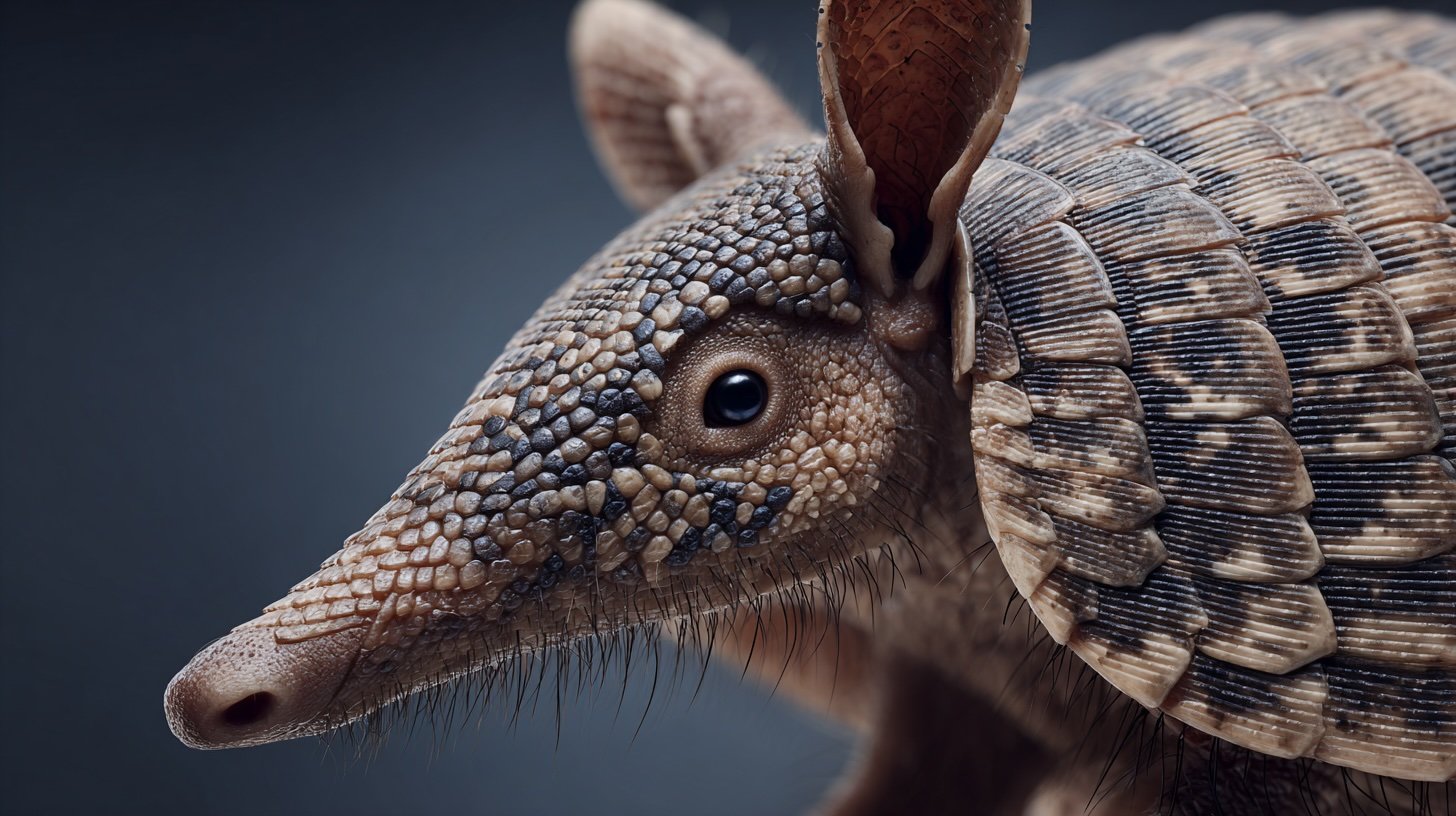
Armadillos wander through the natural world like quirky little mistakes that nature fully intended. They look part medieval armoury, part garden pest, part misunderstood introvert who would simply like to dig in peace. Every time someone meets one for the first time, you see that tiny pause followed by a puzzled smile, as if the brain needs a moment to file this creature somewhere between hedgehog, tortoise and small armoured tank. That, of course, never works, because armadillos insist on being entirely themselves.
The story usually starts with dust. Armadillos adore it. Any warm region of the Americas with soft soil quickly becomes a buffet, a construction site and a bed-and-breakfast for them. You walk across a savannah in northern Argentina and notice strange divots that look like someone tested a spoon everywhere. That’s an armadillo’s way of saying it has been here, eaten here and probably slept here. Their claws mean business. They don’t scratch the ground; they perform full-scale excavation with the enthusiasm of someone digging for ancient treasure.
Spend a moment with the giant armadillo and your sense of scale wobbles. This creature looks like it could have been designed by a committee that tried to merge a tractor with a pangolin. It roams the Amazon with surprising tenderness, even though its claws could probably rearrange a car tyre. It owns the largest claws of any mammal, which feels unfair on every predator that ever tried to intimidate it. The giant armadillo doesn’t roar, hiss or posture. It simply digs. When it digs, it reshapes the landscape. Other animals rely on the enormous burrows it abandons, turning them into ready-made apartments, nurseries and emergency shelters. You stand there thinking you’re watching an animal, but in reality you’re looking at a quiet architect of the forest.
Move north and wander into places where armadillos shouldn’t logically survive, and yet they thrive anyway. The nine-banded armadillo has no time for logical boundaries. It used to stick to warmer zones, then winters grew milder, gardens expanded, and humans planted tasty insects under their lawns without meaning to. The nine-banded saw an opportunity and marched northward with a sense of entitlement previously reserved for migrating tech companies. People now spot these armour-plated wanderers in states that once laughed at the idea. They aren’t laughing now.
The nine-banded armadillo also arrived with its own bizarre reproductive quirk. Most mammals go through pregnancy, deliver one or two babies and call it a day. This character produces four identical youngsters every time, as if nature decided to run a promotional offer on biological copying. They aren’t just siblings. They’re perfect clones, little sets of four, roaming the world as natural quadruplets who must answer every curious question from biologists for the rest of their lives. You keep waiting for one of them to rebel and dye its armour blue.
Out on the Argentinian plains, the smallest member of the family scurries beneath the sand like an underground rumour. The pink fairy armadillo looks made-up. If you sketched it as a children’s cartoon character, people might accuse you of going too whimsical. It measures barely the length of your hand, wears pale pink armour, and behaves like a shy ghost who prefers to remain unseen. Locals sometimes swear it doesn’t exist, even though it does. The pink shade isn’t decorative. It comes from blood vessels glowing under a thin keratin shield, giving the animal a soft blush, like someone constantly embarrassed by its own fame.
Spend a moment observing the pink fairy and you feel protective. This fragile creature doesn’t enjoy disruptions. Loud noises, sudden movements, bright lights – all great ways to persuade it to vanish underground faster than you can blink. Its burrowing style resembles swimming, and it glides through sandy soil with such grace that it almost looks bored with gravity. Conservationists worry about habitat change, because the pink fairy simply can’t improvise the way its larger cousins do. You feel tempted to wrap the whole species in bubble wrap.
Then there’s the three-banded armadillo, the overachiever in the family, famous for one particular trick. When life becomes slightly too exciting, it rolls into a ball so perfect you half expect it to be displayed in a design museum. Many armadillo species pretend to roll up but never quite manage the full circle. The three-banded actually clicks shut like a biological treasure chest. Jaguars can’t open it. People can’t open it. The animal becomes an impenetrable sphere with an attitude.
Brazil once chose this species as the inspiration for a football world cup mascot, surely because any creature that solves problems by becoming a ball fits the theme. The mascot’s cheerful grin didn’t quite match the real animal’s personality. The real one watches the world with a suspicious stare, deciding whether to roll up, run off or judge you silently. Its agility surprises everyone. Armour usually implies slowness, but this armadillo picks its way across the savannah with confidence, enjoying open landscapes that might challenge more delicate cousins.
Further west, on drier plains where vegetation grows sparse, another character enters the scene with the dramatic flair of a stage performer. The screaming hairy armadillo earns its name without apology. Pick it up (not recommended), disturb it (absolutely not recommended), or startle it unintentionally, and it unleashes a noise that makes everyone look around in mild panic. The scream sounds oddly human, which unsettles people and delights biologists in equal measure. You get the sense the armadillo knows exactly what it’s doing.
This species jokes with the idea of being armoured. Its plates sprout hair, giving it a scruffy appearance, as if it rolled out of bed after a rough night. It tolerates deserts and semi-arid landscapes brilliantly, navigating sand and scrub with surprising speed. It doesn’t need dense forests or wetlands. It simply needs space, insects and opportunities to scream when annoyed. Watching one forage feels like observing a performer waiting for applause.
Across the Americas, armadillos play an underestimated ecological role. They disturb soil in ways that refresh the land. They aerate compacted ground. They keep insect populations under control. They reshape ecosystems quietly, leaving signs everywhere. Their burrows become shelters for foxes, reptiles, small birds and even the occasional passing anteater. Remove armadillos and many habitats lose their maintenance crew.
Humans and armadillos, however, maintain a complicated relationship. Some people adore them; others blame them for garden chaos, hole-filled lawns and suspicious mounds appearing near foundations. Farmers accuse them of digging too enthusiastically. Urban homeowners glare at them while holding shovels they definitely don’t need. Armadillos don’t understand any of this. They just continue looking for food in the soil, oblivious to property boundaries.
In parts of Latin America, armadillos became part of local folklore and cuisine, adding another layer of complexity to the relationship. Some communities treat them as traditional delicacies, while others consider them oddities to be admired from a distance. Visitors occasionally stumble across carvings, stories and old musical instruments that once used dried shells as resonators. These echoes of cultural entanglement remind you that armadillos have lived beside humans for centuries.
In the United States, the nine-banded armadillo unexpectedly found itself in the spotlight for medical reasons. It carries a bacterium associated with Hansen’s disease, which sparked endless headlines, mostly dramatic and occasionally misleading. Scientists reassured the public that risk remains extremely low, but people do love a sensational story involving exotic mammals. The armadillo, meanwhile, continued snuffling through back gardens without paying attention to its own media narrative.
Climate change adds a twist to their ongoing journey. As winters become less severe, and landscapes shift, certain armadillo species treat expanding territories like a new challenge. You might start seeing nine-banded armadillos in regions where snow used to maintain firm control. People living in these places will soon discover that the creature doesn’t hibernate, doesn’t negotiate and doesn’t appreciate being told to leave. It simply digs, eats and explores.
Spend enough time with armadillos and their personalities begin to separate clearly. The giant makes you feel small. The nine-banded makes you question ecological boundaries. The pink fairy makes you whisper. The three-banded makes you applaud. The screaming hairy makes you jump out of your skin. They all carry armour, yet each one wears it differently, as if proving that even the toughest-looking animals can possess the most endearing quirks.
Their evolution tells a rather cheeky story. Millions of years ago, their ancestors wandered across South America while continents shifted, climates swung wildly, and predators evolved into every shape imaginable. Instead of developing speed or teeth or bulk, they doubled down on protection. They built personal shields. They committed to the slow-and-steady strategy with such dedication that it became the family trademark. Sloths and anteaters joined their superorder, forming a trio of creatures unified by odd joints and slow metabolism, but armadillos took the crown for eccentric design.
The world they inhabit now demands agility and resilience. Building roads through habitats interrupts their routines. Expanding farmland removes insect-filled feeding grounds. Mining alters entire landscapes. Conservationists face a tricky challenge: armadillos don’t protest loudly. They don’t gather in visible groups. They simply vanish quietly when conditions worsen. Protecting them requires attention to the understated, which rarely wins funding as easily as charismatic megafauna.
Yet armadillos reward patience. Watch them long enough and an entire world of behaviour opens up. You notice the way they test soil texture before digging. The way they pause and sniff the air with adorable concentration. The way their little ears flick when insects move underground. They resemble miniature archaeologists determined to uncover everything worth knowing beneath the surface.
People who study them often develop soft spots. Field biologists describe long nights waiting outside burrows, hoping the giant armadillo decides to grace them with a rare appearance. Garden owners in Texas grudgingly admit the creatures bring a strange charm to evening walks. Travellers crossing the Argentine plains sometimes spot a pink fairy armadillo scuttling like a whisper of cotton candy and remember the moment for years.
Armadillos don’t seek applause. They walk their dusty paths quietly, shaping ecosystems, confusing newcomers and perfecting their eccentric routines. You can try to understand them scientifically, culturally or behaviourally, but they always hold something back. That mystery suits them. An armoured mammal that refuses to fit any easy category deserves a bit of secrecy.
Spend time with armadillos and they start teaching subtle lessons. You realise resilience doesn’t always roar. Innovation doesn’t always move fast. Adaptation doesn’t always demand attention. Sometimes it just wanders by on small legs, sniffs the ground thoughtfully and digs exactly the hole it needs. And in that moment, you realise these odd, stubborn, endearing creatures truly belong everywhere their claws can reach.