Appassimento: A Winemaking Trick Older Than Rome
Somewhere in the Mediterranean thousands of years ago, a farmer noticed something simple. Grapes left in the sun began to wrinkle and shrink as their skins tightened and their juice thickened. At the same time, their sweetness intensified dramatically. The fruit looked less impressive than before, yet it tasted far richer. That small observation eventually shaped one of Italy’s most distinctive winemaking techniques and quietly influenced centuries of Mediterranean wine culture.
Today the process is called appassimento, the Italian word for withering. Winemakers harvest grapes and then allow them to dry for weeks or months before fermentation begins. As water slowly evaporates, sugars and flavours concentrate inside each berry. The resulting wines often feel deeper, heavier, and more layered than wines made from fresh grapes. Because of that transformation, the technique produces some of the richest wines in Italy.
The method sounds distinctly Italian, especially when someone pours Amarone or Recioto from Valpolicella. Yet the roots of drying grapes stretch far back into the ancient Mediterranean world, long before modern appellations or elegant tasting rooms appeared in northern Italy. Ancient civilisations across the Mediterranean understood that grapes behaved differently from most fruits. Leave them alone long enough and they naturally turn into raisins, a transformation that fascinated early farmers.
That change intrigued people because sweetness increased dramatically while the fruit became easier to preserve. Consequently people began experimenting with drying grapes deliberately rather than accidentally. Greeks spread grapes across straw mats beneath the sun. Phoenician traders carried similar practices along their trading routes across the eastern Mediterranean. Meanwhile farmers in North Africa developed their own variations. The technique travelled easily because it required almost no equipment, only sunlight, patience, and grapes.
By the time Rome expanded across the Mediterranean, raisin wine already existed. Roman agriculture embraced the idea enthusiastically. Romans loved writing about farming almost as much as they loved drinking wine, therefore several authors recorded detailed instructions for producing wines made from dried grapes. Their agricultural manuals reveal just how widespread the practice had become.
Pliny the Elder described wines made from grapes left to shrivel before pressing. Columella, one of Rome’s most influential agricultural writers, explained methods for drying bunches after harvest. Sometimes grapes remained longer on the vine so that natural dehydration began in the vineyard. In other cases farmers harvested them and dried them on racks where air circulated freely. Either approach concentrated sugar before fermentation even started.
The resulting drink was known as passum, and it became one of the most luxurious wines in the Roman world. Amphorae filled with passum travelled across the empire, reaching markets from North Africa to Rome itself. Crete in particular gained a reputation for producing large quantities of this sweet raisin wine. Merchants shipped it along busy Mediterranean trade routes where wealthy drinkers eagerly purchased it.
Roman writers praised passum not only for flavour but also for its supposed health benefits. Physicians recommended it for digestion and general strength. Ancient medical texts even suggested it might cure headaches or help with certain illnesses. Whether those claims held any truth hardly mattered because people enjoyed the wine regardless.
However the technique required patience and labour. Grapes needed time to dry without rotting. Workers had to protect them from insects, birds, and sudden rain. At the same time air circulation mattered enormously because excessive humidity could ruin an entire batch. Because of that effort, raisin wines often cost more than ordinary wine.
Luxury wines frequently survive history precisely because they demand skill and care. The difficulty itself gives them value and reputation. When the Western Roman Empire collapsed many agricultural traditions fragmented across Europe. Nevertheless the practice of drying grapes never vanished entirely.
Monasteries preserved vineyards throughout medieval Europe, and monks continued producing sweet wines using partially dried grapes. Medieval drinkers developed a strong taste for rich dessert wines, therefore raisin wines suited that preference perfectly. Concentrated sugar also helped preserve wine during long journeys. Barrels might travel for weeks by cart or ship before reaching distant markets, and wines with higher sugar and alcohol survived those journeys better.
Gradually the tradition settled firmly in northern Italy. Around Verona and the hills of Valpolicella, local growers discovered that their climate suited the process unusually well. Autumns were cool enough to prevent rapid spoilage but dry enough to allow grapes to dehydrate slowly. This balance mattered enormously for successful drying.
In hotter regions grapes might simply cook in the sun. In wetter regions mould would spread quickly across the fruit. The Veneto landscape offered exactly the delicate balance required for careful dehydration. Over centuries winemakers refined the method through experience and observation.
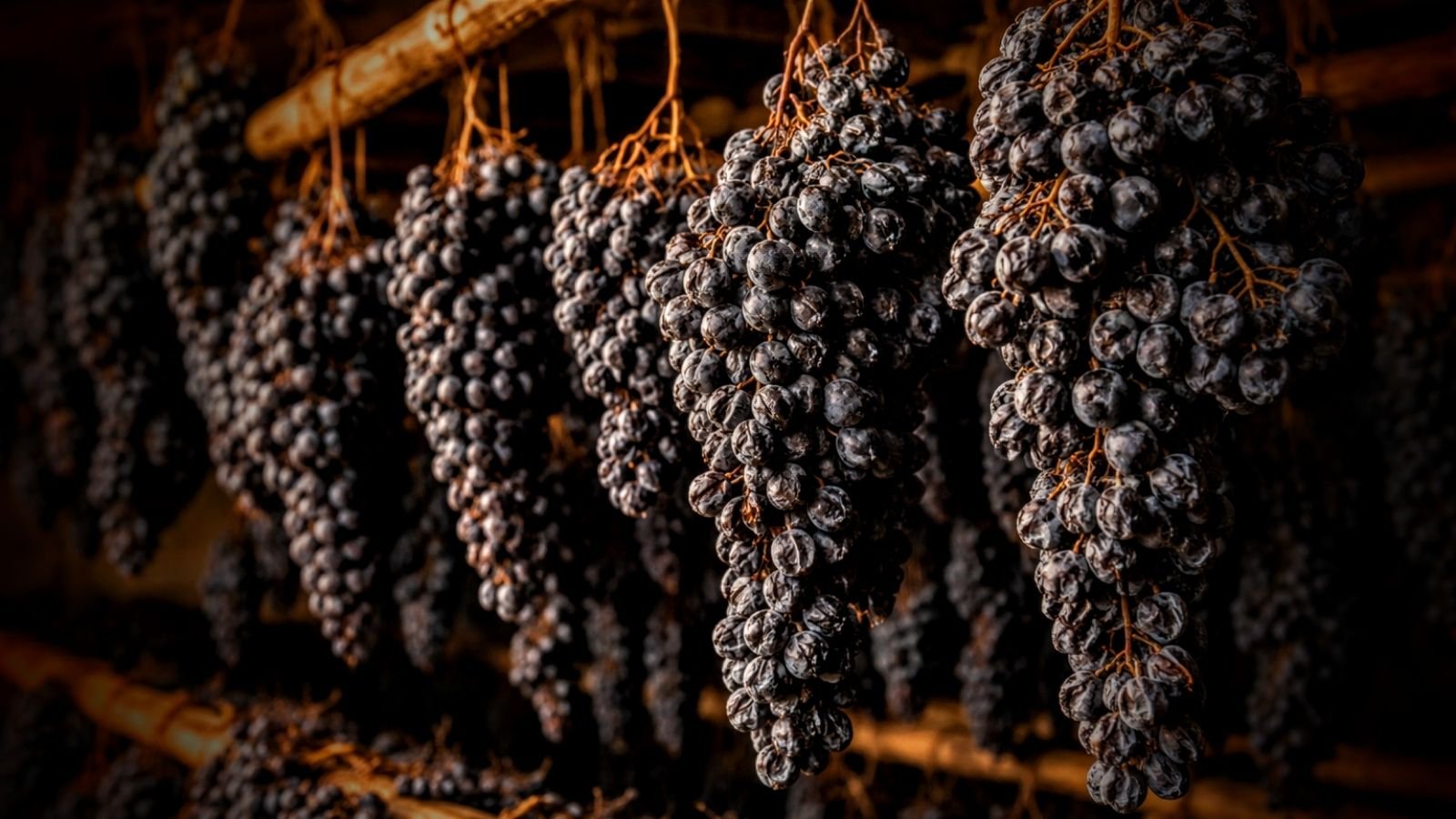
After harvest they carried bunches of grapes into airy lofts known as fruttai. The grapes rested on bamboo racks, straw mats, or wooden trays arranged in long rows. Windows remained open to encourage steady air circulation. Gradually the grapes lost moisture and their skins wrinkled as the berries shrank.
Inside each berry the sugar concentration increased dramatically. Winemakers waited patiently while the fruit transformed over several weeks. By the time pressing began, the grapes had lost roughly thirty percent of their original water content. The juice that emerged from the press felt dense, aromatic, and unusually rich.
For centuries the principal wine created through this method was Recioto della Valpolicella. Recioto was sweet, powerful, and intensely aromatic. Many historians consider it a distant descendant of the ancient Roman passum because both wines relied on the same principle. Dry the grapes first, ferment them later.
Across two millennia the core idea barely changed. Viticulture evolved dramatically during those centuries as new grape varieties appeared and trade routes expanded. Climate shifts altered harvest schedules and cellar techniques improved. Nevertheless the quiet practice of drying grapes in lofts continued every autumn across the hills near Verona.
During the early twentieth century an accident altered the story. A batch of Recioto fermented longer than intended inside a Valpolicella cellar. Normally winemakers stopped fermentation early so sweetness remained in the finished wine. In this case the yeast consumed nearly all the sugar.
Instead of sweet dessert wine the cellar produced something dry, strong, and unexpectedly complex. The wine retained the concentrated character created by dried grapes, yet it lacked the sweetness typical of Recioto. Producers named this new style Amarone, meaning roughly “the great bitter,” to distinguish it from its sweet relative.
Initially Amarone appeared only occasionally and few producers considered it important. However drinkers gradually developed a taste for its bold character. By the mid twentieth century wineries began producing Amarone deliberately rather than discovering it by accident. Eventually it became one of the most famous wines in northern Italy.
Despite modern technology the drying stage itself remains surprisingly traditional. Many wineries still place grapes on racks inside ventilated lofts rather than using industrial drying machines. The process unfolds slowly across autumn and early winter. During those months complex chemical changes occur inside the grapes.
Sugar concentration rises, obviously, yet aromatic compounds also intensify. Meanwhile flavours gradually shift from fresh cherry and berry toward darker notes such as fig, raisin, cocoa, and spice. At the same time the skins thicken and tannins evolve. By the time fermentation begins the grapes already contain remarkable complexity.
Specific grape varieties proved particularly suited to this technique. Corvina, Rondinella, and Corvinone possess relatively thick skins that allow them to survive months of drying without collapsing. Their natural acidity also helps balance the richness that develops during appassimento. Without those grapes the process would be far riskier.
The technique eventually produced more than one style of wine. Winemakers discovered that the leftover skins from Amarone fermentation could enrich lighter wines. Fresh Valpolicella wine passed again over those skins and absorbed additional flavour and structure. This secondary process became known as ripasso.
Even ancient winemakers occasionally cut corners. Archaeological evidence suggests that some Roman producers may have imitated expensive raisin wines by adding honey rather than drying grapes properly. Apparently wine fraud existed long before modern regulations appeared. Nevertheless the authentic drying technique endured through centuries of agricultural change.
Modern wineries often monitor humidity and airflow with sensors and climate controls. Fans may circulate air through drying rooms and researchers analyse fungal activity to ensure grapes remain healthy during dehydration. Yet the underlying philosophy remains almost unchanged from Roman times. Harvest the grapes, lay them carefully on racks, and allow time and air to reshape the fruit before pressing.
Few winemaking traditions demonstrate such continuity across centuries. Roman farmers would instantly recognise the sight of grapes drying on wooden racks. They might not understand stainless steel tanks or temperature controlled fermentation, yet the essential process would feel entirely familiar.
Two thousand years of history collapse into one quiet autumn room filled with slowly shrinking grapes. Rows of trays stretch across the loft while cool air drifts through open windows. Outside the vineyards stand bare after harvest. Inside the grapes continue their gradual transformation.
Wine culture often celebrates innovation. New yeast strains appear every decade and satellite mapping now analyses vineyard soils. Global markets constantly search for new trends and new styles. Yet certain traditions endure precisely because they produce something unmistakable.
Appassimento creates wines that feel dense and powerful with aromas leaning toward dried fruit, chocolate, and spice. Alcohol rises naturally without overwhelming the structure of the wine. Even casual drinkers often recognise the style immediately once they taste it.
Today wineries across the world experiment with drying grapes and versions of the technique appear in Argentina, Australia, and the United States. Still the emotional heart of appassimento remains in northern Italy. The hills of Valpolicella shaped the method while the local climate preserved it.
Generations of growers refined the process with patience. A glass of Amarone therefore carries more than flavour because it carries centuries of agricultural observation and persistence. Roman writers describing passum, medieval monks tending vineyard rows, farmers laying grapes across bamboo racks, and somewhere in the twentieth century a distracted cellar master who forgot to stop fermentation.
All of them contributed to a tradition that began with a simple observation. A dried grape tastes sweeter than a fresh one. From that small discovery an entire style of wine quietly emerged.
Post Comment
You must be logged in to post a comment.