The Rat That Sailed the Pacific
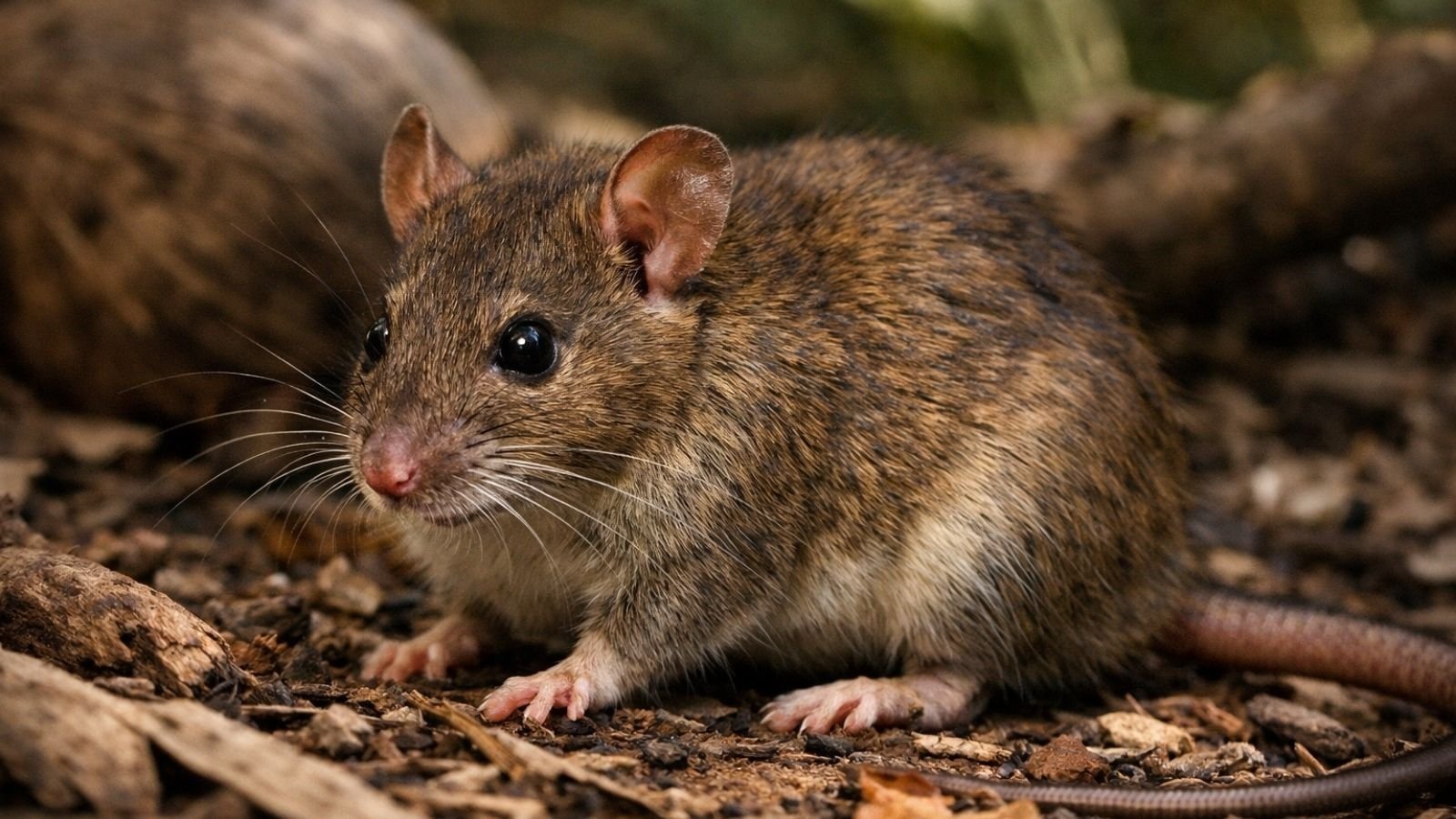
Some travellers plan their journeys carefully, while others simply end up on the boat. The Polynesian rat belonged firmly to the second category. Small, quick, and extremely adaptable, it managed to cross one of the largest oceans on Earth without maps, compasses, or even the slightest idea where it was going. Humans did the navigation, yet the rat quietly followed. As a result, a creature weighing less than a handful of coins ended up travelling farther than many great explorers of the ancient world.
Long before cargo ships stitched the world together, Polynesian navigators travelled across the Pacific in large double-hulled canoes. They carried crops, animals, tools, stories, and entire fragments of their home ecosystems. Coconut seedlings travelled in woven baskets, while taro roots rested in damp leaves. Chickens clucked nervously in cages and dogs waited beside paddles and nets. Meanwhile, unnoticed and entirely unwelcome, small brown rats hid among fibres, food stores, and rope. When the canoe reached a new island, the rats stepped ashore as well, and consequently the island gained a new resident.
The species known today as the Polynesian rat, or Rattus exulans, is smaller than the infamous rats that later arrived with European ships. It has soft brown fur, prominent ears, and a body roughly the length of a human hand. Its modest size turned out to be an advantage. Remote islands rarely offer endless resources; therefore smaller animals often survive where larger ones struggle. In addition, the rat’s flexible diet allowed it to adapt quickly to unfamiliar landscapes.
Scientists believe the species originally evolved somewhere in Southeast Asia. From there it gradually spread through island chains toward the western Pacific. However, the truly dramatic stage of its expansion began when people started sailing far beyond the horizon. Polynesian societies undertook one of the most impressive maritime expansions in human history. Navigators read stars, winds, ocean swells, and the flight paths of birds with remarkable accuracy. Over centuries they settled a vast triangle of islands stretching from Hawai‘i in the north to New Zealand in the south and Easter Island far to the east.
Each voyage carried a portable world. Plants mattered for survival and animals mattered for food, labour, and companionship. Yet hidden passengers also mattered, even though nobody invited them. The Polynesian rat became one of those persistent stowaways that quietly follow human civilisation wherever it travels. Once rats reached a new island, their success rarely depended on human help. They reproduced rapidly and adapted quickly to unfamiliar conditions.
A female rat can produce several litters each year, and each litter may contain numerous pups. Consequently, populations can grow with startling speed. Within a surprisingly short time a handful of rats may become hundreds. Islands often provided ideal conditions for such expansion. Many Pacific islands evolved without land mammals, and therefore native species had little experience defending themselves from rodents.
Birds frequently nested on the ground, insects lived without rodent predators, and seeds lay scattered on forest floors with minimal danger. In such places, the arrival of a curious omnivore with sharp teeth introduced an entirely new ecological pressure. The Polynesian rat eats almost anything it can find. Seeds disappear quickly once rats discover them, while bird eggs provide easy protein. Young chicks cannot defend themselves, and insects, lizards, and fruit also become convenient meals.
This flexibility allowed the species to thrive across islands with very different environments. Tropical forests, volcanic slopes, coastal shrubs, and grassy plateaus all provided opportunities. Consequently, some islands became dense with rats within decades of human arrival. Modern researchers sometimes reconstruct this process by examining archaeological layers where rat bones appear alongside human artefacts.
Even more revealing are seeds bearing distinctive tooth marks. When scientists date those seeds, they can estimate when rats first appeared. Because rats rarely swim across open ocean on their own, their arrival almost always signals the arrival of humans as well. In this unusual way, the Polynesian rat has become a kind of biological timestamp for ancient migration. For archaeologists, the animal acts almost like a living signature of exploration.
New Zealand provides a striking example. Early theories once suggested humans reached the islands much earlier than the thirteenth century. However, the appearance of rat remains in archaeological deposits helped narrow the timeline considerably. The evidence now points to settlement beginning around the late thirteenth century. In other words, the rat quietly recorded the moment people first stepped onto the islands.
Not every chapter of the rat’s story reads like a peaceful travel diary. On some islands the species dramatically altered the landscape. One of the most debated examples involves Easter Island, known locally as Rapa Nui. Centuries ago the island supported forests dominated by tall palms, yet by the time Europeans arrived in the eighteenth century those forests had vanished.
For a long time scholars blamed human overuse of timber for the disappearance. Later, researchers noticed something curious scattered across the soil: thousands of ancient palm nuts bearing unmistakable rat bite marks. Therefore a different explanation emerged. If rats consumed large quantities of seeds, new palm trees would struggle to grow. Over generations the forest might simply fail to regenerate.
The debate continues today. Climate shifts, agriculture, and human resource use probably contributed as well. Nevertheless, the gnawed seeds suggest that small rodents may have influenced the fate of an entire forest. Few animals demonstrate so clearly how modest creatures can reshape landscapes.
Despite the ecological disruption, the Polynesian rat did not exist purely as a nuisance within Polynesian societies. In several cultures it also appeared on the menu. In New Zealand the Māori called the animal kiore and trapped it in forested areas during seasons when the rats grew fat on berries and seeds. After capture they could be roasted or preserved in their own fat and stored for later consumption.
While the idea may surprise modern readers, small animals often served as important food sources on islands where large mammals were absent. Preserved rats sometimes even became trade goods between communities. Consequently, the rat lived a complicated life beside humans. At times it stole food, yet at other moments it became food itself.
Meanwhile the Pacific continued filling with settlements. Canoes travelled between archipelagos, knowledge circulated among navigators, and communities expanded across the ocean. Rats travelled with every generation of exploration. Yet the species eventually encountered competitors far more formidable than itself.
When European ships began arriving in the Pacific from the seventeenth century onward, they carried other rodents. The black rat and the brown rat arrived in ports, warehouses, and ship holds. Both species were larger and more aggressive, and therefore they often dominated the smaller Polynesian rat. Gradually, on many islands, the newcomers displaced the original stowaway.
The rat that once travelled across half the Pacific suddenly faced rivals better suited to crowded ports and human settlements. Consequently, the Polynesian rat retreated into forests or remote areas where larger rats struggled to establish themselves. Today it still survives across parts of Southeast Asia and many Pacific islands, although its distribution reflects centuries of ecological competition.
Modern conservation efforts have added another twist to the story. Many island ecosystems suffered severe losses after the arrival of rats. Ground-nesting birds, reptiles, and insects declined dramatically wherever rodents thrived. Conservation programmes therefore attempt to remove rats from certain islands in order to restore native wildlife.
These campaigns have achieved remarkable results. On islands where rats disappear, bird populations often rebound within only a few years. Seeds that once vanished overnight suddenly survive long enough to grow. Forests slowly regain the ability to regenerate. However, the Polynesian rat also represents an important part of cultural history in some regions.
In New Zealand, for instance, certain offshore islands maintain populations of kiore because of their historical connection with Māori settlement. Consequently, the species occupies an unusual position in modern discussions about conservation and heritage. It is both an ecological invader and a historical witness.
Step back from the details and the journey becomes astonishing. A small rodent from Southeast Asia ends up scattered across thousands of islands separated by enormous distances of ocean. It travels without sails, charts, or intention. Instead it rides quietly beside one of the most skilled seafaring cultures the world has known.
Each island settlement becomes another chapter in the rat’s accidental voyage. For archaeologists the creature provides clues about human migration, while for ecologists it offers lessons about fragile island environments. Cultural historians, meanwhile, see a reminder of how closely human expansion and animal movement intertwine.
The Polynesian rat never planned to circle half the Pacific. It merely followed opportunities, gnawed through baskets, slipped along ropes, and explored new beaches under moonlight. Nevertheless, its tiny footprints stretch across one of the greatest stories of exploration ever told. Long before global shipping lanes appeared on maps, before aircraft crossed oceans overnight, and before the idea of globalisation existed, this modest animal had already travelled astonishing distances. It sailed the Pacific simply by hiding in the cargo, and wherever the canoe landed, the rat quietly stepped into history.