Zoroastrianism and the Persian Spark Behind Heaven, Hell and Judgement Day
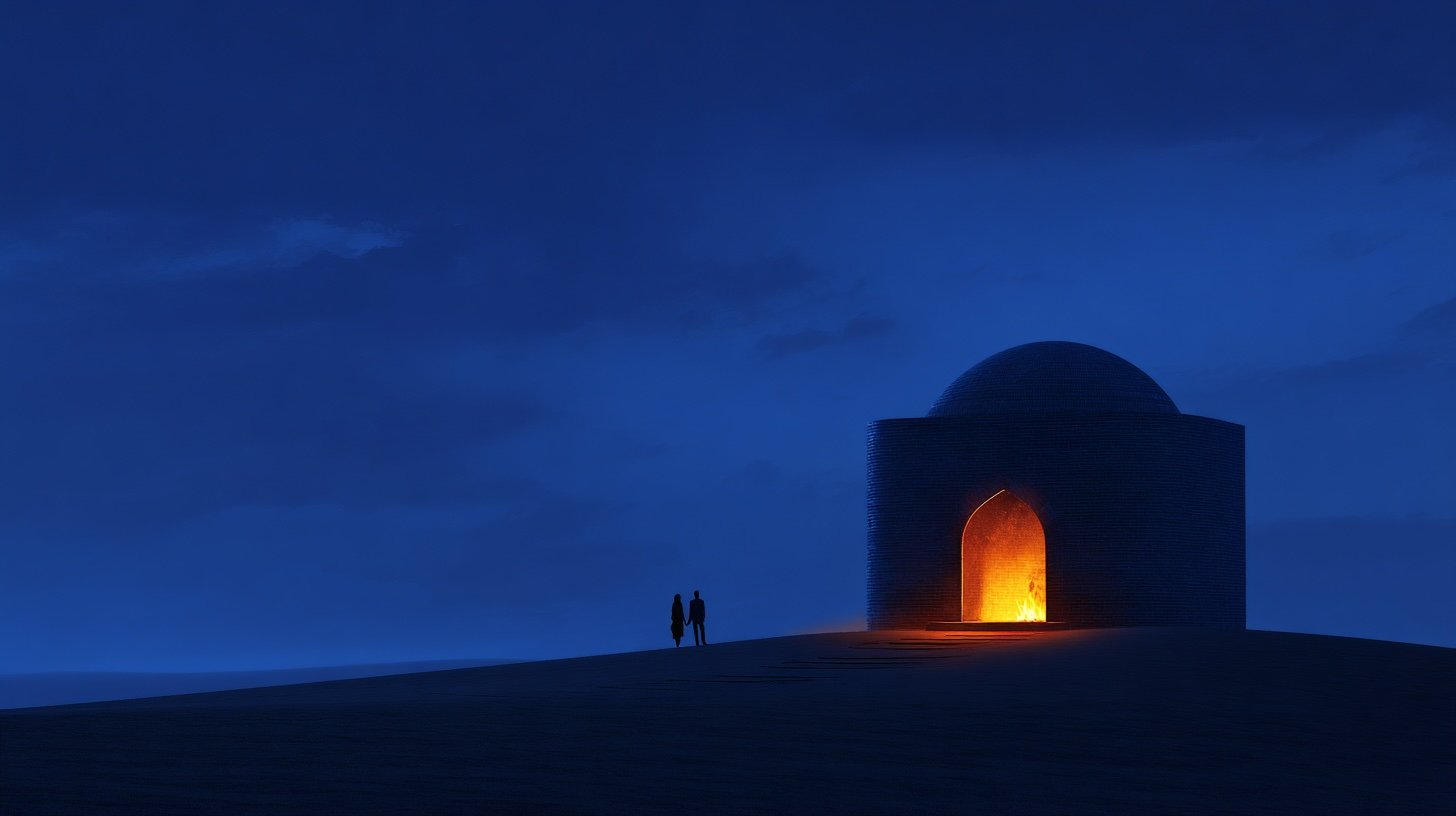
Zoroastrianism looks deceptively modest today, quietly minding its business in fire temples scattered across Iran, India and the wider diaspora. Yet peel back the history, and you find a religion that managed one of the greatest intellectual coups in world culture without raising its voice. Zoroastrianism didn’t need armies or aggressive missionaries. It simply carried ideas so elegant and so stubbornly clear that neighbouring civilisations picked them up almost by accident and wove them into their own belief systems. Judaism, Christianity and Islam grew into global religions, but many of the concepts at their core once flickered first in Persian flames.
The story begins somewhere on the Iranian plateau, long before monotheistic debates grew fashionable. A man named Zoroaster, thoroughly unimpressed by the chaotic collection of gods worshipped around him, proposed that the universe made much more sense when all goodness, light and wisdom flowed from a single source: Ahura Mazda. Zoroastrianism framed this divine presence not as a temperamental sky god but as the Wise Lord, a being whose very essence radiated truth. Opposing Ahura Mazda stood Angra Mainyu, the destructive spirit. They weren’t equal in power, and this wasn’t dualism in the comic-book sense. It was a moral landscape in which good possessed purpose, and evil represented a deliberate collapse of that purpose.
Zoroastrianism introduced something revolutionary: the belief that humanity stood in the middle of this cosmic tension as active participants. People weren’t helpless spectators in a divine drama. They shaped the universe through their choices, guided by a simple prescription that has survived thousands of years because it’s annoyingly sensible: good thoughts, good words, good deeds. Live like that, and you became a tiny co-worker of the Wise Lord. Live otherwise, and you effectively offered Angra Mainyu a lift.
This worldview matured long before Jewish thinkers found themselves in Babylonian exile. When the Persians conquered Babylon and generously allowed the Jewish community to return home, something else happened: cultures found themselves sitting at the same dinner table, exchanging not just politics but ideas. Zoroastrianism had centuries of philosophical development behind it, and it showed. Concepts that appear in Jewish writing after the exile bear a resemblance so striking to Zoroastrian themes that scholars have spent entire careers mapping the family resemblance.
Take the afterlife. Early Judaism pictured Sheol as a shadowy underground dormitory where everyone ended up regardless of their moral track record. It was not a motivational system. Zoroastrianism, meanwhile, already had a detailed eschatology. Souls crossed the Chinvat Bridge and faced judgement. Their deeds—not their bloodline—determined whether they enjoyed paradise or plummeted into darkness. When post-exilic Jewish texts begin to speak of resurrection, judgement and moral destinations, one hears a distinctly Persian echo drifting across the centuries.
Then comes the figure of Satan. In older Hebrew texts he appears more like a celestial civil servant checking paperwork than a cosmic villain. Only in later writings does he expand into a full adversary, suspiciously similar to Ahriman’s role in Zoroastrian cosmology. Angels also acquire names, roles and personalities around this time, developing into a structured hierarchy reminiscent of the Amesha Spentas and their assisting spirits. Zoroastrianism did not introduce angels to Judaism, but it certainly sharpened the outlines.
Perhaps the most striking parallel is the emergence of a saviour figure. Zoroastrianism taught that a future world-renewer, the Saoshyant, would appear at the end of time. He would purify creation, defeat evil and usher in a new cosmic age. Suddenly Jewish thought begins to express hopes for a future anointed one whose role looks eerily similar. Christianity later gives this idea its own distinct shape in the figure of Jesus. Islam, too, integrates elements of restoration and judgement that align comfortably with the Zoroastrian pattern. Through each transformation the flavour changes, but the underlying recipe feels familiar.
Zoroastrianism also contributed to a new moral vocabulary built around personal accountability. Instead of a fatalistic universe where people drift through divine whims, it insisted that every thought and action mattered. This wasn’t just ritual purity—though Zoroastrianism loved a good purification ritual. It was an ethical posture. Live truthfully and you strengthened cosmic order. Live falsely and you fed chaos. Judaism’s post-exilic writings, Christianity’s moral teachings and Islam’s intense emphasis on intention and accountability all echo this unmistakably Persian insistence that humans help steer the moral direction of the cosmos.
Even the aesthetic of Zoroastrianism seeped into neighbouring traditions. Fire, glowing in sanctuaries and symbolising purity, knowledge and divine presence, left linguistic and symbolic fingerprints everywhere. Later scriptures—Jewish, Christian, Islamic—speak of God as light, the righteous as radiant, wisdom as illumination and wickedness as darkness. These metaphors feel natural today, almost universal, but they gained tremendous momentum in a culture that treated fire as both material and metaphysical clarity.
One of the quiet triumphs of Zoroastrianism is how it managed to influence the world while shrinking in visible power. The Achaemenid, Parthian and Sasanian empires carried its worldview across continents, yet the religion never demanded submission in the way later imperial religions would. The Persians were content to let people worship in peace as long as no one set fire to the treasury. Ideas slipped across borders simply because they made sense. A worldview that explained suffering, championed moral choice and promised a final restoration proved irresistible.
In the modern world, Zoroastrianism survives in smaller communities, yet its conceptual fingerprints sit quietly in the background of global spirituality. Billions of people who have never heard of Zoroaster instinctively imagine heaven and hell as moral destinations, assume a cosmic conflict between good and evil, picture angels as organised celestial messengers and expect a final judgement. These aren’t innate human defaults—they’re cultural inheritances shaped in ancient Persia.
Walk into a contemporary fire temple and you’ll find a flame burning with steady patience. It’s tended not because fire is worshipped, but because fire symbolises an inner clarity people still chase. That flame has outlived empires. It has travelled through languages, deserts, dynasties and scriptures. It has kindled ideas in religions that grew vast and powerful while the original tradition carried on with quiet dignity.
Zoroastrianism never demanded recognition for its influence, but its ideas have threaded themselves so deeply into the world’s religious imagination that they no longer look foreign. They look like cultural bedrock. The cosmic struggle between good and evil, the final renewal of creation, the moral weight of personal choice, the angelic messengers, the radiant saviour—these didn’t simply appear organically in the Abrahamic faiths. They evolved in conversation with one of humanity’s oldest monotheistic religions.
That’s the charm of Zoroastrianism: it illuminates quietly. Its teachings still glow in other people’s stories, other people’s rituals, other people’s metaphors. No empire lasts forever, and no religion stays unchanged, but some ideas prove so compelling that they drift across borders and centuries, hitching rides on the imaginations of those who never meant to adopt them. Zoroastrianism’s greatest legacy may be that its vision of a morally charged universe became part of the world’s shared spiritual instinct.
And somewhere in that, you sense Zoroaster would smile. His goal was never conquest. It was clarity. The idea that people could choose truth, shape the cosmos through their actions and look forward to a world renewed by goodness still stands today. The flame burns on, not because it must, but because people continue to find light in it.