Xoloitzcuintli: A Dog Older Than Most Civilisations
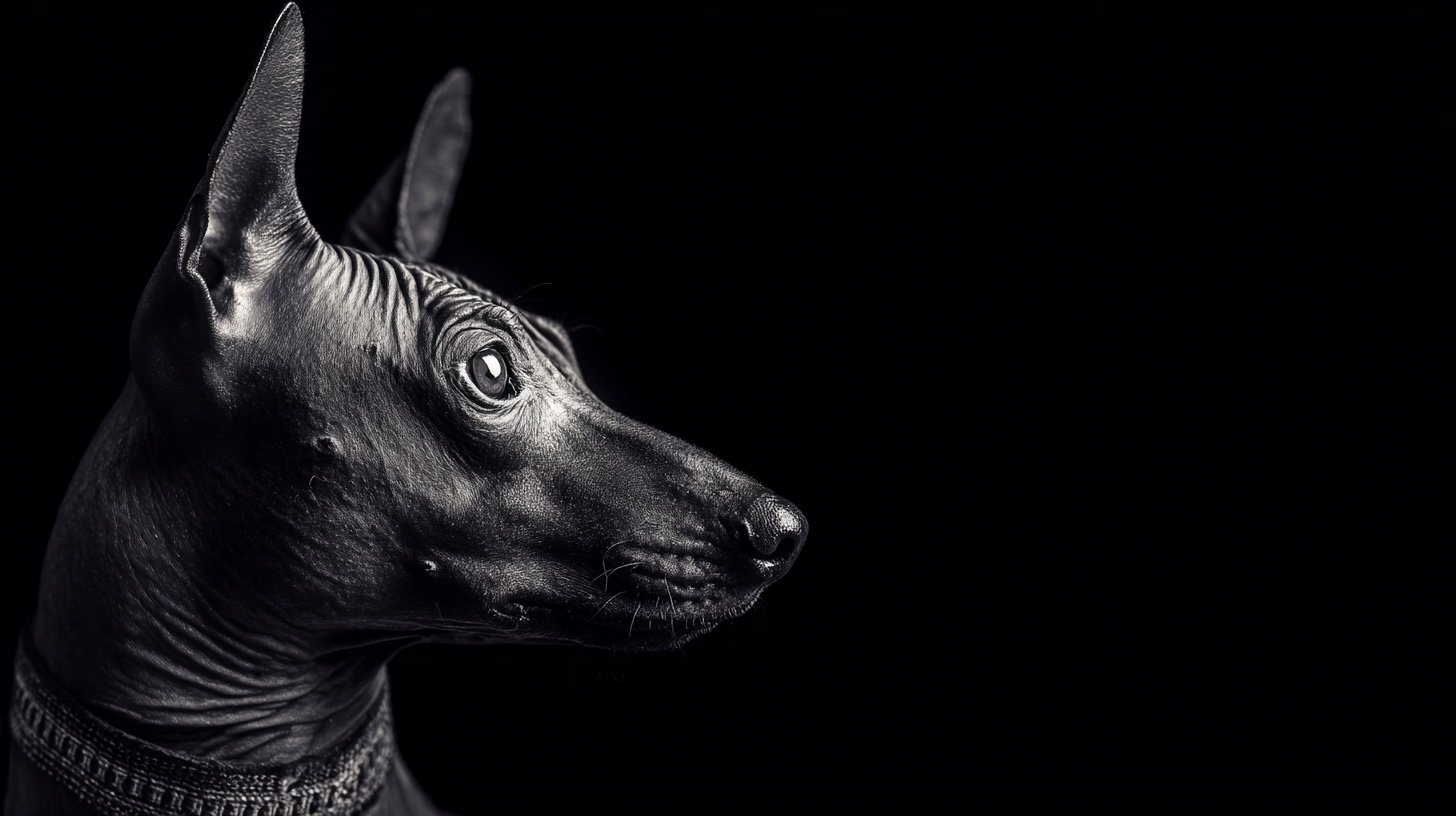
The first time someone meets a Xoloitzcuintli, they usually do one of two things. They either grin in delight, because they’ve finally encountered a dog that looks like it walked straight out of a myth. Or they blink twice, unsure whether they’ve just greeted a canine, a sphinx in disguise, or a tiny household deity trying out domestic life. The Xolo doesn’t mind either reaction. It has been worshipped, doubted, buried with kings, and featured in films. A bit of mixed feedback hardly makes a dent in its confidence.
The name already feels like a test you need to pass before you’re allowed to admire the breed. Xoloitzcuintli. Many people give up around the fourth letter, which is a shame, because behind the name sits a story that starts thousands of years ago when civilisations in Mesoamerica carved animals into clay and built their whole worldview around spirits, gods and what happens after the final sunset. The Xolo was not simply a pet. It was a guide, a protector and occasionally an ambassador to places no human had seen. Ancient families believed these dogs escorted souls into the afterlife, a task they seemed to perform with calm confidence and, presumably, a very collected trot.
Because of this ceremonial background, archaeologists keep finding little clay Xolos placed inside tombs. Some look surprisingly cheerful, as though the potter imagined them wagging their tails in darkness. Others have that classic dignified posture that says, with absolute certainty, that they know what’s going on even when you don’t. What makes the whole thing even more intriguing is how many of these artefacts appear across large areas of Mexico, suggesting that this wasn’t a local tradition. The Xolo served in households, temples and journeys across entire regions.
Modern science adds its own paragraphs to the story. Genetic studies show that this breed is genuinely ancient, not one of those clever marketing inventions that call something “old” because it has a slightly archaic name. The Xolo carries markers that set it apart from the European dog families that shaped so many modern breeds. In simple terms, it belonged to the continent long before colonisation and kept its lineage mostly intact even as huge waves of imported dogs arrived.
One of the quirks people notice immediately is the coat. Or, more accurately, the lack of it. The hairless variety is the one that gets the attention, though a fully coated Xolo exists too. The hairless type has a smooth, warm skin, often dark and faintly shiny. Some people say touching a Xolo feels like holding warm porcelain; others compare it to a well-polished stone. The breed comes in three sizes – toy, miniature and standard – which makes it fairly flexible. You can choose between a dog that fits in a backpack or one that prefers being in charge of the entire sofa.
The hairless trait comes from a genetic mutation that also affects the teeth. Owners quickly learn that their elegant guardian might have fewer teeth than expected. This is normal for the breed and leads to surprisingly adorable expressions. What it does mean, however, is that dental care is something you take seriously. A Xolo without too many teeth still eats enthusiastically, but you’ll need to keep an eye on how.
The coated Xolo has a short, dense layer of fur and looks more conventional, though still unmistakably part of that ancient family. People who want the charm without the skincare routine often choose the coated version. The hairless counterpart needs special care for obvious reasons. Sunscreen in summer, extra warmth in winter, moisturising when the skin gets dry, gentle baths, and a complete refusal to let the dog bake under strong sunlight. This is a breed that rewards attention with glossy, healthy skin but doesn’t tolerate neglect.
Temperament surprises many newcomers. A breed this exotic, this wrapped in stories and mythology, might seem aloof or highly strung. In reality, Xolos tend to be calm, observant and deeply attached to their people. They radiate quiet confidence. They watch a new visitor for a moment, assess, conclude everything is fine, and then settle down with the sort of serenity that comes from knowing one’s ancestors escorted kings to eternity.
One trait often mentioned is their alertness. They make excellent watchdogs not because they bark constantly but because they notice everything. They’re the type of dog that tilts its head one second before you hear the knock on the door. Their loyalty is remarkable, sometimes intense, but usually not overly demanding. They enjoy company, possess a refined sense of humour, and regularly pretend to be offended by jokes they secretly enjoy.
Despite looking delicate, they handle physical activity very well. Long walks, gentle runs, puzzle games indoors – they manage all of it with ease. What they don’t enjoy is cold weather without protection. A hairless Xolo in a British February will immediately communicate its disappointment, preferably by running straight under your duvet. The coated variety has an easier time, yet even they appreciate a warm jumper.
People often underestimate how socialised and intelligent this breed can be. Xolos respond beautifully to training when you approach them with patience. They dislike harsh methods. They understand tone, energy and intention with surprising clarity. Offer structure, kindness and a bit of humour, and the dog will reward you with impressive emotional range. This sensitivity is part of what made them so revered in ancient cultures and so admired by modern families.
The cultural side of the Xolo is rich. Mexico considers the breed part of its national heritage. In recent years, public exhibitions, art installations and even cinema have reintroduced the Xolo to global audiences. The animated film that featured a loyal dog companion based on a Xolo made the breed instantly recognisable to millions. It highlighted something dog lovers already knew: there’s a playful, slightly chaotic, endlessly affectionate personality underneath the mystical appearance.
Their rarity outside Mexico adds to their mystique. People often search for them in Europe, surprised by how few breeders exist. The breed hasn’t become a commercial favourite and remains relatively niche, which protects it from overbreeding and those unpleasant trends in dog fashion. A responsible breeder will guide you through the lineage, explain the needs of each variety and make clear that the hairless Xolo isn’t simply a novelty. It’s an ancient companion with specific requirements and a lot to give.
Looking after a Xolo brings joy, but it also brings routines. Weekly skincare becomes a bonding ritual. Checking for scratches, gently cleaning the skin, applying moisturiser and inspecting any small marks feels less like grooming and more like caring for a small, slightly mischievous deity. Many owners claim the dog appears to enjoy these sessions with an expression that clearly says, “Of course you’re doing all this. I’m sacred.”
The breed’s reputation for good general health comes from the fact that it wasn’t shaped through extreme physical exaggerations. Many modern breeds suffer from traits humans found charming but nature didn’t. Breathing problems, joint issues, oversized heads, narrow hips – some breeds carry these burdens because of decades of selective breeding aimed at appearance. The Xolo avoided most of that. Natural selection played a bigger role, leaving a dog that handles life with grace and relative robustness.
This doesn’t mean they never get ill, only that their list of common issues is smaller. Owners focus on skin care, dental care, and balanced exercise. Add a healthy diet and a warm place to sleep, and a Xolo can remain healthy for many years.
One of their most endearing qualities is how expressive they are. Dogs with heavy coats often rely on large gestures. The Xolo, with its bare skin or tight coat, communicates through subtle movements. A raised eyebrow, a sideways glance, a soft change in posture – everything is visible. Living with a Xolo feels like living with a friend who never hides their feelings. The emotional transparency is surprisingly touching.
They make excellent companions for creative people, travellers, quiet families and anyone who enjoys a dog with personality but without excessive physical demands. They don’t shed much, they don’t fill your house with fur, and they don’t insist on running marathons. They do, however, insist on being involved. A Xolo dislikes being ignored and finds exclusion unacceptable.
All of this makes you understand why the breed lasted thousands of years without losing its place in human society. It was useful, loyal, adaptable and symbolic. It bridged the world of the living and the world of the mysterious. It watched, guarded and guided. People who own a Xolo today often describe the same sensation: a feeling that the dog knows more than it lets on.
There’s a gentle humour in how such an ancient breed thrives in modern flats. A dog once tasked with leading souls through the underworld now supervises humans brewing morning coffee, checks whether the neighbour’s cat is plotting anything suspicious and enforces a strict schedule of belly rubs.
Their presence brings warmth, literally and metaphorically. The hairless variety is famous for being a natural hot-water bottle. Many families swear that sleeping beside a Xolo on a cold night is one of life’s small luxuries. In some households, the dog strategically positions itself against someone with cold feet. Whether this is kindness or strategic territory claiming remains open to interpretation.
What makes the Xolo truly special is the mixture of simplicity and mythology. It is approachable yet mysterious, affectionate yet dignified, modern yet unmistakably ancient. You can look at one and see a family pet, or you can look again and see an echo from a civilisation that thrived long before anyone wrote histories.
People often speak about dogs having souls. With the Xolo, the thought feels particularly fitting. It’s not that the dog understands cosmic matters. It’s that it behaves as though such things might be part of its daily to-do list. Wake up. Stretch. Guard the house. Supervise the humans. Escort lost spirits on the side.
A life shared with a Xolo is rarely dull. You get affection, comedy, ancient dignity and a dog with the kind of presence usually reserved for theatre actors. You get the sense that you’re caring for a piece of history that happens to enjoy squeaky toys. And you get a companion that rewards every bit of attention with warmth, trust and an unwavering belief that your sofa belongs to both of you.
In a world filled with breeds shaped by trends, the Xoloitzcuintli remains refreshingly untouched by fashion. It stands quietly, watching everything, offering loyalty without compromise and reminding humans that a creature doesn’t need fur to be extraordinary.