Winter Sleep: Why We Want More of It
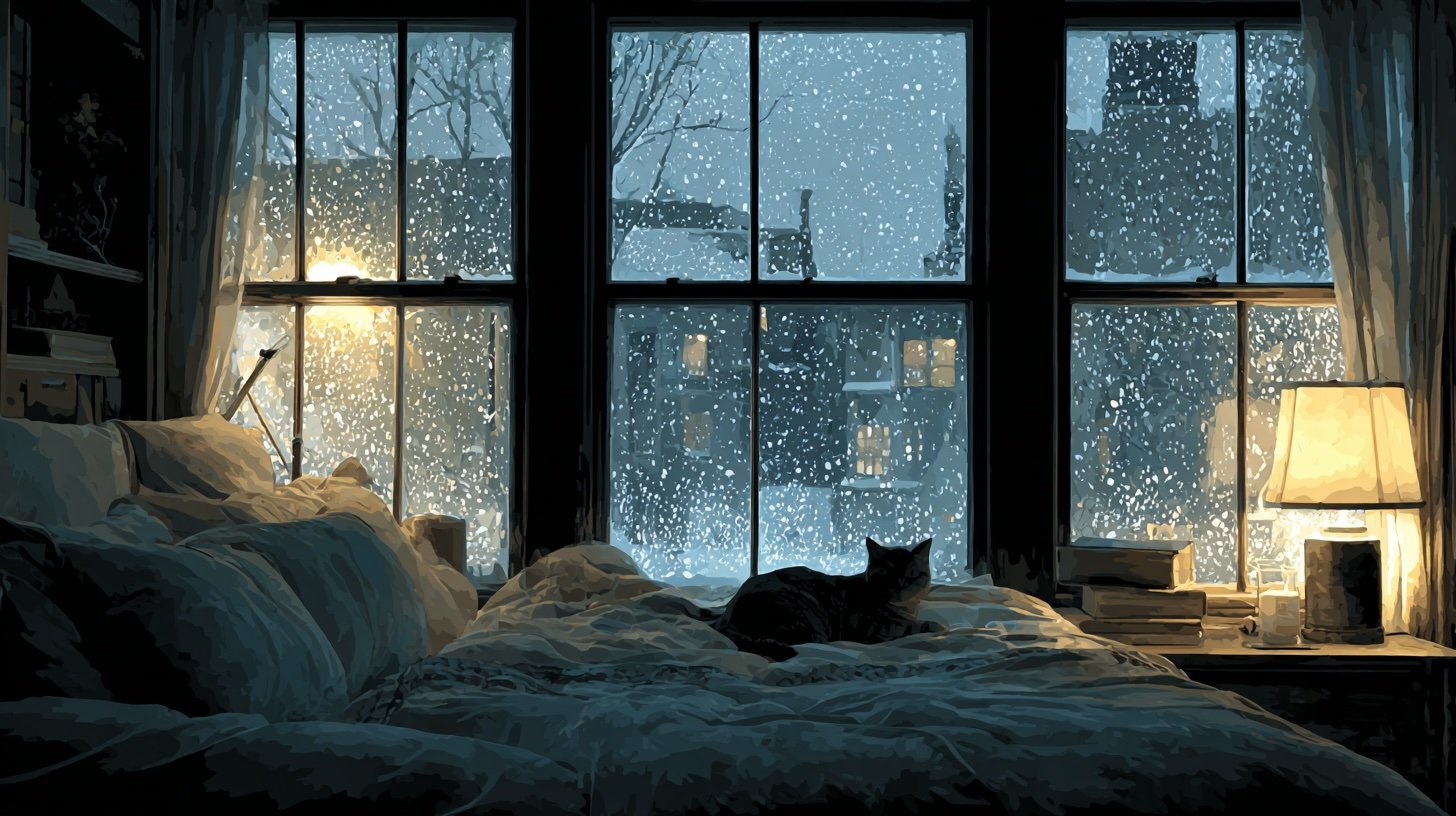
Humans love to think we have escaped nature. We have central heating, LED lights that imitate noon in Ibiza, and coffee strong enough to wake a small planet. Then November rolls in, the sky starts turning grey at lunchtime, and suddenly even the most disciplined person wants to go to bed at 9 p.m. with a blanket, a biscuit and no further responsibilities.
We don’t hibernate. At least not in the technical zoological sense. Yet our bodies clearly haven’t received the office memo about year‑round productivity. Hormones, body temperature, mood and sleep structure all start nudging us towards a slower rhythm when light fades and the weather sulks. You can override some of it with caffeine and blue‑light screens, but biology keeps trying to push you towards something softer: longer sleep, gentler mornings, earlier yawns.
So what exactly happens in winter that makes us feel as if our duvet has acquired a magnetic field? And does science agree that we genuinely need more sleep at this time of year, or are we just looking for a socially acceptable excuse to hit snooze?
Your body clock reads the sky, not your calendar
Inside your brain sits a tiny cluster of neurons called the suprachiasmatic nucleus. It sounds like a prog‑rock band, but in practice it works as the master body clock. It sits just above the crossing of the optic nerves and monitors light coming in through the eyes. Morning light tells it to kick the system into day mode. Darkness tells it to switch on the night programme.
That switch happens largely through melatonin, the hormone your brain releases in dim light. As natural light fades, melatonin starts to rise. You begin to feel a little slower, a touch less interested in spreadsheets, and slightly more interested in pyjamas. When daylight hits your eyes again, melatonin falls and wakefulness returns.
In summer, that cycle lines up with long days and short nights. Your melatonin window tends to stay relatively compact. In winter, especially in higher latitudes, the balance shifts. Nights stretch, mornings start darker, and dusk shows up indecently early. Melatonin responds accordingly. Its nightly rise often starts earlier and lasts longer, so the brain spends more hours in “night mode”, even if your work schedule stubbornly refuses to change.
You might not consciously notice the hormone curve, but you feel the side effects. Sleepiness arrives earlier than your social life would like. Getting up in the dark feels like a character‑building exercise rather than a normal part of the day. Your inner clock still watches the horizon while your outer life remains chained to the alarm.
What recent research says about winter sleep
For decades, researchers suspected that people sleep a little longer during darker months, but data remained patchy. Now that we all walk around with smartwatches and sleep‑tracking rings, scientists have started to peek at millions of nights of real‑world sleep rather than a handful of people in a laboratory.
Those data show a pattern. On average, people in temperate climates tend to sleep longer in winter than in summer, even if the difference looks modest. Some large wearable studies suggest an extra 15 to 25 minutes per night in winter, with wake‑up times sliding a little closer to sunrise rather than staying locked to the clock. Other cohorts show nearly half an hour more sleep on winter nights compared with bright, hot summer ones.
Laboratory sleep recordings tell a slightly different, but complementary, story. Total sleep time doesn’t always change dramatically between seasons when people live in artificially lit cities. However, the internal architecture of sleep does. One influential study from Berlin used full polysomnography across the year and found that people enjoyed around 30 minutes more REM sleep in winter than in spring, even though they lived in an urban environment. Deep sleep dipped in autumn compared with other seasons, while REM latency – the time it takes to enter the dream stage – shifted as well.
Put simply, your brain doesn’t sleep in exactly the same way in January and June. It doesn’t just care about how many hours you spend in bed. It tweaks stages, timing and transitions to match the light outside, even if you claim light has nothing to do with your lifestyle.
Artificial light tries to bully the circadian rhythm
Of course, modern life loves to pretend natural cycles no longer matter. We fill evenings with bright overhead LEDs, televisions, tablets and phones. Many people spend most of their day under quite dim indoor lighting and then blast their retinas with laptop glow at 10 p.m. This pattern flattens the natural contrast between day and night. The brain receives weak daytime signals and surprisingly strong evening ones, which confuses the body clock.
Blue‑rich light in the evening suppresses melatonin and pushes your internal night later. That effect happens all year, but in winter it bites harder. When daylight hours shrink and outdoor time collapses, the little daytime light your system craves often gives way to an entire ecosystem of artificial lamps. The result: you feel sluggish in the morning because melatonin didn’t fall sharply enough, and you feel wired at night because it never rose as gracefully as it wanted.
Recent studies argue that season matters when researchers look at how evening light affects melatonin and sleep latency. In darker months, the body sometimes reacts more strongly to artificial light, as if it clings tighter to any photons that show up after sunset. That can mean a brighter room delays your internal night more in December than it would in June. The irony writes itself: you long for more sleep in winter but design your evenings in a way that keeps it away.
REM winter dreams and the 3 a.m. stare at the ceiling
Longer REM sleep in winter sounds delightful until you remember that REM often arrives more densely in the second half of the night. This stage tends to be lighter and more vulnerable to disruption. If heating turns the bedroom into a desert or dry air irritates your nose, you may wake more easily during these dream‑rich phases.
That pattern helps to explain a peculiar winter experience many people report: the 3 a.m. wake‑up that refuses to leave. You fall asleep quite happily at a sensible time. Several hours later you wake abruptly, wide awake, feeling that something must be wrong because you cannot drift off again. Cortisol naturally rises towards morning to prepare the body for wakefulness. Add a room that’s too warm, a bit of congestion, and a brain that currently tries to serve you extra REM, and you have the perfect recipe for mid‑night consciousness.
When that happens repeatedly, people often assume they sleep badly in winter. In reality, you may sleep slightly longer overall, dream more, yet notice your nights more because you wake during a lighter, vivid stage. The experience feels broken, even when the total sleep volume still rises compared with other seasons.
Body temperature, blankets and the nesting instinct
Sleep and temperature dance together. As night arrives, your core body temperature drops slightly. That cooling helps you fall asleep. Later, towards morning, temperature climbs again and nudges you towards wakefulness. The rhythm happens every day, but the environment shapes how easily it unfolds.
In winter, the gap between outdoor and indoor temperature widens. You hurry through the cold, then collapse into centrally heated rooms. Many bedrooms end up warmer than ideal for good sleep, partly because nobody enjoys stepping onto an icy floor at 7 a.m. The body then needs to work harder to shed heat at night, while the heavy duvet traps warmth around you.
The result feels quite cosy at first. You get that snug nesting instinct: hot water bottle, thick socks, mountain of blankets. Once you drift off, the same conditions can turn mischievous. Overheating often leads to more awakenings, vivid dreams or the temptation to throw a leg out of the duvet in the hope of fresh air. You might blame stress or age, but sometimes you just turned your bed into a low‑budget sauna.
Cold itself plays a role as well. On properly bleak evenings, the chill tells your body that energy conservation might be a wise idea. You feel drawn to the sofa rather than a run. Hunger sometimes shifts towards heavier, starchier food. After a bowl of something creamy and comforting, your metabolic system works through the calories while the brain quietly votes for sleep. The whole organism leans towards “low gear” mode.
Mood, light and the winter blues
For some people, especially in northern latitudes, shorter days don’t just mean gentle yawns. Mood drops as well. Seasonal affective disorder, or its milder cousins, appears when reduced daylight throws the body clock, melatonin and serotonin out of balance. People feel low, lethargic, less motivated and more inclined to oversleep or at least to stay in bed far longer than usual.
Even without a formal diagnosis, many experience a softer version of that slump. You feel fine, just not particularly sparkling. Tasks require more effort. The bed looks suspiciously appealing at unusual times of day. Social life shrinks not only because it gets dark at absurd o’clock, but also because you quietly lose interest in going out.
Light matters for mood as much as for sleep. Morning daylight anchors your clock, improves alertness and helps regulate neurotransmitters tied to emotional balance. Winter removes that anchor from many people’s routines. Dark commutes, indoor offices, lunch eaten under strip lighting and an early sunset mean the brain receives barely any strong daytime light. No wonder it becomes confused about when to feel awake and when to feel tired.
Are we secretly built for seasonal sleep?
Here comes the awkward truth for modern culture: human biology looks suspiciously seasonal, even if we like to pretend otherwise. In pre‑industrial societies without electric lighting, sleep patterns tracked day length far more obediently. People went to bed earlier in winter, woke later, and often slept slightly longer, sometimes in two chunks with a wakeful period in the middle of the night.
Our physiology still remembers that pattern, even though our social and economic systems demand identical performance in January and June. Studies with large groups wearing trackers show clear seasonal rhythms in sleep duration and timing, especially at higher latitudes where winter days stay brutally short. Other research hints that hormones associated with reproduction, immunity and metabolism shift with the seasons as well.
None of this means humans should crawl into caves and emerge in April. It does suggest that the body expects a kind of “winter mode”: a little more rest, gentler mornings, less frantic activity, perhaps a subtle re‑allocation of energy towards maintenance work such as immune function. When reality refuses that adjustment, tension builds between the biology you carry and the calendar you follow.
How to work with winter, not against it
You probably cannot write to your manager and request a formal hibernation policy. You can, however, tweak your routine so that winter sleep works with you rather than against you.
Morning light makes a huge difference. Stepping outside soon after waking, even for ten minutes, gives your body a clear daytime signal. On grey days, that still beats indoor lighting by a generous margin. Some people use light boxes to imitate bright morning light when real sunshine refuses to cooperate. Others simply set a non‑negotiable walk after breakfast.
Evenings benefit from the opposite treatment. Dimmer lamps, warmer colour temperatures and fewer phone screens make it easier for melatonin to rise on time. Small rituals help: a book instead of a doom‑scroll, tea instead of another espresso, a gentle stretch in place of urgent email.
Temperature deserves a bit of engineering. Most sleep specialists suggest keeping the bedroom on the cooler side, then using layers that you can easily adjust during the night. An open window may feel heroic in January, but even a slightly cooler duvet or breathable materials can reduce the risk of wake‑ups caused by overheating.
Then there is timing. If winter makes you sleepy earlier, fighting that urge every single night usually backfires. When possible, shift bedtime slightly earlier instead of forcing yourself to stay up “because it’s only ten o’clock”. That half‑hour concession to biology may repay you with deeper, calmer sleep and less drama at 7 a.m.
Finally, pay attention to the difference between healthy winter sleepiness and something heavier. A little extra craving for rest usually means your system responds quite reasonably to shorter days. Constant exhaustion, low mood, and an urge to spend all weekend in bed can signal something more serious, from iron deficiency to seasonal depression or sleep apnoea. In those cases, the smartest winter habit is not another nap but a conversation with a professional who actually knows their melatonin from their elbow.
Winter sleep as quiet rebellion
The idea that we should operate at identical speed 365 days a year came mostly from factories, not forests. Your biology remembers forests rather well. It remembers that darkness invites rest, that cold encourages energy conservation, and that nights in winter simply last longer than nights in summer.
You cannot negotiate with the sun, but you can renegotiate your expectations. Allowing yourself a little more sleep in winter is not weakness. It is a modest, private act of alignment with primate reality. You still turn up to work, still feed the children, still reply to the messages. You just do it with a body that feels slightly more in sync with the sky rather than constantly at war with it.