Wind Farms: Green Progress or Landscape Vandalism?
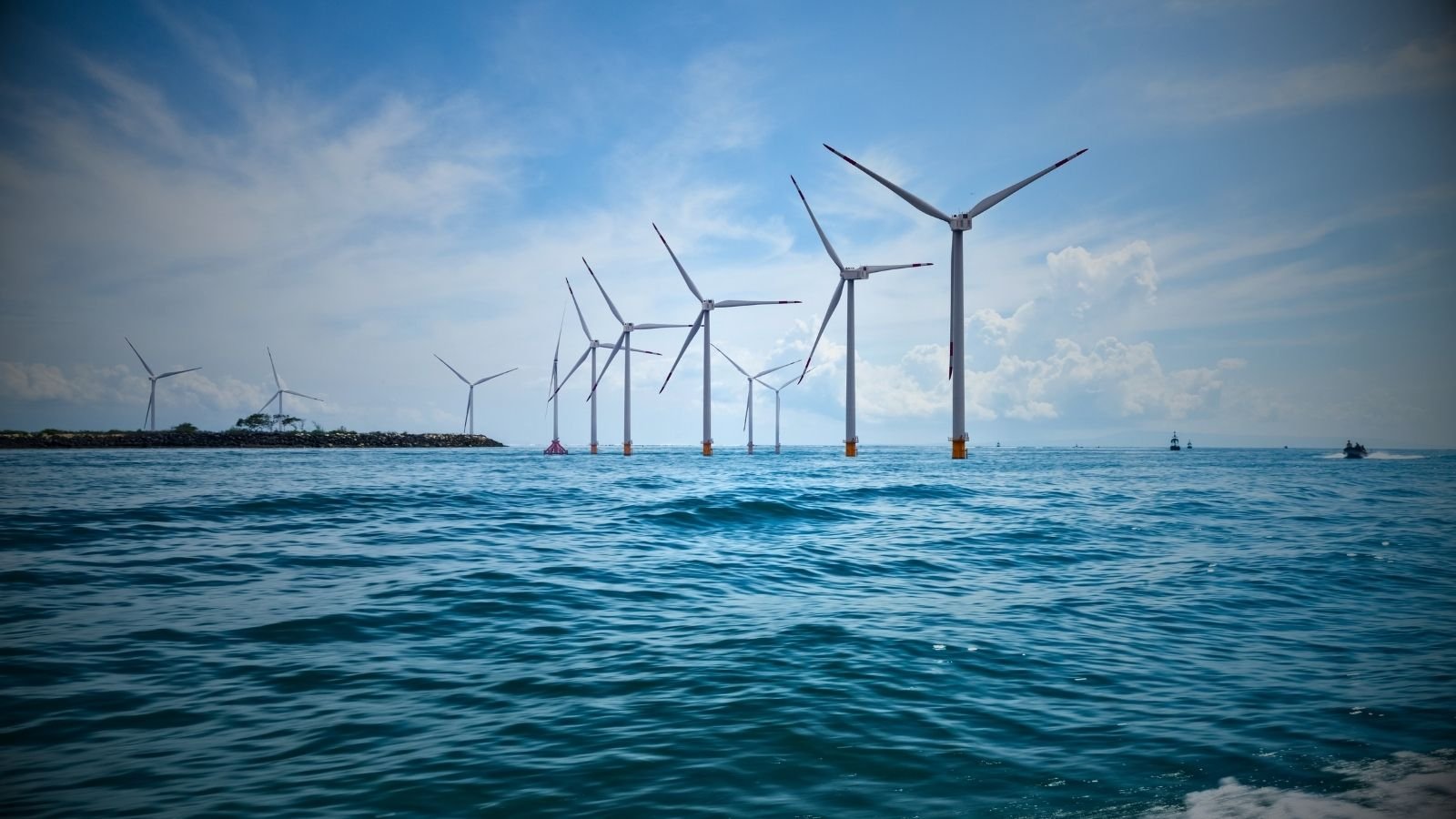
Wind farms have a peculiar talent for being both future-facing and deeply nostalgic at the same time. On one hand, they promise cleaner energy, lower carbon emissions, and a technological route out of fossil fuel dependence. On the other, they often appear in places people associate with continuity, memory, and a sense that some landscapes should remain politely unchanged. As a result, few bits of infrastructure provoke such passionate disagreement while quietly generating electricity in the background.
The modern story of wind farms usually begins with urgency. Governments set climate targets. Energy prices wobble. Gas pipelines start to look politically risky. Meanwhile, the wind keeps blowing whether anyone asks it to or not. From a policy perspective, turbines look almost embarrassingly sensible. They rely on a free resource. They scale relatively quickly. And they fit neatly into decarbonisation spreadsheets. Therefore, when planners speak, the language sounds calm and rational, full of megawatts, capacity factors, and long-term savings.
However, the conversation shifts dramatically once those plans meet a real place. Onshore wind farms tend to land in rural areas for obvious reasons. There is space. There are fewer buildings. Grid connections already snake across the countryside. Yet these same qualities make such places emotionally charged. People move to rural areas precisely because they value openness, quiet, and views uncluttered by industrial objects. Consequently, a turbine can feel less like neutral infrastructure and more like an intrusion that nobody asked for.
Visual impact dominates most objections, and not without reason. A wind turbine does not politely blend into its surroundings. Instead, it announces itself. Even a single structure can alter how a landscape feels, while a cluster can redefine it entirely. Supporters often argue that people will get used to them, pointing to pylons, railways, and motorways as precedents. That may be true in the long run. Yet the adjustment period often proves uncomfortable, especially when change arrives quickly and without local enthusiasm.
Noise complaints follow close behind. Technically speaking, modern turbines comply with strict regulations. The measured sound levels usually sit well below legal limits. Nevertheless, sound is not purely a technical phenomenon. The steady, rhythmic whoosh can become impossible to ignore for some residents, particularly at night or during specific wind conditions. While many neighbours barely notice it, others find it deeply irritating. As a result, this gap between averages and individual experience helps explain why debates around wind farms feel circular and unresolved.
Wildlife concerns add another layer of complexity. Birds and bats do collide with turbine blades, and poorly planned sites can cause genuine harm. For that reason, developers respond with surveys, mitigation plans, and careful siting. At the same time, critics note that environmental arguments sometimes appear selectively, emerging most loudly when turbines threaten cherished views. Supporters counter with broader statistics, pointing out that climate change, traffic, and habitat loss pose far greater risks to wildlife overall. Still, for communities focused on specific species or protected areas, abstract comparisons offer little comfort.
Offshore wind farms change the tone of the debate but not its substance. By placing turbines at sea, planners remove them from daily sight for most people, which instantly reduces opposition. As a result, offshore wind enjoys far higher public approval in many countries. Yet coastal communities often raise their own concerns. Fishing grounds may shrink. Construction disrupts marine life. The horizon changes in subtle but noticeable ways. Even far offshore, the argument returns to who bears the inconvenience and who enjoys the rewards.
That question of reward quietly underpins much of the resistance to wind farms. Large projects involve significant capital, and that money rarely comes from the immediate area. Utilities, investment funds, and international firms finance construction, collect revenue, and distribute profits elsewhere. Meanwhile, local communities see turbines rise over their fields and hills. When the benefits consist mainly of distant climate goals or modest community grants, resentment grows. People do not instinctively oppose change. Instead, they resist change that feels imposed and uneven.
Interestingly, attitudes shift when ownership does. Community-owned wind farms, cooperative models, or schemes offering local residents discounted energy often receive far warmer receptions. The turbines look the same. However, their meaning changes. Instead of symbols of outside control, they become shared assets. This shift does not eliminate all objections. Nevertheless, it reframes the discussion from resistance to negotiation.
Planning systems struggle to navigate these emotional currents. Environmental impact assessments measure habitats, noise, and shadow flicker with admirable precision. What they measure less well is attachment. A valley might not host rare species or ancient monuments. Even so, it can matter deeply to the people who live there. When objections focus on feelings rather than data, developers sometimes dismiss them as irrational. That dismissal, in turn, hardens opposition and erodes trust.
Supporters of wind farms often express frustration at what they see as hypocrisy. Society demands clean energy, yet objects when the infrastructure appears nearby. They argue that every form of power generation carries consequences. Coal mines scar landscapes. Gas extraction leaks methane. Nuclear plants require vast exclusion zones. Wind turbines, by comparison, leave land largely usable and produce no emissions once running. From this angle, opposition looks like a refusal to accept any visible cost for collective benefit.
Opponents respond that this framing oversimplifies the issue. They do not reject renewable energy as such. Instead, they question scale, location, and process. A single turbine in an industrial area attracts little attention. A dense array across a cherished landscape feels different. Moreover, critics argue that energy efficiency, rooftop solar, and demand reduction receive far less enthusiasm than headline-grabbing wind projects, despite often delivering quieter gains.
Cultural context matters as well. In countries with traditions of communal land use or cooperative energy, wind farms integrate more smoothly into public life. Elsewhere, where land ownership feels personal and symbolic, turbines can trigger deeper anxieties about loss of control. Even the aesthetics divide opinion. Some people see elegant structures tracing the movement of air. Others see looming machines that dominate their surroundings. Neither reaction is objective, yet both shape political outcomes.
Media narratives amplify these divisions. A single dramatic photograph can frame a wind farm as heroic progress or environmental vandalism, depending on the caption. Headlines favour conflict over compromise. As a result, nuanced discussions about trade-offs rarely travel far. People encounter simplified versions of the debate and entrench themselves accordingly. Meanwhile, the turbines continue turning, largely indifferent to public mood.
The climate dimension complicates everything further. Extreme weather events, rising energy costs, and geopolitical tensions keep renewable energy high on political agendas. Against this backdrop, delaying or cancelling wind farms appears irresponsible to some and overdue to others. The urgency of decarbonisation compresses decision-making timelines. Consequently, there is less space for slow, trust-building conversations with communities.
Despite all this, the argument around wind farms has evolved. Early projects often arrived with minimal consultation and little local benefit. Newer developments increasingly experiment with participatory models, better design, and more sensitive siting. While these approaches do not eliminate opposition, they reduce its intensity. They also acknowledge an uncomfortable truth. The energy transition cannot succeed through technical efficiency alone. It requires social consent.
Wind farms ultimately force societies to confront an awkward question. What does environmental responsibility look like when it alters familiar places? Abstract support for sustainability proves easy. Living alongside its infrastructure proves harder. Turbines make that tension visible, spinning reminders that cleaner energy still occupies space, still changes views, and still involves compromise.
Perhaps the most honest answer lies in accepting that wind farms will never be universally loved. They are neither pure symbols of green virtue nor acts of aesthetic vandalism. They sit somewhere in between, shaped as much by governance and ownership as by engineering. Where communities feel heard and rewarded, turbines fade into the background of everyday life. Where they feel ignored, the blades never stop provoking anger.
The future of wind farms, therefore, depends less on wind speeds than on trust. Careful planning, fair distribution of benefits, and genuine engagement will not silence every critic. However, they can transform a bitter argument into a workable compromise. In a world that needs cleaner energy quickly, that may be the most realistic ambition of all.