Virginia Woolf Saw This Coming
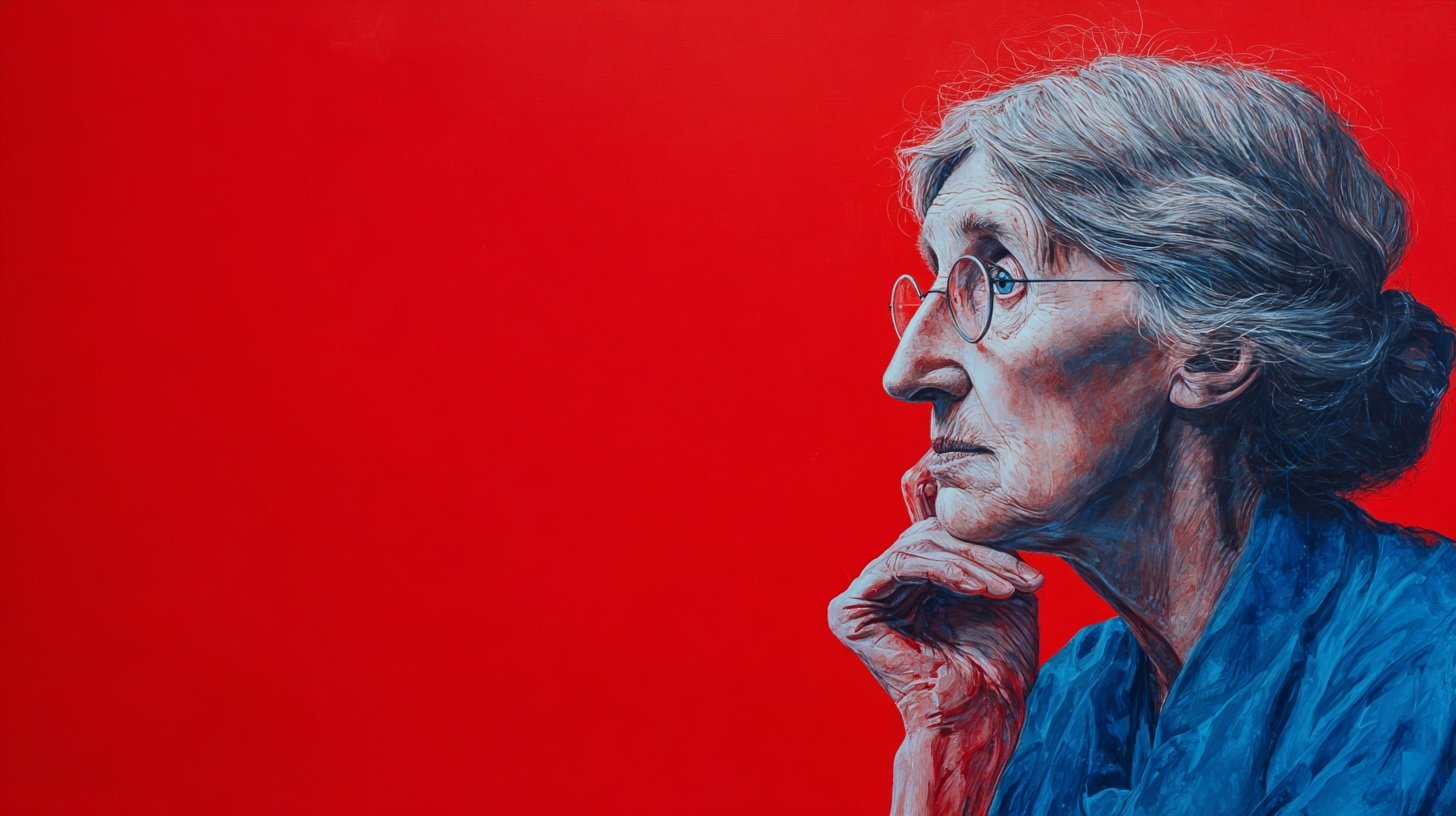
Something peculiar happens when you open a Virginia Woolf novel in 2026. The prose was written nearly a century ago. The author never scrolled through a smartphone or refreshed a social media feed. Yet somehow, it captures what it feels like to live inside your own overwhelmed mind right now. That strange temporal shimmer, where past and present collapse into one another, would have delighted Woolf herself.
We’re experiencing what scholars call a Woolf renaissance. Conferences devoted to her work are multiplying. The year 2025 marked the centenary of Mrs Dalloway. Meanwhile, contemporary writers cite her influence with increasing frequency. Furthermore, quotations from her essays circulate constantly online. That famous bit about needing a room of one’s own and five hundred pounds a year appears everywhere. Often it’s accompanied by moody photographs and aesthetic layouts that would probably amuse and horrify her in equal measure.
However, this resurgence isn’t merely academic nostalgia or Instagram fodder. Instead, readers are discovering something crucial. Woolf’s experimental novels offer what we desperately need in an age of infinite scroll and fractured attention. In fact, they provide a literary technique that actually mirrors how we experience consciousness now.
Consider the stream-of-consciousness method she pioneered. When Woolf wrote Mrs Dalloway in the 1920s, she revolutionised fiction. She depicted how thoughts flicker, overlap, and contradict—much like our own mental chatter. Consequently, her characters’ minds drift from the present moment to memories decades old. They shift from trivial observations about the weather to existential questions about death. All of this happens within the same flowing paragraph. Nevertheless, novels weren’t supposed to work this way. Readers expected clear plots, linear narratives, tidy resolutions.
Yet anyone who’s tried to read a serious book whilst notifications ping recognises this instantly. Similarly, anyone who’s suddenly remembered a conversation from fifteen years ago whilst washing up knows this mental state. Indeed, we’re all living in stream-of-consciousness now, whether we like it or not. Modern life constantly bombards us with information from multiple devices and platforms. As a result, this has essentially turned everyone into a Woolf character. Research on attention fragmentation confirms what we already suspect. Our cognitive resources are dispersed across numerous stimuli. Thus, this creates precisely the scattered mental state that Woolf was trying to capture on the page.
This is where Woolf becomes strangely prophetic. She understood something long before neuroscientists began studying it. The mind doesn’t move in straight lines. Furthermore, she grasped that modern existence was creating a new kind of human consciousness. Even in her era of telegrams and motorcars, people had to process vastly more sensory information than previous generations. “On or about December 1910 human character changed,” she famously declared. Scholars debate what exactly she meant. Nevertheless, the sentiment resonates now more than ever. Something fundamental about how we think, feel, and attend to the world has shifted again. This time, however, the culprit is digital technology rather than industrial modernity.
Woolf’s concept of “moments of being” feels particularly relevant to our current predicament. In her autobiographical writings, she distinguished between two states. There are moments of genuine presence—when you’re fully conscious of experiencing life. Then there’s “non-being,” the cotton-wool state of mindless routine that comprises most existence. These heightened moments, she believed, are when we’re truly alive. During them, the protective covering falls away. We experience reality directly. Often, they’re triggered by seemingly insignificant things: light on water, a flower, a particular quality of silence.
Today’s mindfulness industry peddles similar ideas for considerable profit. Yet Woolf got there first and with more nuance. Far from being purely pleasant experiences, she recognised complexity. These heightened moments of awareness can arrive as shocks. Moreover, they bring revelations of underlying patterns. Sometimes they deliver sudden intimations of mortality. Nevertheless, she argued that seeking and cultivating these moments was essential to being fully human. In an age when we document every experience rather than simply experiencing it, this matters. After all, we’re perpetually half-present whilst scrolling through other people’s carefully curated lives. Woolf’s insistence on genuine presence feels radical.
The parallels between Woolf’s mental health struggles and contemporary experiences create another point of connection. Living with what we’d now likely diagnose as bipolar disorder, she experienced extremes. Periods of intense creative mania were followed by devastating depression. Moreover, she endured multiple breakdowns. She was institutionalised. Ultimately, she died by suicide in 1941. Her essay “On Being Ill” addresses how illness defamiliarises the world. Specifically, it makes ordinary things seem strange and new. This perspective resonates powerfully in an era when mental health discussions have finally emerged from the shadows.
Woolf’s novels don’t shy away from depicting psychological distress. Septimus Warren Smith in Mrs Dalloway is a war veteran. He struggles with what we’d now call PTSD. He experiences hallucinations and eventually jumps to his death. Importantly, the novel treats his suffering with empathy rather than moralising. It shows how society fails people in mental health crises. The patronising doctors, the lack of understanding, the stigma—it all feels distressingly contemporary. Meanwhile, Clarissa Dalloway herself throws a party as a society hostess. Yet she experiences moments of dissociation and existential terror. She must conceal these behind polite conversation. Anyone who’s maintained a professional facade whilst their mind spirals will recognise that particular exhaustion.
What makes Woolf’s portrayal of mental illness so valuable is that she wrote from inside it. She wasn’t observing madness from a safe clinical distance. Instead, she was describing the landscape from within. Her stream-of-consciousness technique rendered the actual texture of anxious or manic thought. She captured how depression slows time. Similarly, she showed how mania makes connections between everything. This experiential authenticity is why her work still speaks to people struggling with their own mental health a century later.
The feminist dimension of Woolf’s relevance shouldn’t be overlooked. However, it’s worth noting that her views were more complex than internet quotations suggest. Sometimes they were more troubling. A Room of One’s Own remains a foundational text. It argues that women need financial independence and physical space to create art. Moreover, the essay’s central claim still holds. Women have been systematically excluded from the conditions necessary for literary production. Whilst more women write and publish now than in Woolf’s time, the structural inequalities persist. Domestic labour, economic precarity, lack of institutional support—they haven’t disappeared. Instead, they’ve simply shape-shifted.
However, Woolf’s class privilege complicates her status as a progressive icon. So do her occasional troubling comments about race and working-class people. Frankly, she could be a snob. Occasionally, her writing contains language and attitudes that make contemporary readers wince. Nevertheless, this contradiction makes her interesting. She was a revolutionary feminist who also benefited from class hierarchies. Sometimes she reinforced them. Ultimately, this makes her a more compelling figure than a plaster saint would be. It forces us to grapple with reality. Even visionary thinkers are products of their historical moment, complete with blind spots.
Orlando, Woolf’s 1928 novel, has found new audiences. It’s about an aristocrat who lives for centuries and changes sex halfway through. Written as a love letter to Vita Sackville-West, with whom Woolf had an affair, it playfully dismantles assumptions. The idea that gender is fixed or essential crumbles in this text. Orlando wakes up one morning as a woman instead of a man and essentially shrugs. The character adjusts to new social restrictions whilst remaining fundamentally the same person. Consequently, this centuries-ahead-of-its-time approach treats gender as performance rather than essence. It has made Orlando a touchstone for LGBTQ+ readers and scholars.
The irony, of course, is notable. Woolf’s actual portrayals of Constantinople in Orlando rely on Orientalist stereotypes. Furthermore, they reflect misconceptions about Turkish culture. Scholars have noted that she created an androgynous Eastern fantasy. It had little to do with historical reality. Once again, we encounter Woolf’s contradictions. She could be progressive and reactionary. She was visionary and limited. All at once.
What about the reading experience itself? Woolf isn’t easy. Furthermore, her novels resist the kind of rapid consumption that modern life encourages. You can’t skim Mrs Dalloway whilst half-watching television. Instead, To the Lighthouse demands something different. You must slow down, pay attention, immerse yourself in her language and recurring images. As a result, this creates a dual quality to her work. It feels simultaneously antiquated (who has time for difficult modernist novels?) and necessary. After all, we need to resist the pressure for constant productivity and stimulation.
Professor Stephanie Paulsell at Harvard Divinity School describes how Woolf “reteaches you how to read.” When Paulsell first attempted To the Lighthouse, she found herself confused. Whose consciousness was she inhabiting? Whose thoughts was she hearing? If you let your attention wander, you’re lost. Consequently, this forced her to “bring more attention to the page.” She had to read not for plot progression but to follow “the flight of the mind.” In essence, Woolf’s experimental prose becomes a training ground. It cultivates the kind of sustained, deep attention that scrolling culture erodes.
This creates a productive tension. Reading Woolf in the 2020s means fighting against every habit that contemporary digital life has instilled. Specifically, it requires turning off notifications. You must clear mental space. Additionally, you have to accept that you won’t “get through” many pages in a sitting. In return, however, you gain access to prose that captures the full spectrum of human consciousness. The sublime and the mundane appear together. The traumatic and the transcendent often exist within the same sentence. “Life itself, every moment of it, every drop of it, here, this instant, now, in the sun, in Regent’s Park, was enough,” Clarissa Dalloway thinks. “Too much, indeed.”
That paradox resonates throughout Woolf’s work and throughout contemporary experience. Life feels simultaneously overwhelming and insufficient. We’re drowning in information yet starving for meaning. Hyperconnected yet lonely. Constantly busy yet feeling like we’re not really living. Woolf diagnosed this malaise nearly a hundred years ago. It was at the dawn of modernity. Since then, her diagnosis has only become more acute.
The 2025 conference circuit reflects this renewed interest. “Woolf and Dissidence” was the theme of the 34th Annual International Virginia Woolf Conference. It was held across King’s College London and the University of Sussex. Scholars explored Woolf’s politics of dissent. They examined her pacifism through two world wars, her feminism, her narrative techniques as aesthetic rebellion. As the conference organisers noted, Woolf’s work speaks to us urgently. Her “reckoning with the historical crises of her own era speaks powerfully, even urgently, to our own crises today.”
This urgency isn’t manufactured. Climate crisis, rising authoritarianism, ongoing gender inequality, mental health emergencies, information overload, technological disruption—Woolf wrote about all of it. Admittedly, she wrote about it in different forms. Three Guineas, her 1938 anti-war essay, drew connections. Patriarchy, fascism, and militarism intertwine in ways that feel painfully current. Notably, her observation challenges us. The “private house” and the public world of war and politics are intimately connected. This challenges the artificial separation we maintain between personal and political spheres.
The question remains: what do we actually gain from reading Woolf now? Beyond historical interest or academic credibility, what’s the point? Perhaps it’s permission to be complex. Her novels insist that human consciousness is messy, contradictory, unfathomable even to ourselves. Moreover, they resist easy answers and tidy conclusions. We live in an age of hot takes and algorithmic certainty. People get reduced to data points and demographic categories. In contrast, Woolf’s commitment to representing the irreducible strangeness of individual minds feels like resistance.
Perhaps, too, it’s the example she provides. She was someone who transformed her suffering into art without romanticising it. Woolf didn’t pretend that writing cured her mental illness. She didn’t claim that her breakdowns made her more creative. Instead, she simply insisted on making art anyway. She found form for formless experience. She put words to the supposedly inexpressible. “By putting it into words I make it whole,” she wrote. “This wholeness means that it has lost its power to hurt me.”
Ultimately, Woolf feels contemporary because she was always ahead of her time. She asked questions we’re still trying to answer. How do we maintain individual consciousness in a world that constantly fragments our attention? How do we create space for genuine thought in an age of manufactured opinion? And how do we balance the competing demands of public and private life, work and rest, connection and solitude? Furthermore, how do we remain fully human—complex, contradictory, difficult—when everything pushes us towards simplification.
She didn’t solve these problems. After all, her own life ended in tragedy. But she refused to look away from them. She developed a literary language capacious enough to contain them. That language remains available to us. It carries rhythms of sea and consciousness. It insists on the importance of what seems insignificant. And it maintains faith in the power of momentary illumination. All we have to do is slow down enough to read it.