Why The Sumerians Disappeared But Never Really Vanished
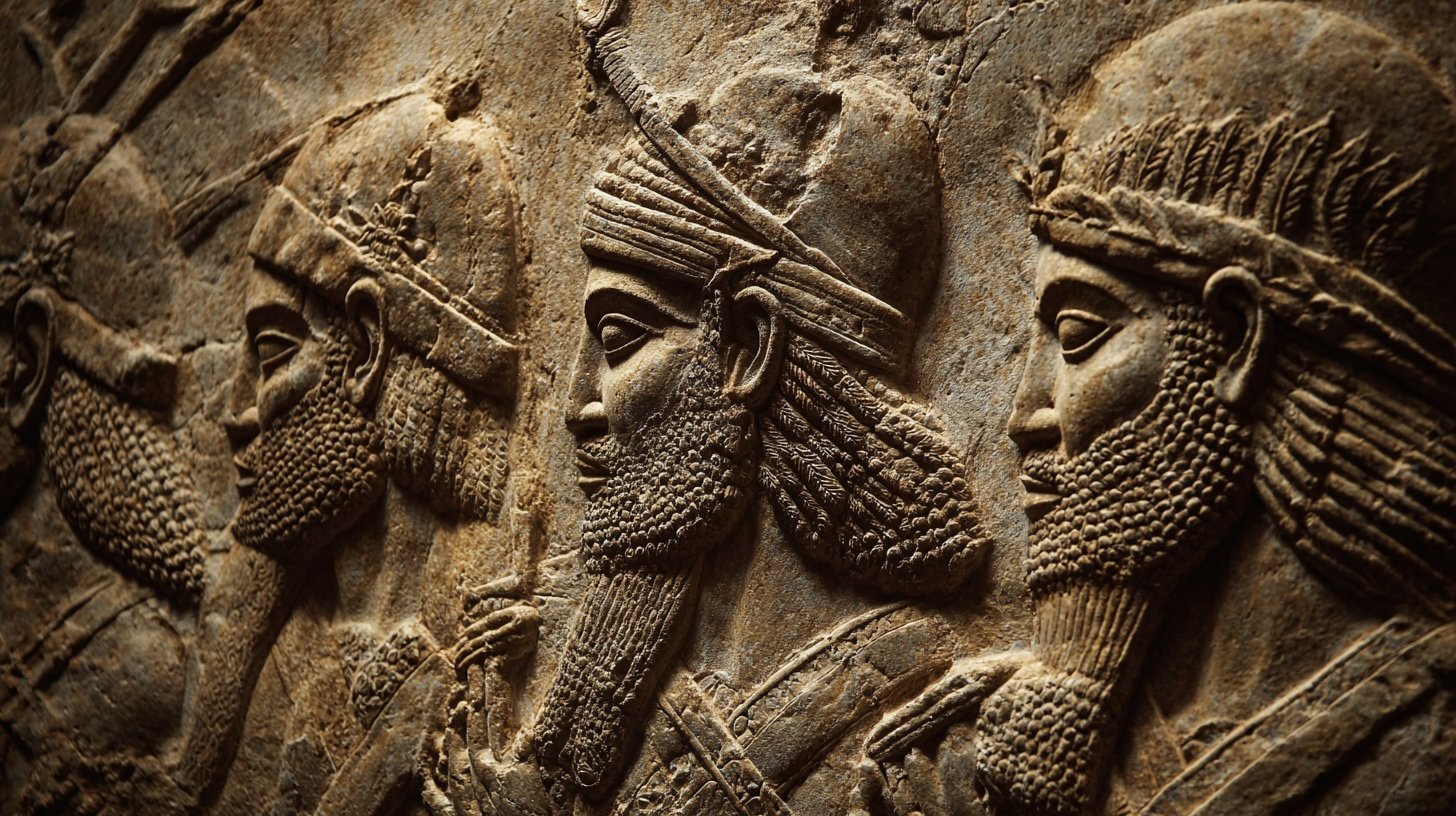
The Sumerians are often described as the first civilisation, which already sets them up for a strange kind of disappearance. Being first sounds permanent. It sounds like the sort of thing history should keep visible forever. Yet Sumer fades from view remarkably early. By the time later empires dominate Mesopotamia, Sumer feels less like a living culture and more like an inherited archive. The cities remain. The temples remain. The tablets remain. Meanwhile, the people slowly slip out of the picture.
This ending never arrived with drama. No single catastrophe wiped Sumer away. Instead, Sumer dissolved into continuity. That process makes it harder to notice, although far more revealing once you do.
Sumer never functioned as a unified state. Instead, it formed a dense constellation of city-states spread across the marshy southern plains between the Tigris and Euphrates. Uruk, Ur, Lagash, Nippur and others competed constantly. They fought wars, rewrote borders, boasted of victories, and rebuilt walls with exhausting regularity. What tied them together was not loyalty but habit. They worshipped similar gods. They wrote in the same language. And they organised labour, agriculture, and trade in familiar ways.
That fragmentation encouraged innovation. Each city needed to manage surplus, labour, property, and ritual efficiently. As a result, writing developed as a tool of administration rather than expression. Likewise, law emerged as a way to stabilise fragile urban societies. Education followed naturally because bureaucracy does not reproduce itself on instinct. None of this required central authority. In fact, rivalry probably accelerated it.
However, fragmentation also made Sumer porous. From early on, Sumerian cities interacted with Semitic-speaking populations to the north. Traders moved constantly. Families intermarried. Soldiers served under foreign rulers and returned home. Consequently, bilingualism became normal long before political conquest made it unavoidable.
That context reshapes the so-called fall of Sumer. When Sargon of Akkad rose to power in the 24th century BCE and unified much of Mesopotamia, he did not crush Sumerian civilisation. Instead, he absorbed it. His administration adopted Sumerian religious traditions. His scribes learned Sumerian first. And his empire ruled in Akkadian but governed through Sumerian systems.
This shift felt less like conquest and more like rebranding. Power changed hands, yet culture remained remarkably stable. Temples continued their rituals. Schools repeated the same exercises. Archives expanded steadily. What changed was the spoken language of everyday life and, gradually, the way people described themselves.
Language played a decisive role. Sumerian eventually stopped functioning as a mother tongue, probably around 2000 BCE. Akkadian replaced it in homes, markets, and military camps. Nevertheless, Sumerian did not disappear. Instead, it moved upward. It became the language of law, ritual, scholarship, and prestige.
As a result, an unusual situation emerged. A language no one spoke fluently remained central to education. Students copied Sumerian texts for centuries. Priests recited prayers they never used conversationally. Administrators archived documents in a script older than their empire. Over time, Sumerian turned into a classical language while its speakers vanished.
Once that happened, identity shifted quietly. People stopped calling themselves Sumerian because the word no longer described daily life. Instead, identity attached itself to cities, dynasties, professions, and later empires. Cultural continuity continued without an ethnic label to protect it.
Later powers inherited this arrangement. Babylonian and Assyrian rulers styled themselves as restorers of ancient order. They rebuilt temples with careful reference to old inscriptions. They copied myths obsessively. And they framed themselves as guardians of sacred tradition. However, they rarely foregrounded the people who created that tradition.
This is how cultural credit erodes. Ideas survive because they work. Names disappear because they stop being useful.
Consider writing. Cuneiform began as a practical Sumerian system for tracking goods, labour, and land. Over time, it adapted to other languages. Although its visual form remained recognisable, its sounds changed. Eventually, cuneiform belonged to Mesopotamian civilisation as a whole. Few later users cared who invented it.
Law followed a similar path. The idea that laws should be written, fixed, and publicly known emerged in early Sumerian cities. However, later law codes attached themselves to kings whose states lasted longer or projected power more effectively. Attribution followed visibility rather than origin.
Religion absorbed Sumer just as thoroughly. Gods merged. Names shifted. Stories accumulated layers. Inanna became Ishtar. Enki gained new titles. Myths were edited to suit new political needs. Over time, these stories felt timeless. Their starting point faded from view.
Environmental pressure reinforced these changes. Southern Mesopotamia suffered from soil salinisation caused by centuries of irrigation. Gradually, crop yields declined. Economic strength moved north where agriculture proved more sustainable. As wealth shifted, influence followed.
From the inside, this never felt like collapse. Cities adapted. People relocated. Administration adjusted. For those living through it, this was continuity under new management.
Modern history prefers clean endings. They make narratives easier to digest. Sumer resists that preference. Its disappearance unfolded across centuries. It involved no single villain. It produced no obvious ruins marking a final day.
Instead, Sumer became infrastructure. Its inventions turned into assumptions. Its solutions became defaults. Later empires operated inside frameworks Sumerians had built without always realising it.
That invisibility marks a strange kind of success. Cultures that fail disappear completely. Cultures that succeed too well dissolve into the background. Their work survives so thoroughly that it no longer requires attribution.
This explains the paradox. Sumer sits at the root of early civilisation and yet rarely receives attention. It shaped urban life, administration, education, myth, and timekeeping, while leaving no continuous identity to defend its memory.
In that sense, the Sumerians did not vanish. They became the baseline. And baselines are almost never remembered.