Why Rome Feared Carthage Long Before the Elephants Appeared
Prefer to listen? Enjoy the story of Carthage on Youtube
The city of Carthage rose out of a legend about a determined Phoenician woman who refused to accept the boundaries set by men. Dido, or Elissa if you prefer her Phoenician name, supposedly fled Tyre with sharp wits, loyal merchants and a bag of silver. She reached a promising North African cape, cut an oxhide into thin strips and marked out enough land to build a trading hub that would annoy every Mediterranean power for centuries. That story might be more poetic than factual, yet Carthage behaved exactly like a place born from audacity.
Carthage grew because Phoenicians understood a simple rule: you can survive by farming, but you only get rich by trading. They were masters of purple dye, glasswork and clever navigation. Their ships travelled from Levantine ports to Sardinia, Sicily, Iberia and possibly further than the later Romans liked to admit. Carthage started as one colony among many before morphing into the unofficial headquarters of a commercial empire. Merchants poured wealth into its harbours, which became among the busiest in the ancient world. Greek writers, never thrilled about competition, muttered that Punic traders worked with infuriating discipline.
The city faced the sea with confidence. The famous double harbour included one section for trade and another for the navy, complete with individual ship sheds. Carthaginian sailors controlled key routes and knew when to push their advantage. Iberian mines delivered silver; African hinterlands supplied grain; Punic diplomats bought loyalty with contracts rather than forced oaths. Carthage preferred tribute and tariffs to garrisons, which made its empire flexible but occasionally fragile.
Greeks in Sicily became the first serious rivals. They were equally stubborn, equally ambitious and equally convinced of their cultural superiority. Carthage fought a series of wars on Sicilian soil, sometimes winning, sometimes being kicked back to North Africa. It kept returning because Sicily acted as the perfect middle ground between European, African and eastern trade. Whoever controlled it influenced the entire western Mediterranean.
Then Rome arrived with its neat togas, unshakable pragmatism and appetite for expansion disguised as defensive concern. When conflict flared in Messina, the Romans claimed they were simply helping allies. Carthage suspected that their allies had a habit of multiplying like rabbits. The First Punic War turned the Mediterranean into an endless tug-of-war over ships, ports and pride. Carthage entered with superior naval experience, yet Rome built a fleet from scratch and added a boarding device called a corvus, which turned sea battles into floating infantry brawls. Carthage ceded Sicily, grumbled about the indemnities and watched Rome grow.
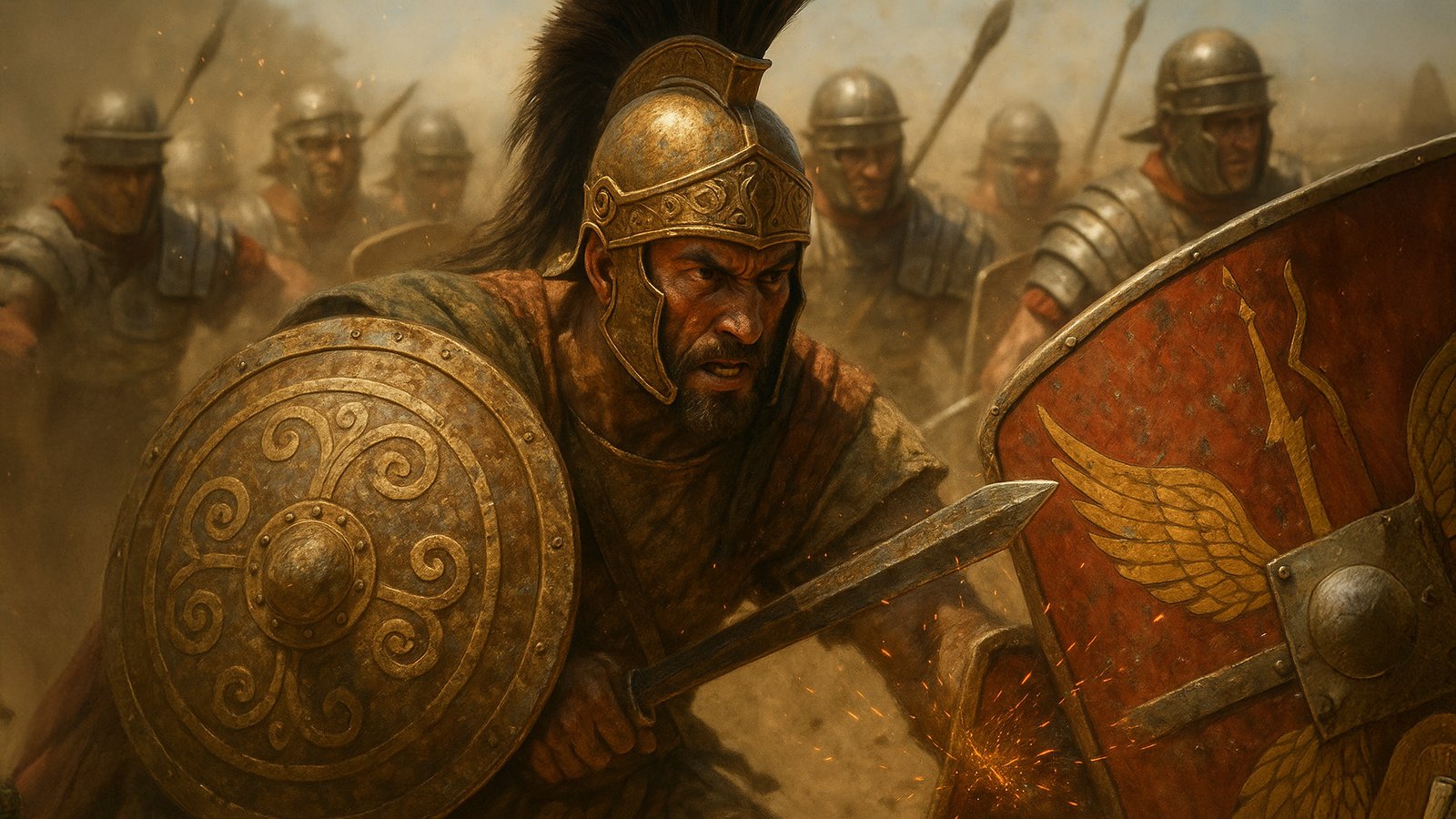
Hamilcar Barca, who understood Roman determination better than most, raised his son Hannibal in the belief that Carthage needed bold leadership. Iberia became their new base, rich in minerals and soldiers ready to be hired. Hannibal inherited an army, a political network and the family conviction that Rome would never stop until Carthage surrendered. He marched across the Alps with elephants, freezing soldiers and enough swagger to terrify the Roman Senate without even being in Italy yet. Roman mothers probably used his name as a bedtime threat.
Hannibal did not conquer Rome, but he humiliated it. Trebia, Lake Trasimene and Cannae forced Romans to rethink everything they believed about invincibility. The Senate refused to negotiate; they simply ground on with Fabian tactics, avoiding pitched battles and starving Hannibal of reinforcements. Carthage, politically divided and often hesitant, failed to support him fully. Iberian territories began slipping away. Eventually the fight shifted to North Africa, where Scipio Africanus defeated Hannibal at Zama. Carthage lost its empire once again and accepted terms that clipped its wings.
Rome insisted Carthage stay small, quiet and economically contained. Carthage, being Carthage, rebuilt its wealth anyway. Merchants returned to sea routes. Agriculture in the hinterland thrived, thanks to innovations described by the agricultural writer Mago. Roman senators looked across the water and saw a city recovering too quickly for their comfort.
Cato the Elder, who loved repetition nearly as much as he loved discipline, ended his speeches with the same nagging line: Carthage must be destroyed. Younger senators rolled their eyes, but the message stuck. When conflicts erupted between Carthage and Numidia, Rome seized the opportunity. The Third Punic War felt less like a struggle for dominance and more like an extermination contract written to soothe Roman paranoia.
Carthage resisted with desperate energy. Citizens melted jewellery to fund defences. Women cut their hair to make catapult ropes. The city held out under siege for three grinding years. Roman soldiers fought street by street during the final assault. Flames consumed districts that once buzzed with trade. The survivors were enslaved. As for the salt myth, it seems Romans preferred drama but not necessarily agricultural vandalism.
Yet the city refused to stay dead. Julius Caesar planned its rebirth; Augustus completed the task. Roman Carthage became a prosperous African metropolis with temples, theatres and the sort of baths that made visitors question why the Romans had destroyed the place in the first instance. The region later turned into a centre of early Christianity, producing thinkers like Tertullian and Augustine. Carthage served as a reminder that cities can rise repeatedly, even when empires prefer them erased.
The original Punic civilisation faded, but its legacy survived through fragments. Modern Tunisia still carries traces of Punic language in place names. Archaeologists keep uncovering evidence that counters the old Roman habit of propaganda. Carthage emerges as a society that blended maritime skill, cultural stubbornness and commercial talent. It protected its autonomy against two centuries of Greek rivalry and Roman expansion.
The rise and fall of Carthage feels less like a simple arc and more like a meditation on ambition. A trading outpost grew into a powerhouse. Sceptical neighbours challenged it. A rival empire crushed it. The world remembers Hannibal’s elephants more than Punic trade accounts, but the real power of Carthage came from its docks, markets and ability to attract people chasing opportunity.
Carthage reminds us that maritime empires share a specific vulnerability. Their strength rests on mobility, wealth and diplomacy. Those advantages bring influence yet create jealousy. Rome envied Carthage’s success more than it feared its army. When fear combined with envy, the outcome became inevitable.
A stroll through the ruins today offers a strange contrast. Blue sea, gentle breeze and Roman villas perched above Punic foundations create a layered landscape. Visitors see serenity where ancient writers described naval blockades. The Byrsa Hill view hides the memory of siege ramps. Tourists take photographs where generals once held frantic councils.
Carthage continues to invite questions. How did a Phoenician colony outshine rivals across three continents? What would have happened if Carthage had reinforced Hannibal at the right time? Could the Mediterranean have followed a different cultural trajectory under Punic leadership? Historians keep wrestling with these ideas, partly because the city’s story refuses to settle.
Perhaps the most striking part of the tale sits in its persistence. Rome tried to erase Carthage so thoroughly that future generations would barely remember it. The opposite occurred. Carthage became a symbol of imperial anxiety, military brilliance and economic resilience. People write books about its harbours, gods, treaties and wars. Dido receives fresh literary tributes every few decades. Hannibal’s Alps crossing endures as one of history’s favourite acts of tactical mischief.
The ruins do not shout about tragedy. They sit quietly by the sea, framed by palm trees and sunlight. They hint at the layers beneath: Phoenician merchants, Carthaginian sailors, generals arguing about Rome, families escaping the final fires. Carthage built a civilisation that valued enterprise, and built it so well that even destruction could not silence its memory.
The city rose, fell, rose again and left a complicated legacy. That might be the most Carthaginian ending of all.