Why Parakeets in London Are Loved, Loathed, and Here to Stay
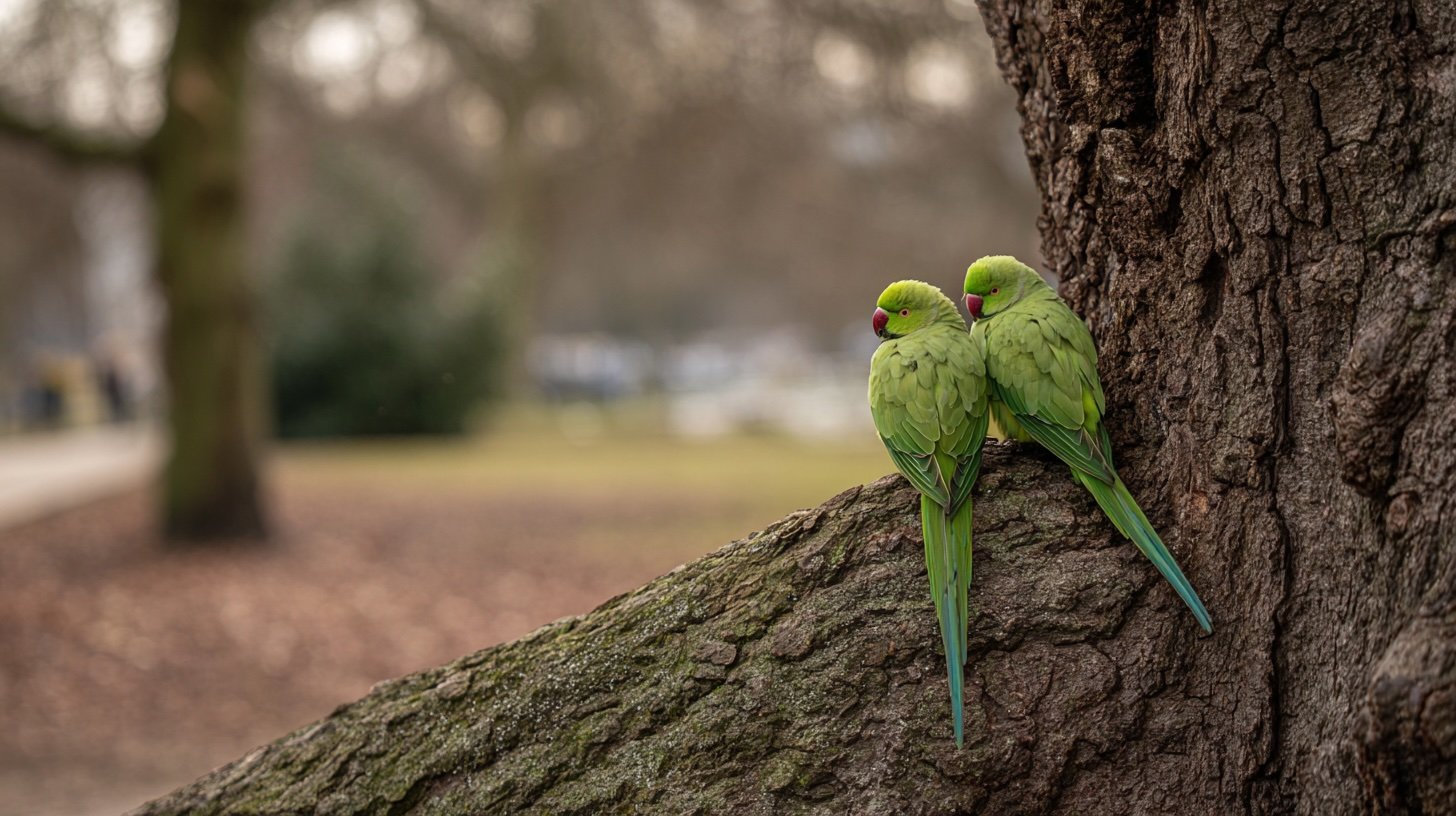
London has a habit of quietly rewriting what counts as “normal”. Somewhere between foxes raiding bins and sourdough becoming a personality trait, parakeets slipped into the picture and never left. Today, parakeets in London feel so established that first-time visitors assume they’ve always been here, like red buses or bad coffee at tourist attractions.
The birds most people mean when they talk about parakeets in London are ring‑necked parakeets. Bright green, long‑tailed, loud in a way that cuts through traffic noise, they look like something imported from a subtropical postcard. In biological terms, that instinct isn’t wrong. These birds originate from parts of Africa and the Indian subcontinent. In practical terms, though, they now behave as if London plane trees were designed specifically for them.
Their presence isn’t the result of a grand plan or an official introduction. It’s the outcome of a slow accumulation of small, human decisions. Britain imported large numbers of parrots and parakeets as pets throughout the twentieth century. Some escaped. Others were released deliberately. On their own, these incidents didn’t look like much. Over decades, they added up.
By the late 1960s, breeding parakeets were confirmed in the wild in London and nearby Kent. That detail matters because it marks the point where parakeets in London stopped being an oddity and became a self‑sustaining population. Once breeding took hold, growth became a matter of food, shelter, and numbers rather than continued releases.
London turned out to be almost absurdly accommodating. The city has parks stitched together with suburbs full of mature trees, many of them riddled with cavities. Those holes are perfect nesting sites. Gardens supply feeders, fruiting trees, and an endless stream of well‑meaning people who enjoy feeding birds more than thinking about population dynamics. Urban heat islands soften winter extremes. For a species that already tolerates cooler conditions in parts of its native range, this was enough.
As parakeets in London increased, myths rushed in to fill the storytelling gap. The most famous one claims that Jimi Hendrix released a pair on Carnaby Street in the 1960s. Another blames the Great Storm of 1987, imagining smashed aviaries and a sudden tropical jailbreak. Film‑studio accidents get a mention too. These stories persist because they’re neat, glamorous, and easy to remember.
Reality, predictably, looks messier. Research examining early records suggests multiple origin points rather than a single dramatic release. Early clusters around South London and Kent fit far better with repeated escapes and releases over time. It’s a story without a single hero, villain, or guitar solo, which is why it struggles to compete with the myths.
There’s also a less romantic angle that rarely makes it into pub conversation. During parts of the twentieth century, fears around psittacosis, sometimes called parrot fever, caused anxiety about keeping parrots. Some historians and researchers have suggested that this may have contributed to birds being abandoned or released. That explanation lacks the sparkle of rock‑star folklore, but it aligns with how social panic tends to influence animal populations.
Once established, parakeets in London expanded quickly. Over recent decades, they’ve been one of the fastest‑growing bird populations in the UK. Estimates vary by year and method, but figures in the tens of thousands are now widely cited. What matters more than the exact number is the trend. The growth curve points firmly upward.
Anyone who doubts this should stand in a park at dusk. Parakeets gather in communal roosts, arguing noisily over branches before settling for the night. The sound carries. It turns trees into living noticeboards announcing that these birds are not shy guests.
Their behaviour only adds to the sense that they’ve claimed the city. They commute between feeding and roosting sites, covering several kilometres a day. They eat almost anything plant‑based that looks vaguely edible. And they hang upside down from feeders with the confidence of animals that don’t expect to be challenged. For many Londoners, this visibility is part of the appeal. Parakeets add colour and movement to grey afternoons. They feel exotic without requiring a passport.
That affection explains why parakeets in London inspire strong emotional responses. Plenty of people genuinely love them. They photograph them. They feed them. And they talk about them as if they were adopted locals rather than arrivals from elsewhere.
Others experience the same birds very differently. From an ecological perspective, the concern isn’t noise or novelty, but competition. Ring‑necked parakeets nest in tree cavities, which are a limited resource. Native birds such as woodpeckers, nuthatches, and starlings rely on the same kind of spaces. Bats do too. When a bold, social species expands rapidly, it puts pressure on everything else trying to use the same holes.
Research from mainland Europe has shown that invasive parakeets can aggressively displace other species from nest sites and, in some cases, cause direct harm. In the UK, scientists and conservationists argue that the potential for similar impacts exists, even if the full scale hasn’t been pinned down by long‑term studies yet. This gap between visible abundance and detailed impact data fuels disagreement. Some people see a harmless success story. Others see a warning that’s being ignored because the birds are charming.
Garden feeders create another flashpoint. Parakeets tend to arrive in groups and dominate. Smaller birds often back off. To a gardener watching from the kitchen window, this doesn’t feel like abstract ecology. It feels like bullying with feathers.
Agriculture sits quietly in the background of the debate. In other countries, ring‑necked parakeets have caused damage to crops and orchards. In Britain, large‑scale impacts remain limited, but risk assessments have flagged the possibility. Disease adds another layer of unease. Parrots can carry infections that affect humans and other animals. That doesn’t make parakeets in London a public health emergency, but it keeps officials cautious.
Management is where affection and anxiety collide. Suggestions of culling appear from time to time and almost immediately trigger public outrage. Colourful birds don’t fit easily into narratives of pest control. Authorities have tended to avoid drastic measures, partly because they’re controversial, partly because controlling a widespread urban population is complex and expensive.
There’s a revealing contrast with another parrot episode in London. Monk parakeets, a different species, once caused concern in parts of East London because their nests posed risks to power infrastructure. Action followed. Ring‑necked parakeets pose subtler, slower ecological questions rather than immediate practical threats, which makes decisive intervention harder to justify and easier to delay.
Despite all this, parakeets in London have already woven themselves into the city’s ecological fabric. Urban predators such as peregrine falcons and sparrowhawks have learned that green parrots are edible. Parakeets disperse seeds. They draw people’s attention to urban wildlife who might otherwise ignore it. None of this cancels out the risks, but it complicates the story.
What makes the situation particularly London is that it reflects two truths at once. London is a city that enjoys spectacle. A flash of green against winter branches feels like a gift. London is also a city under environmental pressure, where space and resources are limited. In that version of the city, every newcomer matters.
Parakeets sit right at that fault line. They’re not visitors anymore. They’re residents, complete with habits that irritate some neighbours and delight others. They didn’t arrive with permission, but they arrived because human systems made it possible.
The future of parakeets in London depends on questions that remain open. Will their numbers keep rising as winters soften and urban habitats persist? Will detailed UK research confirm significant impacts on native birds and bats, or show a more nuanced balance? And will public opinion shift as novelty fades and noise increases?
For now, the birds carry on regardless. They shout over traffic. They jostle for nest holes. And they gather in parks at dusk like commuters who refuse to queue politely. Whether you see them as a cheerful accident or a slow‑burn problem probably says as much about your idea of London as it does about the birds themselves.
One thing is certain. Parakeets in London are no longer a curiosity. They are part of the city’s everyday ecology, born from human habits and thriving in human landscapes, and they’re unlikely to disappear quietly.