Why Ayurveda Still Works When Wellness Trends Don’t
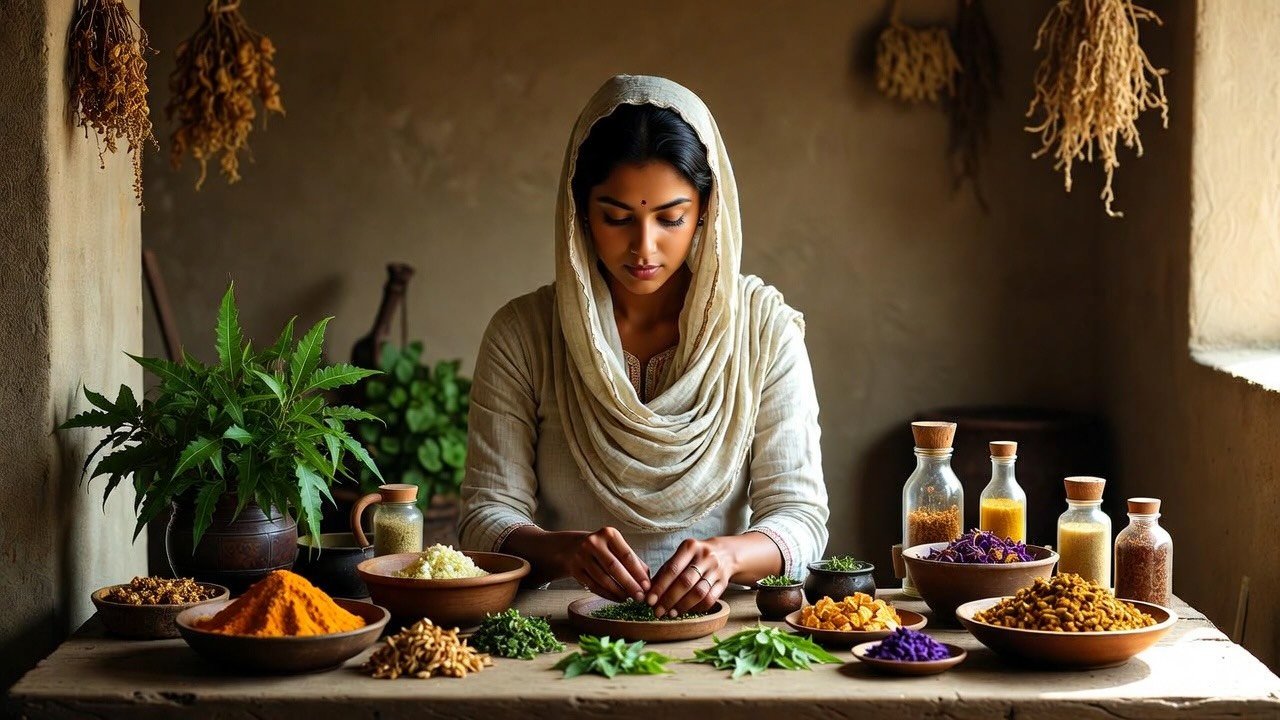
Ayurveda rarely asks for attention. Instead, it operates whether anyone watches or not. Long before wellness became an industry or lifestyle language turned ancient practices into accessories, Ayurveda already functioned as a medical system. Over time, it evolved through use, argument, failure, and correction. That long history still shapes how serious Ayurvedic clinics work today, even while global wellness culture continues to misread it.
The easiest mistake, however, is to treat Ayurveda as a mood. Warm oil, soft lighting, balance, detox, calm. Yet in its original setting, Ayurveda never aimed to soothe first. Rather, it aimed to explain. It asked why bodies break down, why recovery stalls, and why the same illness behaves differently in different people. Instead of searching for a universal fix, it built a framework for variation.
That framework took shape in India over centuries through practice rather than mysticism. At first, physicians trained through apprenticeship long before universities formalised the process. Meanwhile, texts circulated, disagreed, corrected one another, and refined methods. The Charaka Samhita obsesses over digestion, metabolism, behaviour, and causality. By contrast, the Sushruta Samhita reads like a blunt surgical handbook, describing wounds, tools, and reconstruction without poetic detours. Neither text flatters the reader. Instead, both demand discipline.
Unlike many pre-modern medical traditions, Ayurveda never slipped quietly into history. Instead, it survived colonial pressure, scientific challenge, and cultural ridicule by remaining useful. Of course, survival required compromise. Some practices vanished, while others adapted. By the twentieth century, Ayurveda gained institutional backing, standardised education, and professional licensing. For that reason, continuity matters. Systems that survive by functioning behave differently from those preserved by nostalgia.
A serious Ayurvedic clinic in India therefore feels closer to a teaching hospital than a retreat. Consultations take time and deliberately resist efficiency. Typically, patients talk at length, while doctors listen without interruption. Pulse diagnosis happens quietly and repeatedly, alongside other observations. Tongue colour, digestion, sleep patterns, emotional volatility, work rhythms, seasonal exposure. Individually, each element matters little. Together, however, they form a pattern.
For this reason, the approach frustrates patients trained to expect speed. The goal is not a label. Instead, it is coherence. Symptoms only gain meaning once they align with a broader picture of imbalance. Consequently, two people with the same biomedical diagnosis may receive entirely different treatments because their bodies respond differently to stress, food, and time.
That philosophy inevitably collides with modern expectations of standardisation. Nevertheless, Ayurveda never promised efficiency. It promised understanding. Since understanding takes time, treatment does too.
Kerala offers the clearest example of Ayurveda operating without performance pressure. On the one hand, the climate supports medicinal plants year-round. On the other, generations of Vaidya families preserved intensive treatment protocols. As a result, clinics there still expect patients to stay for weeks. Diets simplify. Movement slows. Gradually, routines tighten. Recovery becomes structured work.
In this context, Panchakarma often gets misunderstood abroad. In proper clinical settings, it is not a cleanse. Instead, it is a sequence of physician-supervised interventions designed to reset metabolic and elimination pathways. Crucially, preparation matters as much as execution. Even more importantly, recovery matters more than either. When shortcuts appear, results suffer. Therefore, serious clinics enforce boundaries that tourists sometimes resist.
Tourism nonetheless altered the picture. As international wellness travel expanded, fragments of Ayurveda detached from institutional discipline. Gradually, treatments shortened, consultations thinned, and language softened. As a result, the system shifted from diagnostic to decorative. Marketing benefited. However, outcomes suffered. For this reason, senior practitioners criticise the trend openly, arguing that dilution damages credibility more than scepticism ever could.
Within India itself, Ayurveda lives with ongoing internal tension. On one side, some push for biomedical validation through trials and standard protocols. On the other, others resist reduction, arguing that individualised treatment collapses under statistical flattening. In reality, both positions raise valid concerns. Evidence matters. At the same time, context matters too. Consequently, Ayurveda continues negotiating that balance, often imperfectly.
Critics frequently claim that Ayurveda rejects modern medicine. In practice, reputable clinics do not. Blood tests, scans, and biomedical diagnoses appear regularly in patient files. The difference, instead, lies in interpretation. Data informs rather than dictates. Numbers describe rather than decide. In short, synthesis replaces deference.
That synthesis extends beyond biology. For example, Ayurveda treats work habits, social stress, seasonal behaviour, and emotional patterns as medical variables. This approach does not romanticise illness. Instead, it complicates responsibility. As a result, healing becomes shared effort rather than outsourced repair.
Western patients often find this unsettling. Initially, they arrive seeking relief. Eventually, they leave confronting habits. Late nights matter. Overstimulated digestion matters. Emotional suppression matters. Therefore, recovery demands participation. Ayurveda rarely indulges denial.
Naturally, legitimate criticisms exist. Quality control varies. Regulatory failures caused contamination scandals that deserve scrutiny. Additionally, some practitioners oversimplify concepts when teaching abroad. Others commercialise spiritual language carelessly. Still, Ayurveda is not immune to institutional weakness. Living systems rarely are.
Yet failure coexists with rigour. Formal education spans years. Examinations test anatomy, pharmacology, pathology, and clinical judgement. Meanwhile, hospitals integrate inpatient and outpatient care. Research institutes publish studies, however uneven. As a result, debate continues. Stagnation does not.
One reliable indicator that Ayurveda is not a trend is boredom. In practice, serious treatment involves repetition. Meals taste plain. Days follow strict schedules. Progress unfolds slowly. Consequently, there is little novelty to document. Improvement arrives quietly or not at all. Influencer logic collapses under that weight.
Slowness, in turn, carries cultural meaning. Ayurveda assumes bodies unfold across time rather than moments. Seasons matter. Age matters. Past illness matters. Therefore, there is no reset button, only adjustment. This worldview resists optimisation culture.
Western wellness often borrows Ayurvedic imagery while discarding discipline. As a result, oil becomes indulgence. Balance turns metaphorical. Detox becomes weekend entertainment. Once separated from institutional seriousness, the system loses its spine.
By contrast, clinics that treat Ayurveda as medicine enforce boundaries. They refuse unsuitable cases. When necessary, they collaborate with surgeons. They also discourage treatment when compliance seems unlikely. Ultimately, selectiveness protects outcomes better than marketing.
Ayurveda also carries an ethical framework that modern wellness rarely acknowledges. Classical texts outline physician conduct, patient consent, seasonal responsibility, and community obligation. In this framework, authority comes from restraint rather than performance. Profit does not excuse harm. Prestige does not justify negligence.
For that reason, Ayurveda remains embedded in public health rather than confined to private spas. It treats populations as well as individuals. Rural clinics matter alongside urban centres. Access matters alongside refinement.
Perhaps the most uncomfortable element for modern audiences is accountability. Ayurveda offers effort rather than miracles. Consequently, failure reflects mismatch more often than betrayal. That honesty alienates consumers trained to expect guarantees.
Systems that last centuries tolerate frustration. Ayurveda frustrates patients, practitioners, researchers, and marketers alike. Yet that friction keeps it alive. Smooth narratives belong to trends. Rough edges belong to working systems.
Seen clearly, Ayurveda does not compete with modern medicine. Instead, it complements, challenges, and occasionally contradicts it. Dialogue replaces dominance. Coexistence replaces conversion.
For observers used to treating tradition as decoration, this reality disappoints. Ayurveda refuses to stay shallow. It demands time, patience, and humility. Those unwilling to offer that often mistake it for failure.
Beneath branding and borrowing, however, the system continues doing what it always did. It watches bodies change, contexts shift, and solutions adjust. That continuity, rather than age, explains why Ayurveda outlasts trends.