When Humans Started Dancing and Never Stopped
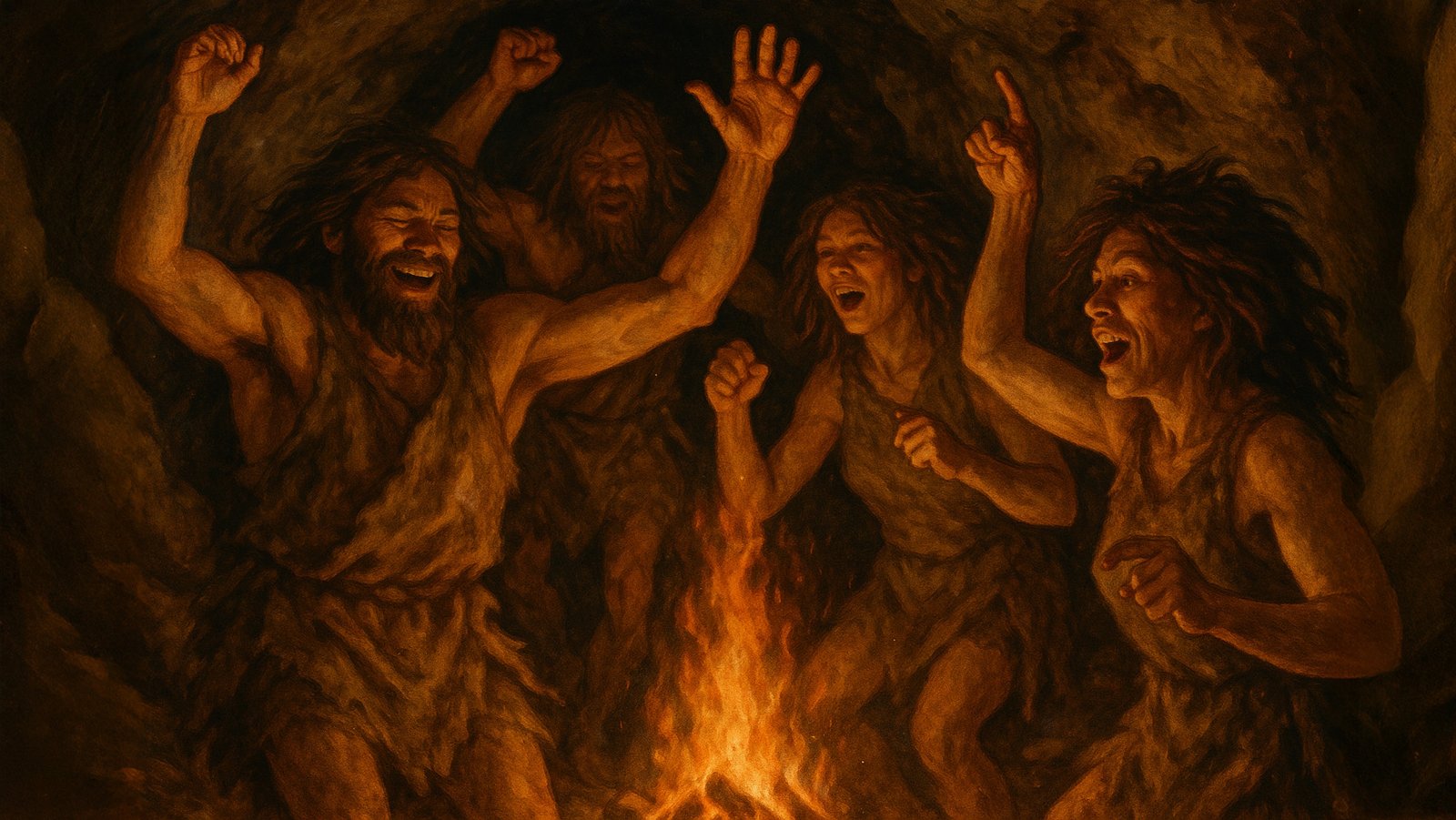
Dancing didn’t arrive with a polite knock on humanity’s door. It sneaked in long before anyone thought to invent writing, pottery or the concept of being embarrassed in public. Long before civilisation formed queues for anything, our ancestors moved their bodies around fires, under stars and inside caves without asking for permission. They didn’t need a DJ. They had thunder, drums made from whatever they hunted, and the sheer shock of discovering that shaking your hips feels surprisingly good.
Anthropologists argue, as they always do, but most agree dancing predates language. That sounds dramatic, yet when you think about it, grunting rhythmically while stomping the ground doesn’t require much vocabulary. Our early family members watched flames flicker, heard the wind whistle, and something in their bones responded. Rhythm existed everywhere in nature: beating hearts, crashing waves, rain hitting leaves. Humans simply copied it, then improved it with flair, confidence and a generous dose of showing off.
Some cave paintings in India’s Bhimbetka rock shelters depict human figures mid‑wiggle. They date back at least nine thousand years, although the style suggests the artists had been observing dance long before picking up paint. There’s also evidence from prehistoric burial sites where bodies lie in positions that suspiciously resemble choreographed ritual poses. Either they danced themselves into an afterlife nap, or someone staged it for symbolism. The truth is probably somewhere in between.
No ancient civilisation managed to resist the temptation of organised movement. Ancient Egyptians danced at festivals, funerals and Nile‑side parties that undoubtedly had stronger drinks than they care to admit. Their dances ranged from solemn to acrobatic, with temple dancers performing slow, hypnotic routines that were meant to charm the gods. Meanwhile, ordinary Egyptians seemed perfectly happy to charm each other.
Across the Mediterranean, the Greeks embraced dancing with their usual enthusiasm. They danced for Dionysus, obviously, but also for war training. Spartan boys learned steps that strengthened coordination, stamina and discipline. It’s amusing to imagine battle‑ready teenagers performing choreographed routines, but the Spartans didn’t care what it looked like as long as it worked. For them, dancing wasn’t decorative. It was preparation.
Over in ancient China, dancing blended with etiquette and philosophy. Court dances followed precise patterns that mirrored cosmic order. Every gesture meant something, and every participant had responsibilities. It was less nightclub, more celestial instruction manual with silk sleeves. Still, people enjoyed it. They always do. Even the strictest ritual can’t hide the thrill of shared movement.
Africa’s dance history stretches so deep that calling it ancient feels inadequate. Many African cultures treat dancing as a living archive. It carries myths, genealogies, celebrations, warnings and prayers. Movements communicate meaning the way words do, sometimes more effectively. Whole communities gather to dance, creating rhythms layered with drums, claps and call‑and‑response singing. Outsiders often call these performances energetic. Insiders call them Tuesday.
By the time medieval Europe emerged from centuries of being gloomy about many things, dancing returned with cheerful force. Villagers danced at harvest festivals, in taverns, in fields and occasionally inside churches where priests pretended not to notice. Chain dances, circle dances and partner dances swept the continent long before anyone invented formal ballroom etiquette. Everyone participated, except for those who insisted they had two left feet, which is universal across all centuries.
Renaissance courts took dancing very seriously. Nobles hired instructors who built entire careers teaching aristocrats how to glide gracefully without tripping on their own wealth. These dances helped display breeding, power and connections. A well‑executed bow could impress more than a well‑written poem. At these courts, dancing evolved into a social currency, and missing a step could feel like a diplomatic incident.
Folk traditions kept inventing their own moves across Europe, Asia, Africa and the Americas. As cultures mixed through trade, exploration and other less admirable reasons, dances travelled. Flamenco grew from a swirl of Roma, Moorish, Jewish and Andalusian influences. The Irish jig met African rhythmic traditions in the American South, brewing new forms that later shaped tap dance. Every step has a genealogy.
Then came the nineteenth century, which loved rules almost as much as it loved revolutions. Ballroom dancing formalised everything: posture, footwork, hand placement, even facial expressions. The waltz arrived and caused moral panic because partners held each other too closely. Scandalous. The same society that tolerated duels protested swirling gently in circles. Humans are nothing if not unpredictable.
In the twentieth century, dancing rebelled. Jazz spread improvisational joy across American cities, fuelled by African American creativity. Swing, Charleston and Lindy Hop burst into nightclubs, bringing wild kicks, lifts and an unshakeable sense that the world suddenly had more oxygen. Latin dances like salsa and samba added heat. Ballroom stayed, but it now shared the stage with rhythms that refused to behave.
The century also embraced dance as art. Ballet evolved into something athletic, expressive and occasionally painful to watch if you empathise with ankles. Modern dance threw out established rules and replaced them with experiments in emotion, gravity and controlled chaos. Hip‑hop grew from block parties into a global language. Street dancers invented moves that looked impossible until you tried them and immediately realised they absolutely were.
Today dancing sits everywhere. Weddings, clubs, festivals, protests, sports victories, TikT—no, the platform we shall not mention, and any place where people need to express something words cannot handle. Choreographers teach millions of amateurs online. Professional companies push technique to extremes. Meanwhile, someone somewhere is still doing the exact same joyful jump their ancestors tried five thousand years ago.
Why dancing continues to thrive is not a mystery. It connects people without demanding shared language. It releases tension, builds confidence and sometimes embarrasses teenagers, which is a bonus. It turns strangers into companions and companions into conspirators. No other human activity can start as a shy tap of the foot and escalate into a full‑body celebration without requiring training.
Some scientists theorise that dancing strengthens social bonds by synchronising heartbeats and brain activity. Others claim it helps humans find mates by displaying physical fitness and rhythm. They aren’t wrong, although many dancers simply want to feel alive for a moment. Rhythm enters the body, the world fades and life briefly makes sense.
The invention of dancing doesn’t belong to an inventor. It belongs to every human who ever felt a beat land in their chest. It’s one of the rare things humanity created without needing instructions. As long as people have bodies and the world keeps throwing rhythms at us, we’ll keep dancing. We always have. We always will.