When Hospital Walls Turn Into Galleries: The Healing Power of Art
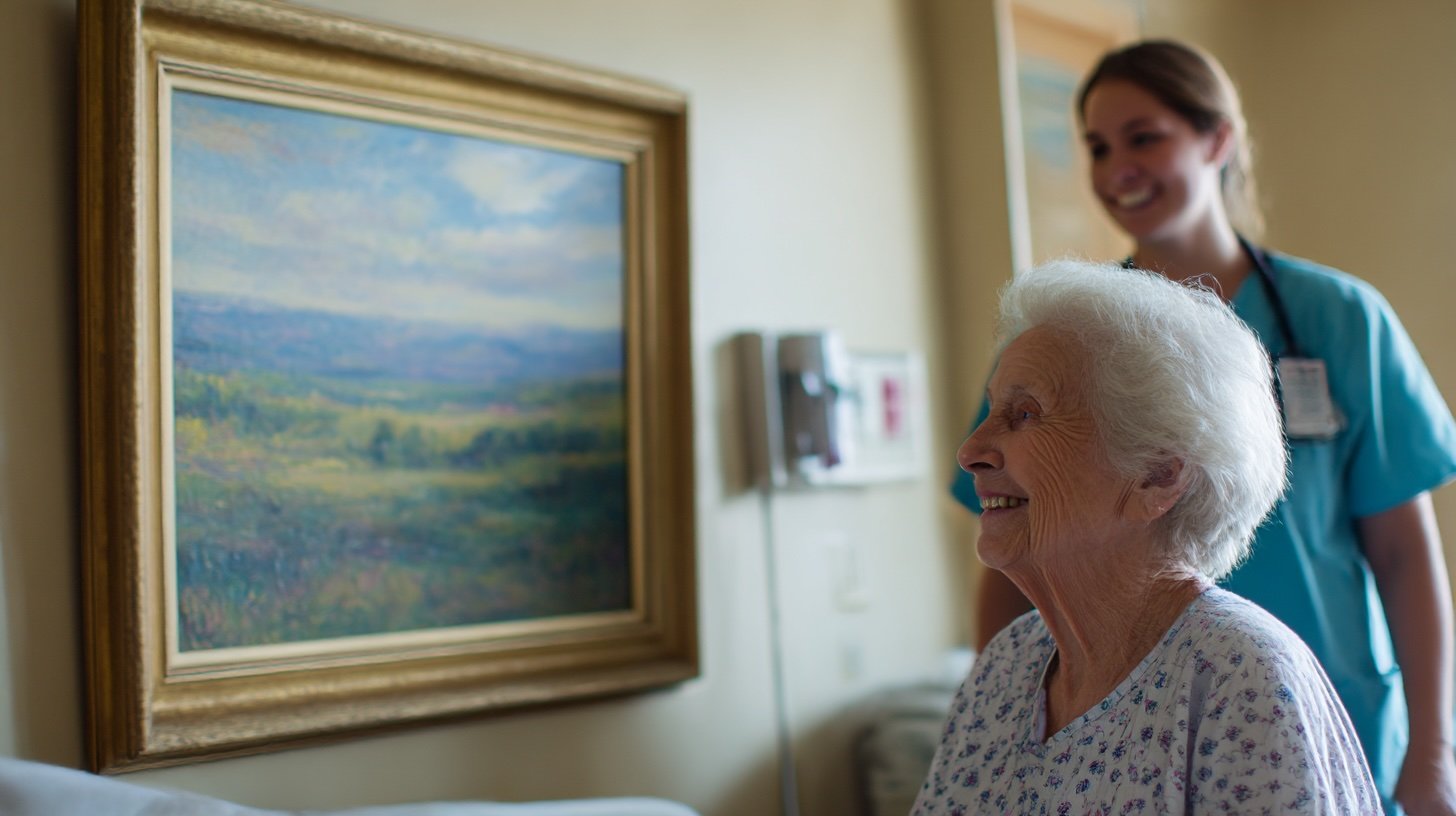
Imagine this: you’re in a hospital corridor, the fluorescent lights humming overhead like slightly sinister bees, and the only thing breaking the monotony is a print of a landscape that looks suspiciously like the Windows XP background. You pause. You stare. You suddenly feel a tiny bit less like a lab rat waiting to be called in for tests. That, my friend, is science at work, though not the sort with clipboards and lab coats. It’s the growing body of research that says looking at art, even in the most sterile of settings, can actually improve your wellbeing.
This isn’t some new-age mantra cooked up by a wellness influencer with an Instagram filter obsession. Earlier this year, a hefty systematic review examined 38 studies involving nearly 7,000 participants and confirmed what some of us have suspected ever since we sneaked into a gallery on a rainy afternoon and walked out mysteriously calmer: art doesn’t just sit there looking pretty, it does something to you. Not just in galleries, but in hospitals, clinics, even on a laptop screen during yet another Zoom call. And the magic isn’t limited to serene Monet lilies or haunting Rembrandts; even abstract splashes or conceptual photography can trigger the effect.
The researchers used the sort of language scientists love—words like “eudaimonic wellbeing” and “meaning-making”—but what it boils down to is simple: looking at art helps people feel more connected to life, more present, more human. That’s quite an achievement for a bit of paint or pixels. And it’s not limited to art connoisseurs who can spot a Turner from across the room. Anyone can benefit, whether you know your Van Gogh from your van rental or not.
The irony is that while everyone nods along when told that playing or creating art can improve mental health, the idea that just looking at it might do the same is often brushed aside. Yet the evidence is piling up. Take one study where people viewed artworks online for just a few minutes. Their mood lifted. Anxiety levels dipped. And those who were more sensitive to aesthetics got the biggest hit of joy, like an espresso shot for the soul. It’s the equivalent of emotional fast food, only without the guilt or the heartburn.
Hospitals have quietly been onto this for decades. There are programmes like Paintings in Hospitals, which loans actual art to healthcare settings. Patients report that the works offer comfort, spark conversations, even provide hope. Staff feel less like they’re working in a place designed by Kafka and more like they’re part of something humane. The art doesn’t cure cancer or stitch wounds, but it does something equally radical—it makes people feel human in an environment that often strips them of that feeling.
It’s not just anecdotal either. Physiological changes back this up. Art in clinics has been linked to lower heart rates, reduced pain perception, and calmer breathing. Imagine walking into a waiting room lined with soothing landscapes instead of posters warning you about seventeen ways your lifestyle might kill you. You might still have high blood pressure, but at least you won’t get it from staring at the décor.
Governments are starting to catch on, albeit slowly. In the UK, a report estimated that engaging with arts and culture adds around eight billion pounds’ worth of benefits to public health each year. That’s not pocket change. Reduced medication use, delayed onset of dementia, improved productivity, fewer GP visits—it’s the kind of data that should make policymakers drool. And yet, when budgets get cut, arts programmes are often the first to go, dismissed as frills rather than frontline tools. Perhaps what’s missing is a marketing rebrand. Instead of calling it an art loan, call it a non-invasive therapeutic intervention with proven cost savings, and watch the funding roll in.
What’s fascinating is how democratic this all is. You don’t need to buy a ticket to the Louvre or splash out on a pricey print. Even a high-resolution image on a phone screen can give a boost. Virtual reality exhibitions have shown similar benefits, which is good news for anyone whose idea of a day out doesn’t involve battling queues and overpriced café sandwiches. In fact, digital art access might be the great equaliser, taking masterpieces out of marble halls and into people’s bedrooms, hospital wards, or care homes.
The psychology behind it is still being untangled. Some theories suggest that art engages brain circuits tied to reward and pleasure, releasing dopamine like a well-timed slice of cake. Others argue that it invites reflection, offering a rare moment of pause in lives that otherwise resemble conveyor belts of tasks. Some point to art’s ability to reduce feelings of isolation by connecting us to shared human experiences across time and culture. Whatever the mechanism, the outcome is the same: we feel better, even when life doesn’t give us much reason to.
There’s also the small matter of dignity. Being in a hospital can make you feel like a specimen, stripped of privacy, patience, and sometimes clothing. Art restores a sense of normality. A vibrant painting on the wall reminds you there’s still a world out there with sunsets, joy, humour, and creativity. It says: you’re not just a patient in a gown, you’re still a person capable of wonder. That shift in perception may not show up on a blood test, but it lingers in the spirit.
Not everyone responds to the same kind of art, of course. Some people swear by the calm of watercolours, others get more from edgy contemporary installations that look like they belong in an IKEA accident report. The point isn’t what you look at, but that you look at something that triggers a response. The cliché that beauty lies in the eye of the beholder turns out to be scientifically useful advice. If a neon sculpture shaped like a lobster makes you smile, then that’s the medicine working.
Sceptics might mutter that this is all just placebo. But even if it were, placebos that reduce anxiety, lift mood, and improve quality of life without side effects are rare treasures. Unlike many medications, art doesn’t carry a leaflet warning about dizziness, nausea, or death. The only possible danger is getting stuck in front of a canvas for too long and missing your bus.
In a way, this research is forcing us to rethink what counts as healthcare. We’ve been conditioned to equate treatment with pills, procedures, and machinery. Yet here comes a reminder that something as deceptively simple as looking at art can offer measurable benefits. It suggests that wellbeing is not just about fixing what’s broken but also nurturing what makes us feel whole.
Hospitals, with their endless corridors and antiseptic walls, may never resemble galleries, but sprinkling them with art transforms the experience. Imagine waiting for a daunting appointment while gazing at a tranquil seascape rather than a peeling noticeboard. Or recovering from surgery while a colourful abstract keeps you company instead of beige wallpaper. It’s not about distraction, it’s about enrichment.
This isn’t confined to medical settings. Workplaces, schools, and homes can all benefit from the same principle. A study in a grey office with nothing but spreadsheets might make you feel trapped, but add a splash of colour or a quirky print, and suddenly the environment feels less like a punishment. It’s the same brain pathways responding, gently nudging us towards resilience and balance.
And perhaps that’s the most compelling point: art is everywhere if we choose to notice it. It doesn’t demand you decode symbolism or memorise art history trivia. It only asks for a moment of attention, and in return it offers a shift in mood, a flicker of meaning, a reminder of life’s messy richness. Whether you’re stuck in traffic staring at a mural, scrolling through digital exhibitions in bed, or wandering through a ward where someone thought to hang a painting, art has the potential to change the way you feel.
We’ve spent centuries arguing over what art means, who gets to make it, who gets to own it. Maybe the answer has been quietly obvious all along: art is good for us. Not metaphorically, but measurably, clinically, biologically. And it works without needing us to perform, produce, or understand. All we have to do is look.