Two Million Years of Rain
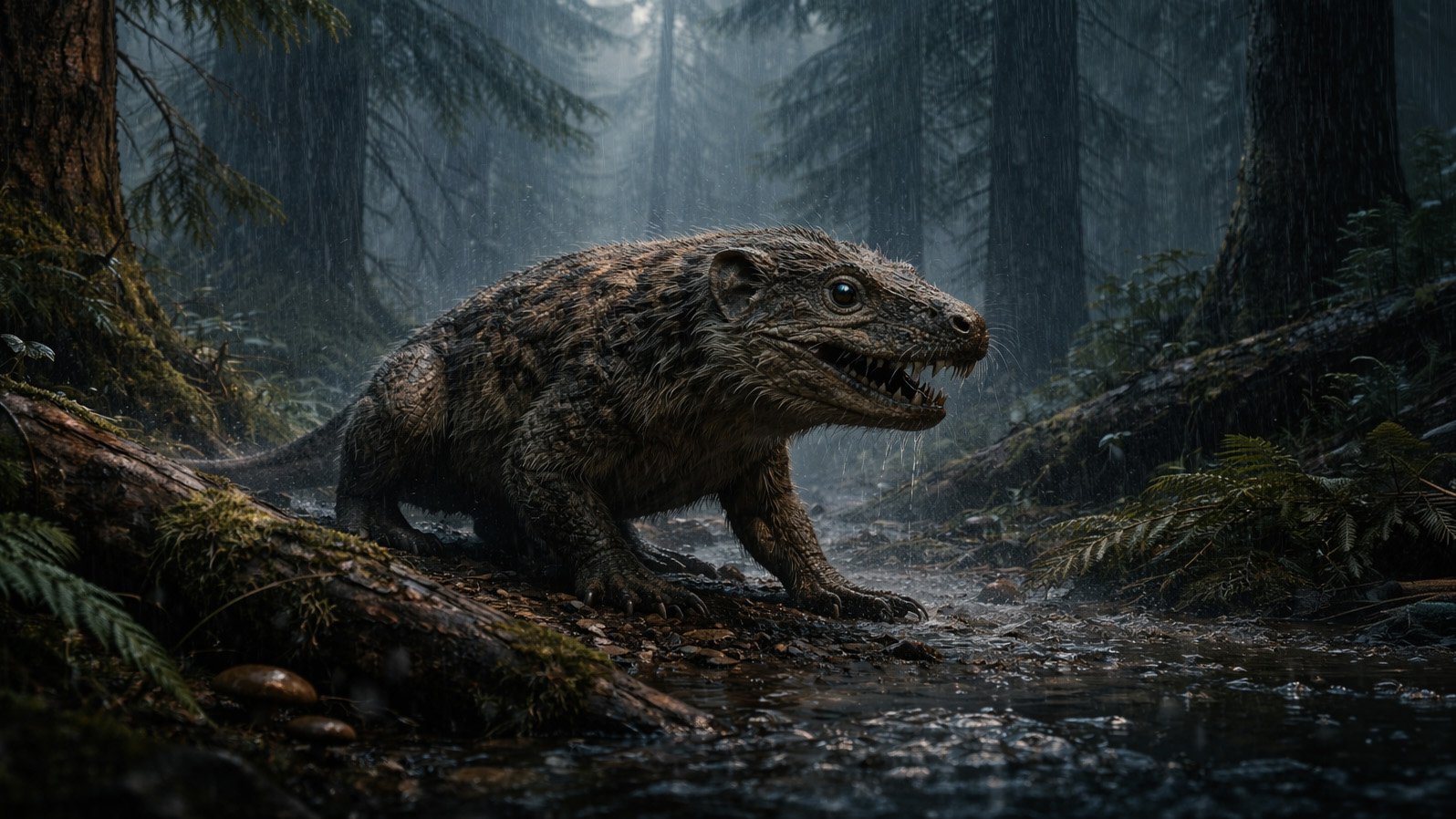
Rain sounds nice at first. However, it becomes tiring when it keeps returning month after month. Now imagine that strange weather lasting almost two million years. That idea sits at the heart of the Carnian Pluvial Episode, a period in the Late Triassic when Earth’s climate behaved in unusual ways. Many people hear phrases like “two million years of rain” and picture endless drizzle. As a result, they imagine a muddy world with no breaks. This image is misleading. Scientists are not saying it rained every day. Instead, they mean that between about 234 and 232 million years ago, many regions became much wetter than usual for a very long time. At the same time, this happened during an era that was normally hot and dry.
To see why this matters, it helps to look at what came before. Back then, all the continents were joined together into one giant landmass called Pangaea. The climate followed strong seasonal patterns, often driven by monsoon winds. Because of this, many inland areas stayed dry for long stretches. Scientists can spot this dryness in rocks formed by evaporation, hard dry soils, and dusty floodplain sediments.
Then the story changes. Suddenly, the rocks show stronger signs of flowing water. Rivers grew more powerful and carried larger amounts of mud and sand. For example, in Britain, rock layers from this time show repeated shifts that point to wetter conditions. Similarly, in Germany, thick river deposits appear where dry sediments once dominated. In the Alps, dark, clay-rich layers interrupt long runs of limestone. Together, these clues suggest that rainfall and runoff increased.
Scientists noticed these patterns long before they gave them a name. In 1989, two researchers, Michael Simms and Alastair Ruffell, suggested that these changes came from a widespread wet period during the Carnian Age. However, their idea did not convince everyone right away. Some scientists argued that rivers can change for local reasons. Because of this, wetter rocks in one place do not always prove a global climate shift. As a result, the debate pushed researchers to gather evidence from many regions.
That debate still shapes the language used today. Some studies call the Carnian Pluvial Episode an “event”, which sounds short and sudden. Others prefer the word “episode”, which sounds longer and less tidy. This difference is more than wording. It guides how readers imagine the change. A short event suggests one sharp moment, while an episode allows for ups and downs over time.
The phrase “nearly two million years” can also cause confusion. Scientists did not measure rainfall with a clock. Instead, they matched rock layers from different places using fossils, changes in Earth’s magnetic field, and chemical signals. When these records line up, they show that unusual climate conditions lasted roughly one to two million years. Moreover, many researchers think the wetter climate arrived in several pulses rather than one endless wet stretch.
This is why the phrase “without dry seasons” needs explanation. Earth did not lose its seasons. Instead, the balance shifted. Wet seasons became wetter, while dry periods weakened or shortened in many places. As a result, rivers carried more water and landscapes began to change. Since Pangaea was enormous, these effects did not look the same everywhere. In fact, some regions changed more than others.
Scientists rely on many clues to support this picture. On land, wetter climates speed up the breakdown of rocks and increase river flow. Therefore, more mud and sand wash into basins and seas. Ancient soils can also show signs of forming in wetter conditions. In addition, fossil pollen and spores reveal which plants were growing and how much moisture they needed.
Even amber helps tell the story. During the Carnian, amber deposits became more common. Amber comes from tree resin, and changes in climate can affect how much resin trees produce. This does not mean the world turned into a rainforest. Instead, it shows that plant life and land ecosystems changed in noticeable ways.
The oceans add another part of the story. In many areas, limestone reefs and carbonate platforms declined during this time. They were replaced by muddy sediments. This change suggests shifts in seawater chemistry, temperature, or oxygen levels. At the same time, stronger rivers likely carried extra nutrients and sediment into the sea, which made life harder for reef-building organisms.
Chemical evidence adds further detail. Scientists study carbon isotopes in rocks, which act like signals of how carbon moves through Earth’s system. During the Carnian Pluvial Episode, these signals show drops that suggest large amounts of carbon entered the air and oceans. In some regions, this happened more than once. Therefore, the carbon cycle likely faced repeated disruptions.
Many researchers think volcanoes played a major role. Huge eruptions linked to the Wrangellia volcanic region released large amounts of carbon dioxide and other gases. Carbon dioxide warms the planet. As the planet warms, air can hold more moisture. Consequently, rainfall and storms can become stronger, especially in monsoon climates.
However, volcanoes affect climate in more than one way. Carbon dioxide causes long-term warming. Other volcanic gases can cool the climate for short periods. In addition, acidic conditions can harm marine life that builds shells from carbonate. Because of this, the same eruptions could cause wetter land conditions and serious problems in the oceans.
Not all scientists think volcanoes explain everything. Some researchers point to changes in mountains and land shape that could have altered wind and rain patterns. Others focus on regular changes in Earth’s orbit that affect climate cycles. Most likely, several forces worked together, with volcanism providing a strong push and other processes shaping the details.
Popular summaries often make the story sound too simple. Saying the episode “lasted two million years” does not mean constant rain everywhere. Instead, it means signs of climate disturbance appear across that span of geological time. Within it, there were wetter phases, quieter phases, and clear regional differences.
A better way to imagine the Carnian Pluvial Episode is as a long period of unstable seasons. Some years were much wetter than normal. As a result, rivers flooded more often and spread thick layers of mud. Later, drier conditions tried to return, yet the climate shifted again. This repeated pattern fits the evidence better than the idea of endless rain.
Life did not ignore these changes. The Carnian followed the massive end-Permian extinction, when ecosystems were still recovering. During the wetter interval, some marine groups declined, especially those tied to reefs. In certain seas, oxygen levels dropped. On land, changing water supplies reshaped habitats and food chains.
Dinosaurs often take centre stage in this story. Some scientists think the changing climate helped early dinosaurs spread and diversify. However, dinosaurs did not suddenly take over because of one wet period. Their rise was gradual, and many of their relatives thrived both before and after this time.
Plants changed as well. Fossil pollen suggests that plants suited to wetter conditions became more common during the humid phases. Later, familiar Mesozoic forests developed. In addition, swamps and peat-forming environments returned in some areas, ending a long gap when coal-forming conditions were rare.
Lakes also reacted strongly. Changes in rainfall and volcanic input could alter lake chemistry and oxygen levels. Therefore, the episode was about more than rain alone. Water reshaped entire landscapes, from soils and rivers to lakes and shallow seas.
Scientists are careful not to rely on just one type of evidence. Rivers can shift course, plants can move, and chemical signals can have several causes. For this reason, strong conclusions come from matching many independent clues. When sediments, fossils, and chemistry all point in the same direction, confidence grows.
Even so, debates remain. The exact timing depends on how rock layers are matched and dated. Some regions show clearer wet signals than others. In addition, scientists still discuss how much volcanism, tectonics, sea level, and orbital cycles each mattered.
The word “global” can also mislead. A global climate event does not mean the same weather everywhere. Instead, it means a shared cause with wide effects. Different regions respond in different ways, depending on geography and air circulation.
Some researchers divide the Carnian Pluvial Episode into several wet pulses because signs of runoff and ecological stress rise more than once. Others describe the whole interval as a single episode, especially for general readers. When you hear “two million years”, it helps to ask what that time span includes.
The idea of “no dry seasons” sticks because people like clear extremes. In reality, seasons continued, but the balance changed. Dry periods became less severe in many places, which was enough to transform landscapes and ecosystems.
Another misunderstanding is that more rain must mean better conditions for life. Extra rain can also bring floods and erosion. At the same time, it can lower oxygen levels in seas. Because of this, a wetter world can help some organisms while harming others.
The word “pluvial” adds to the confusion. It sounds like one huge downpour. In geology, it simply labels a group of rocks linked to wetter conditions. Therefore, the Carnian Pluvial Episode was a long disturbance within a generally dry age, not a planet-wide rainstorm.
In simple terms, three ideas matter most. First, many areas that were usually dry became much wetter during part of the Carnian Age. Second, this shift matches changes in the carbon cycle, temperature, and sediment patterns. Third, the disturbed interval lasted about one to two million years and included several wet phases.
Dating such ancient climate changes is difficult. Scientists use volcanic ash layers, fossil sequences, magnetic signals in rocks, and repeating sediment patterns linked to Earth’s orbit. Each method has limits, so dates come with ranges rather than exact years.
Because of these limits, the Carnian Pluvial Episode is often dated to around 234–232 million years ago. Its length may be described as closer to one million years in some studies and closer to two in others. This reflects real scientific uncertainty, not confusion.
There are also fascinating details. Some Carnian amber pieces trap tiny organisms, offering rare views of ancient life. Reef systems suffered during the episode but later recovered in new forms. In this way, the Carnian Pluvial Episode acted as both a crisis and a turning point.
Above all, the episode offers perspective. Earth’s climate can change quickly on geological timescales. Once changed, it can stay unusual for longer than any human society could endure. Meanwhile, simple phrases can turn into myths, even when the rocks tell a careful and complex story.