Tomb Guardians of Ancient China: The Silent Protectors of Your Afterlife
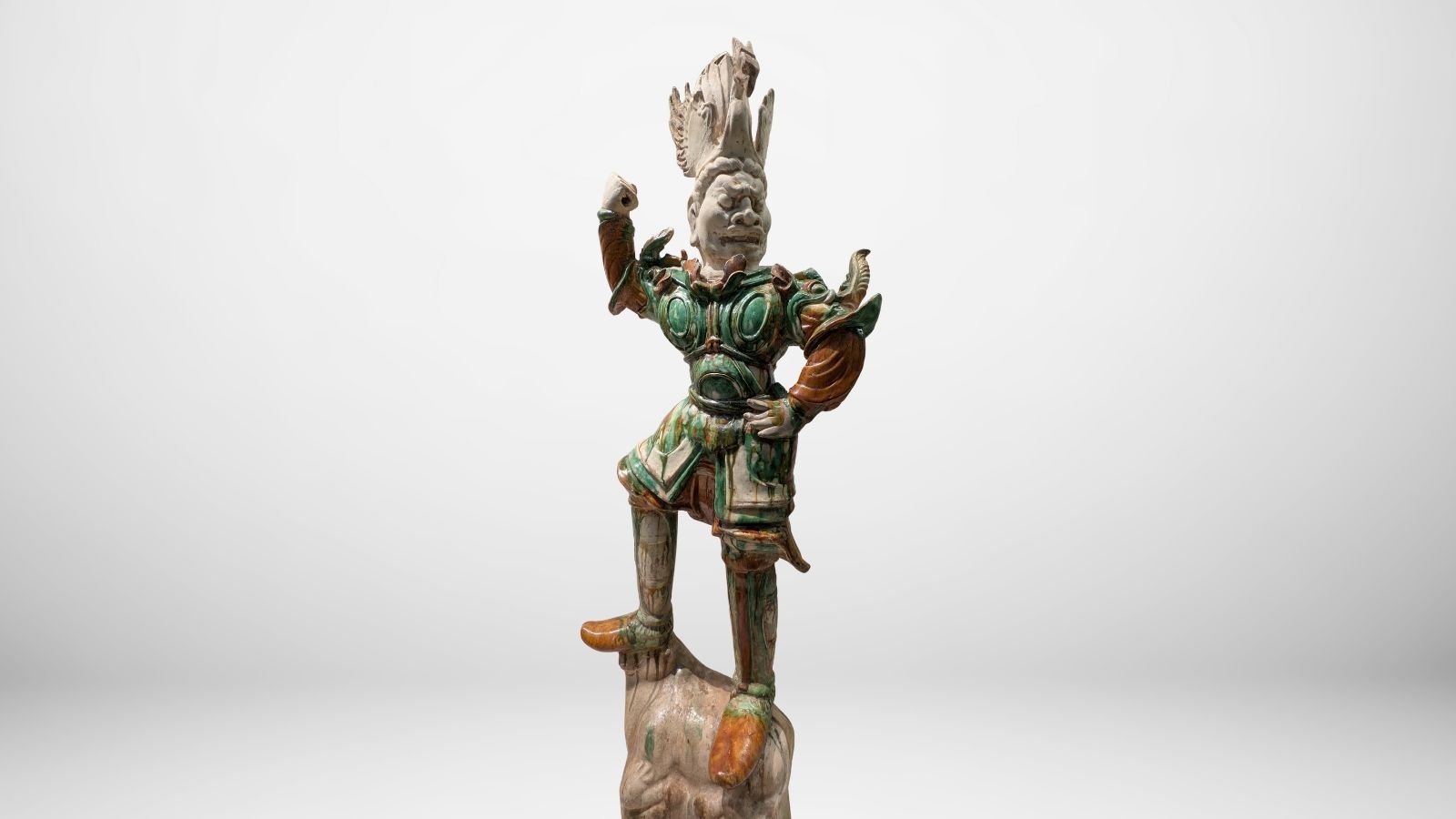
They stand with bent knees, clenched fists, bulging eyes, and expressions that suggest they would happily wrestle a demon before breakfast. Tomb guardians in ancient China were not decorative niceties. They were security systems, status symbols, and metaphysical bouncers rolled into one. Their job was simple: keep the dead safe, keep the living respectful, and keep malevolent forces well away from what lay underground.
Ancient China treated death as a relocation rather than an ending. Life continued elsewhere, under different rules but with familiar hierarchies. Officials remained officials. Soldiers still guarded. Servants still served. If you had enemies in life, you could reasonably expect to have them after death as well. That assumption shaped burial culture for more than a millennium and gave rise to one of the most striking visual traditions in Chinese art.
The earliest tomb guardians emerged during the Han dynasty, when burial goods known as mingqi became increasingly elaborate. These objects acted as substitutes for real people and possessions, allowing the dead to maintain comfort and authority without dragging half the household into the grave. Alongside miniature houses, granaries, pigs, and servants appeared figures whose expressions suggested zero tolerance for nonsense. These guardians were not gods. They were closer to supernatural civil servants, appointed to maintain order below ground.
Fear played a role, but pragmatism mattered more. Tomb robbery was common, spirits were unpredictable, and the afterlife had its own bureaucracy. A guardian with exaggerated muscles and an aggressive stance made a clear statement. This grave was protected. This occupant still mattered. Interfere at your peril.
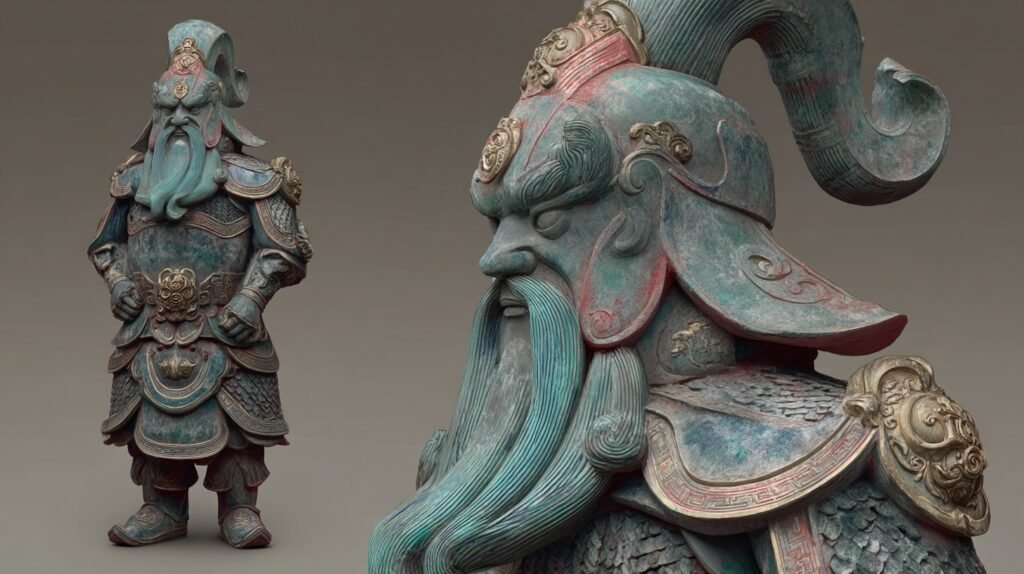
By the Tang dynasty, tomb guardians reached their most flamboyant phase. Artisans embraced drama with enthusiasm. Figures grew taller, more dynamic, and far more colourful thanks to sancai glazing in amber, green, and cream. These were no longer static sentries. They looked mid-action, one foot crushing a demon or earth spirit, the torso twisted as if responding to an unseen threat.
Tang tombs usually featured pairs of guardians, carefully positioned along the spirit path leading into the burial chamber. One type represented the earth spirit, often horned or winged, part beast and part myth. Its role was to control chaotic subterranean forces, earthquakes, restless ghosts, and whatever else might crawl up from the underworld. The other type took human form, an armoured warrior with a commanding pose and a face carved into a permanent scowl. Together they covered both the cosmic and the practical.
These figures borrowed heavily from military iconography. Armour mirrored that worn by real Tang soldiers. Boots, belts, and shoulder guards followed contemporary fashion. This was not accidental. The Tang state saw itself as orderly, cosmopolitan, and powerful. Tomb guardians echoed that confidence, extending imperial authority into death itself. Even underground, hierarchy held firm.
There is also an undeniable theatrical streak. Raised arms, clenched fists, exaggerated brows, and flared nostrils all suggest motion and intent. They were meant to be seen, even if only briefly during burial rites. The message was aimed as much at the living as at invisible forces. This tomb belonged to someone important. Respect it.
Not every guardian looked monstrous. Some appear almost comically overbuilt, their expressions teetering between menace and caricature. That tension reflects an important cultural balance. The goal was deterrence, not chaos. Guardians frightened away trouble by their presence alone. Ideally, they never had to act.

The most extreme expression of tomb guardianship sits on an entirely different scale. The Terracotta Army of the First Emperor transformed the idea into a logistical marvel. Thousands of life-sized soldiers, each with individual features, ranks, and equipment, stood ready for eternal service. This was not symbolic protection. It was administrative continuity. An emperor who ruled through armies in life expected nothing less in death.
Unlike later guardians, the Terracotta Army avoided overtly supernatural elements. No demons crushed underfoot. No horns or wings. The threat was managed through disciplined force rather than myth. That choice reflects the Qin obsession with order, control, and uniformity. Superstition existed, but it wore a rational uniform.
As centuries passed, attitudes shifted. Confucian ideals encouraged restraint, moral order, and moderation. Burial customs gradually softened. Guardians remained, but their aggression toned down. Song dynasty examples appear calmer, less theatrical, more symbolic. The job still mattered, but it no longer required a theatrical snarl.
There was also a growing discomfort with excessive burial goods. Lavish tombs drew criticism for waste and moral excess. Guardians survived this critique better than many objects because they served a protective function rather than indulgence. They were useful, not merely luxurious.
Buddhism added another layer. As ideas of judgment, karma, and rebirth spread, the afterlife became less about defending personal territory and more about moral accounting. Guardians adapted accordingly. Some figures borrowed visual cues from Buddhist temple guardians, blending imported cosmology with local tradition. Protection shifted from physical defence to spiritual guidance.
Yet the core idea never vanished. Even modest burials often included some form of protective figure, whether ceramic, stone, or painted on tomb walls. The visual language remained recognisable: strength, vigilance, readiness.
Tomb guardians also tell us a great deal about how ancient China viewed authority. Power did not expire with death. Titles, ranks, and responsibilities followed the individual beyond the grave. Guardians enforced that continuity. They were not personal pets or sentimental memorials. They were officials on permanent assignment.
From an artistic perspective, they offered rare freedom. While court art often demanded restraint and refinement, tomb figures allowed for exaggeration and expressive force. Craftsmen could explore dynamic poses and intense facial expressions without offending elite taste. Ironically, art meant never to be seen again became some of the most vivid surviving evidence of its time.
Modern audiences often read these figures as eerie or exotic, but their creators likely found reassurance in them. They promised stability. They suggested that chaos stopped at the tomb door. Life might end, but order endured.
There is also something quietly ironic in their fate. Designed to ward off disturbance, they spent centuries buried, only to be excavated, displayed, photographed, and debated. They failed spectacularly at keeping the living away, yet succeeded in carrying their message forward.
Today, tomb guardians sit in museums stripped of context, admired for glaze, posture, and form. Their original audience has long gone. What remains is a powerful reminder that ancient China did not fear death so much as it planned for it. Thoroughly. Bureaucratically. With excellent craftsmanship.
In the end, tomb guardians reveal a culture deeply confident in continuity. The afterlife required management, defence, and a clear chain of command. Someone had to stand watch. Someone always did.