Thermopylae: Where 300 Spartans Became Larger Than History
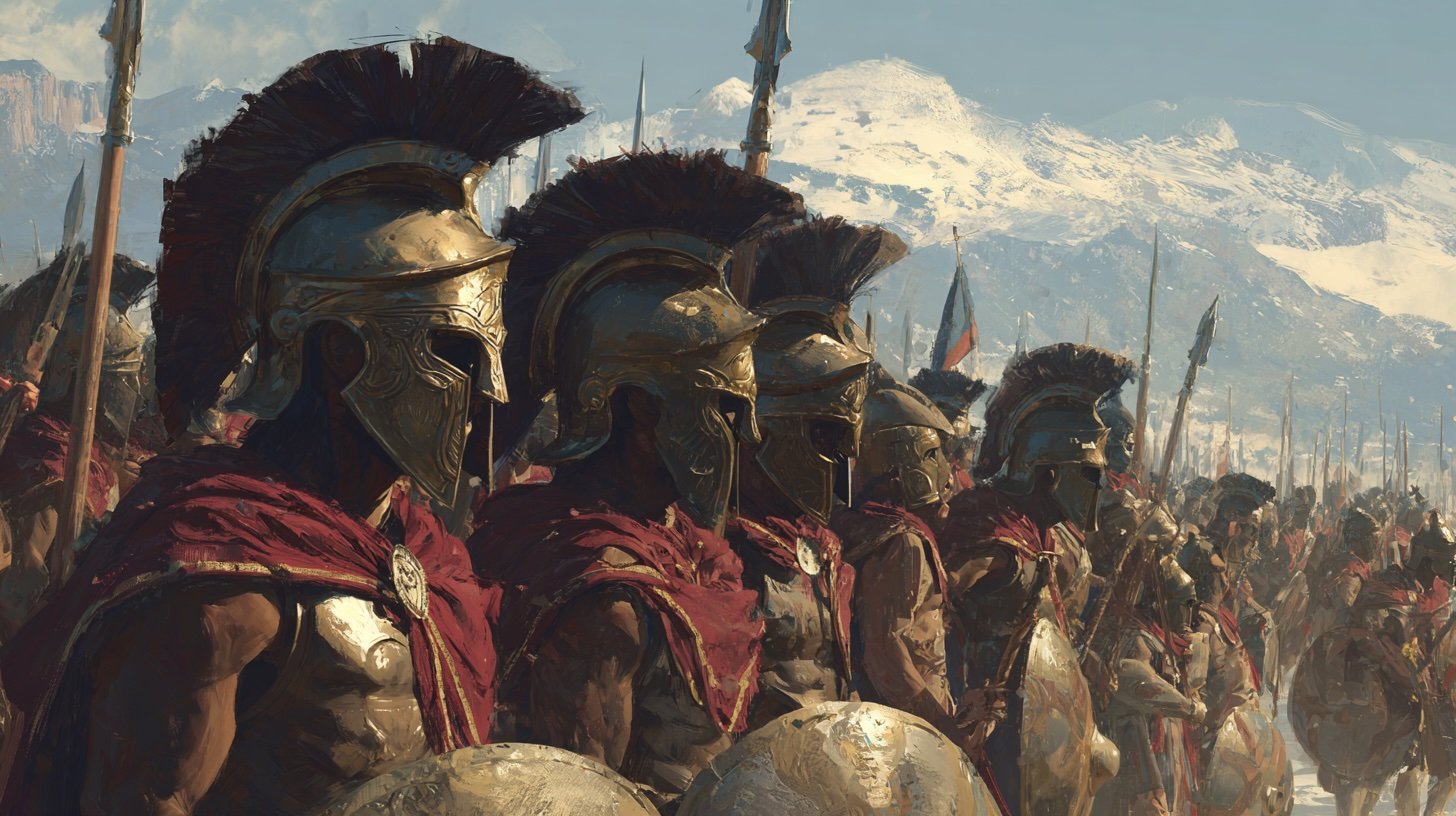
The story of the 300 Spartans never really belonged to history. It slipped early into legend, where bronze muscles gleam, the Persians form an endlessly replenishing tide, and the Greeks hold the line because someone needs to star in an inspirational poster. Yet beneath the layers of heroic varnish sits a real, complicated, occasionally petty human drama set in a narrow Greek pass that smelled of hot springs and impending doom. Thermopylae didn’t become famous because three hundred men died there. It became famous because the story grew legs and refused to sit down quietly.
The Persian Empire did not need to impress anyone in 480 BCE. It stretched from the Indus Valley to the Aegean, covering a vast patchwork of languages, religions and grudging taxpayers. Xerxes I, recently crowned and smarting from the Greek victory at Marathon a decade earlier, decided to settle accounts properly. He built pontoon bridges across the Hellespont, marched an army so large that contemporaries swore it drank rivers dry, and sailed a fleet that terrified even the Mediterranean, which thought it had seen everything. Greek estimates, delivered with the healthy exaggeration of people facing imminent invasion, placed his army at well over two million. Modern historians stick to something shy of a third of a million, which still feels excessive for a summer holiday, but Xerxes wasn’t after beaches. He wanted total submission.
Greece, as usual, responded with bickering. City-states squabbled over leadership like siblings arguing in the back seat. Sparta reluctantly took military command because no one else owned quite as many spears. Athenians provided ships, Corinthians grumbled, and everyone else joined in because being conquered by Persia sounded worse than tolerating each other for a few months. Thermopylae became part of a wider defensive plan that also included a naval stand at Artemisium. The Greeks needed to delay the Persian advance long enough to organise something better than panicked shouting.
Leonidas, the Spartan king pressed into leading the land force, had a problem. The battle inconveniently coincided with the Carneia, a religious festival during which Sparta preferred not to fight. Rules were rules, which meant the city couldn’t send its full army. It could, however, dispatch the royal guard, three hundred strong, all of them men with living sons—Sparta’s discreet way of signalling that this expedition might not involve a return ticket. Leonidas gathered them, added several thousand allied hoplites from across Greece, and marched to the Hot Gates.
Thermopylae was not the broad stretch of shoreline we see today. In 480 BCE it formed a cramped bottleneck between mountains and sea, squeezed so tightly that a handful of disciplined hoplites could block the way. Geography loves a dramatic narrative; this was its contribution. Leonidas inspected the pass, nodded in professional approval, and assembled his troops as comfortably as possible on terrain clearly designed by someone who disliked cavalry.
Xerxes arrived with a sense of ceremony. Persian intelligence had apparently informed him that a small Greek force barred his way. He expected apologies, possibly accompanied by fruit baskets. Instead, he found Spartans combing their hair before battle. This cultural quirk baffled the Persians, who had not read the Spartan handbook explaining that good grooming was perfectly compatible with imminent death. Xerxes ordered the Greeks to surrender their weapons. Leonidas responded with the two words that launched a thousand memes: “Come and take them.”
Day one of the battle began like an ill-advised gym challenge. Waves of Persian infantry surged into the pass and immediately collided with Greek phalanxes packed tighter than rush-hour commuters. Shields overlapped, spears bristled, and the Persians discovered that numerical superiority doesn’t help when the doorway only fits three people. Persian archers tried their famous arrow storms, but Greek hoplites wore heavy armour and held shields the size of small dining tables. Even the Immortals, Xerxes’ elite guard, failed to make progress. For all their speed and skill, they struggled in the confined space, and Greek discipline turned the lane into a meat grinder.
By the end of the second day, the situation had become embarrassing. Xerxes watched his men repeatedly bounce off the Greek line like frustrated moths hitting a lantern. Herodotus writes that the Persian king leapt from his throne in alarm several times, though one suspects he was simply reacting to the realisation that his invasion wasn’t going to plan. The Greeks, rotating their units to stay fresh, held with maddening resilience.
Then came Ephialtes, a local who decided that betrayal looked more profitable than patriotism. He revealed a mountain path that snaked behind the Greek position. Xerxes sent the Immortals along it during the night, and at dawn Leonidas saw the trap spring shut. The Greeks were about to be outflanked, and retreat would only lead to a messy pursuit. Leonidas dismissed most of the allied troops. A thousand men remained voluntarily—or semi-voluntarily, depending on whose account you trust. The 300 Spartans stayed. Seven hundred Thespians refused to leave because they considered honour more important than survival. Four hundred Thebans stayed too, possibly out of coercion or a desire to prove loyalty. Whatever their reasons, they joined the final stand.
The last day at Thermopylae belongs to legend. The Greeks fought in wider ground now that the pass opened slightly, which allowed the Persians more room to envelop them. Spears snapped, swords flashed, armour clattered. Leonidas fell early in the fighting. His men retrieved his body in a furious counterattack, a gesture of respect that carried enormous cultural weight. The Spartans eventually shifted uphill to a small mound, surrounded on all sides. Persian archers ended the battle in a storm of arrows. For the defenders, it was the inevitable final chapter they had signed up for when they marched out of Sparta.
Thermopylae ended in tactical defeat, but the Greeks treated it like spiritual victory. The delay bought invaluable time for Athens to evacuate and for the allied fleet to regroup. The following month at Salamis, the Greek navy dealt the Persians a crushing blow. The year after that at Plataea, the Greeks ended the invasion altogether. Thermopylae, framed against this wider backdrop, became the story of how a doomed last stand helped shift the momentum of an entire war. Whether or not this was strictly true mattered less than how people felt about it.
The myths grew quickly. Herodotus romanticised the numbers, though in fairness, he knew a good story when he saw one. Later writers embellished further. The 300 Spartans became lone saviours of Western civilisation. The Persians swelled into monsters, sometimes literally. Modern retellings trimmed away the thousands of allied Greeks who fought and died there, leaving behind a simpler tale that fit neatly into cinematic posters. Audiences liked their heroes uncomplicated and their geography minimalist.
But the truths, when allowed to surface, are even more interesting than fiction. The Spartans were not a nation of superhero warriors; they trained obsessively, yes, but they also quarreled with neighbours, upheld harsh social rules and practised a form of citizenship that excluded the majority of their population. They won many victories but also suffered humiliating defeats. Thermopylae shows them at their most admirable: disciplined, determined, fully aware of the cost.
The Persians were not faceless hordes either. Their empire was sophisticated, multicultural and administratively impressive. Xerxes commanded troops from Egypt, India, Babylon, Media, Bactria, Sogdia, and beyond. They wore different armour, spoke different languages and marched under a single banner only because the empire had mastered the art of coordinating diversity long before globalisation became fashionable.
Thermopylae reveals a clash of two very different political cultures. Greek city-states prized autonomy, sometimes to the point of self-sabotage. Persia thrived on central authority and relative tolerance. Each side saw the conflict through its own lens. For the Greeks, it was a fight for freedom. For Persia, it was a disciplinary expedition to deal with annoyingly rebellious coastal neighbours.
Numbers, of course, remain a source of eternal fascination. The Greeks began with roughly seven thousand men. The Persians perhaps fielded a hundred thousand in the immediate theatre. The famous 300 Spartans made up only a fraction of the defenders, yet their presence turned the battle into a symbol. People remember the clean simplicity of their sacrifice: a small band willingly opposing a vast empire. The contrast still grips the imagination because it feels beautifully lopsided.
Modern interpretations sometimes lean too hard into the heroic dust. The notion that the 300 saved Europe is tidy but implausible. The Greek victory at Salamis had far more strategic significance. The subsequent triumph at Plataea sealed the Persian withdrawal. Thermopylae’s value is emotional rather than strategic. It gave the Greeks a story to rally around, a demonstration that courage could hold the line even when everything else suggested retreat.
The afterlife of the battle also contains its share of contradictions. Sparta later erected a monument at the site with the famous line urging passers-by to tell the Spartans that the fallen obeyed their laws. Nearby stands a more modern statue dedicated to the Thespians, who died in equal measure without subsequent cinematic fame. The Thebans, overshadowed by political complications, rarely receive the same attention. History is picky about whom it elevates.
Then there are the survivors. Two Spartans lived through the battle: Aristodemus, who had been recovering from an eye injury, and Pantites, who returned late from a diplomatic mission. Far from celebrating their survival, Sparta shamed them. Aristodemus fought later at Plataea with reckless fury, as though determined to prove himself. Pantites, crushed by public scorn, took his own life. The myth of heroic death left little room for more nuanced endings.
The imagery surrounding Thermopylae remains compelling because it taps into something universal: the admiration we feel for those who hold a line others would have abandoned. It invites reflection on leadership, loyalty and what we choose to remember. Leonidas didn’t expect to win. He aimed to delay, to signal defiance, to embody the stubborn streak that Greeks enjoyed seeing in themselves. His strategy worked better in the cultural imagination than on the battlefield, but imagination often outlives fact.
Thermopylae still echoes across speeches, novels and political rhetoric. Leaders reference it when they want to honour last stands or highlight moral resolve. Artists return to it whenever they need a visual shorthand for courage. Tourists visit the site expecting grandeur, only to discover a squashed road flanked by hills and a few unassuming memorials. The Hot Gates today hardly resemble the battlefield of 480 BCE, thanks to silt deposits pushing the shoreline outwards. The narrow pass of legend has widened into something disappointingly ordinary. Yet the story still rises above the landscape, filling in the gaps with imagination.
What remains undeniable is that Thermopylae shows how stories gain meaning through retelling. Three hundred Spartans fought there, but thousands of others did too. The Persians were powerful, but not monstrous. The Greeks were brave, but not flawless. Somewhere between the sharp spearpoints and the exaggerated numbers lies a tale about people doing what they believed necessary, even when hope had packed its bags and left early. That’s why Thermopylae endures. Not because it changed the course of history on its own, but because it offered a reminder that courage leaves a deeper mark than victory.
The next time someone mentions the 300 Spartans as lone heroes holding back an empire, you’ll know the wider cast, the messier motives and the human threads that weave through the story. Heroism rarely appears as neatly as legend would like. But Thermopylae shows that even the untidy versions can inspire, especially when told beside hot springs that still whisper distant echoes of bronze on bronze.