The World’s Most Expensive Peptides
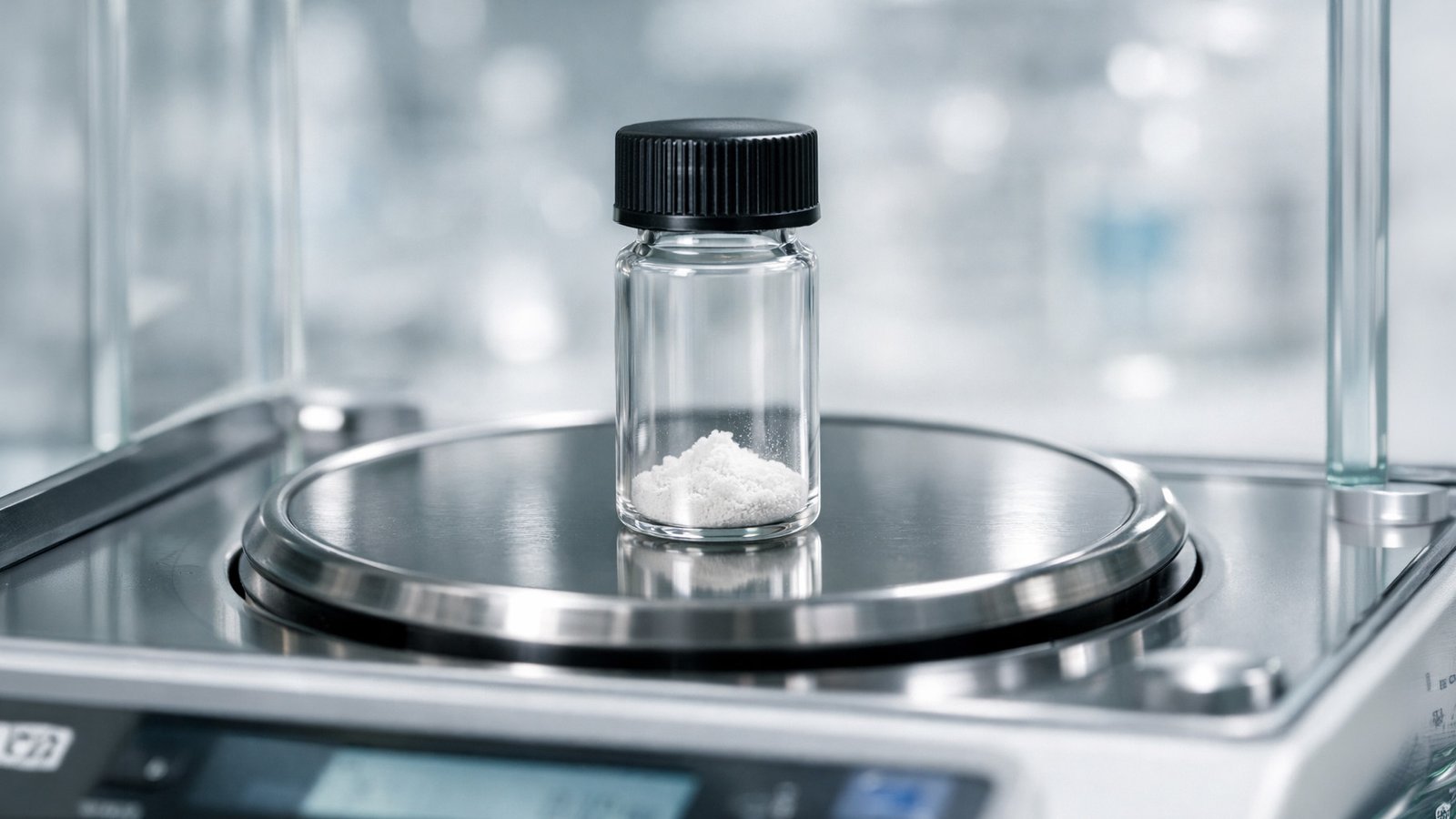
In pharmaceutical manufacturing, size rarely predicts difficulty. Some large molecules behave politely in the reactor and move through production with surprising efficiency. Peptides rarely offer that courtesy. Even a chain of a few dozen amino acids can become a stubborn chemical puzzle that consumes weeks of work and a surprising amount of money.
At first glance the idea sounds odd. A peptide is simply a chain of amino acids, and biology builds those chains constantly inside living cells. However, reproducing the same precision in an industrial environment proves far less forgiving. Chemists must assemble each amino acid in the exact order while preventing every other possible reaction from happening at the same time.
Because of that constraint, peptide chemistry behaves like a sequence of controlled moves rather than a single reaction. Each amino acid must be attached step by step. Meanwhile the remaining reactive groups must stay carefully protected so they do not interfere. Then the protecting groups must be removed again, often under conditions that cannot damage the growing chain.
As a result, one therapeutic peptide may require dozens of repeated reaction cycles. Each cycle includes coupling reagents, solvents, monitoring, washing, and verification that the step worked correctly. If even one step performs poorly, the yield for the whole chain begins to shrink.
This is why peptide manufacturing rarely resembles a neat textbook diagram. Instead it looks more like a long relay race. Every step must pass the baton cleanly to the next one. When the chain grows longer, the probability of mistakes quietly increases.
The most widely used technique behind modern peptide manufacturing is solid-phase peptide synthesis, usually shortened to SPPS. In this method the first amino acid attaches to a small resin bead. Chemists then build the peptide chain directly on that solid support. After every reaction they wash away excess reagents and prepare the chain for the next step.
The idea is elegant, yet the reality remains demanding. Each coupling step requires carefully protected amino acids and activating agents. After the reaction the resin must be washed repeatedly to remove unwanted by-products. Then the protecting group on the next amino acid must be removed before the cycle begins again.
Consequently the process consumes large amounts of solvent and time. Dozens of reaction cycles quickly accumulate into hundreds of individual operations. Meanwhile analytical testing follows closely behind to confirm that the chain still looks correct.
Another difficulty appears when chemists consider reaction efficiency. Even a highly successful step might achieve around ninety-eight per cent yield. That number sounds impressive until it repeats thirty or forty times. Small losses accumulate quietly across the sequence.
Therefore the final mixture rarely contains only the target peptide. Instead it contains a crowd of close relatives. Some sequences miss one amino acid. Others include an extra fragment. Some develop oxidation or deamidation changes during synthesis.
At this stage purification becomes unavoidable. High-performance liquid chromatography, commonly called HPLC, remains the main workhorse for peptide purification. The technique separates molecules based on subtle differences in chemical behaviour.
Yet separation takes patience. Each chromatographic run requires time, solvent, and analytical monitoring. Sometimes one purification pass does not deliver the required quality. Consequently manufacturers may repeat the process several times before reaching the desired purity.
Therapeutic peptides typically require extremely high purity levels. Regulatory standards demand tight control of related impurities, stereochemical accuracy, solvent residues, and counterions. In practice that means the final product must look chemically identical to the intended molecule.
Because of these requirements purification can become one of the most expensive stages in the entire workflow. Large volumes of solvent pass through chromatography columns while analytical systems monitor every fraction. Only the correct material finally survives the process.
Length certainly influences cost, but length alone does not decide the champion. A short peptide produced in massive volume may become relatively affordable. Meanwhile a medium-length peptide with unusual modifications may cost dramatically more.
Semaglutide illustrates this balance well. The molecule contains thirty-one amino acids, which already makes synthesis demanding. However the real complication comes from its fatty-acid side chain attached through a specialised linker. This modification extends the drug’s half-life by promoting albumin binding in the bloodstream.
From a therapeutic perspective the design is brilliant. Patients benefit from longer dosing intervals and more stable pharmacology. From a manufacturing perspective the modification introduces another layer of complexity.
Chemists must now attach the fatty side chain at exactly the correct position without damaging the peptide backbone. Site-specific functionalisation requires precise conditions and careful monitoring. Any deviation risks producing a mixture of partially modified molecules.
Tirzepatide moves further along this complexity curve. The molecule contains thirty-nine amino acids together with a fatty diacid side chain connected through a spacer. The longer chain increases the number of reaction cycles required during synthesis.
Moreover the structural modification adds further analytical challenges. Purification must separate the correctly modified peptide from closely related variants. Even small differences in structure can influence biological activity.
Meanwhile bone-related peptides bring their own manufacturing demands. Teriparatide and abaloparatide both contain thirty-four amino acids. Their sequences are manageable but still long enough to require careful synthesis and purification.
Because these peptides must meet strict clinical quality standards, manufacturers often invest significant effort in process optimisation. Even small improvements in yield or purification efficiency can reduce costs noticeably.
Another fascinating category involves personalised cancer vaccines. Researchers increasingly design neoantigen peptides tailored to the mutations found in an individual patient’s tumour. Each patient may require a unique set of peptide sequences.
This approach offers remarkable therapeutic potential. However it challenges traditional manufacturing economics. Instead of producing one sequence at enormous scale, companies may produce dozens of distinct peptides in small batches.
Factories generally prefer repetition and large volumes. Personalised peptide therapy offers neither. As a result the cost per gram can rise dramatically even though the quantities remain small.
In these programmes the true expense often lies in the surrounding infrastructure. GMP manufacturing requires detailed documentation, validated equipment, extensive testing, and strict quality release procedures. Those requirements remain largely the same regardless of batch size.
Consequently personalised peptide production can become extraordinarily expensive on a per-gram basis. The chemistry itself might be manageable. The regulatory and operational framework multiplies the total effort required.
Failure also contributes quietly to peptide cost. Not every synthesis proceeds smoothly from beginning to end. Some sequences aggregate during solid-phase synthesis, which slows reactions and lowers yields.
Other sequences resist dissolution during purification. Hydrophobic peptides sometimes cling stubbornly to chromatography columns. Sensitive amino acids may oxidise during handling.
Each of these challenges may require process adjustments or repeated synthesis attempts. Although such setbacks rarely appear in marketing brochures, they shape the economics of peptide manufacturing.
Another important factor involves material efficiency. Producing a single gram of purified peptide may require far more starting material than outsiders expect. Solvents, reagents, protecting groups, and purification losses accumulate across the process.
Recent analyses of peptide manufacturing highlight how heavy the material footprint can become. Compared with many small-molecule drugs, synthetic peptides may generate significantly higher process mass intensity. In simple terms the final gram often carries a long trail of discarded material behind it.
Nevertheless the pharmaceutical industry continues to invest heavily in improving peptide production. Researchers are exploring more efficient coupling reagents, greener solvents, and automated synthesis platforms. Some newer methods dramatically reduce solvent consumption.
These improvements matter because peptide medicines have become one of the fastest growing areas in drug development. Hormone analogues, metabolic regulators, and targeted signalling molecules now dominate several therapeutic fields.
GLP-1 receptor agonists offer a vivid example. Drugs such as semaglutide and tirzepatide have transformed the treatment of type 2 diabetes and obesity. Demand for these molecules has expanded at a remarkable pace.
Yet increased demand also highlights the complexity of manufacturing them. Companies must scale production without sacrificing purity or reliability. Even small deviations in quality could affect clinical outcomes.
Therefore manufacturers invest heavily in analytical technologies and process control. Sophisticated monitoring systems track each stage of synthesis and purification. Meanwhile quality teams verify that every batch meets strict specifications.
It is also important to separate manufacturing cost from the final price of a medicine. Drug pricing includes many additional elements. Clinical trials, regulatory approvals, distribution systems, and intellectual property protections all contribute to the final figure.
Consequently a medicine may appear extremely expensive even if its manufacturing cost represents only part of the story. Peptide synthesis is challenging, but the pharmaceutical market introduces additional economic layers.
Nevertheless chemistry still plays a central role. Long sequences, complex modifications, high purity requirements, and small production volumes combine to push certain peptides into the highest cost category.
Semaglutide becomes expensive because it combines a relatively long chain with specialised lipid modification. Tirzepatide adds additional residues and structural complexity. Parathyroid-related peptides require careful synthesis across thirty-plus amino acids.
Meanwhile personalised neoantigen peptides disrupt economies of scale entirely. Their value lies in individual specificity rather than mass production.
Taken together these factors explain why certain therapeutic peptides can cost thousands of dollars per gram in research catalogues or small-scale manufacturing contexts. The molecules themselves remain tiny. The process required to build them correctly is anything but small.
In the end peptide economics reflects a simple principle. Biological precision demands chemical precision. Every amino acid must appear in the correct position and every modification must occur at the right site.
When that precision succeeds, the resulting molecule can influence metabolism, immunity, or hormonal signalling with remarkable specificity. Achieving that result requires a chain of chemistry steps that must all succeed together.
Therefore the world’s most expensive peptides are not merely rare molecules. They are the products of demanding synthesis, meticulous purification, strict regulation, and constant analytical scrutiny.
That combination of chemistry and precision explains why such small substances sometimes carry such large price tags.
Post Comment
You must be logged in to post a comment.