The Tudor Bedroom: Where Marriage, Sex, and Community Shared the Same Space
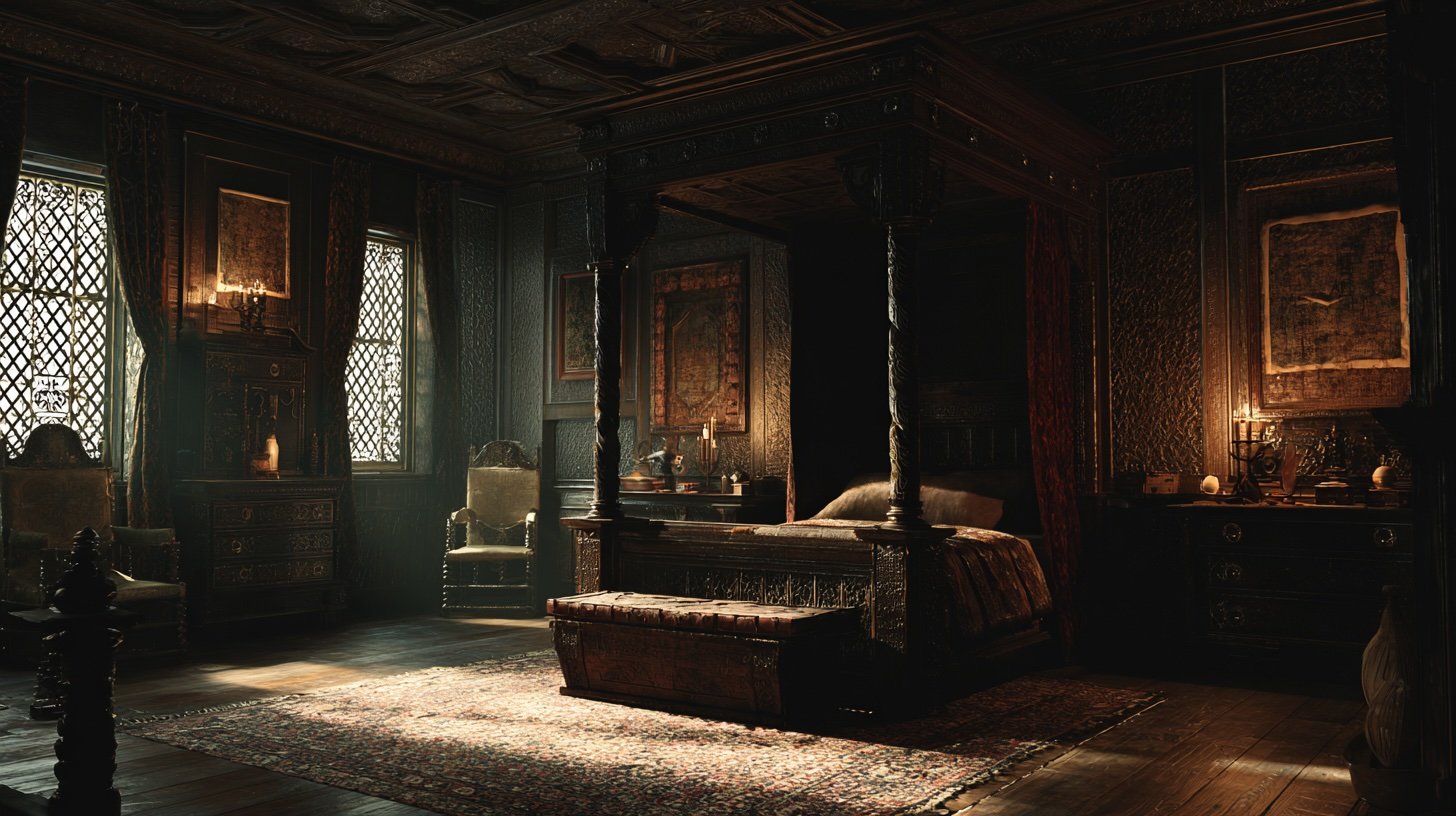
The Tudor bedroom did not whisper. Instead, it spoke loudly, often to an audience. It smelled of bodies, wool, smoke, and damp linen, and it functioned less as a private retreat than as a crossroads where marriage, hierarchy, faith, and daily survival collided. To step inside a sixteenth‑century bedchamber, therefore, means abandoning modern ideas of intimacy almost immediately.
At the centre stood the bed. It dominated the room physically and symbolically. It was the most expensive object most households owned, sometimes worth more than the rest of the furniture combined. Even modest families invested heavily in beds because sleep mattered, warmth mattered, and because the bed carried meaning far beyond comfort. Marriage quite literally revolved around it.
Property changed hands beside it. Children arrived from it. Illness unfolded in it. Death often ended there too. Consequently, the bed anchored family life from beginning to end.
Despite what period dramas suggest, Tudor bedrooms rarely offered solitude. Servants entered freely. Children slept close by. Apprentices, relatives, and visitors sometimes shared the same bed. Even in grand houses, attendants hovered nearby. Privacy existed on a sliding scale, increasing with wealth yet never reaching modern expectations.
Curtains helped, although they shielded rather than sealed. Four‑poster beds with testers and embroidered hangings signalled status more than comfort. Heavy fabrics trapped heat and blocked draughts from ill‑fitted windows. At the same time, they kept out insects and soot drifting from hearth fires.
Linen sheets rested on mattresses stuffed with straw, chaff, wool, or feathers, depending on means. Cotton lay centuries in the future. Clean linen mattered morally as much as physically. Preachers regularly linked fresh sheets to godliness, discipline, and sexual order.
Bedsheets were washed, contrary to popular myth, although far less frequently than today. Bodies were wiped rather than submerged. Full bathing carried medical suspicion, yet partial washing remained routine. As a result, the bedroom felt lived‑in rather than filthy, heavy with scent rather than neglect.
Marriage shaped the meaning of that space. Love existed, yet marriage rarely hinged on affection alone. Property, alliances, labour, inheritance, and reputation weighed heavily. Among elites, families negotiated matches carefully, sometimes brutally. Consent mattered legally; pressure mattered socially.
Secret marriages flourished precisely because public approval carried such force. Among ordinary people, choice played a larger role, although community oversight remained intense. Courtship unfolded under watchful eyes. Meetings happened during work, at church, or during shared meals.
Tokens passed hands quietly. Letters circulated. Nevertheless, prolonged physical privacy before marriage attracted suspicion. Betrothal blurred boundaries. Many couples treated engagement as moral permission, even if church courts officially disagreed.
Sex before marriage occurred more often than moralists liked to admit. Church records overflow with cases of premarital pregnancy. Communities responded pragmatically. A child conceived after betrothal often caused less outrage than a pregnancy without declared intention. Marriage restored order, at least on paper.
Religion hovered constantly in the bedroom. Sex within marriage was permitted and even encouraged, yet desire itself raised anxiety. Pleasure needed justification. Medical theory helped. Many believed female pleasure aided conception, which allowed enjoyment to exist under the banner of reproduction.
Lust for its own sake, however, remained suspect. Rules restricted sexual activity more than modern readers expect. Sundays, feast days, Lent, Advent, periods of menstruation, pregnancy, and post‑childbirth recovery all theoretically banned intercourse. Taken literally, this left surprisingly few permissible days.
In practice, couples interpreted rules flexibly. Birth patterns suggest negotiation rather than strict obedience. The marriage bed reflected lived compromise rather than doctrinal purity.
The wedding night carried enormous symbolic weight. In wealthier households, the bedding ceremony marked the transition from public contract to physical union. Family and friends escorted the couple to the chamber. Prayers were spoken. Jokes followed. Blessings mixed with embarrassment.
Curtains closed, yet the marriage remained a communal event. Consummation mattered legally. A marriage without sex could be challenged and annulled, especially among elites where property and succession hung in the balance. Contrary to lurid myth, proof relied on testimony rather than inspection.
Witnesses spoke. Letters circulated. Reputation did the work. Morning rituals sometimes confirmed completion. Public acknowledgement mattered because marriage functioned as social glue. It stabilised inheritance, labour, and morality.
Gender hierarchy shaped everything inside the bedchamber. Husbands held legal authority over wives’ bodies and property. Obedience defined ideal femininity. Wives owed sexual availability alongside domestic order. Sermons repeated this relentlessly.
Yet the bedroom also created subtle spaces of influence. Wives controlled access, managed fertility through spacing and timing, and shaped daily rhythms. Emotional negotiation mattered. In long marriages, mutual dependence often softened theory.
Domestic violence existed and society tolerated a degree of it. Excessive cruelty, however, risked intervention from neighbours or church courts. Community mattered more than privacy. Marriage unfolded under observation.
Pregnancy transformed the bedroom again. The bedchamber became a lying‑in room, darkened, sealed, and feminised. Curtains closed. Windows were covered. Female relatives and midwives took control. Men withdrew.
Birth unfolded as a communal female event shaped by ritual and belief. Medical understanding blended classical theory and folklore. Heat, position, emotional state, and even bedroom orientation supposedly affected conception and a child’s sex.
Infertility nearly always blamed women, although male infertility appeared quietly in medical texts. Blame followed power. Same‑sex intimacy existed mostly in silence. Male same‑sex acts attracted severe legal penalties, while female intimacy remained harder to define and therefore less visible.
Bedrooms offered opportunity and danger in equal measure. Discovery carried consequences. Even so, letters, jokes, and court records reveal humour, tenderness, frustration, and desire woven through daily life.
The Tudor bedroom held contradictions comfortably. It staged intimacy without privacy, affection without romance as an ideal, sex without modern freedom, and marriage as both emotional bond and economic engine.
It absorbed births, arguments, prayers, bargains, and secrets without ever pretending to be quiet. To imagine Tudor love, therefore, is not to picture candlelit isolation. Instead, it means whispered words behind drawn curtains while footsteps pass outside and the community listens closely for what the marriage bed might produce next.