The Top Hat Scare of 1797
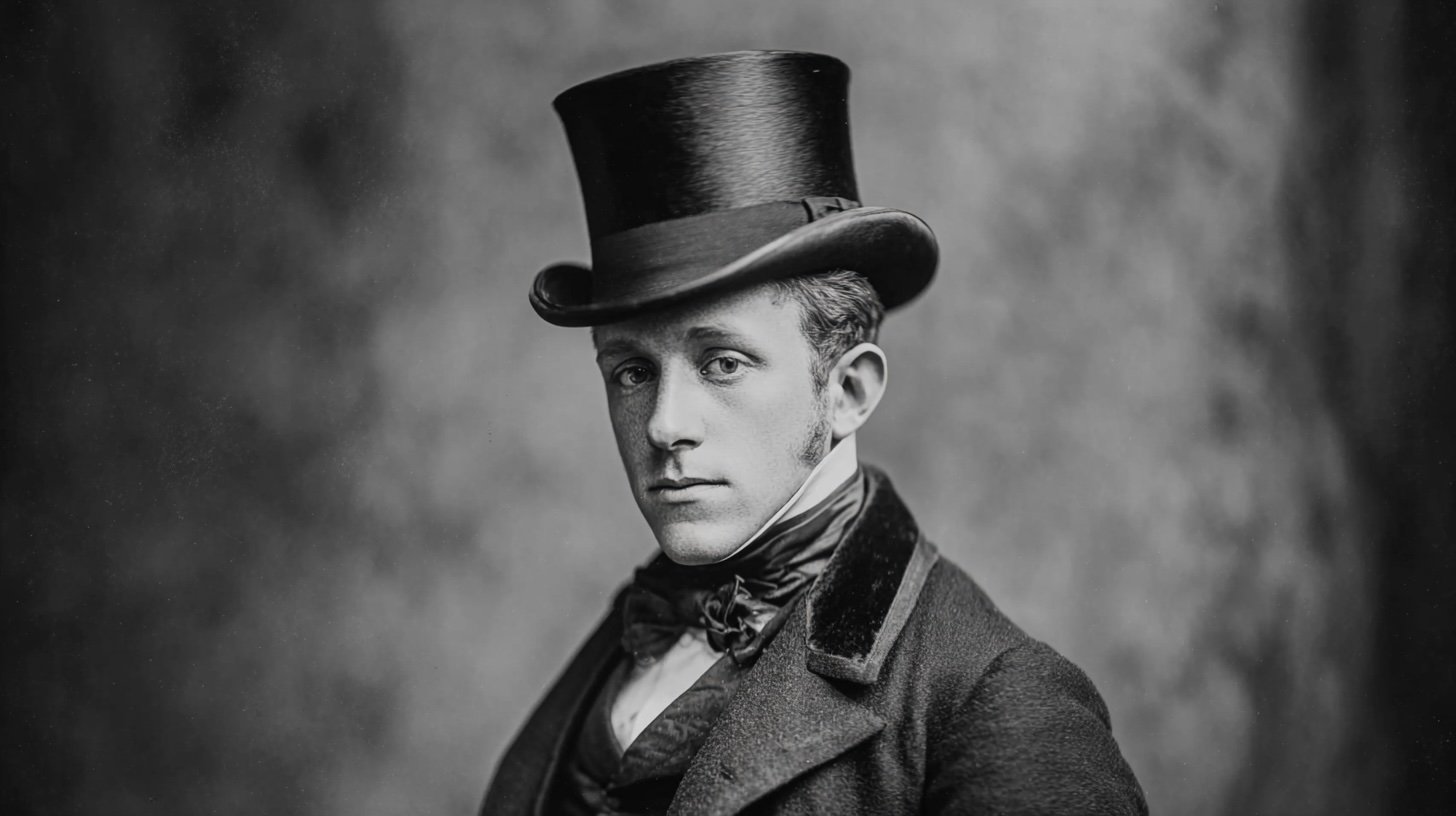
The top hat has never looked innocent. Even today, it carries baggage: authority, spectacle, money, theatre, and sometimes menace. Yet its earliest reputation was stranger still. According to a story that refuses to die, the top hat once caused a riot in London. Women fainted. Children screamed. Horses panicked. Eventually, the police intervened. Order collapsed. All because a man walked down the street wearing what looked like a chimney on his head.
This event supposedly took place in January 1797. At the time, the hat was tall, black, rigid, and entirely unfamiliar. The wearer was said to be a London haberdasher named John Hetherington. However, the fine he allegedly paid varies by version. Likewise, so does the street, the crowd size, and the exact nature of the disturbance. What stays consistent is the punchline: London could not handle the top hat.
Here is the problem. No one at the time seems to have noticed. London in the late eighteenth century documented everything. For instance, newspapers thrived on scandal. Courts recorded minor infractions with enthusiasm. Street disturbances rarely passed without comment. Yet there is no contemporary report of a riot caused by a top hat. There is no arrest record. There is no magistrate’s note. Nor is there an outraged editorial. Instead, the first written accounts appear decades later, quietly slipping into collections of curious anecdotes as if they had always existed.
As a result, this becomes one of those historical stories that feels true without being factual. The riot did not happen. The shock, however, did.
To understand why the top hat felt unsettling, it helps to picture London before it arrived. Men’s hats followed the human body. Tricornes, bicornes, caps, and soft felt hats curved, folded, and sat low. They belonged to a world shaped by muscle, cloth, and gravity. Even formal headwear still acknowledged the skull beneath it.
By contrast, the top hat broke that unspoken agreement. Instead of following the body, it rose straight up. Rather than accommodating anatomy, it ignored it entirely. Height appeared where none had existed before. Early versions used beaver felt stiffened with shellac, giving the surface a glossy, almost mechanical finish. Some examples were genuinely tall, far taller than later Victorian models. In a city used to horizontal spread and rounded silhouettes, this rigid vertical cylinder felt unmistakably aggressive.
More importantly, it looked modern. The 1790s were not calm years. London watched the French Revolution with fascination and fear. Clothing had become political. Consequently, trousers, jackets, hats, and even colours carried meaning. A hat was no longer just protection from weather. Instead, it became a statement about class, allegiance, and respectability. When the top hat appeared, it did not look aristocratic in the old sense, nor comfortably working class. Rather, it looked commercial, assertive, and urban.
This is where the myth begins to feel plausible. A man wearing a strikingly new top hat would have drawn attention. Naturally, people would have stared. Jokes would have followed. Crowds in Georgian London formed easily. They gathered around street performers, accidents, arguments, and novelty. Therefore, a small knot of onlookers could quickly become a scene. That did not require panic or violence. It only required curiosity.
Over time, later writers mistook that everyday social friction for something larger. The story of the riot appears to crystallise in the mid-nineteenth century, when the top hat had already completed its transformation. By then, it had become the uniform of bankers, officials, and respectable men. Imagining that this symbol of authority once caused chaos was irresistibly ironic. In that sense, the tale reassured readers that even the most respectable conventions began as outrageous disruptions.
As the story travelled, details drifted. The hat grew taller with every retelling. The crowd became more hysterical. Meanwhile, the fine became more specific. John Hetherington turned into a convenient protagonist, a named figure to anchor the anecdote. None of this required evidence. The story worked because it felt right.
What actually happened instead was slower and more revealing. The top hat spread because it solved practical and social problems. Its height made men look taller and slimmer. Its rigid structure survived rain better than softer hats. In addition, its clean lines suited the emerging language of professionalism. As London’s commercial class expanded, the top hat fitted the mood. It signalled seriousness without aristocratic ornament. Above all, it looked deliberate.
This explains why reactions were mixed rather than explosive. Some mocked it. Satirical prints exaggerated its proportions until wearers looked absurdly elongated. Others, however, adopted it quickly, recognising its advantages. Fashion rarely changes through riots. Instead, it changes through awkward transitions, half-acceptance, and quiet copying.
The myth also persists because it flatters modern sensibilities. It suggests that people in the past were more excitable, more easily shocked, and less rational. In reality, they were simply navigating rapid change without the benefit of hindsight. The top hat symbolised something new pressing into view: modern urban identity.
Once established, the top hat never fully lost its edge. It oscillated between respectability and caricature. Politicians wore it to look authoritative. Undertakers wore it to look solemn. Meanwhile, stage villains adopted it to look untrustworthy. Magicians turned it into a theatrical prop. By the twentieth century, it could signal wealth, arrogance, eccentricity, or irony, depending on context.
That long afterlife feeds back into the original story. We half-expect the top hat to cause a reaction because, in truth, it still does, just more quietly. It draws the eye. It disrupts familiar outlines. And it declines to fade into the background. As a result, those qualities make the riot story feel emotionally plausible, even when it falls apart under closer examination.
There is also something deeply London about the myth. The city prides itself on tolerance and understatement, yet it has always reacted sharply to visible disruption. Loud fashions, foreign styles, and sudden novelty have repeatedly caused moral panic. In retrospect, the top hat simply became a convenient early example, elevated into legend.
Today, historians treat the event as a cautionary tale about how history gets decorated. A minor moment of surprise becomes a riot. A curious crowd becomes social breakdown. A new hat becomes a threat to public order. Ultimately, the process says less about 1797 and more about how later generations enjoy packaging the past.
The real story of the top hat is more interesting than the fake riot. It shows how objects can carry meaning far beyond their function. It also shows how fashion reflects economic shifts, political anxiety, and changing ideas of masculinity. Finally, it shows how modernity often arrives not with explosions, but with awkward glances and muttered commentary.
So no, London did not riot over a top hat. The streets did not erupt. The police did not panic. Yet the hat still mattered. It unsettled people because it announced something new without explanation. In a city already uneasy about change, that was enough to make it memorable.
That is why the story survives. Not because it is accurate, but because it captures the moment when the top hat first stepped into view and refused to apologise for itself.