The Rucksack: From Alpine Goat Paths to Office Meeting Rooms
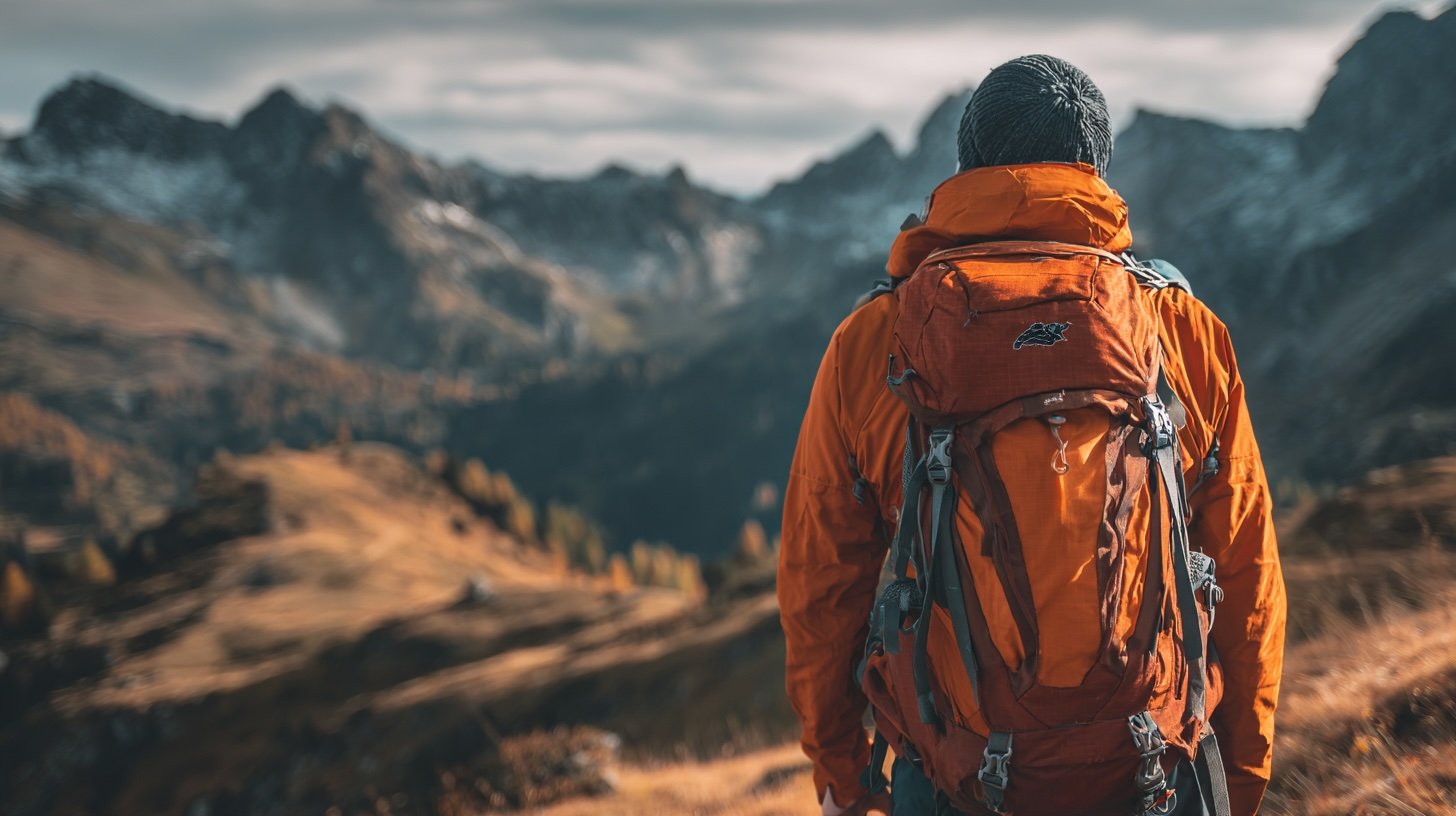
The word looks simple enough. Rucksack. Two blunt syllables, slightly clumsy, very German, a promise of practicality rather than poetry. Yet behind this humble term sits a surprisingly colourful story of human stubbornness, wandering feet, mountain obsessions, military logistics and our eternal desire to haul too much stuff everywhere we go.
The Germans gave us the name. Rücken means back, Sack means… well, sack. A bag for the back. You can almost hear a 19th‑century Alpine guide explaining it with a shrug while tying a goat‑hide bundle around his shoulders. English speakers liked the term. Borrowed it around 1853, kept it as‑is, probably because it sounded tougher than the daintier backpack and far more serious than knapsack, which feels like something a Victorian boy might take on a school field trip to collect leaves.
Long before the word made its way into polite British speech, humans had already perfected the fine art of carrying awkward, heavy loads on their backs. Prehistoric hunters strapped animal hides into makeshift sacks. Early traders strapped woven baskets to wooden frames. Travellers tied possessions with rope and hoped for the best. Whenever humans needed to move things they couldn’t hold in their hands, the answer was usually some variation of the back‑sack idea.
The people roaming the Alps were especially inventive. In those steep valleys and high passes, simple sacks weren’t enough. You needed structure, so out came the wooden frame. The earliest alpine carriers, known as Kraxen, were basically lattices of wood strapped to a person like an overly ambitious wearable coat rack. These contraptions hauled firewood, tools, dead chamois, enormous quantities of cheese and anything else that needed transporting up or down ridiculous gradients. Not elegant, but astonishingly effective.
By the time the world reached the mid‑19th century, mountaineering stopped being a survival necessity and became a hobby for people with more enthusiasm than sense. While Britain supplied the eccentric gentlemen and the romantic motivations, the German‑speaking world supplied the vocabulary and the equipment. Alpine clubs began to appear. Climbers wanted a proper bag that could carry clothes, ropes, food and the questionable optimism required to go up cliffs wearing tweed. They adopted the German word Rucksack because it was already widely used in the mountains and, frankly, it sounded suitably no‑nonsense.
The military also fell in love with the idea. Nations needed soldiers to march with half their lives strapped to their backs: ammunition, blankets, food rations, emergency bits of metal that might once have been tools. Early military rucksacks tended to be stiff, canvas‑heavy creations that showed little consideration for human shoulders or spines. Comfort wasn’t the priority. Durability was. A good rucksack survived mud, rain, deep snow and the enthusiastic handling of sergeants who believed nothing should ever be carried lightly.
As armies modernised, so did their sacks. External metal frames arrived, allowing soldiers to carry more weight without collapsing. They didn’t collapse as often, which was technically an improvement. Later, during conflicts such as the Vietnam War, the American lightweight rucksack emerged with aluminium frames and multiple pockets. It looked like your uncle’s fishing gear had decided to become athletic.
Meanwhile, civilian use exploded. As rail travel expanded and working days shortened, ordinary people finally had weekends to wander about. Hiking was suddenly fashionable. Writers praised the joy of rambling, artists painted idyllic country scenes and all of them needed something to carry sandwiches in. The rucksack shifted from a niche term to a household word.
By the early 20th century, British schoolchildren were marching to class with rucksacks, though these often resembled squashed briefcases with straps. University students heading on summer adventures strapped canvas bags to their backs while attempting not to look too inexperienced in front of Swiss mountain guides. Travellers crossing Europe after the wars learned that a rucksack was the most dependable companion: patient, reliable and available in muddy khaki whether you wanted khaki or not.
Then came the gear revolution. Synthetic materials changed everything. Waterproof fabrics, reinforced stitching, zips that didn’t jam the moment you looked at them the wrong way. Designers discovered hip belts and sternum straps. People started talking earnestly about load distribution. Even casual day‑packs gained engineering ambitions. The rucksack transformed from a simple bag to an entire system, a small portable universe with compartments for laptops, secret pockets for passports, and straps that solve shoulder pressure as though the wearer might be hiking up K2 on the way to the office.
Language, as always, followed its own preferences. In Britain, rucksack stayed popular. Backpack also gained ground, especially with American cultural influence, but rucksack maintained a familiar presence. It is the term that still carries a faint scent of the outdoors, of wind‑beaten hills and long paths, of damp cardigans and sturdy boots. Backpack sounds like a commute. Rucksack still promises adventure.
The original German word never bothered with flourishes. It didn’t pretend to be elegant. It just described what it was, and what it still is. A sack for your back. Perfectly literal, functional and impossible to misunderstand. Which might explain why it spread so easily. People from London to New Zealand now say it without thinking of its Alpine roots.
The journey of the rucksack also mirrors the evolution of human movement. When people walked everywhere, it carried work tools. When exploration fever gripped the 19th century, it carried ropes, food tins and early maps. When the world went through wars, it carried provisions and orders. When peace came, it carried flasks of tea, sketchbooks and slightly soggy sandwiches eaten on rainy hillsides. In the age of remote work and global travel, it carries laptops, charging cables, noise‑cancelling headphones and an emergency snack you forgot you packed three months ago.
There is something wonderfully democratic about the rucksack. Anyone can use one. It doesn’t need instructions. You put things inside, place it on your shoulders and go. It suits children on their first day of school and travellers on a year‑long trip. It sits in boardrooms, clings to cyclists and hops onto trains with tired commuters. It turns even the most business‑like professional into a temporary adventurer simply by distributing weight evenly and preventing shoulder pain.
The modern versions come in every material imaginable. Sleek urban roll‑tops for people who want to look efficient in rainstorms. Minimalist leather ones for those who like the idea of ruggedness but prefer it expressed gently. Technical hiking packs with multiple straps, mesh panels and bright colours that suggest you might, at any moment, abandon civilisation and become a part‑time mountain goat. Yet all of them owe their existence to that early Alpine practicality.
What’s amusing is how much meaning people attach to these bags without realising it. The rucksack you choose says something about you. A battered canvas one suggests literary pretensions and a tendency to collect small notebooks. A black waterproof one signals a commuter who has accepted British weather as an adversary worthy of respect. A large technical pack shows ambition or at least the optimistic belief that camping will be restful. A tiny one announces that you carry nothing but keys, confidence and possibly a granola bar.
Despite all the variations, the spirit remains universal. Humans like to move and humans like to carry things. A rucksack fits our anatomy, keeps our hands free and offers a comforting sense of preparedness. You never know when you might need an extra jumper, a book, a laptop, a charger, a bottle of water or a snack. Having them close suggests you are ready for unpredictable adventures, whether that means scaling a mountain or enduring a long day of meetings.
There is also a quiet irony in the way the rucksack evolved. It grew from an object of survival into an object of convenience, from a tool of explorers and soldiers into a companion for office workers. Yet the emotional appeal remains the same. It whispers one promise every time you sling it over your shoulders: you’re going somewhere. Even if that somewhere is only the corner shop.
Next time you pick one up, think of the journey this simple word has taken. From Alpine dialects to global streets, from wooden frames hauling firewood to laptop‑friendly designs gliding through airports. A rucksack carries much more than its contents. It carries a lineage of practical genius and an unspoken invitation to move through the world with a bit of curiosity.
And yes, the name still sounds a little blunt. But that’s part of its charm. Like the mountains that inspired it, a rucksack doesn’t ask for admiration. It just gets on with the job, quietly, loyally, ready for whatever direction you choose next.