The Real History of Greenland, Beyond Ice, Vikings, and Myths
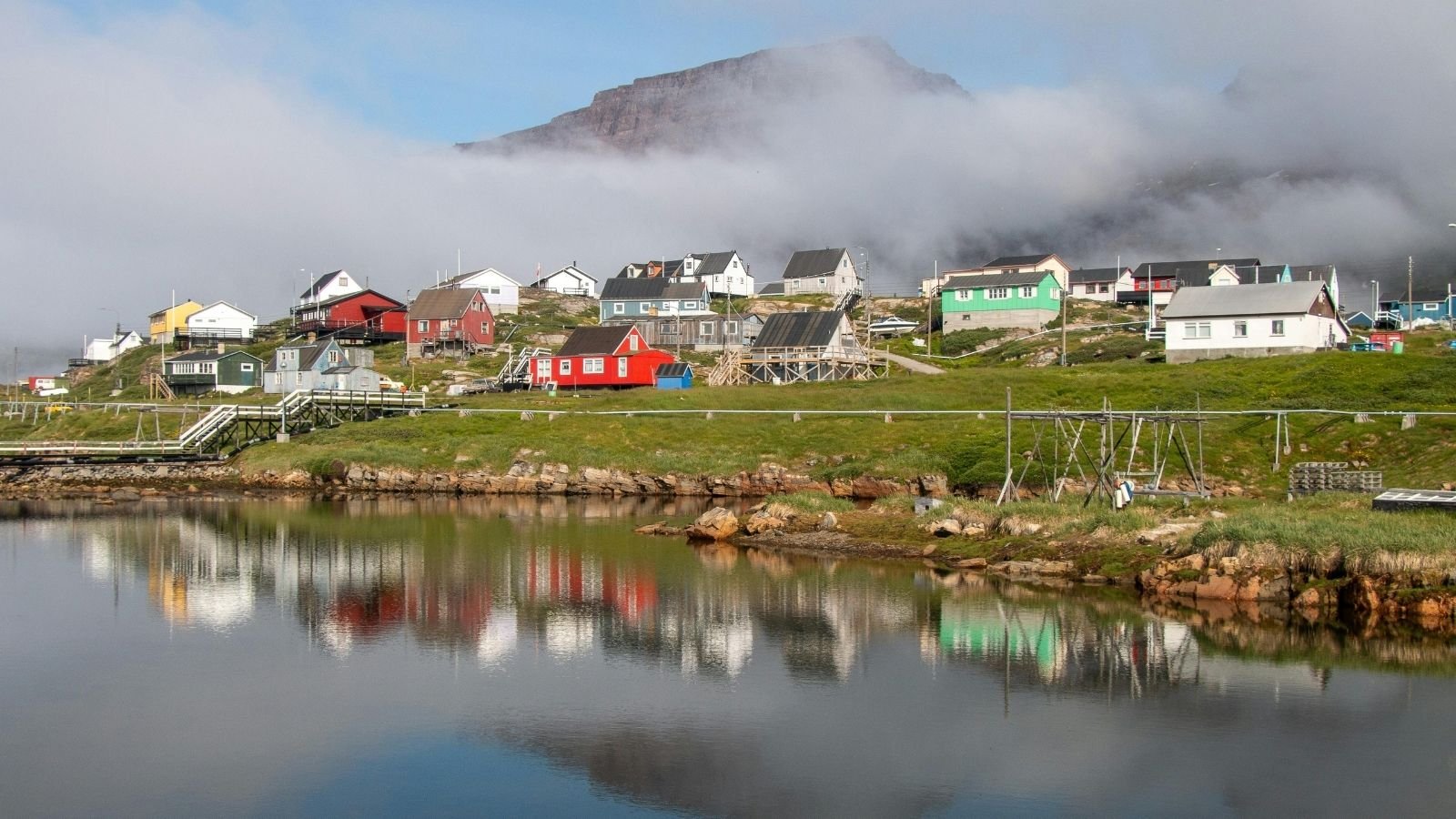
The history of Greenland begins long before ice became its defining headline. Long before climate charts, satellite images, or geopolitical fantasies, Greenland functioned as a proving ground for human survival at the edge of habitability. People arrived there thousands of years ago not to conquer or extract, but to test whether life could hold together in a place that rewarded attention and punished certainty. Maps later made it look empty, yet Greenland was never silent. It accumulated stories, failures, adaptations, and interruptions, each layer shaping the island long before modern history tried to simplify it.
The first humans reached Greenland around four and a half thousand years ago, moving east from the Canadian Arctic. They did not arrive as conquerors or explorers in the heroic sense, but as careful opportunists following animals, ice conditions, and seasonal rhythms. Archaeologists call them the Saqqaq people, although that label hides how little we truly know about their inner lives. What remains are tools, campsites, and traces frozen into the ground with unusual generosity. Permafrost preserved hair, wood, even fragments of clothing, allowing modern science to reconstruct lives that never expected to be remembered.
They vanished. So did the groups that followed them in northern Greenland, known today as Independence I and Independence II cultures. Climate cooled. Ice patterns shifted. Hunting became less predictable. Small populations reached breaking point. Greenland taught its first lesson early: survival there required not only skill, but flexibility and numbers. Without both, even well-adapted cultures could disappear quietly.
The people who stayed were the ones who arrived last. Around the thirteenth century, the Thule culture spread eastward across the Arctic and into Greenland. They came prepared in ways earlier groups were not. They brought dogs that turned distance into movement, boats that made whales accessible, and social systems built around shared risk. Their descendants are the Kalaallit, the Inuit of Greenland today. Unlike earlier cultures, they endured, adjusted, and made the island their own rather than treating it as a temporary edge.
Kalaallit life revolved around motion. Settlements shifted with seasons. Knowledge passed through stories rather than written rules. Survival depended on reading ice, weather, animals, and people with equal care. The landscape was not hostile so much as demanding. It rewarded attention and punished complacency. That relationship shaped a worldview where cooperation mattered more than hierarchy and adaptation mattered more than tradition for its own sake.
While Inuit communities were settling into Greenland, a very different group arrived from the east. Norse settlers from Iceland reached southern Greenland around the year 985. They brought sheep, cattle, iron tools, churches, and a deep confidence in their own way of life. Their leader, Erik the Red, gave the land its most famous marketing slogan. Calling it Greenland was not irony. It was persuasion. If you wanted people to cross dangerous seas, you needed optimism.
The Norse settlements took hold along the south-western coast, where fjords offered grassland during warmer centuries. For several hundred years, they farmed, traded, and worshipped much like their relatives in Iceland and Norway. They exported walrus ivory to Europe and imported prestige goods that reinforced their identity as part of the medieval Christian world. Churches rose. A bishopric appeared. Greenland felt, briefly, like an extension of Europe rather than its margin.
Then the climate cooled. The Little Ice Age shortened growing seasons and made sea travel harder. Trade with Europe became unreliable. Walrus ivory lost value as elephant ivory returned to the market. Farming grew riskier. Rather than shift toward hunting in the Inuit manner, Norse society clung to livestock and imported status. Over time, that rigidity proved fatal. The Western Settlement vanished first. The Eastern Settlement lingered, then faded from records.
For centuries, Europeans told dramatic stories about what happened next. Some imagined violent conflict with Inuit hunters. Others spoke of moral decay or divine punishment. Modern research offers a less theatrical explanation. The Norse did not fail because they were wiped out. They failed because they did not change enough. Their Greenland was an outpost of Europe, not a place they fully reimagined. When conditions shifted, their system broke.
Kalaallit communities, meanwhile, continued. They noticed the Norse, traded with them at times, and then watched them disappear. Oral traditions preserved fragments of contact, stripped of European drama. From an Inuit perspective, the lesson was simple. People who ignore the land eventually lose their place on it.
Greenland’s next reinvention came much later. In the early eighteenth century, Danish-Norwegian missionaries arrived, convinced they would rediscover lost Norse Christians. Instead, they found Inuit societies that had outlasted medieval Europe’s Greenland experiment. Missionary Hans Egede stayed anyway. Denmark framed its presence as protection and spiritual guidance, but it quickly hardened into colonial control.
Trade monopolies shaped daily life. Foreign access was restricted. Inuit hunters became tied to Danish trading posts. Christianity replaced older belief systems, sometimes gradually, sometimes aggressively. Danish language and administration gained authority. Greenland was no longer a place people arrived accidentally. It became a managed possession.
Colonial rule brought mixed outcomes. On one hand, it limited exploitation by rival powers and avoided plantation-style extraction. On the other, it created dependency. Economic decisions flowed from Copenhagen. Cultural confidence eroded. Traditional practices survived, but under pressure to justify themselves against European norms.
The twentieth century accelerated everything. During the Second World War, Denmark’s occupation by Germany cut Greenland loose from its colonial centre. The United States stepped in, building airstrips and bases that pulled Greenland into global conflict without asking permission. After the war, Denmark returned with new urgency and a plan to modernise fast.
Villages were consolidated. Children were sent to Danish-language schools. Housing blocks replaced seasonal dwellings. Fishing industrialised. Health care improved. Life expectancy rose. At the same time, social dislocation followed. Alcohol abuse increased. Suicide rates climbed. The pace of change left little room for consent or adjustment.
Greenland officially ceased to be a colony in 1953, becoming part of the Danish state. On paper, this meant equality. In practice, power remained uneven. Home Rule in 1979 marked a turning point. Self-Government followed in 2009, granting control over most domestic affairs and recognising Greenlanders as a people under international law.
One decision symbolised the new direction clearly. In 1982, Greenland voted to leave the European Economic Community. Fishing mattered more than integration. Control mattered more than scale. The island chose limitation over abstraction.
Facts often surprise people encountering Greenland beyond clichés. It covers more than two million square kilometres, yet holds fewer than sixty thousand people. Most live along the coast, where ice loosens its grip. Inland, the ice sheet dominates, shaping climate far beyond the island itself. Greenland’s glaciers influence sea levels worldwide, making local change a global concern.
Myths persist stubbornly. Greenland still appears in popular imagination as empty, timeless, and static. In reality, it has experienced some of the most intense social transformation of the last century. Another myth paints it as permanently dependent. While economic challenges remain real, Greenland has repeatedly demonstrated political agency when given space to exercise it.
Controversy surrounds the colonial past. Forced relocations near military bases, assimilation policies, and cultural suppression remain unresolved wounds. Denmark has acknowledged some mistakes, but debates over responsibility, apology, and reparations continue.
A newer controversy sits under the ice. Climate change melts glaciers and exposes minerals, rare earth elements, and potential shipping routes. Global powers watch closely. Economic opportunity tempts politicians. Environmental risk alarms communities. Greenland stands once again at a crossroads between adaptation and external expectation.
Independence hovers as both aspiration and question. Many Greenlanders support it in principle. Fewer agree on timing or cost. Danish subsidies remain significant. Global markets remain unforgiving. History offers cautionary tales about moving too slowly and about moving without preparation.
Greenland’s past refuses tidy morals. It shows that survival depends on learning when to hold fast and when to let go. It reveals how identity fractures under imposed speed. And it demonstrates that even the harshest environments can sustain life, while rigid systems collapse under mild pressure.
The island was never merely a backdrop for ice and ambition. It has always been a place where people tested ideas about belonging, adaptation, and control. That experiment continues, not frozen in time, but unfolding in real weather, real politics, and real lives.
Photo by ArcticDesire.com Polarreisen