The Persian Eunuchs Myth: Villains or Just Bureaucrats?
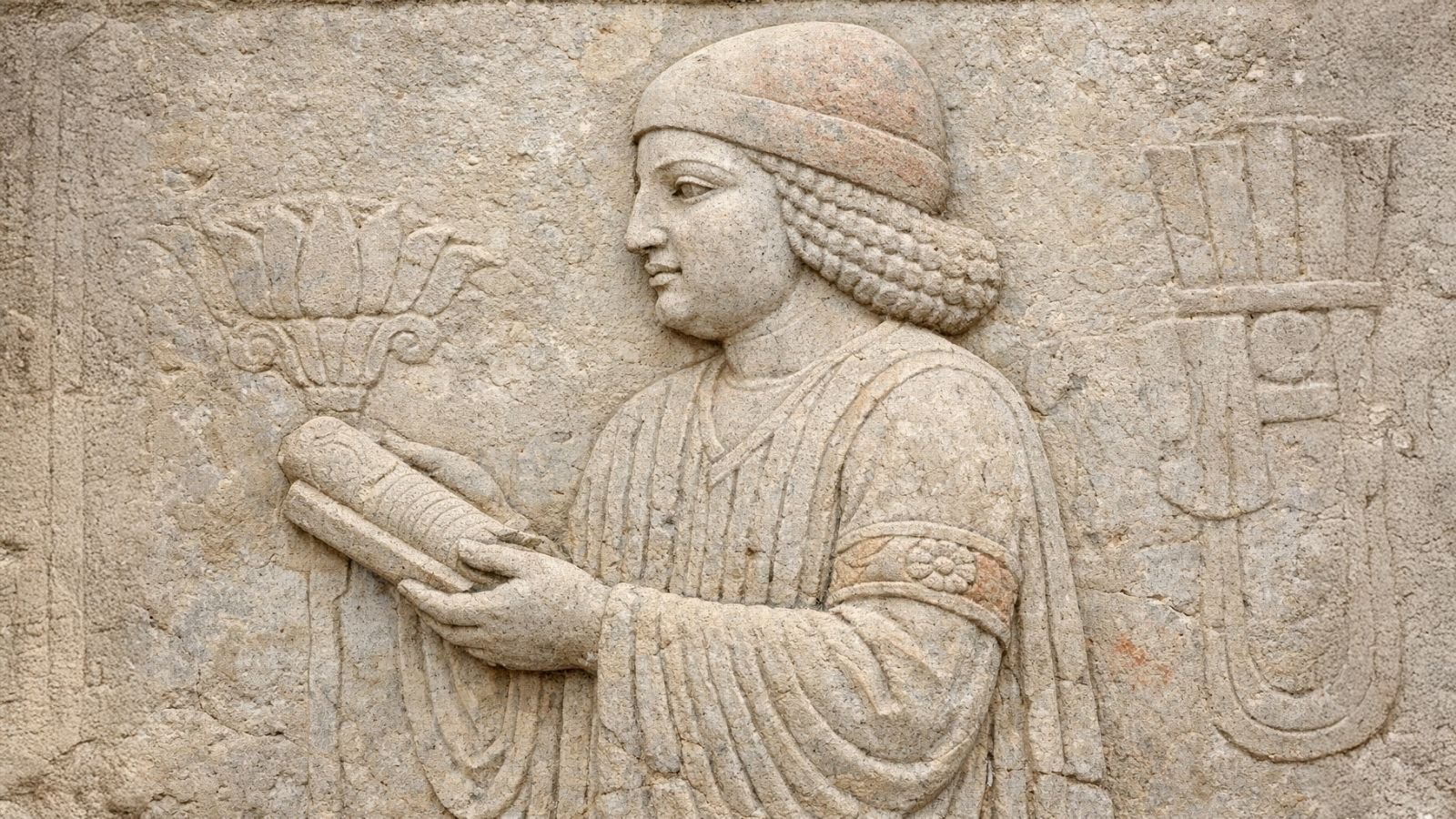
Greek writers loved a good villain, and Persian eunuchs fitted the role with unsettling elegance. In ancient accounts they appear as whisperers behind curtains, masters of poison, and shadowy figures nudging kings toward ruin. This image still shapes how Persian eunuchs are imagined today, casting them as manipulative court villains rather than historical actors. Yet that portrait says far more about Greek bias and storytelling habits than about how eunuchs actually functioned inside the Persian political system. Yet that image says far more about Greek anxieties than about how the Persian state actually worked.
The Persian Empire did not emerge as a loose collection of feuding nobles. Instead, it grew into one of the most administratively sophisticated states the ancient world had seen. From Anatolia to the Indus, and from the Caucasus to Egypt, the empire required order, communication, logistics, and record‑keeping. Consequently, power depended on systems that functioned daily rather than on theatrical plots. Eunuchs found their place inside those systems because they solved real political problems.
To understand their role, it helps to step away from Greek storytelling habits. Greek authors wrote for audiences who distrusted monarchy, disliked bureaucracy, and treated bodily difference as moral symbolism. A castrated man at court therefore seemed unnatural and suspect. Persian political culture, however, did not share those assumptions. What mattered there was loyalty, competence, and proximity to the king.
Eunuchs entered Persian service in different ways. Some came from conquered regions, while others rose through palace training systems that prized literacy, numeracy, and discipline. Over time, they learned court languages, memorised protocol, and mastered the rhythms of royal administration. Their education aimed at service rather than heroism. In an empire that ran on paperwork as much as warfare, those skills carried weight.
Their most visible function involved access. Persian kings stood at the centre of power, but access to them was carefully regulated. Audiences, petitions, reports, and ceremonies followed strict rules. Eunuchs often supervised these processes, and this role alone created influence. Anyone who controls schedules, messages, and introductions inevitably shapes political outcomes, even without personal ambition.
Modern observers sometimes mistake this structural influence for manipulation. In reality, it resembles the power of senior civil servants, chiefs of staff, or permanent secretaries. They do not rule, yet little happens without passing through them. Persian eunuchs occupied a similar position long before bureaucratic theory gave it a name.
Another factor behind their prominence lay in succession politics. Persian kings ruled dynastically, but dynastic systems invite instability. Brothers challenge brothers, sons rebel against fathers, and noble families cultivate alternative claimants. As a result, a ruler surrounded solely by powerful aristocrats would face constant risk.
Eunuchs offered a counterweight. They could not found rival dynasties. They lacked heirs who might turn office into inherited power. Their future depended entirely on royal favour and institutional survival. That dependence, in turn, made them attractive custodians of treasuries, seals, and confidential correspondence.
This arrangement was not uniquely Persian. Similar logic appears in other imperial systems, from Byzantium to China. States repeatedly discovered that officials without family power bases could stabilise court politics. The Persian case therefore fits a wider pattern rather than standing as an exotic anomaly.
Greek authors, however, interpreted this arrangement through their own cultural lens. They framed Persian court life as a moral lesson about excess and corruption. Absolute power, in this view, invited intrigue. Eunuchs became symbols rather than administrators. When kings made poor decisions, blame drifted toward those nearest to them.
These narratives thrived because they reassured Greek audiences. Persian weakness could be explained not by strategic complexity but by internal rot. Eunuchs embodied that rot neatly. They were visible, unfamiliar, and easy to caricature.
Persian evidence paints a calmer picture. Administrative tablets from Persepolis record officials issuing rations, coordinating labour, and managing supplies. Names appear repeatedly, associated with specific responsibilities. As a result, these records show continuity, routine, and accountability. Drama rarely leaves traces in accounting systems, and little drama appears here.
When eunuchs surface in such sources, they do so as titled officials embedded within hierarchies. They receive allocations, supervise teams, and report upwards. Their authority appears formal rather than furtive. This does not mean they lacked ambition or personality. Instead, their power operated through office rather than whispered conspiracy.
Court politics still involved rivalry. No imperial system escapes that. Yet rivalry did not require villainy. Competing interests, policy disagreements, and personal tensions unfold wherever decisions matter. Eunuchs participated because they occupied senior roles, not because they embodied corruption.
One reason the stereotype persisted lies in how history gets written. Greek texts survived in abundance. Persian voices did not transmit themselves in narrative form to later European readers. What survived were administrative fragments rather than storytelling histories. Over time, those fragments lost their power to challenge the stories.
Later cultures recycled the image eagerly. Roman authors borrowed it when describing eastern courts. Medieval chroniclers reused it for Byzantium. Early modern writers applied it to Ottoman and Chinese empires. Consequently, the eunuch became a universal symbol of courtly decay, detached from any specific political reality.
Once detached, the trope grew stronger. Every new retelling confirmed the previous one. By the time modern readers encountered Persian eunuchs, the image felt ancient and unquestionable. Yet it rested on a narrow set of biased sources.
Recent scholarship has shifted the tone. Historians now compare narrative texts with archaeological evidence, administrative documents, and cross‑cultural parallels. Eunuchs emerge as institutional actors shaped by imperial needs. Their influence reflects trust and expertise rather than manipulation.
This reassessment does not sanitise the Persian court. Power remained concentrated. Decisions could be brutal, and punishments could be severe. Yet these features belonged to monarchy itself rather than to the presence of eunuchs. Removing them from the picture would not have produced a gentler empire.
Seen this way, eunuchs appear less exotic and more familiar. They resemble professional administrators operating within an autocratic framework. Their careers rose and fell with policy shifts, royal favour, and administrative success. They mattered because empires depend on people who make systems function.
The Greek caricature remains tempting because it offers narrative clarity. Villains make history easier to digest. Bureaucracy rarely does. Yet history often hides its real drivers inside filing systems, logistics networks, and controlled access points.
Persian eunuchs occupied precisely those spaces. They ensured messages travelled, resources moved, ceremonies followed script, and authority remained legible across distance. Without them, the empire would have struggled to cohere.
Revisiting their role therefore does more than correct a stereotype. It challenges how power itself gets imagined. Influence does not always look dramatic. Often it looks procedural. It lives in offices rather than on battlefields. It survives by being boring enough to endure.
Greek authors gave us intrigue. Persian administration gave us longevity. Between those two, the quieter force usually wins.