The Origin of Wine: Ancient Story of Curiosity and Fermentation
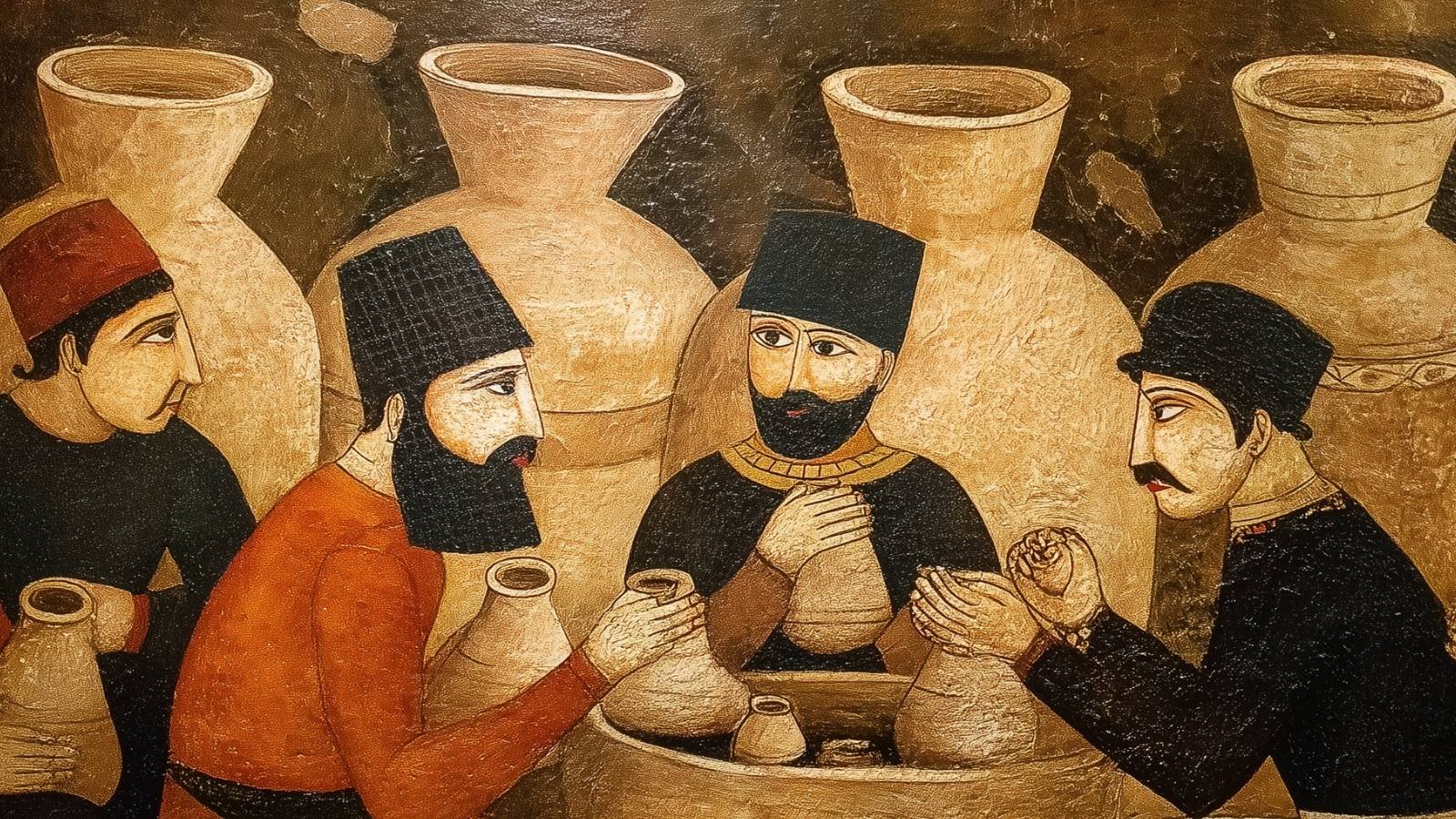
Wine rarely begins with a grand toast. It begins with someone, somewhere, staring at a container of forgotten grape juice, noticing it smells a bit different today, and deciding to taste it anyway. That tiny act of curiosity set humanity on a path that now involves Michelin-starred sommeliers, collectors bidding like stock traders, and friends arguing about whether that bottle really needs to breathe or if someone just wants attention. People often talk about the origin of wine as though it were a single moment, a neatly labelled milestone, yet the real origin story isn’t tidy. It sprawls across mountains, caves, clay jars and cultures that never imagined their daily drink would become a symbol of sophistication centuries later.
Tracing wine back to its birthplace leads us to the South Caucasus, a region that seems to enjoy surprising archaeologists every decade. In the gentle hills of what is now Georgia, pieces of ancient pottery carry chemical ghosts of something unmistakably vinous. These jars, dating to around six thousand years before Christ, hold the earliest confirmed traces of grape‑based fermentation. Picture early farmers gathering wild grape clusters, crushing them without ceremony, and sealing the mixture inside clay vessels. Heat, yeast, sugar and time did the rest. When they opened the jars again, they didn’t just find a drink; they found a small miracle.
Move a little south and you stumble into a cave in Armenia, where archaeologists uncovered the world’s oldest known winery. It sounds modest, but inside the Areni‑1 cave lay a fully equipped prehistoric production line. There were grape fragments drying on racks, stone basins with the stain of ancient treading, jars sunk into the ground for fermentation, and a sense that whoever operated this place took their craft seriously. The cave must have echoed with the rhythmic squelching of grape skins underfoot. There’s something strangely comforting in imagining prehistoric winemakers complaining about their knees after a long day.
Even in those early days wine wasn’t just a drink. It became a cultural connector. Egypt embraced viticulture and elevated wine to the status of a luxury reserved for priests and high officials. Their tomb paintings show vineyard workers pruning vines, pressing grapes and sealing amphorae. Labels marked the origin, the year and sometimes the name of the vineyard manager, which means that wine snobbery predates us by several millennia. Pharaohs enjoyed Cabernet‑adjacent prestige long before Bordeaux wrote its first classification.
Further west the Greeks decided wine deserved a starring role in civilisation. They drank, debated and occasionally behaved like people who discovered moderation only as a theoretical concept. Wine found a god, Dionysus, whose preferred management style involved ecstatic dancing and mild chaos. Greek amphorae became early branding tools; potters decorated them with scenes of revelry, myth and the occasional reminder that drinking too much invites disaster. Yet the Greeks also encoded wine into their political and philosophical spheres. A good symposium wasn’t just about consumption. It was a platform for ideas, gossip and bragging. The drink lubricated discussions that shaped thought for centuries.
The Romans arrived and, as usual, scaled everything. They industrialised wine and planted vineyards from Spain to Syria. They wrote manuals describing ideal soils, pruning methods and cellar techniques. And, they designed amphora shapes that signalled region, style and even price. And they made wine accessible to everyone. Roman taverns served the kind of everyday wine that encouraged both storytelling and questionable decision‑making. Of course, widespread demand brought widespread fraud. Pliny the Elder famously complained that even elite households sometimes drank wine that wasn’t what the label suggested. The more things change, the more they ferment exactly the same.
After the Roman Empire faded, Europe didn’t abandon wine; it simply handed responsibility to people in robes. Medieval monasteries became the custodians of viticulture. Monks cultivated vines, recorded climate conditions, kept meticulous notes and created the foundations of what we now call terroir. Burgundy grew under their steady hands. Champagne bubbled—sometimes explosively—under their patient experimentation. Wine mapped itself onto the Christian world through ritual, symbolism and practicality. Monastic life may have promised devotion, but someone still had to taste the fruits of the vineyard.
Trade carried wine across seas and kingdoms. Venice sent casks to northern markets. Iberian wines found buyers from the Baltic to the Levant. Fortified wines emerged almost by accident when sailors realised that a splash of brandy allowed wine to survive long voyages. Madeira grew famous partly because barrels rolled around in the holds of ships travelling to and from India. The sloshing, combined with tropical heat, created flavours nobody expected. Improvised innovation at its finest.
Then came the great leap: bottles and corks. Glass technology matured enough to give wines a durable home, and cork from Mediterranean oaks provided a reliable seal. Suddenly wine didn’t just have to be drunk young. It could age, deepen and acquire complexity. Collecting began. Prestige followed. Champagne houses discovered the magic and menace of secondary fermentation. Countless bottles exploded in cellars, sending corks flying like mischievous sprites, yet the thrill of drinking a sparkling liquid conquered fear of injury.
The nineteenth century delivered triumph and tragedy. Scientific advances revealed the invisible world of yeast and fermentation. Winemakers embraced temperature control, sanitation and analytical methods. And then phylloxera arrived: a tiny aphid from North America that devastated European vineyards. Entire wine regions collapsed. Some growers wept in public. Others concocted dubious substitutes involving raisins, sugar and optimism. The eventual solution—grafting European vines onto American rootstocks—rescued viticulture but changed it forever. Every glass of wine today owes its existence to that botanical alliance.
The twentieth century transformed wine from a regional staple into a global cultural force. European countries formalised regulations to protect reputation and geography. New World regions, unburdened by centuries of hierarchy, experimented boldly. California shocked the wine world in 1976 when its bottles triumphed over France’s best in a blind tasting that still stings French pride. That event shattered the myth of Old World superiority and opened the door for Chile, Argentina, South Africa, Australia and New Zealand to claim their place.
By the turn of the millennium, wine conversations shifted again. Enthusiasts debated oak levels, alcohol percentages, soil composition and whether the winemaker listened to jazz or classical during fermentation. Critics developed enormous influence, and ratings could lift obscure vineyards into overnight fame. Wine collecting became an investment game; certain bottles turned into financial assets stored in climate‑controlled vaults.
Wine’s fun side never really disappeared either. There’s the Spanish tradition of stomping grapes in festivals with an enthusiasm that borders on competitive sport. There’s the ancient belief that wine mixed with seawater enhanced flavour, an idea that only a truly bold palate would champion today. Also, the delightful fact that some of the most prestigious grapes—like Pinot Noir—are notoriously difficult to grow, as if they enjoy watching humans suffer a little.
Of course, controversies cling to wine like tannins to a young Bordeaux. The biggest quarrel concerns authenticity. Should wine be made with minimal intervention, following ancient principles? Or should modern tools guide consistency and quality? The natural wine movement champions spontaneity, wild fermentation and rustic honesty. Critics argue that it sometimes produces flavours that feel like an acquired taste nobody quite acquired. Then there’s the issue of additives: sulphites, stabilisers, clarifiers. Traditionalists claim these are necessary; purists call them intruders.
Geography brings its own disputes. Regions guard their names fiercely. Sparkling wine from anywhere outside Champagne must tiptoe around a vocabulary minefield. Even in the New World, debates rage about what climate change means for regional identity. Warmer temperatures shift harvest dates, alter acidity levels and invite grape varieties previously unthinkable. England, once considered borderline for quality viticulture, now produces sparkling wines that rival long‑established producers. Climate irony in a bottle.
Wine fraud remains a shadowy subplot. For centuries people have watered down wine, tinted it with dubious ingredients or forged labels. In recent decades notorious counterfeiters have fooled auction houses and collectors, proving that the romance of wine sometimes blinds even the well‑informed. Technology now helps detect inconsistencies, but the thrill of deception seems as enduring as the drink itself.
The globalisation of taste adds another twist. Supermarkets stock wines from six continents. Consumers experiment with orange wines, pét‑nat, volcanic terroirs and bottles fermented in clay amphorae buried underground. Some regions revive ancient methods as a badge of honour. Others push boundaries with laboratory‑level precision. Wine wears many identities today, shifting between rustic heritage and polished innovation without apology.
At its heart wine remains a bridge between nature and culture, chance and craft, the wild and the intentional. Open a bottle and you hold a story that began long before cities rose or alphabets formed. Those first curious people who lifted the lids of clay jars wouldn’t recognise today’s tasting notes or elaborate vocabulary, but they would recognise the pleasure, warmth and camaraderie that follow a shared cup. Wine still carries that ancient pulse.