The Mystery of Hessdalen Lights
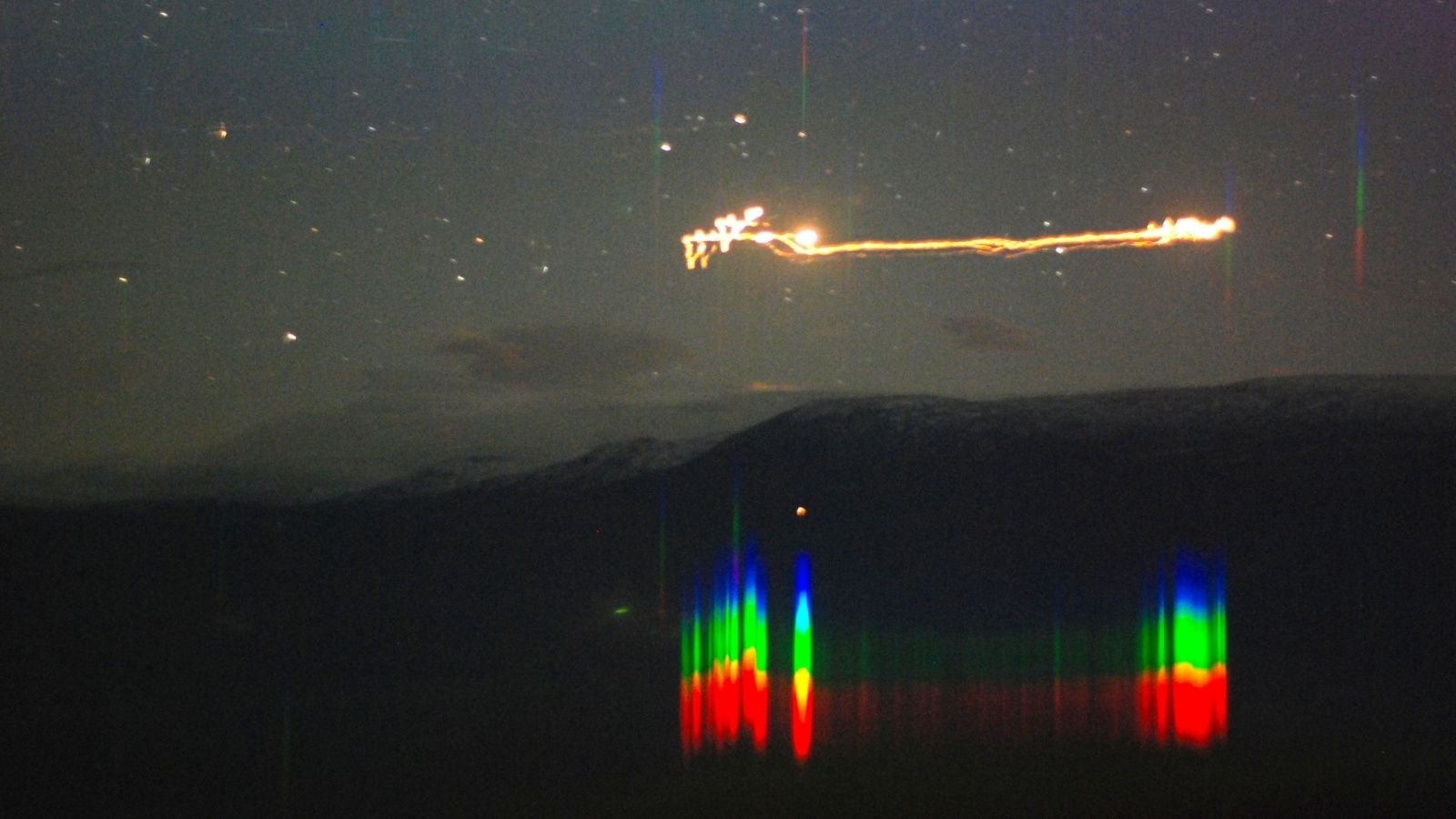
Hessdalen looks harmless on a map. At first glance, it is just a quiet valley in central Norway, wrapped in pine forests, shaped by a river, scattered with a few houses, and largely ignored by the outside world. Nothing about it seems to invite global curiosity. And yet, every so often, the valley lights up. Literally.
For decades, glowing objects have appeared here, sometimes hovering, sometimes drifting, sometimes darting, and occasionally lingering long enough to make witnesses doubt their own eyes. They show up at night and in broad daylight. Colours range from white and yellow to red and bluish tones. Behaviour, meanwhile, swings between polite stillness and sudden bursts of speed. Predictability never quite arrives.
Naturally, locals speak about the lights with the casual shrug that comes from long familiarity. Visitors, by contrast, talk about them with excitement, confidence, and a tendency to embellish. Scientists, unusually for a story like this, turned up with equipment and, more importantly, kept returning.
Although written reports reach back to the 1930s, Hessdalen earned its reputation properly in the early 1980s. Between roughly 1981 and 1984, sightings multiplied at an almost absurd rate. People claimed to see lights several times a week, sometimes several times a night. As a result, cars stopped along the road. Binoculars appeared. Cameras followed. The valley became a quiet theatre.
After that intense period, activity slowed but never stopped entirely. These days, estimates suggest a handful of sightings each year, sometimes a dozen, sometimes more. On the one hand, that is enough to maintain intrigue. On the other, it is not enough to dull it.
Descriptions tend to repeat, even when witnesses do not compare notes. Most commonly, a glowing ball appears hovering above the valley floor or gliding slowly along it. In other cases, accounts describe fast-moving lights that change direction without warning. On rarer occasions still, observers mention clusters or shapes that briefly suggest structure before dissolving into darkness.
Most mystery-light stories collapse under a familiar problem. They rely entirely on anecdotes. Someone saw something strange. Someone else believed them. The trail usually ends there. Hessdalen, however, took a different route.
During the early 1980s, researchers launched what became known as Project Hessdalen. Instead of debating stories, they brought scientific instruments into the valley. Cameras, radar, spectrum analysers, radio receivers all followed. The aim was not romance. Rather, it was measurement.
One early milestone arrived in the form of a detailed technical report published in 1984. The document reads like a checklist written by engineers who had accepted that the night sky was misbehaving. Radar wavelengths, detection ranges, radio interference tests, timing protocols all appear. Poetry is absent, and for once that absence feels reassuring.
From there, attention shifted towards patience. In 1998, an automated measurement station appeared in the valley. Locals quickly gave it a name. The Blue Box sits quietly on the hillside, a blue container packed with sensors and low-light cameras, watching continuously.
Crucially, this station never sleeps. Cameras run day and night. Environmental data streams in without interruption. Since the lights do not announce themselves, waiting became the method. Few unexplained natural phenomena receive this level of long-term attention.
Over time, the project collected photographs, video recordings, radar traces, and occasional spectral data. None of this produced a tidy answer. Nevertheless, it narrowed the question. Something luminous appears in this valley. Instruments sometimes register it. Radar occasionally detects objects at distances incompatible with nearby reflections. Light spectra sometimes suggest excited atoms rather than borrowed illumination.
At this point, imagination tends to enter the room. Moving lights invite intention. Craft, probes, visitors all get proposed. Unsurprisingly, Hessdalen attracts UFO narratives the way a flame attracts moths.
Researchers understand this risk well. In fact, several have written openly about how the UFO label discourages serious work. Once a phenomenon slides into that category, funding evaporates and reputations wobble. Hessdalen persists despite this stigma, not because of it.
Before speculation takes over, investigators return to an unglamorous starting point. Misidentification. Planets near the horizon. Aircraft. Distant car headlights. Atmospheric mirages. All of these exist here, and all explain some sightings.
Problems arise when critics insist they explain everything. That claim weakens once instruments enter the picture. A car headlight does not hover silently for an hour. Venus does not generate radar signatures suggesting motion through a valley. In short, misidentification accounts for noise. It does not erase the signal.
From there, several scientific hypotheses attempt to explain what remains. None claim victory.
One prominent family of ideas centres on plasma. Not science-fiction plasma, but dusty plasma, where charged particles interact with microscopic dust grains and organise into luminous structures. In laboratory settings, such plasmas form shapes, move coherently, and emit light in ways that can appear object-like.
Meanwhile, local geology adds another layer of intrigue. Surrounding rocks contain minerals associated with radon emission. Radon decay releases alpha particles that ionise air. When ionisation combines with dust, humidity, temperature gradients, and electric fields, conditions may emerge that support persistent luminous formations.
Another approach leans even more heavily on geology. Quartz-bearing rocks under mechanical stress generate electric fields through piezoelectric effects. In effect, the ground itself becomes a generator. Those fields may then interact with the atmosphere and produce light, echoing similar phenomena reported near earthquakes elsewhere.
Chemical explanations also refuse to disappear. Historical mining left metallic dust in the area. Under particular conditions, airborne particles could oxidise or combust in unusual ways. Although popular accounts often frame this idea as a final solution, researchers tend to treat it as a partial answer with gaps.
What links all these models is restraint. Each explains some observations while struggling with others. Some handle colour well but fail on motion. Others explain persistence but not acceleration. None tie every loose end.
At the same time, human perception complicates matters further. Hessdalen’s fame draws people hoping to see something. Expectation shapes experience. Long camera exposures stretch movement. Digital compression introduces artefacts. As a result, a distant glow becomes meaningful far too quickly.
Scientists working in the valley acknowledge these problems openly. Ambiguous data exists. Ordinary events appear in the records. Even so, monitoring continues.
Occasionally, the lights cooperate by doing something genuinely inconvenient. Radar registers activity without obvious visual counterparts. Optical events show spectral features inconsistent with simple reflection. Timings fail to match known aircraft paths. Unsurprisingly, these moments keep interest alive.
Certain details have become inseparable from the story. The Blue Box watching through polar nights. The early 1980s, when sightings became so frequent that novelty wore thin. Camera sensitivity figures pushed to absurdly low light levels, daring darkness to complain.
The valley itself adds both atmosphere and difficulty. Its shape encourages optical illusions. Fog drifts in easily. Cold air pools. Temperature inversions form. Observation, therefore, becomes harder rather than easier.
Ultimately, the real controversy surrounding Hessdalen has little to do with visitors from elsewhere. Instead, it centres on evidence. How much ambiguity can science tolerate? How long should a rare phenomenon be observed without resolution? When does patience start to look like obsession?
Critics argue that decades without closure signal a dead end. Supporters, however, counter that long-term observation is exactly how understanding grows. Nature does not rush to meet human deadlines.
Communication adds its own friction. Every few years, a hypothesis escapes into the media framed as a final answer. Certainty spikes. Researchers sigh. Meanwhile, the lights continue.
Photography: Bjørn Gitle Hauge