The Last Pagan Emperor and Why Culture Rarely Goes Backwards
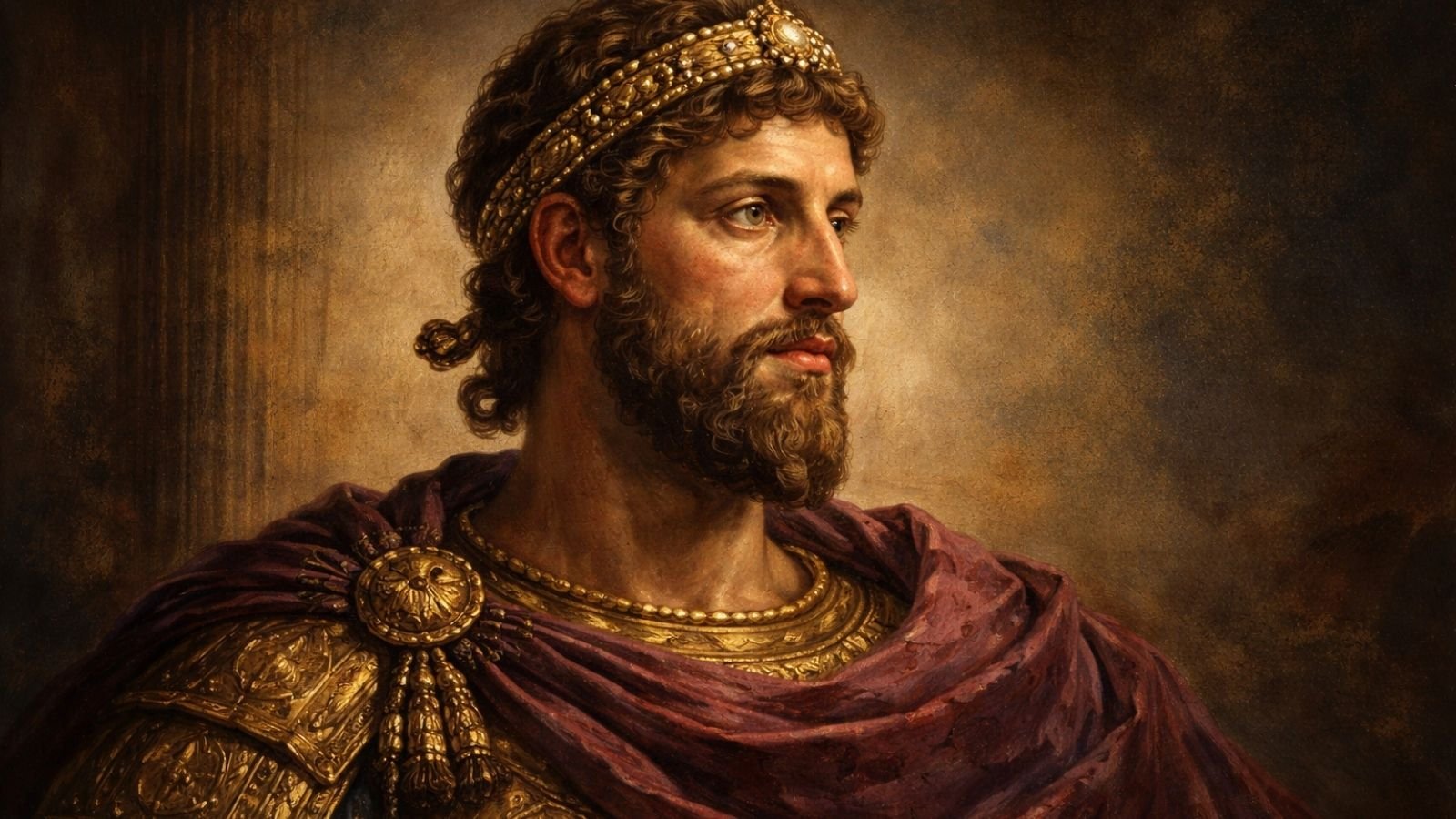
The last pagan emperor was Julian the Apostate, who ruled the Roman Empire from 361 to 363 CE and attempted to reverse its Christian direction. At the moment he came to power, the empire was officially Christian yet socially unsettled, which convinced him the change could still be undone. From the outset, therefore, Julian behaved less like a doomed reactionary and more like a reformer persuaded that history had turned too quickly.
Julian did not look like a man preparing to lose. He was young, disciplined, intellectually serious, and unusually reflective for a Roman emperor. Moreover, he read philosophy obsessively, wrote letters at alarming speed, and quoted Plato without theatrical display. Religion, in his view, demanded ethical effort rather than mechanical ritual.
When Julian assumed power in 361 CE, Christianity possessed legal authority but not universal emotional depth. Pagan temples still stood across the empire, sacrifices continued, and old aristocratic families quietly honoured ancestral gods. On paper, then, the situation appeared reversible.
Julian believed it was, and that belief shaped his strategy from the beginning. Rather than storm churches or launch purges, he rejected force as crude and counterproductive. Such pressure, he believed, would only harden Christian resistance. Instead, he pursued something subtler and far more ambitious: cultural correction.
His goal was persuasion rather than suppression. He wanted to argue that paganism had been abandoned hastily, that Christianity had triumphed through momentum rather than merit, and that the old gods could return in a morally serious, intellectually coherent form. This was not nostalgia. Instead, it was reform guided by a rear‑view mirror.
The project collapsed almost immediately, although not through open revolt. Instead, it failed through quiet inertia, which proved harder to overcome than opposition.
Julian ruled for barely two years. After his death during a Persian campaign, his religious programme dissolved with remarkable speed. Consequently, Christianity resumed its advance, paganism retreated further into private life, and Julian became an eccentric footnote rather than a turning point. Yet his failure remains a clear demonstration of how cultural reversals collapse, even when backed by intelligence, sincerity, and state power.
By the time Julian tried to redirect the empire, Christianity had stopped behaving like a fragile belief system. Instead, it had become infrastructure. Churches organised food distribution, bishops mediated disputes, and communities handled burial, charity, and social care. Conversion no longer meant simply changing gods. Instead, it meant entering a functioning support network.
Paganism could not match that, and historically it had never needed to. Traditional Roman religion operated as a loose federation of cults, festivals, and local practices. It relied on habit, family custom, and civic pride rather than exclusive belief. That flexibility had once been its strength. Under sustained pressure, however, it became a weakness.
Julian recognised this imbalance and attempted to correct it. In doing so, however, he revealed the deeper structural problem.
He tried to professionalise paganism. Priests received behavioural expectations, rituals gained moral framing, and philosophical coherence became a stated goal. Charity, previously marginal in pagan religious life, suddenly mattered. As a result, temples were encouraged to feed the poor, support the vulnerable, and resemble Christian institutions in everything except theology.
The imitation was obvious, and it carried consequences. Once a belief system must copy its rival’s structure to compete, the outcome rarely favours the imitator. People notice where energy already flows. Christianity had grown into its role organically over generations. Pagan reform, by contrast, arrived as policy and therefore felt managerial.
Julian also underestimated how deeply Christianity had reshaped daily assumptions. By the fourth century, many Romans no longer experienced Christianity as revolutionary. Instead, it functioned as background. Marriage norms, burial customs, moral language, and ideas of purpose had already shifted.
Cultural change works this way. Once new habits take root, the old system stops feeling natural, even to those who admire it intellectually. Argument rarely defeats routine. Julian could argue brilliantly for pagan metaphysics, yet he could not argue people out of their daily organisation of life.
Time worked against him as well. Cultural transformation moves slowly, whereas political authority is often brief. Julian’s reign was visibly temporary, and everyone understood it. Christian leaders had learned patience under hostile emperors. Pagan elites hesitated instead.
That hesitation proved fatal. Julian’s religious tolerance, often praised today, carried an unintended cost. By refusing overt coercion, he denied himself the only tool capable of forcing rapid behavioural change. Yet coercion would likely have failed too, because Christianity had grown under persecution while paganism had not.
This tension reveals a recurring pattern in cultural reversals. Soft power moves too slowly. Hard power provokes resistance. The window where persuasion, authority, and timing align is narrow.
Julian also misread generational psychology. For older elites, paganism represented continuity. For younger Romans, however, it felt abstract. Christianity spoke more clearly about belonging, discipline, and moral narrative.
That difference mattered, because cultural systems survive by recruiting the indifferent rather than the convinced. Christianity structured ordinary lives. Pagan revival appealed mainly to those already inclined to search for meaning.
This pattern repeats across history. Political restorations fail once social hierarchies shift. Language revivals struggle when economic incentives point elsewhere. Moral backlashes collapse when they ignore how people actually live.
Julian attempted to reverse belief without reversing life, and the gap widened quickly. Even his philosophical seriousness worked against him. He embraced Neoplatonism, which required education and abstraction. Christianity, by contrast, communicated through stories, rituals, and communal practice.
There is also the problem of memory. Cultural nostalgia remembers festivals and myths, not inconvenience. Paganism recalled grandeur rather than limits. Christianity benefited from being new enough to define itself aspirationally.
Julian’s death sealed the experiment more decisively than any decree could have done. Successors reversed his policies with minimal resistance. Temples closed quietly, Christian privileges returned, and the moment passed. Paganism did not collapse dramatically. It simply failed to return.
That quiet disappearance matters. Cultural losses rarely announce themselves. Instead, they become visible only when reversal attempts expose their absence.
Julian’s story is often framed as tragedy. The deeper lesson is structural. Cultural change does not care about sincerity.
Reversals fail not because reformers lack intelligence, but because they arrive too late. Once daily life has reorganised, belief follows behaviour like a shadow.
That is why the last pagan emperor remains relevant. His failure shows that power cannot rewind normality and that moral seriousness does not guarantee cultural traction.
History remembers winners loudly. Failed reversals are remembered quietly. Julian belongs to the second category, and that may be his most enduring legacy.