The Lantern-Lit Madness of Fasnacht in Basel
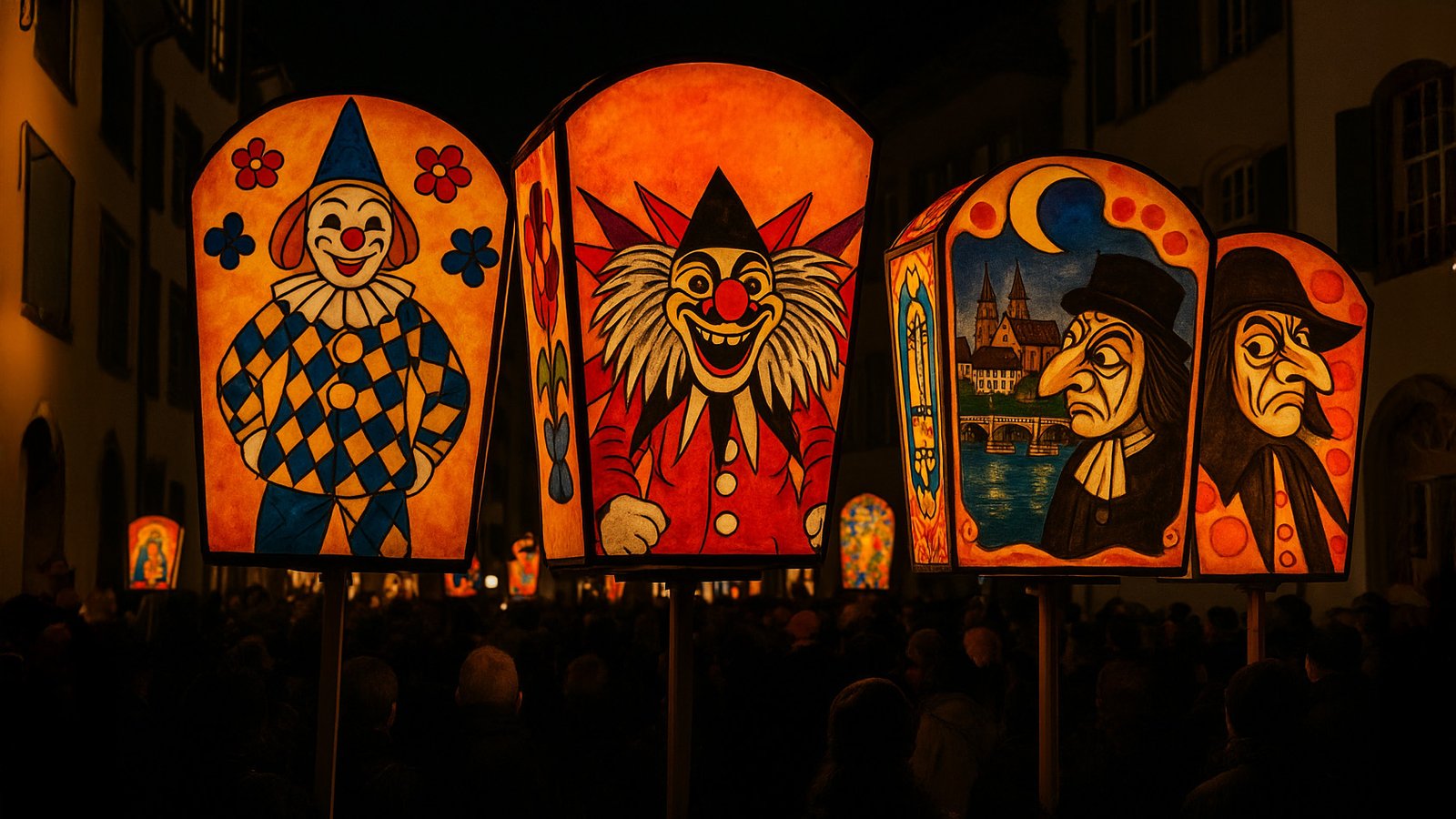
Fasnacht in Basel looks like someone took a centuries‑old tradition, sprinkled a touch of mischief over it, dimmed every light in the city at 4am, and then let thousands of masked night owls take over the streets with piccolos and drums. It’s the kind of February festival that makes even Venice’s carnival feel a little self‑conscious. Basel doesn’t try to be glamorous. It prefers satire, lanterns the size of wardrobes and a schedule that treats sleep as an optional hobby.
The whole thing kicks off with Morgestraich, a moment so dramatic it should really come with a warning for first‑timers. Basel’s old town sinks into darkness, and the only glow comes from giant hand‑painted lanterns draped across masked figures who look like they’ve wandered out of an illustrated fable. Then the first piccolo hits. Then a drum. Hundreds more join in, and suddenly the streets feel alive in a way that makes you forget the temperature is somewhere between freezer aisle and mild hypothermia. You follow the sound because everyone else does and because resisting feels pointless. Morgestraich sweeps through the city like an unstoppable, slightly chaotic river of rhythm.
Those lanterns deserve their own chapter in human cultural history. Each one carries a sujet—an idea, a theme, more often than not a public roasting of politicians, global events, bank scandals, football teams, or whichever poor soul happened to irritate Basel that year. The lanterns glow beautifully, but their messages often sting. You can lose half an hour just reading them, nodding at clever sketches, trying to decipher Swiss‑German puns that locals swear are hilarious. Even if you don’t understand a word, the artistry grabs you.
The cliques march along with enviable discipline for people wearing oversized masks and costumes that could double as small stage sets. The piccolos screech cheerfully above the relentless pulse of the drums. You might think the sound would become monotonous, but it doesn’t. Somehow the same pattern, played for hours, starts feeling hypnotic—like Basel’s heartbeat amplified and set loose on cobblestones.
After you’ve survived the pre‑dawn magic, daytime Fasnacht greets you with confetti, Gugge bands and a never‑ending supply of visual drama. Confetti, by the way, comes with rules in Basel. Locals don’t use recycled confetti because it’s considered impolite to throw something that might have touched the ground. Fresh confetti only, thank you very much. And they’ll throw it generously, especially at anyone who hasn’t bothered to wear a carnival badge. Take it as a lesson: buy the badge.
The Gugge musicians bring glorious chaos to the streets. Their brass instruments blare intentionally dissonant notes that bounce off medieval facades with enviable confidence. Gugge music isn’t trying to be pretty. It wants to have fun, make noise and wake up anyone who slept through Morgestraich. People carry entire tubas painted like sea monsters, trombones decorated with cardboard politicians, trumpets wearing wigs. It’s wonderfully unserious and yet full of pride.
Somewhere between the parades, the lantern exhibition and spontaneous pockets of music, you notice that Fasnacht doesn’t behave like a festival designed for tourists. Basel runs it for itself. Visitors are welcome, of course, but the city never bends the rules to make things simpler for outsiders. You learn to follow the flow, move aside when a clique marches past, keep your hands off lanterns, and never block a drummer—they have more presence than traffic lights.
Basel’s restaurants and pubs transform into stages for Schnitzelbank. These performers deliver satirical songs in tight rhymes, accompanied by illustrations they flip through like oversized comic strips. Their humour digs into local politics and global absurdities with equal enthusiasm. Even if you barely understand the dialect, you catch the rhythm, the mockery, the triumphant punchline. The audience reacts with knowing laughter and occasional groans. The performers beam. Everyone drinks.
One of the festival’s loveliest surprises appears on Tuesday: Kinderfasnacht. Children in miniature costumes—sometimes adorable, sometimes hilariously terrifying—march through the streets with tiny drums or paper lanterns. Parents hover nearby wearing expressions of pride mixed with mild panic. The kids take the role seriously, which means their drumming may or may not follow the official tempo. Nobody minds. The cliques cheer for them, bystanders coo, and a few grandparents weep more than they admit.
By the time night falls again, the city glows. Lanterns parade through streets and squares like moving art galleries. Shadows dance across medieval stone. A brass band suddenly erupts into a tune that sounds like a marching order from a circus ringmaster. A troupe spreads confetti over unsuspecting heads with the determination of pastry chefs decorating a cake. You try to photograph everything but never manage to capture the atmosphere—the sound refuses to be contained by a phone.
The most charming part lies in its contradictions. Fasnacht in Basel looks wild but runs with extraordinary organisation. The cliques practise for months. Costumes and masks take entire teams to build. The lanterns are designed by artists who pour storytelling skill into each panel. The schedule remains sacred: three days, no extensions, no shifting of dates, no gentle alternatives for light sleepers. Basel may host international art fairs and glossy architecture tours, but for these 72 hours, it slips into a much older skin.
History curls through every alley. The earliest documented carnival in Basel goes back to 1376, though people were almost certainly causing trouble long before that. The Reformation tried to dampen the celebration by sneaking piety into the calendar, but Basel stuck to its traditions with admirable stubbornness. The carnival morphed into a form of civic expression, blending protest, art, community and irreverence in a way that suited the city’s personality. That mix still defines it.
UNESCO eventually recognised Fasnacht as intangible cultural heritage, not because it’s pretty, but because it’s alive. It evolves constantly without losing its core. Older Basel families pass membership in cliques down like heirlooms. Younger generations reinvent costumes, reinterpret satire and push art forward. And the music—those fifes, those drums—links everyone together across age, profession and neighbourhood.
If you drift through the old town during Fasnacht, you notice an unusual sense of equality. Everyone becomes part of the same swirling story. The person wearing the enormous papier‑mâché lion mask could be a banker or a baker. The drummer leading a clique might work in pharmaceuticals or teach history. Basel doesn’t care. The costume absorbs the identity, freeing people to laugh at themselves, their city and the world.
The festival rewards curiosity. Peek down a narrow alley and you find a tiny group practising a drum pattern as though auditioning for a time‑travel version of Stomp. Wander into a courtyard and you discover a lantern workshop where artists paint details with the concentration of medieval scribes. Step into a café and the owner tells you which clique always wins applause and which one insists on costumes so heavy people lose two kilos per parade.
Eating becomes its own sport during these days. You grab a Basler Mehlsuppe, a thick, savoury flour soup traditionally served during the carnival, because the icy wind convinces you that only soup can save humanity. You try Zwiebelwähe, an onion tart that feels like a warm hug disguised as pastry. And you definitely nibble on Schenkeli, small sweet fried dough pieces, purely to maintain morale. Every bakery claims their version is the best. Every local insists they’re wrong.
Tourists eventually realise Fasnacht in Basel doesn’t revolve around spectacle alone. It represents Basel’s ability to laugh at tension, to craft beauty from tradition, to unite disparate parts of its identity. The city sits at the crossroads of three cultures—Swiss, French, German—and the carnival somehow blends all three flavours while retaining something unmistakably local.
That identity shines brightest when the drum marches begin again late at night. You feel the rhythm rise from cobblestones. People sway. Lanterns flicker. Faces vanish into masks, then reappear in smiles when the music pauses. You listen and think, this festival doesn’t try to charm you, but it does anyway.
For all its noise, colour and satire, Fasnacht also holds quiet moments. A lantern painter gently adjusts a brush stroke. A drummer warms up alone in a side street. A piccolo player wipes steam from their mouthpiece while leaning against a medieval wall. These small scenes balance the carnival’s grand parade energy.
The end arrives at 4am on Thursday, precisely 72 hours after the start. The city falls silent again, almost theatrically. Lanterns darken. Drums rest. Costumes disappear back into trunks. People go home, exhausted and entirely satisfied. Basel returns to normal, at least on the surface. Underneath, the rhythm lingers.
Visitors who leave after Fasnacht carry two things: confetti in every pocket and a strong suspicion that they’ve witnessed something rare. Winter festivals across Europe each have their charm, but Basel’s Fasnacht feels like a character in itself. It thrills, teases, sings, mocks, glows and marches—all while keeping its heart firmly anchored in tradition.
If you find yourself longing for a winter escape with personality, consider Basel in February. Pack warm clothing. Bring curiosity. Prepare your sleep cycle for protest. And keep space in your luggage for confetti. Basel will make sure you return home with plenty.