The History of the Davos Forum and the Making of a Global Ritual
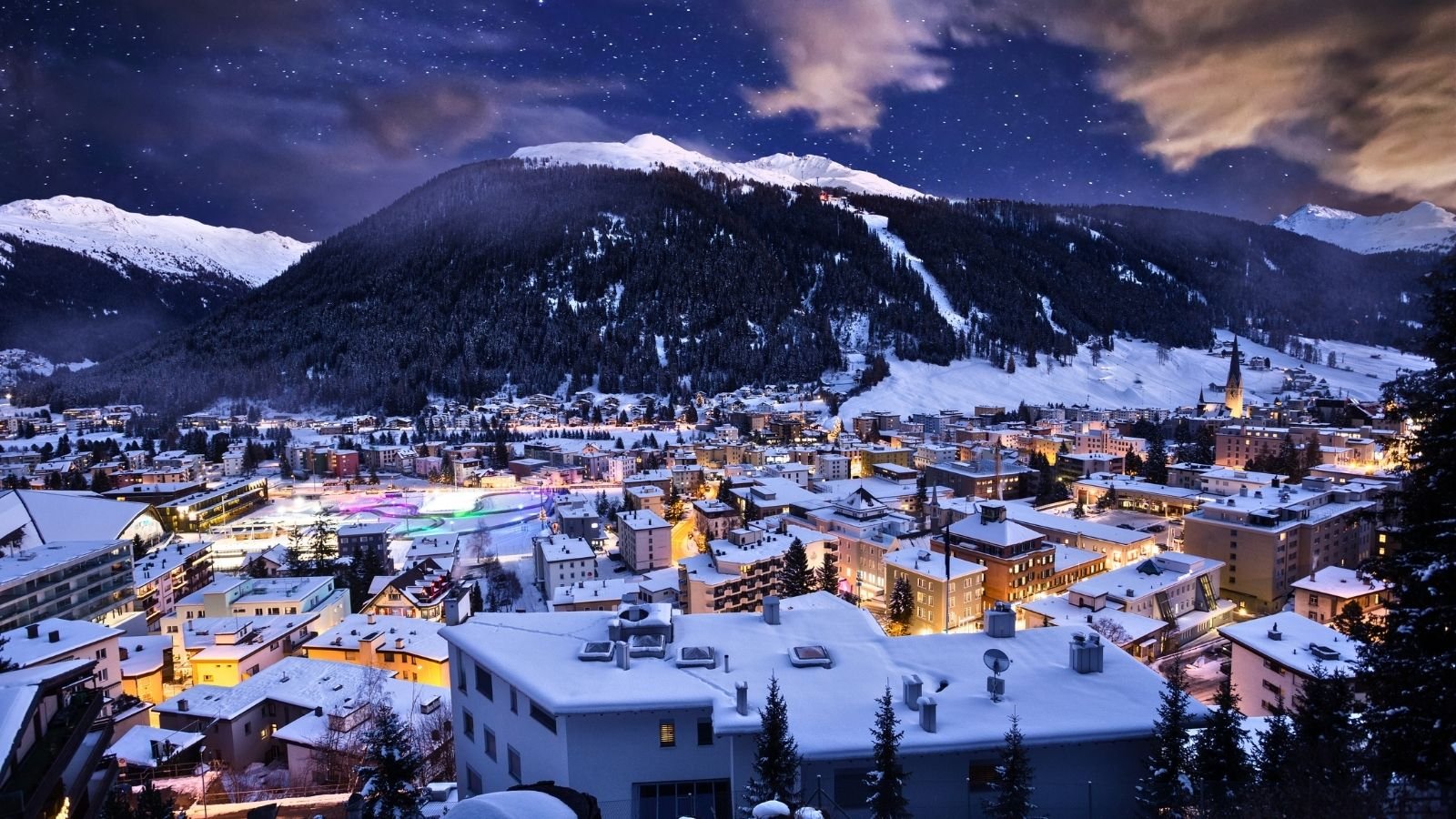
The history of the Davos Forum did not begin with global power or elite symbolism. Instead, it started as a practical idea in a practical place, aimed at a practical audience. In 1971, the Swiss mountain town of Davos was not shorthand for inequality, influence, or global coordination. Rather, it was a quiet resort shaped by fresh air, sanatorium memories, and a long off-season. What arrived that winter, therefore, was not a cabal or a summit, but a modest management seminar.
Behind it stood Klaus Schwab, not plotting a new world order but teaching economics in Geneva. At the time, he worried that European companies were falling behind their American counterparts. Because of this, management theory mattered as much as engineering. Consequently, European executives needed space to talk to each other, learn modern corporate practices, and think beyond national borders. Davos, neutral and secluded, offered precisely that.
The first gathering looked modest by today’s standards. Several hundred executives came to discuss governance, productivity, and long-term planning. Politicians stayed away. Journalists showed little interest. As a result, there were no protests, no helicopters, and no panels about saving the planet. Overall, the mood resembled a business school retreat rather than a global summit.
However, something subtle happened once people were kept together for several days. In practice, isolation encouraged candour. Executives spoke more freely than they did in capitals or headquarters. Moreover, they lingered over dinners, drifted into extended conversations, and argued without scripts. Gradually, Davos turned proximity into its defining feature.
During the 1970s, the wider world intruded. Oil shocks, inflation, and currency instability forced business leaders to think politically. Meanwhile, governments realised that economic policy could no longer ignore multinational corporations. As a result, ministers and officials began appearing in Davos, first cautiously, then routinely. By the early 1980s, therefore, the line between business forum and political gathering had blurred beyond repair.
In 1987, the meeting rebranded itself as the World Economic Forum. That name change mattered. In particular, it signalled ambition and scale. Davos no longer pretended to be a European management workshop. Instead, it positioned itself as a place where the world economy could be discussed as a single system. This shift, importantly, matched a changing global mood.
The Cold War was thawing. Markets were opening. Capital moved more freely than before. Unsurprisingly, Davos leaned into the moment with confidence. As a result, the Forum framed globalisation not as a risk, but as an opportunity, provided it was managed responsibly. Integration, dialogue, and cooperation therefore became its favoured vocabulary.
One episode from the late 1980s gained almost mythical status. At Davos, Greek and Turkish leaders met and signed a declaration easing tensions between their countries. The agreement failed to solve decades of rivalry. Nevertheless, the symbolism proved irresistible. From that point on, Davos increasingly suggested that quiet conversations in snowy corridors could achieve what formal diplomacy often could not.
The 1990s transformed the Forum completely. As the Soviet Union collapsed, leaders from newly independent states arrived seeking legitimacy, investment, and advice. Consequently, Davos turned into a marketplace of futures. Presidents outlined reform plans. Bankers assessed risk. Consultants translated ideology into spreadsheets. Inevitably, the language of transition filled the air.
At the same time, China began sending increasingly senior figures. Their presence, in turn, signalled a different style of integration, slower and more controlled, yet no less consequential. Davos adjusted quickly. As a result, panels multiplied and topics expanded. What once fit comfortably into one hotel now spilled across the town.
By the late 1990s, Davos carried a reputation as the cockpit of globalisation. Supporters saw coordination and dialogue. Critics, by contrast, saw collusion and distance from ordinary life. Importantly, both interpretations fed off each other. The Forum’s influence grew, therefore, because it sat at the intersection of power and visibility.
This visibility produced its own caricature. The phrase “Davos Man” entered public debate, describing a cosmopolitan elite untethered from nations and insulated from consequences. The Forum never embraced this identity. Still, its rituals did little to dispel it. Consequently, badges, security checkpoints, invitation-only dinners, and curated guest lists reinforced the sense of a closed world speaking largely to itself.
Yet Davos was never simply a stage for consensus. Instead, disagreement thrived, often intensely. Executives clashed with activists. Politicians contradicted each other on panels, then shared drinks privately. In practice, the Forum’s real function lay less in agreement and more in alignment. As a result, participants left knowing how others framed problems, which solutions sounded acceptable, and which words had quietly lost their usefulness.
The turn of the millennium brought open resistance. Anti-globalisation protests followed the Forum, sometimes reaching Davos itself, more often targeting it symbolically elsewhere. The critique remained direct. Decisions affecting millions, protesters argued, were being shaped without democratic accountability. Therefore, dialogue, in their view, did not equal legitimacy.
After the 2008 financial crisis, the tone shifted again. Davos could no longer celebrate markets without caveats. Consequently, panels filled with talk of regulation, trust, and systemic risk. Bankers spoke cautiously. Politicians promised reform. In response, the Forum promoted a language of responsibility, attempting to distance itself from the excesses of the previous decade.
Klaus Schwab introduced the idea of stakeholder capitalism, arguing that companies should serve not only shareholders but society at large. To some, the idea sounded radical. To others, it felt overdue. Critics, however, dismissed it as cosmetic. Even so, the concept fit Davos perfectly, since it offered moral framing without binding commitments.
As technology firms rose to dominance, Davos absorbed them seamlessly. Founders replaced financiers as headline attractions. Accordingly, discussions shifted toward data, platforms, and disruption. At the same time, inequality became a recurring theme, discussed earnestly by people who embodied its upper extremes. Unsurprisingly, the contrast attracted attention.
The setting amplified every contradiction. Private jets crowded regional airports while panels debated climate collapse. Meanwhile, luxury watch brands sponsored receptions alongside sessions on sustainability. Supporters described this as pragmatic engagement. Critics, on the other hand, saw hypocrisy with good catering.
Security itself became part of the spectacle. Swiss soldiers patrolled the streets. Airspace closed. As a result, badges determined access with surgical precision. For one week each year, therefore, Davos resembled a fortified city built entirely for conversation.
Then the pandemic arrived and punctured the ritual. In 2021, the meeting moved online. Screens replaced corridors. Consequently, chance encounters vanished. Without physical proximity, Davos lost much of its mystique. Attendance fell. Attention drifted. Although the Forum survived, its reliance on embodied presence became obvious.
In 2020, Schwab introduced another phrase that quickly outgrew its intentions: the Great Reset. He argued that COVID offered a chance to rethink capitalism, sustainability, and social contracts. The proposal remained broad and aspirational. Nonetheless, it triggered an explosion of conspiracy theories. Online, therefore, Davos transformed from elite forum into imagined command centre.
Ironically, the backlash strengthened Davos as a symbol while weakening its actual influence. People argued about what it represented rather than what it achieved. In response, the Forum offered clarifications, transparency efforts, and familiar language about dialogue. Even then, the myth proved harder to manage than any panel.
Despite everything, Davos persists. It does so because it meets a recurring need. Global leaders lack neutral spaces where they can speak informally, without treaties or microphones shaping outcomes in advance. Davos, therefore, continues to offer that space, wrapped in ritual and repetition.
It is not a parliament, it does not legislate, it does not command. Instead, its power lies in shaping which conversations feel inevitable and which feel outdated. In that sense, Davos acts less as a decision-maker and more as a rehearsal space for the stories powerful people tell themselves about the world.
That role explains both its endurance and its unpopularity. As long as global coordination exists without global democracy, places like Davos will attract suspicion. Likewise, as long as leaders seek alignment without accountability, snowy towns will continue to host uneasy conversations.
Davos began as a management seminar and became a mirror. What it reflects depends largely on who is looking. Some see cooperation. Others see detachment. Both readings contain truth, which helps explain why the Forum remains stubbornly relevant.
Ultimately, Davos is not where the world is run. Rather, it is where the world explains itself to those already inside the room. That explanation changes every year. The ritual, however, endures, with boots crunching on snow, badges swinging on lanyards, and conversations beginning again as if nothing else quite works the same way.