The History of Snowboarding, From Snurfer to Olympic Sport
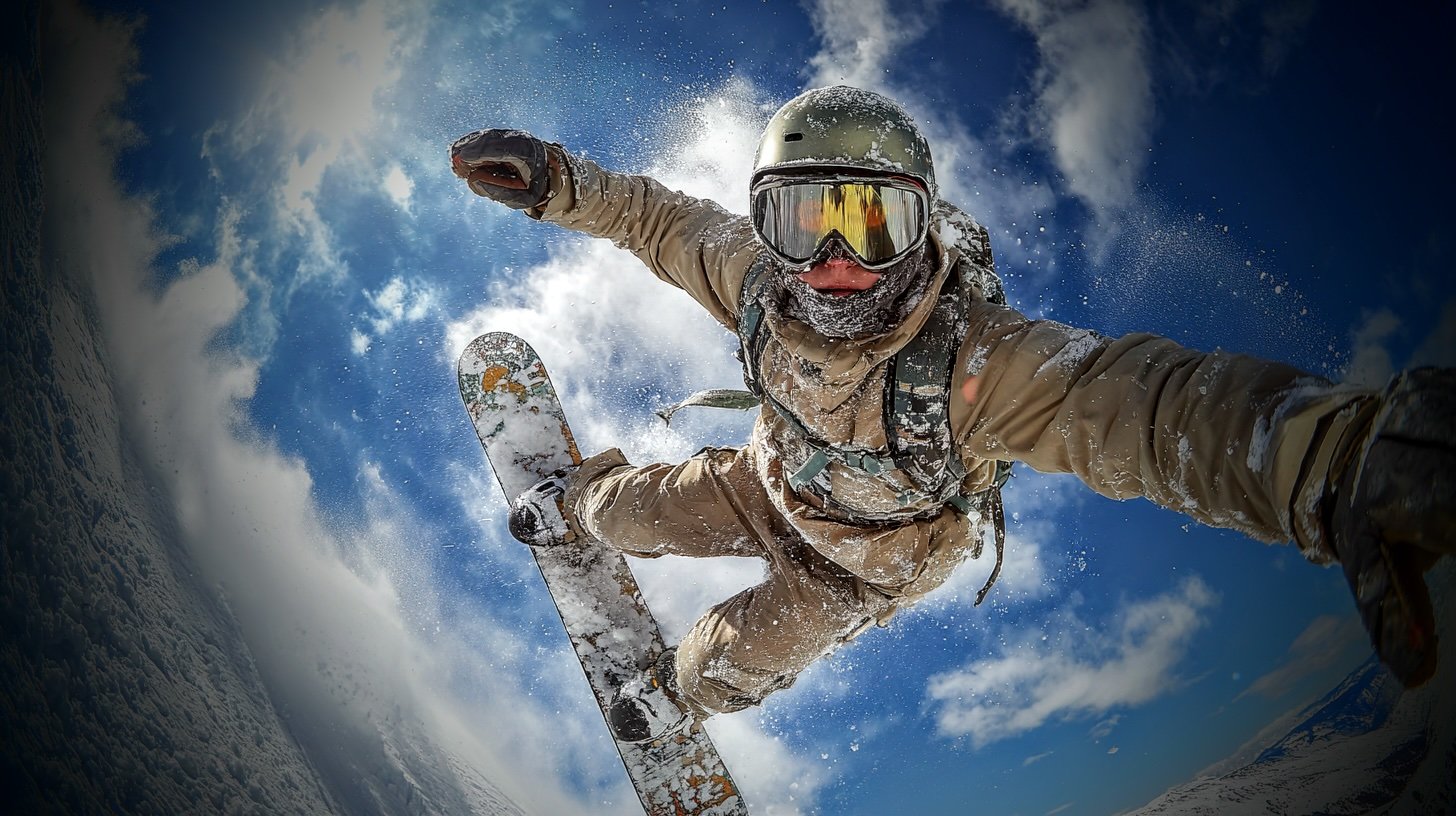
Snowboarding did not begin as a sport anyone planned to take seriously. Instead, it arrived sideways, half-finished, and slightly embarrassing, like many cultural ideas that later pretend they were inevitable. Long before Olympic medals and corporate sponsorships, it existed as a cure for boredom, a winter experiment, and a quiet act of defiance against ski culture.
The story usually opens in 1965 in Michigan, when engineer Sherman Poppen tied two skis together for his children and added a rope at the front. He called it the Snurfer, a name that nodded towards surfing rather than skiing. The device had no bindings and no turning technique beyond shifting weight and hoping for the best. Even so, it captured something essential. Riders faced sideways, chased flow rather than control, and treated snow as a surface to play with rather than conquer.
At first, snowboarding stayed a novelty. Poppen licensed the Snurfer as a toy, sold through department stores, and aimed squarely at children. Meanwhile, teenagers and tinkerers began modifying it. They shaved edges, tested stance angles, and experimented with materials. As a result, snowboarding drifted away from toy aisles and into garages, workshops, and improvised slopes.
During the 1970s, the activity remained marginal. Ski resorts mostly banned snowboards, citing safety fears, slope damage, and discomfort with riders who ignored poles and lift etiquette. These bans, however, shaped snowboarding’s identity. Riders embraced outsider status. They hiked slopes, rode unofficial terrain, and borrowed attitudes from skateboarding and surfing rather than alpine racing.
Equipment evolved alongside culture. Early boards lacked metal edges and struggled on icy snow. Control stayed limited, speed unpredictable, and injuries frequent. However, experimentation accelerated. Bindings appeared and locked feet in place. Board shapes widened and softened. Steel edges followed, transforming snowboards from sliding planks into carving tools. With each improvement, snowboarding became more viable as a sport rather than a novelty.
The 1980s marked a turning point. Snowboarding did not suddenly gain respectability, yet it became organised. Manufacturers like Burton and Sims pushed design forward while promoting competitions aggressively. Events appeared across the United States and Europe, often hosted at resorts still uneasy about the discipline. Riders competed in slalom-style races, halfpipe events inspired by skate culture, and freestyle exhibitions that valued style over speed.
Even then, snowboarding resisted uniform rules. No single rulebook existed and no unified authority controlled events. Some competitions rewarded clean turns and timing, while others favoured height, risk, or visual flair. This lack of clarity frustrated administrators. At the same time, it appealed to riders. Snowboarding felt open, experimental, and unfinished in the best sense.
Media exposure accelerated everything. Snowboarding photographed well and filmed even better. It looked dynamic, expressive, and youthful. As a result, magazines embraced it. Films followed riders into backcountry terrain and halfpipes carved into mountainsides. Music leaned towards punk, hip-hop, and alternative rock, reinforcing the sense that snowboarding lived in a different cultural lane from skiing.
By the early 1990s, snowboarding had outgrown underground status. Participation numbers climbed sharply. Resorts reversed bans and invested in terrain parks. Equipment sales surged. At the same time, tensions surfaced between snowboarders and winter sports institutions. Many riders distrusted skiing federations and feared regulation would flatten creativity.
That anxiety proved justified and exaggerated at once. When Olympic inclusion discussions began, snowboarders faced a dilemma between visibility and control. The Olympic model demanded clear governance, standardised judging, and predictable formats. By contrast, snowboarding thrived on ambiguity and experimentation.
Nevertheless, momentum proved unstoppable. In 1998, snowboarding entered the Winter Olympics. This inclusion marked a cultural shift as much as a sporting one. Snowboarding became the first discipline rooted in modern board culture to join the Games. The debut felt awkward, controversial, and symbolic. Riders protested governance decisions. A gold medal briefly disappeared due to a drug test shaped more by bureaucracy than culture. Even so, the signal remained clear. Snowboarding had reached the world’s most traditional sporting stage.
After that moment, the sport split into parallel paths. Competitive snowboarding adapted quickly. Athletes trained for Olympic formats. Judging systems matured. Disciplines such as snowboard cross, slopestyle, and big air followed, each highlighting different aspects of riding. Meanwhile, non-competitive snowboarding continued evolving in backcountry terrain, street riding, and film culture, often ignoring Olympic influence entirely.
This dual identity remains central to the history of snowboarding. On one side stands a professionalised, medal-driven version, complete with national teams and sponsorship contracts. On the other stands a lifestyle-driven culture that values freedom, creativity, and personal style over podiums. The two coexist, sometimes uneasily, sometimes productively.
Technology continued reshaping the sport. Board materials improved. Profiles diversified. Riders chose between camber, rocker, hybrid shapes, and specialised designs. Boots and bindings became lighter and more responsive. Safety gear advanced as well. Consequently, snowboarding expanded in both accessibility and ambition. Beginners progressed faster. Advanced riders pushed terrain that once seemed impossible.
Snowboarding also globalised rapidly. What began in North America spread to Europe, Japan, and beyond. Each region developed its own style. Japanese riders emphasised precision and aesthetics. European scenes blended alpine influence with freestyle innovation. This global exchange enriched the sport rather than diluting it.
Cultural perception shifted along the way. Snowboarding lost some rebellious edge as mainstream acceptance grew. Predictably, nostalgia followed. Veterans complained that snowboarding had become domesticated. Younger riders shrugged and kept riding. Historically, this tension mirrors many cultural movements that transition from fringe to mainstream. Survival often demands compromise.
Despite commercialisation, snowboarding retained its core appeal. It still rewards balance, intuition, and adaptability. It still allows riders to interpret terrain creatively. Unlike many sports, progress often feels personal rather than comparative. Riders chase sensations as much as results.
The history of snowboarding therefore resists a clean narrative. It does not move in a straight line from invention to Olympic recognition. Instead, it loops. Periods of freedom give way to structure. Structure provokes resistance. Resistance generates new forms. The sport renews itself by refusing to settle completely.
Today, snowboarding occupies an unusual position. As a global competitive sport, it shares space with a deeply individual practice. Olympic stadiums and quiet mountain valleys both claim it. Sponsorship shapes part of the culture, while self-expression remains central. This balance did not emerge by chance. Decades of tension between control and creativity made it possible.
Looking back, snowboarding’s journey reveals less about snow and more about culture. It shows how play becomes discipline, how rebellion becomes institution, and how institutions adapt when relevance matters. Snowboarding never asked to represent youth culture or modernity. It simply followed instinct on snow. The world chose to follow.