The Cornish Pasty and the Art of Feeding Hard Labour
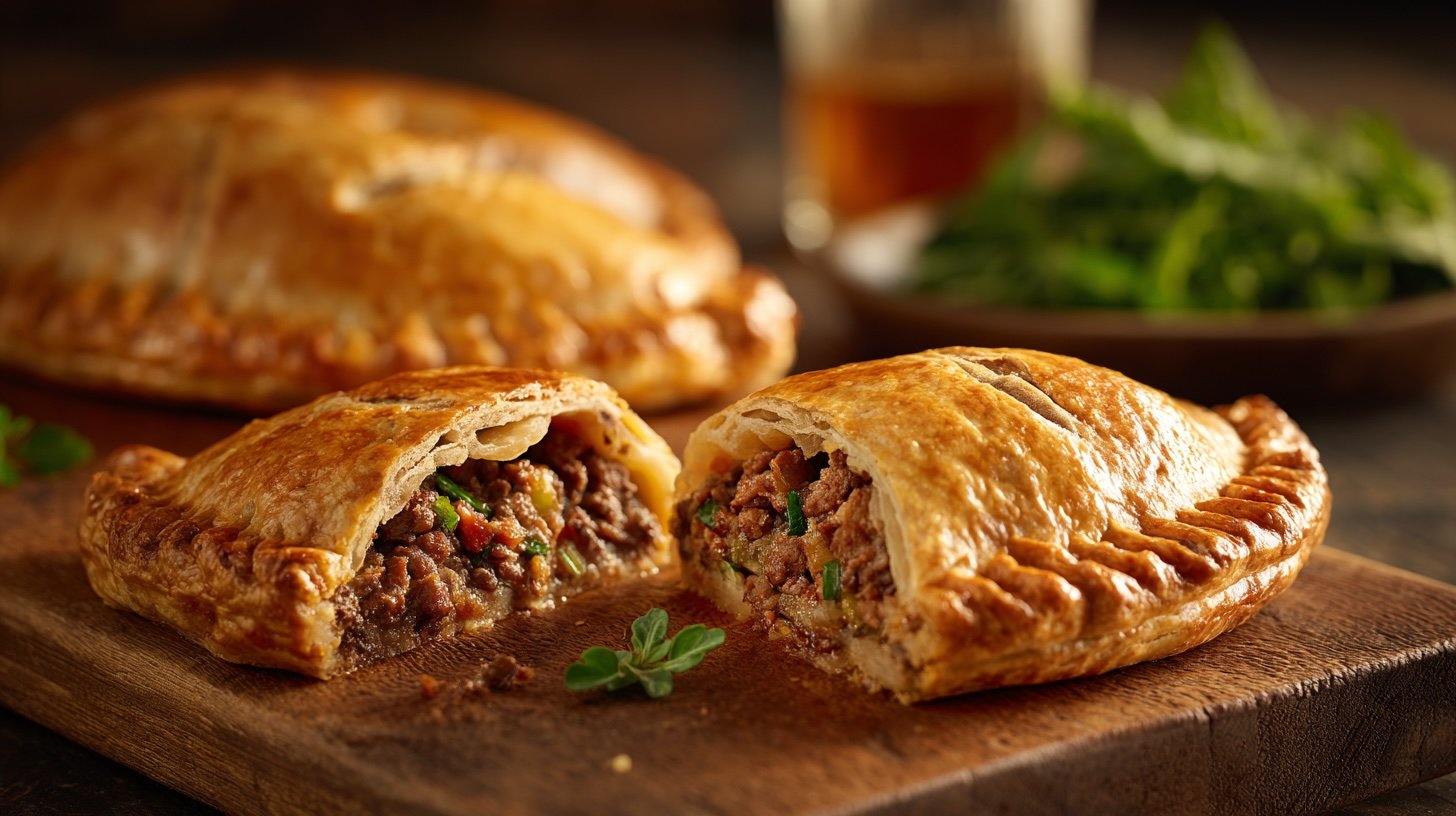
The Cornish pasty does not try to impress. Instead, it turns up warm, heavy, and faintly stubborn, like something that expects to be taken seriously without explanation. It does not arrive stacked, drizzled, or deconstructed. Rather, it arrives ready to be eaten. That attitude comes directly from its origins. The pasty was never designed to be admired. It was designed to work.
Long before authenticity labels or food tourism mattered, Cornwall shaped the pasty through necessity. This corner of Britain lived off rock rather than soil. Tin and copper paid the bills, and mining set the rhythm of daily life. As a result, men left home early, went deep underground, and stayed there for hours at a time. Food had to survive travel, dirt, damp, and clumsy handling. It also had to satisfy hunger created by physical labour, not by boredom. The pasty answered those demands without fuss or flourish.
At its simplest, the Cornish pasty is a sealed meal. Beef, potato, swede, and onion sit together inside shortcrust pastry, seasoned with salt and pepper and little else. There is no sauce and no attempt at refinement. Instead, the filling cooks inside the pastry, steaming gently and turning basic ingredients into something cohesive. Importantly, the pastry does more than hold things together. It protects the food and, just as crucially, the person eating it.
That thick crimp along the side was functional rather than decorative. It acted as a handle. Miners could grip it with dirty hands, eat the contents, and set the crust aside. A popular story claims the crust was always discarded because of arsenic or other toxins. While appealing, the reality was more pragmatic. People wasted little. Sometimes the crust went to children. Sometimes it ended up in pockets. And sometimes it even fed animals. What mattered was choice. The pasty allowed food and filth to be separated without slowing the day.
Over time, the crimp itself became symbolic. Side-crimped meant Cornish, while top-crimped suggested something else. That distinction survived industrialisation, railway expansion, and mass baking. Eventually, it found its way into legislation, which feels oddly appropriate for a food that always respected structure. When the Cornish pasty received Protected Geographical Indication status, nostalgia was not being rewarded. Instead, a set of working rules was being preserved.
Naturally, stories gathered around the pasty. Miners worked long hours and spent them underground. In such conditions, imagination filled the gaps. One of the best-known tales involves knockers, the spirits said to haunt Cornish mines. Strange sounds needed explanations, and invisible companions made sense in dark places. Leaving a bit of pasty behind was meant to keep knockers friendly. Whether anyone truly believed this mattered less than the ritual. The pasty became part of the emotional landscape of mining life, not merely the physical one.
Another story often repeated today claims pasties were commonly made with savoury filling at one end and sweet filling at the other. Meat on one side, jam or apple on the other, marked by a different crimp. This did happen occasionally, particularly in home kitchens. However, it was never standard practice. The idea survives because it sounds charming and efficient, two qualities modern audiences enjoy projecting backwards. In practice, real working food tends to be less whimsical.
As Cornwall’s mining industry declined, Cornish people left. They took the pasty with them. Migration carried it to Australia, South Africa, Mexico, and the United States. In places shaped by heavy labour, the pasty settled in and adapted. Local arguments soon emerged. Ketchup, gravy, or nothing at all became serious identity statements. Food travels quietly like this, embedding itself wherever labour patterns feel familiar.
Back in Cornwall, the pasty remained ordinary. That ordinariness matters. It was never a feast dish or a celebration food. Instead, it belonged to weekdays, packed lunches, pockets, and paper. When tourism eventually arrived, the pasty followed reluctantly. It found itself photographed, branded, and occasionally dressed up. Even so, the traditional version barely changed. Altering it too much would miss the point entirely.
Health questions inevitably appear when traditional foods meet modern lifestyles. A Cornish pasty is heavy. Pastry brings saturated fat, while potatoes dominate the filling. One average pasty can carry more calories than many people expect from lunch. If your day involves sitting still, eating one regularly will not end well. That reality does not make the pasty unhealthy by default. Rather, it makes it context-specific.
The pasty was built for energy expenditure. Miners burned enormous calories simply by working. They needed food that stayed warm, filled the stomach, and released energy steadily. In that context, the balance of fat, carbohydrates, and protein makes sense. Compared with modern ultra-processed convenience food, a traditional pasty appears restrained. The ingredient list is short. The processing is minimal. Nothing hides behind flavourings or additives.
Problems begin when industrial versions cut corners. Cheaper meat, thicker pastry, and inflated portion sizes shift the balance. What once functioned as fuel turns into excess. Many supermarket versions borrow the name without respecting the logic. Consequently, they deliver calories without the same nutritional honesty. The reputation of the pasty suffers, blamed for habits it never encouraged.
Culturally, the Cornish pasty sits at a complicated intersection. Cornwall has long negotiated its place within England. Often, it has felt overlooked or reduced to stereotypes. The pasty became a visible marker of difference. Arguments about authenticity frequently mask deeper concerns about recognition, economic survival, and cultural respect. Food carries these tensions well because it feels personal rather than abstract.
The pasty also resists trends. It does not adapt easily to dietary fashions. Gluten-free, vegan, or low-fat versions exist, yet they feel like translations rather than evolutions. The original was precise. Change it too much and the reason for its existence disappears. That resistance gives the pasty a strange modern relevance. In a culture obsessed with novelty, refusal to change reads as confidence.
Eating a Cornish pasty in the right conditions explains everything. After a long walk, in cold air, with genuine hunger, it feels exactly right. Each bite makes sense. The pastry insulates and the filling satisfies. Eaten absent-mindedly at a desk, it feels excessive and faintly ridiculous. That contrast reveals its origins more clearly than any history lesson.
Ultimately, the Cornish pasty endures because it never pretended to be more than it was. It solved a problem, and it solved it well. Centuries later, people still argue about the details. That kind of longevity rarely comes from clever marketing. Instead, it comes from usefulness, repeated daily, until usefulness becomes tradition. The pasty does not ask for reinvention. It asks for understanding. Eat it with respect, and preferably after you have earned it.