The Brutal Business Model of Gladiator Schools
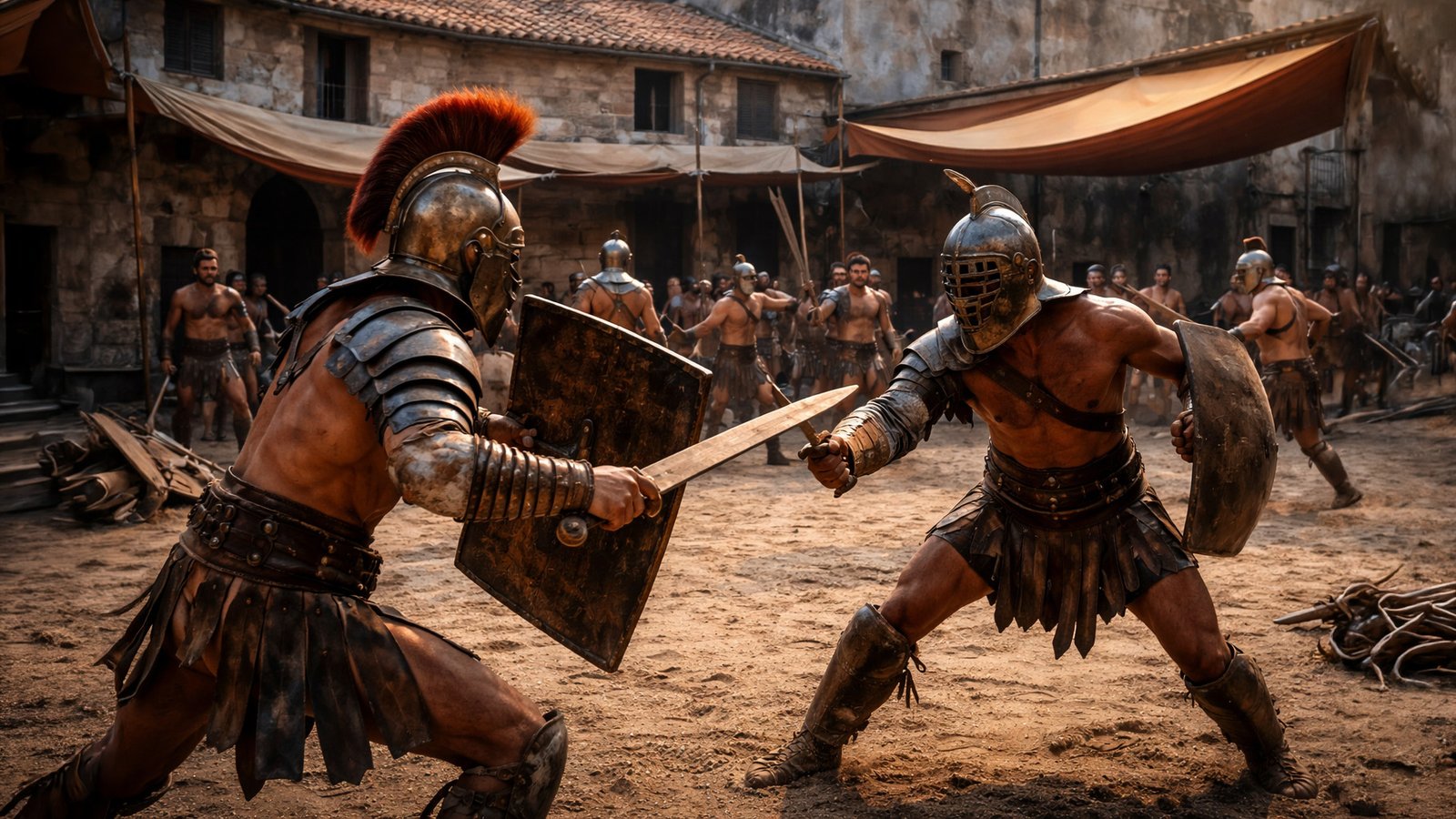
Ancient Rome adored spectacle. Crowds flooded amphitheatres to watch men fight with swords, nets, tridents, and shields while sand quietly absorbed the blood. Yet behind the theatre of heroism and death stood something far less romantic: a tightly organised industry. Gladiator schools, known as ludi, operated less like chaotic prisons and more like structured training academies whose owners monitored costs, managed risk, and protected their investments with surprising discipline.
At the centre of this world stood the lanista. To the Roman public he appeared to be a trainer or manager. In practice he functioned as something closer to the owner of a professional sports franchise mixed with a slave trader and a financial strategist. The lanista purchased fighters, supervised their training, rented them out to event organisers, and tried to keep them alive long enough to recover the initial investment.
Running a ludus required serious capital. Gladiators did not magically appear in the arena ready to fight. Instead they had to be purchased, fed, housed, trained, equipped, and medically treated for years. When historians attempt rough modern equivalents, the cost of preparing a successful fighter can resemble the value of a luxury property. Consequently a proven gladiator represented an extremely valuable asset.
Because of that value, fighters experienced a strange mixture of brutality and protection. They lived under strict discipline in cells that resembled prison rooms within heavily guarded compounds. However, those same men received regular meals, medical care, and carefully structured training schedules designed to keep them in peak physical condition. A dead gladiator created drama for the crowd. A living gladiator created long‑term revenue for the school.
The architecture of the schools reflected that curious balance between prison and academy. Most ludi formed around a central training yard surrounded by colonnades. Cells opened onto this courtyard so trainers could monitor activity throughout the day. Nearby armouries stored helmets, shields, and specialised weapons. Kitchens fed the residents while baths supported recovery after training. In some cases, medical rooms even contained surgical instruments designed for treating arena wounds.
The largest example stood beside the Colosseum itself. Known as the Ludus Magnus, it connected to the arena through an underground passage. Because of that corridor, gladiators could move directly from training grounds to spectacle without appearing on the streets of Rome. Archaeologists believe hundreds of fighters lived and trained there simultaneously.
Daily life followed a disciplined routine. Training typically began at dawn with conditioning exercises designed to build stamina. Afterwards fighters practised with wooden swords and shields before progressing to real weapons. Using wooden equipment reduced injuries during practice and therefore protected the school’s financial investment. Accidents still occurred, yet owners had strong incentives to minimise them.
Training also remained highly specialised. Gladiators did not all fight in the same style. Some became heavily armoured swordsmen called murmillos. Others performed as retiarii carrying nets and tridents. Each category required different coaching techniques and tactics. Former gladiators who had earned their freedom often returned as instructors known as doctores. Through them, schools preserved specialised knowledge about combat and performance.
The financial core of the business revolved around renting fighters for public games. Wealthy sponsors, known as editors, organised spectacles to celebrate festivals, political campaigns, or family funerals. Instead of maintaining their own fighters, they hired them from professional schools. Contracts therefore specified the number of gladiators, the combat styles required, and the acceptable level of risk.
Star fighters quickly became premium assets. Their reputations attracted crowds much like modern sports celebrities sell tickets. Inscriptions and graffiti from Pompeii show that fans followed particular gladiators with passionate loyalty. Some supporters even painted slogans praising their favourites on city walls. Consequently a champion fighter generated considerable revenue for his owner.
Yet the economics of gladiator combat included an unusual mechanism. If a gladiator died in the arena, the organiser often had to compensate the lanista with the full value of the fighter. Because of that financial penalty, killing a gladiator made the spectacle dramatically expensive. As a result many fights ended when one combatant surrendered and the crowd demanded mercy.
This payment arrangement worked almost like a primitive insurance system. The lanista accepted the risk of sending fighters into combat but expected compensation if the investment disappeared permanently. Therefore most bouts were not designed to end in death. Surviving several matches actually increased a fighter’s market value.
Contracts also governed the lives of voluntary gladiators. Although many fighters were slaves or prisoners of war, a surprising number were free men who signed agreements known as auctoramenta. By accepting this contract they pledged obedience to the lanista and agreed to endure punishment or death in the arena if required. In exchange they received wages and the possibility of fame.
Some volunteers joined because they were drowning in debt. Others chased glory. Roman society admired martial courage, and successful gladiators sometimes became celebrities. Graffiti in Pompeii praises individual fighters as if they were modern football stars. Meanwhile admirers reportedly sent them love letters. Fame occasionally outweighed the danger.
Despite these incentives, the business never lost its brutality. From the perspective of Roman elites, gladiators remained property. Even voluntary fighters temporarily surrendered their legal rights when signing their contracts. The lanista controlled their training, their diet, and their appearances in games. Discipline inside the schools could therefore be severe.
Nevertheless gladiator schools also developed surprisingly advanced sports science. Diets emphasised barley, beans, and other carbohydrates that built body mass and endurance. Archaeologists examining gladiator skeletons have found evidence of unusually dense bones caused by constant training. Medical staff specialised in treating wounds rarely encountered by ordinary Roman doctors.
Roman writers even mentioned recovery techniques. Fighters bathed in alternating hot and cold water to reduce muscle pain. Trainers analysed technique and adjusted fighting styles depending on a gladiator’s physique. In several respects these schools resembled early professional sports academies.
The industry expanded across the Roman world. During the empire’s peak, more than a hundred gladiator schools may have operated around the Mediterranean. Cities such as Pompeii, Capua, and Carnuntum hosted major training centres supplying fighters to regional arenas. Consequently the spectacle of combat became one of Rome’s most recognisable cultural exports.
Some lanistae accumulated remarkable wealth and influence. Their fighters represented valuable entertainment assets that politicians needed for public games. Maintaining strong relationships with powerful sponsors therefore mattered almost as much as maintaining healthy gladiators. A successful school could become a visible part of civic life.
Even so, the profession carried heavy stigma. Roman authors frequently described the trade of the lanista as morally suspect. Gladiators, actors, and prostitutes belonged to professions considered disreputable because they used their bodies for public entertainment. Wealth rarely translated into social respect.
The system occasionally produced explosive violence. The most famous example erupted in 73 BCE when a group of gladiators escaped from a school in Capua under the leadership of Spartacus. Their revolt grew into a massive slave uprising that terrified the Roman Republic. The rebellion reminded Rome that the industry depended on controlling large numbers of trained fighters.
Even after that shock, the gladiator business continued for centuries. Crowds demanded spectacle and politicians relied on games to win popularity. Entrepreneurs therefore invested heavily in schools hoping to produce the next arena champion.
Gradually attitudes began to shift. As Christianity spread across the empire, criticism of violent entertainment increased. Emperors slowly restricted gladiatorial games during the fourth century. By the early fifth century the tradition had mostly disappeared.
When the arenas finally fell silent, the schools that once trained thousands of fighters vanished as well. Yet their organisational logic left an unexpected legacy. Residential training, specialised coaching, medical supervision, and star performers now define modern sports academies.
Behind the cinematic image of roaring crowds and heroic duels lay something distinctly Roman: a disciplined commercial system built on contracts, investment, and calculated risk. Gladiator schools were not merely places where men learned to fight. They were businesses designed to convert violence into profit.
Post Comment
You must be logged in to post a comment.