The Blobfish: the Most Misunderstood Face in the Ocean
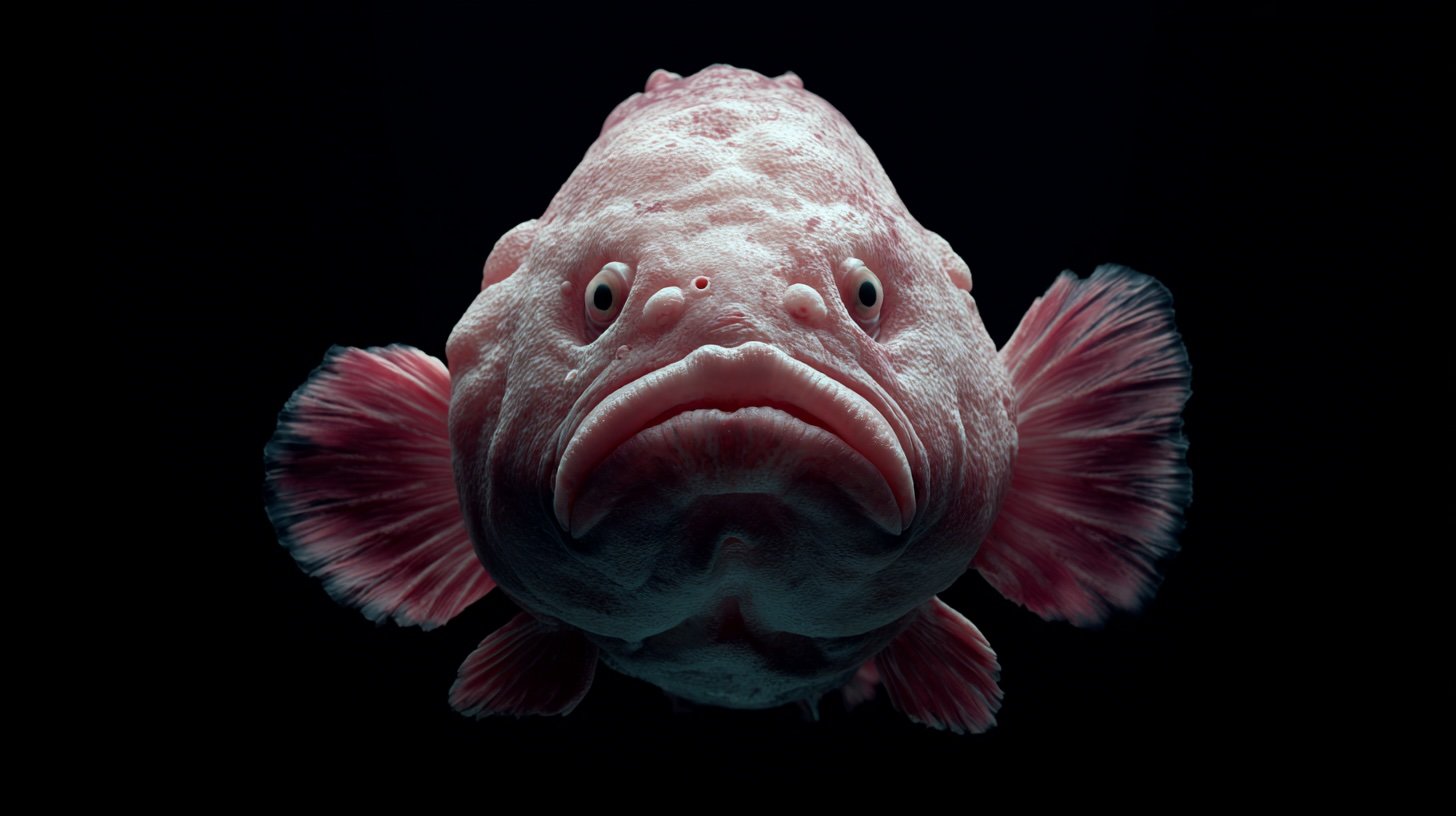
Blobfish roam the deep with the kind of calm only creatures of crushing pressure can master. Their world sits far below the restless waves, where sunlight never bothers to visit and the temperature barely warms a fingertip. People picture them as soft pink puddings with sad noses, but that famous photo misrepresents an animal that actually looks rather regular when it stays where it belongs. High pressure shapes its body into something firm and purposeful, and the relaxed face that made it a meme only appears after an undignified trip to the surface. No fish looks its best after decompression, so the blobfish never quite forgave us.
Life at depths of six hundred to twelve hundred metres demands efficiency, so blobfish float with quiet confidence above the seafloor. Their bodies contain barely any muscle because there is no need for athletic performance. They drift, hover and wiggle just enough to nudge themselves towards their next meal. Driftwood scraps, passing crustaceans and unlucky sea snails make up the usual buffet. They do not chase; they simply wait, which feels like the most deep-sea attitude imaginable.
The gelatinous body gives them a secret advantage. Its density sits just below that of seawater, so they hang in the water without spending energy. A swim bladder would burst under pressure, so evolution skipped that part and went for something sturdier. The result looks squishy but functions beautifully in the abyss. There is a quiet elegance in this minimalism, though the blobfish never asked anyone to appreciate its design.
Their social life remains mysterious, not because they act covertly but because humans rarely visit their living room. The deep Tasman Sea and the slopes around Australia and New Zealand hide them well. Every now and then scientists discover communal nesting areas. Several females gather and lay bright pink eggs in clumps, colouring the rocks like underwater confetti. They guard their nests with surprising dedication, waving away intruders and hovering close to their offspring. The deep sea may seem cold, but blobfish motherhood brings a small warmth to the darkness.
People heard almost nothing about them until two events changed everything. First, deep-sea trawlers accidentally pulled a few specimens to the surface. Those unfortunate souls became the faces of their species, immortalised in unflattering portraits. Then a group called the Ugly Animal Preservation Society ran a public vote. The blobfish won, instantly becoming the poster child for misunderstood creatures. It turned into a mascot for conservation campaigns, which must be the most ironic way to achieve fame.
Some say the blobfish looks like a retired uncle who spends afternoons judging everyone at the pub. Others insist it resembles a slightly disappointed pudding. These comparisons amused the internet endlessly. Artists painted them, plush toy companies stitched them, and social media made them the star of endless jokes. Yet beneath every meme lies the reminder that animals shaped by high pressure rarely look comfortable on land.
The blobfish plays a steady role in deep-sea ecology. It helps manage invertebrate populations by snacking on whatever crawls near its nose. In the slow economy of the ocean floor, where nutrients drift down from above like economic crumbs, every species contributes quietly. Blobfish do not chase drama; they simply maintain balance in a soft, bobbing way.
Their biology fascinates researchers. They have no bones in the classic sense, only cartilage and jelly shaped into something functional. Their bodies collapse when pressure disappears, which explains the saggy appearance in photographs. The famous specimen displayed at the Australian Museum became an icon entirely by accident and perhaps not with its consent. It never expected to become the Angelina Jolie of marine oddities.
Every expedition that aims to film a blobfish alive encounters technical limits. Submersibles capable of withstanding the necessary pressures cost fortunes, and even then the fish hide with expert subtlety. Only a handful of living images exist, each showing a surprisingly normal creature. Rounded head, soft body, steady eyes. No drooping nose. No tragic expression. Just a fish doing its best to mind its business.
People often ask whether blobfish face extinction. The answer remains unclear, though experts worry about deep-sea trawling destroying their habitat. These nets scrape along the seafloor, flattening delicate ecosystems. The blobfish endures because it evolved for stability, not speed. If its rocky homes vanish, relocation becomes tricky for species unaccustomed to commuting.
Curiously, blobfish inspire a certain affection. Something about their expression triggers the same softness people feel for squishy toys, tired pets or passengers asleep on trains. That odd combination of vulnerability and grumpiness draws us in. They look like they could use a cup of tea and a long holiday.
Yet the humour often overshadows the real wonder of their biology. The pressure at their depth could crush human lungs like paper bags, but blobfish glide through it effortlessly. Their jelly body works as an engineering solution that consumes minimal energy. They conserve their strength because food arrives unpredictably. They rarely need to hunt or chase. They simply wait, floating with the patience of a Buddhist monk.
Scientists admire this low-octane lifestyle. Humans wage constant battles against time and productivity, often forgetting that drifting sometimes accomplishes just as much. Evolution rewarded the blobfish for slowing down, proving that a creature can thrive without muscular ambition.
Some cultures jokingly compare them to mythical spirits of the sea, gentle watchers of the underwater gloom. People imagine them whispering wisdom to lost submarines or offering relationship advice to passing octopuses. While pure fantasy, these stories reflect our fascination with creatures that seem to embody melancholy.
Every deep-sea expedition reveals something new. Strange corals glow in purples and greens. Squat lobsters scatter like panicked insects. Somewhere among them, blobfish hover quietly, blending in with the soft shadows. They do not flaunt themselves. They wait, letting the world drift to them.
Occasionally researchers find multiple blobfish nesting together, creating little communities. They share egg-guarding duties informally, forming something that looks like a neighbourhood watch of gooey neighbours. Nobody expected such cooperation in an environment famous for isolation.
Deep-sea life moves at a rhythm unfamiliar to the surface world. Lights from submersibles slice through the water like torches in a cathedral. Silt rises in slow motion, turning every movement into a miniature storm. Blobfish glide through this haze with an ease that mocks human clumsiness. They belong to a place where time itself stretches.
The more researchers learn, the more the blobfish surprises them. It adapts in ways that feel sculpted by a patient artist. It sacrifices speed for buoyancy, muscle for energy preservation and glamour for survival. The result confuses the eye but impresses the mind.
People often imagine the deep sea as a graveyard of evolutionary leftovers. In truth it hosts some of the most finely tuned designs on the planet. Blobfish represent this perfectly. Their odd appearance shows extreme specialisation, not evolutionary failure.
Children love hearing that blobfish live under pressures that would crush a car. It gives them a sense of scale, a reminder that Earth contains environments stranger than outer space. Adults sometimes discover a quiet comfort in blobfish stories too. They feel relatable in their rumpled charm.
In an age that celebrates speed, strength and efficiency, blobfish remind us that softness can be a strategy. Sometimes the world rewards the creature that uses the least energy. Sometimes survival looks like gentle drifting.
Their accidental stardom continues to shape how we talk about deep-sea conservation. People who had no interest in marine biology suddenly care about seafloor habitats because of a squishy face they found amusing. Conservationists understand this phenomenon well and use it with care. A meme can become a message.
The blobfish never planned for fame but gained it anyway. Deep in its shadowed world, far from the flashing lights of the surface, it continues its slow and graceful existence. No pressure, apart from the literal kind that shapes its entire being.
Somewhere right now, in the quiet folds of the Tasman Sea, one of them floats like a pale ghost above the rocks. It waits for a drifting snack. It watches the endless dark with steady patience. It lives exactly as the deep intended, never worrying about its appearance, never asking humans to vote on its beauty. Its world may seem alien, but its calm acceptance feels strangely familiar.
The blobfish remains a soft ambassador for a harsh environment. It teaches us that nature’s strangest designs often hide the best stories. And in a world obsessed with performance, the blobfish thrives by doing almost nothing at all.