The After-Shop High Street
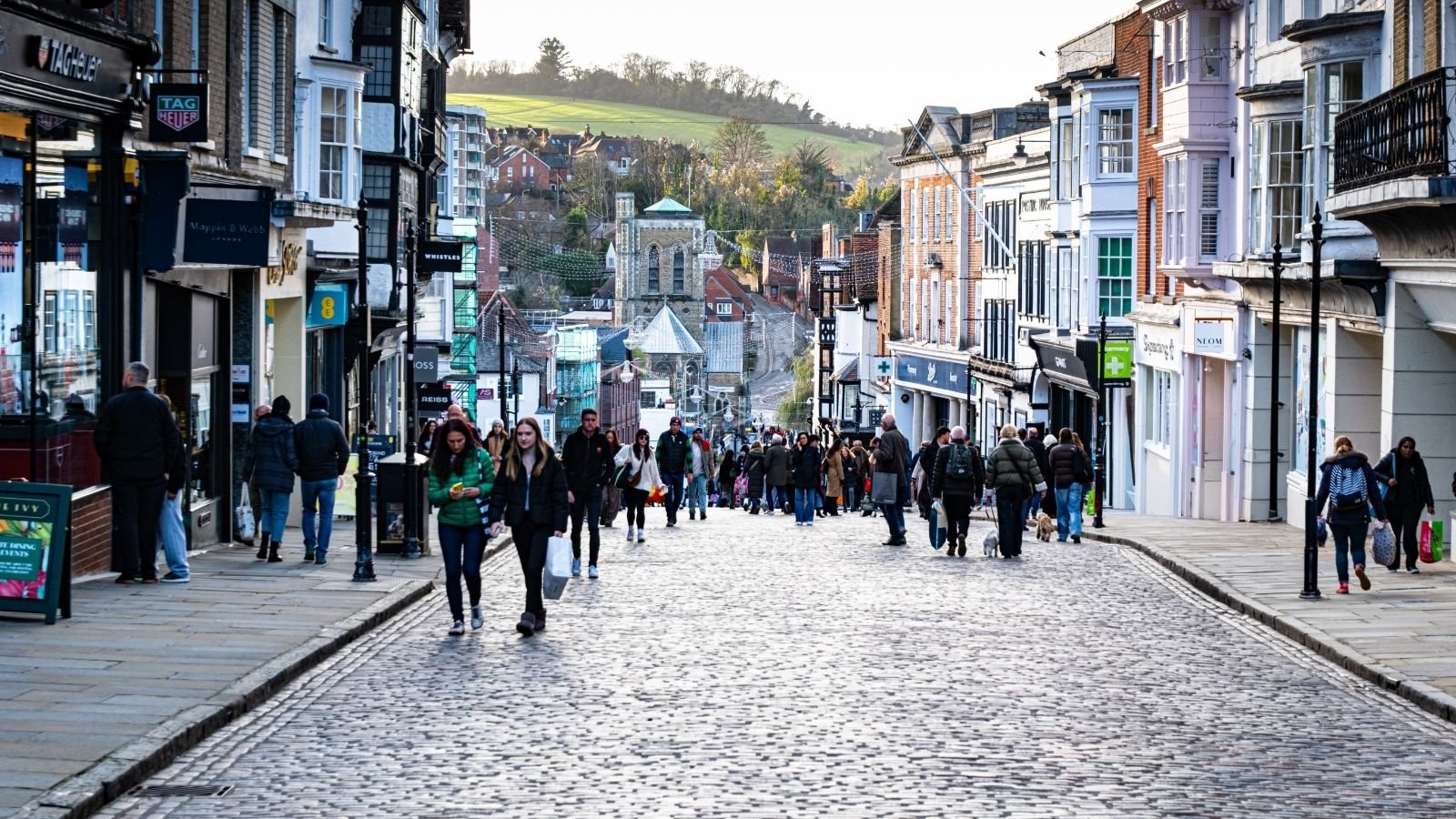
There was a time when the high street knew exactly what it was for. You went there to buy things. Shoes, coats, kettles, birthday cards, a last-minute wedding present you hoped wouldn’t look last-minute. The logic was simple and comforting. Shops clustered together because that was where people were. In turn, people came because that was where the shops were. The system fed itself.
That loop has broken. Not cracked. Properly broken. Online shopping didn’t merely undercut prices or steal convenience. Instead, it quietly rewired habits. People learned they could buy almost anything at any hour without travelling, queuing, or carrying bags home in the rain. Even those who still enjoy browsing no longer do it out of necessity. As a result, the high street lost its monopoly on access. Once that monopoly vanished, much of its economic logic went with it.
Yet the physical street did not stop existing. Buildings still stand. Pavements still run through town centres. Buses still arrive. The real question now sounds deceptively simple. If the high street is no longer primarily about retail, what is it actually for?
A post-retail high street does not mean a dead one. Rather, it means a street that stops pretending it can return to the past and starts reorganising around everyday life as it really functions now.
Retail does not disappear entirely. Instead, it contracts and sharpens. The shops that remain tend to justify their physical presence rather than apologise for it. Essential convenience holds firm. Pharmacies, small supermarkets, bakeries, off-licences, newsagents, charity shops. These places solve immediate problems. Above all, they trade in proximity.
Alongside them sits experiential retail, the kind that cannot be flattened into a parcel. Bookshops that host events. Independent record stores. Specialist food retailers. Repair shops. Tailors. Places where conversation matters and browsing feels purposeful rather than idle. Finally, a thin layer of destination brands survives, not because they need the high street, but because the high street still needs a few recognisable anchors.
What disappears most decisively is the middle. Large chains selling easily shipped goods at prices matched online struggle to justify rent, staffing, and storage. When they leave, the space they vacate rarely returns as more retail. This happens not because councils fail, but because demand no longer exists at scale.
As shops retreat, services move forward. This shift is not a radical experiment. Instead, it is already happening, often unnoticed. Hairdressers, barbers, beauty clinics, opticians, physios, dentists, tutoring centres, language schools, phone repair shops, tailoring services, dry cleaners, nail bars, co-working hubs, and small professional offices all share a crucial trait. They require bodies in rooms.
You cannot stream a haircut. Equally, you cannot download physiotherapy. These businesses depend on regular local footfall rather than occasional splurges. As a consequence, they generate repeat visits. The high street therefore becomes less about weekend surges and more about steady weekday rhythms. Morning appointments matter. Lunchtime errands follow. After-school sessions appear. Early evening drop-ins round things off.
This rhythm matters. A street that lives five days a week ages better than one that waits anxiously for Saturday. Healthcare, quietly, has become one of the most important post-retail tenants. For decades, medical services drifted towards ring roads, retail parks, and purpose-built complexes. Parking mattered more than proximity. That logic, however, is now reversing.
GP surgeries, diagnostic centres, mental health services, physiotherapy clinics, pharmacies with consultation rooms, sexual health services, and outpatient hubs increasingly benefit from central locations. They are visible, they are accessible by bus, they sit where daily life already passes.
Former department stores hosting NHS services are no longer curiosities. Instead, they are practical solutions. Large floorplates suit clinical layouts. Central locations reduce missed appointments. Care becomes part of everyday geography rather than something hidden behind car parks.
Housing plays an equally decisive role. A post-retail high street almost always means more people living directly on or above it. Upper floors that once stored boxes or gathered dust convert into flats. In weaker retail areas, entire ground floors often follow.
This is not simply about increasing housing supply, important though that is. People who live there generate a kind of demand visitors never can. On weekday mornings, they buy coffee. Prescriptions get collected locally. Classes fill up. When bins overflow or lights fail, someone actually notices.
Crucially, people living nearby keep lights on at night. As a result, streets feel inhabited rather than abandoned. Safety improves without slogans or campaigns. The high street stops being a place you travel to and becomes a place that quietly supports daily routines.
Civic functions return next, often slowly and sometimes accidentally. Libraries relocate into empty units. Galleries appear where fashion chains once sat. Community theatres, rehearsal spaces, adult education centres, advice hubs, youth services, and maker spaces take up long leases that commercial operators avoid.
These uses do not maximise rent. Instead, they maximise relevance. When councils treat the high street as civic infrastructure rather than a shopping corridor, something subtle changes. People visit without pressure to spend. They linger, they meet, they attend talks, they bring children. Over time, the street stops performing and starts hosting.
Food, predictably, remains an anchor, yet its shape shifts. Formal dining struggles unless it serves a clear local audience. What thrives instead are cafés, bakeries, casual eateries, street-food style venues, and places that work across the day.
Breakfast matters more than dinner. Coffee matters more than cocktails. Flexibility therefore matters more than polish. Markets and food halls play a growing role here. They lower barriers for operators, allow constant rotation, and keep spaces alive without locking anyone into fragile long-term bets. They also reintroduce a sense of chance. Something new appears. Something disappears. Regulars notice.
The street itself changes too. In a post-retail high street, the pavement becomes as important as the unit. Wider walkways, benches, trees, water fountains, cycle parking, play elements, and outdoor seating turn movement into occupation.
Pedestrianisation matters less as a political statement and more as a behavioural one. When cars stop dominating, people slow down. When people slow down, they notice places. And when they notice places, they use them.
Events matter, though not as spectacle. Markets, performances, seasonal festivals, outdoor classes, and civic gatherings reinforce the idea that the street belongs to its town rather than to a spreadsheet. There is a harder truth underneath all this. Britain no longer has enough retail demand to refill its high streets as they once were. Demographics, logistics, online platforms, and labour economics all point in the same direction. The gap will not close.
Attempts to resurrect retail dominance often delay adaptation. Buildings sit empty while strategies chase vanished footfall. Rents freeze potential uses. Meanwhile, the street decays in plain sight. Accepting fewer shops allows better streets. It frees space for housing, care, culture, services, and everyday utility. Above all, it replaces nostalgia with function.
A post-retail high street does not sparkle in the way brochures promise. Instead, it does something quieter and more important. It becomes useful again, it supports daily life rather than consumption alone. It holds services people rely on. And it gives towns a shared physical centre even when shopping no longer needs one.
The future high street is not a comeback story. Rather, it is a redefinition. Once that shift is accepted, the street stops waiting to be saved and starts evolving on its own terms.