Tartaria Theory and the Seduction of a Forgotten Empire
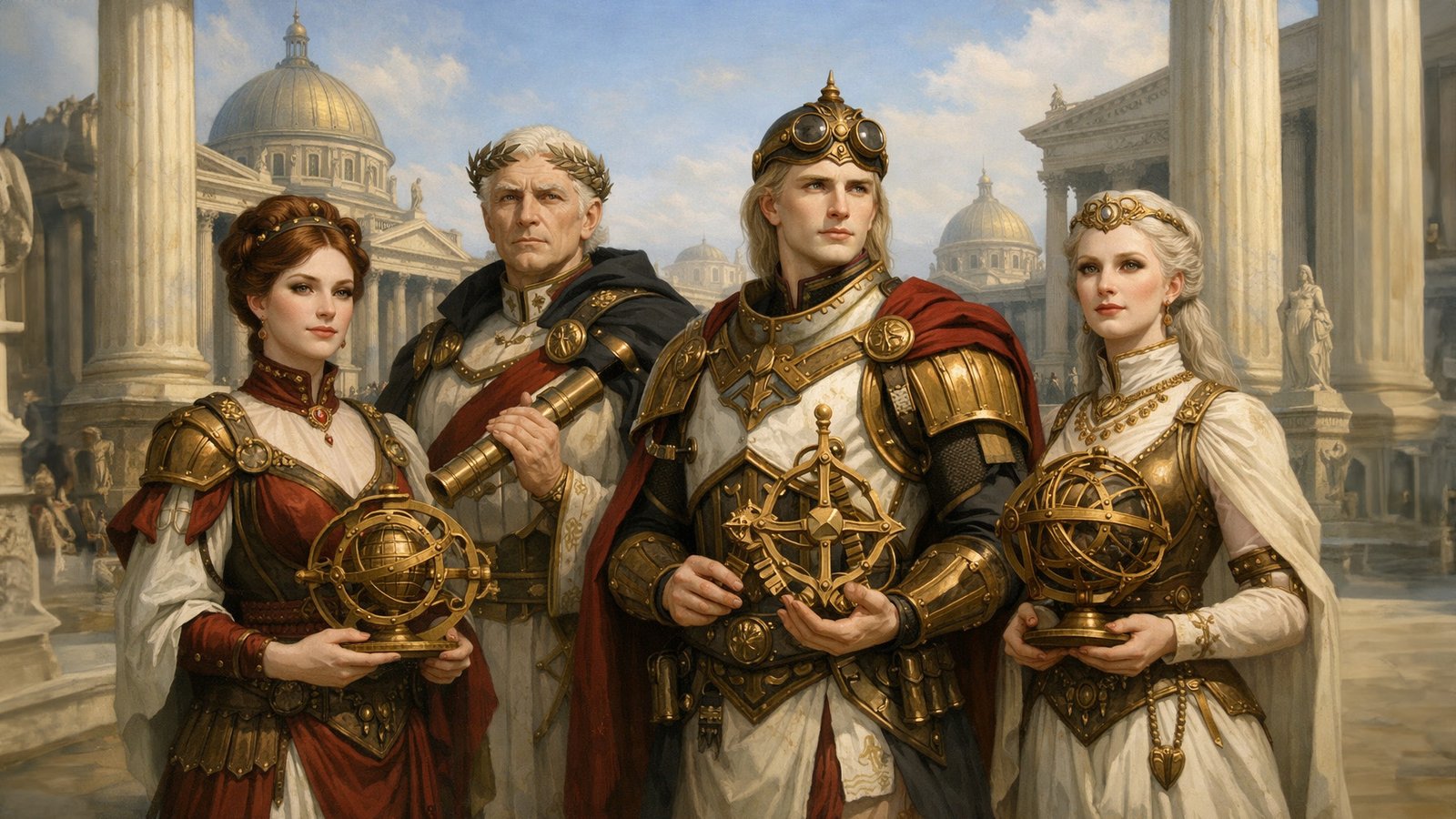
The Tartaria theory often begins with a map and a raised eyebrow. Someone notices the words “Great Tartary” sprawled across a seventeenth- or eighteenth-century European chart and pauses. Almost immediately, a question forms. Why does this enormous place never appear in school textbooks?
From that moment, the idea grows quickly. Perhaps this was not just a vague region but a powerful civilisation. Perhaps it built magnificent cities, mastered forgotten technologies, and then vanished after a catastrophe or a coordinated wipe from history. As a result, modern historical narratives start to look suspiciously thin.
At first glance, the appeal feels obvious. The theory offers a grand hidden story, one in which ordinary people have been denied knowledge of a more impressive past. At the same time, it flatters the reader. You are not merely curious; you are perceptive. You have noticed something others missed.
That emotional hook matters, because it often replaces evidence before facts enter the discussion. Once curiosity turns into suspicion, ordinary explanations feel unsatisfying. Consequently, the search shifts from understanding the past to exposing a supposed secret.
The trouble starts with the name itself. “Tartary” was never a country, empire, or self-identified civilisation. From roughly 1550 to 1800, European mapmakers used the term as a broad label for enormous stretches of Central and Northern Asia they understood poorly. It covered Siberia, parts of Central Asia, the Volga steppe, and regions beyond the Ural Mountains.
Moreover, the label bundled together dozens of peoples. Tatars, Bashkirs, Kalmyks, Mongols, and Tungusic groups all ended up under the same heading. In practice, Tartary meant territory beyond reliable knowledge. It functioned as a confession of ignorance disguised as geography.
This habit was entirely normal for the period. Mapmakers such as Gerardus Mercator in the late sixteenth century or Guillaume Delisle in the early eighteenth relied on second-hand reports and incomplete surveys. Similarly, large parts of Africa appeared with sweeping labels, while Terra Australis filled the southern hemisphere for centuries. Blank space unsettled cartographers, so generalisation filled the gap.
Yet Tartaria narratives treat these labels as proof of a unified empire. They rarely mention that contemporary travellers described the same regions very differently. Russian administrative records from the seventeenth century list separate khanates and tribal territories. Meanwhile, Qing dynasty sources describe frontier zones and tributary relationships rather than a single rival civilisation.
Crucially, people living in these regions did not describe themselves as Tartarians. The name existed almost entirely in Western European usage. Therefore, treating it as evidence of political unity reverses its original meaning.
Architecture then enters the argument, usually with confidence. Ornate buildings in Saint Petersburg, Paris, Washington, or provincial American towns appear too grand, too symmetrical, or too technically ambitious for the nineteenth century. From there, the claim follows that they must predate modern nation-states and belong to a lost global culture.
Context dismantles this idea quickly. Neoclassicism spread deliberately after the mid-eighteenth century, inspired by excavations at Pompeii and Herculaneum beginning in 1748. At the same time, architectural education became formalised through academies in Rome, Paris, and later London. Pattern books circulated widely, allowing builders thousands of miles apart to reproduce similar forms.
As a result, architectural similarity does not signal a hidden civilisation. It signals training, imitation, and ambition. In the United States, classical architecture even served a political purpose, linking the new republic symbolically to ancient Rome.
Star forts often appear as further evidence. However, their history is well documented. Military engineers such as Sébastien Le Prestre de Vauban refined these designs in seventeenth-century France to counter artillery. Their geometry reflects ballistics and angles of fire, not lost technology or mysterious energy systems.
Claims that nineteenth-century societies lacked the capacity to build monumental structures also ignore industrial reality. By 1850, Britain alone employed hundreds of thousands of skilled construction workers. Steam power, rail transport, and mechanised quarrying transformed logistics. Consequently, projects scaled up rather than became harder.
Major buildings left extensive paper trails. Saint Isaac’s Cathedral in Saint Petersburg, completed in 1858, generated decades of correspondence, budgets, and technical drawings. The Palace of Westminster, rebuilt after the fire of 1834, produced similar records. None suggest inherited ruins or unknown builders.
Then comes the mud. According to one of the theory’s most dramatic elements, a global catastrophe in the late eighteenth or early nineteenth century buried cities under metres of sediment. Sunken windows in Rome, Prague, or Chicago supposedly testify to this forgotten disaster.
Urban archaeology tells a quieter story. Cities slowly raise their own ground level. Streets get resurfaced. Sewers and pipes go in. Flood defences alter river behaviour. Over centuries, entrances sink while pavements rise.
Rome offers a clear example. The Tiber flooded repeatedly across antiquity and the Middle Ages, depositing sediment. London shows similar layering after fires, rebuilding, and sanitation projects. Moscow’s street levels changed dramatically after major fires in 1571 and 1812. These processes happened unevenly, which explains architectural oddities.
Archaeological stratigraphy dates these layers precisely. They show gradual change rather than a single global event. If a worldwide mud flood had occurred between 1750 and 1850, it would appear clearly in ice cores, sediment records, insurance claims, shipping logs, and contemporary correspondence. Instead, no such signal exists.
Another pillar of the Tartaria theory involves deliberate erasure. Governments, historians, and educators supposedly cooperated to remove this civilisation from memory during the nineteenth century, particularly as modern states consolidated power.
Here, the scale of the claim becomes its weakness. History does not reside in one archive. It lives in parish registers, tax rolls, inscriptions, coins, trade records, private letters, and oral traditions. For a globe-spanning civilisation to vanish without a shared language, distinctive material culture, administrative system, or genetic footprint would be unprecedented.
By contrast, documented empires appear exactly where expected. The Mongol Empire expanded rapidly in the thirteenth century and fragmented within a century. Russian expansion into Siberia accelerated after 1580, driven by the fur trade and military outposts. Qing authority expanded westward during the eighteenth century. These processes appear consistently across Chinese, Persian, Russian, and European sources.
What keeps the Tartaria theory alive is not explanatory power but narrative appeal. It simplifies the past into a single lost golden age. It replaces slow, uneven change with dramatic rupture. As a result, complexity becomes conspiracy.
Selective reading plays a crucial role. Old maps count when they support the idea, yet accompanying texts get ignored. Unusual buildings count, while construction records disappear from view. Silence becomes proof rather than a warning sign.
This reverses normal historical reasoning. Evidence gains strength when independent sources converge. When archaeology, written records, linguistics, and environmental data point in the same direction, confidence grows. When only one category appears, scepticism becomes sensible rather than dismissive.
There is also a modern emotional undercurrent. The Tartaria theory reflects distrust in institutions and discomfort with official narratives. That instinct did not emerge randomly. Governments do manipulate history, and education does simplify complex pasts.
However, acknowledging those flaws does not require total inversion. Critical thinking involves proportion, comparison, and context. Some narratives deserve challenge, while others collapse under ordinary explanation.
Ironically, the genuine history of the regions once labelled as Tartary is already extraordinary. Nomadic societies developed sophisticated political systems adapted to mobility. Trade routes across the Eurasian steppe connected China, the Middle East, and Europe long before modern globalisation.
These stories resist viral packaging because they demand patience. They involve debate, partial evidence, and gradual transformation. Yet they offer something more durable: insight into how humans organise power, movement, and survival across enormous landscapes.
The Tartaria theory ultimately reveals more about the present than the past. It expresses a longing for hidden meaning and stolen greatness. At the same time, it shows how easily mystery replaces method when curiosity outruns discipline.
History does not need secret empires to remain fascinating. It needs careful assembly. The past survives in documents, ruins, and patterns, waiting not for revelation but for steady attention. Approached this way, it proves richer, stranger, and far more human than any erased super-civilisation.