Spitfire: How a Beautiful Machine Won a Nation’s Heart
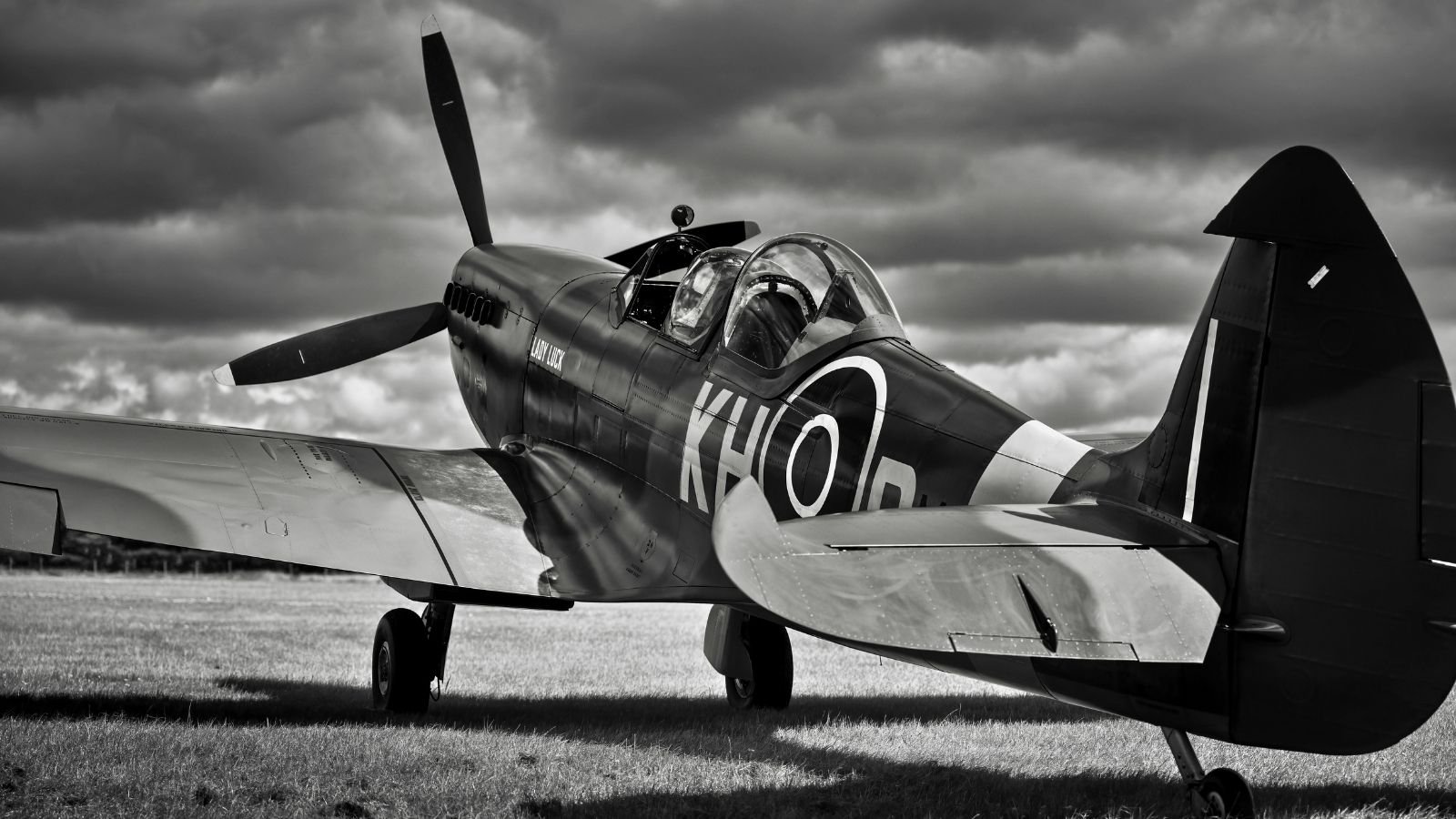
The Supermarine Spitfire tends to arrive in our collective imagination the same way it approached enemy fighters: fast, elegant and with an unmistakable growl that makes even the least aviation‑obsessed person pause and smile. It’s the rare machine that manages to look both dangerous and charming, like a perfectly tailored suit hiding a black belt in karate. People often assume it simply materialised in 1940 as Britain’s wartime guardian angel, but the full story winds its way through racing seaplanes, stubborn engineers, bureaucratic panic, and a nation quietly realising that an aluminium bird could become a national soulmate.
Reginald Mitchell, the man behind the aircraft’s graceful silhouette, did not set out to create a myth. He had been building aerodynamic marvels long before the Spitfire, spending years trying to make Britain’s Schneider Trophy seaplanes outrun the world. Those machines skimmed along at speeds that made contemporary pilots question their life choices every time they strapped in. Mitchell kept learning from them, hoarding little aerodynamic secrets until one day he shaped them into something that could fly higher, turn tighter and climb faster than anything the Air Ministry thought possible.
The prototype first took to the sky in March 1936 with Captain Joseph Summers at the controls. The test flight went beautifully, although Summers famously stepped out of the cockpit and declared, with enviable British understatement, that he found it “all right.” The aircraft represented a quantum leap in British fighter design, yet Summers treated it as though he’d simply test‑driven a new saloon car. That’s how you know a machine is exceptional: the pilot climbs out speechless, then pretends nothing extraordinary happened.
Its famous elliptical wings were not an aesthetic flourish. Mitchell wanted minimal drag and maximum lift, and the distinctive outline made that possible. The result was a wing so efficient that it made rival designers mutter into their tea. Pilots loved it because it allowed incredibly tight turns at high speed. Ground crew adored it slightly less, as repairing battle damage on those lovely curved panels required patience and vocabulary rarely found in official RAF manuals.
Under the cowling sat the Rolls‑Royce Merlin, an engine with a voice that could still make grown adults emotional eight decades later. The Merlin wasn’t merely powerful; it responded to throttle changes like a racehorse, giving the aircraft a certain dramatic flair. Later marks carried even more muscular engines, some replacing the Merlin with the mighty Griffon, which made the nose longer, the sound deeper and the temperament slightly more rebellious.
When the Second World War erupted, the Spitfire entered service as part of a hastily improvising Royal Air Force. The aircraft became an essential ingredient of the Battle of Britain, though it shared the burden with the more numerous Hawker Hurricane. People sometimes forget the Hurricanes did most of the heavy lifting, but the Spitfire stole the spotlight by outperforming the German Bf 109 at altitude and offering pilots a sense of confidence that borders on superstition. The public fell in love with it because it looked like the plane that would win the war, even before it actually did anything.
During the darkest months of 1940, the Spitfire helped turn the tide against the Luftwaffe. Its ability to climb quickly and intercept incoming fighters made it a natural duellist. German pilots claimed they could recognise the Spitfire even at a distance because of those unmistakable wings. British pilots, meanwhile, treated the aircraft with a degree of affection that one normally reserves for pets or favourite pubs. One veteran described it as “a plane that tried to keep you alive,” which is perhaps the finest review any fighter can receive.
Mitchell never witnessed the Spitfire’s wartime triumphs. He died in 1937, leaving colleagues like Joseph Smith to continue refining and upgrading the aircraft. They approached the task with a mix of respect and ambition, gradually pushing the design to new extremes. Later variants featured clipped wings for faster roll rates, new carburettors for inverted flight, extra armour, and various tweaks that transformed the Spitfire from an elegant interceptor into a multi‑role workhorse.
Its career didn’t end when the Battle of Britain faded into the history books. The Spitfire travelled the world, fighting in North Africa, defending Malta, sweeping across Europe after D‑Day and flying reconnaissance missions in Asia. It served as a fighter‑bomber, a photo‑reconnaissance aircraft and even a naval fighter when the Seafire variant entered carrier operations. The aircraft adapted so well to new roles that it began collecting marks and sub‑marks the way mobile phones collect software updates. Pilots who served with late‑war versions often joked that they were flying a distant cousin of the original.
By the time production ended, more than twenty thousand Spitfires had rolled out of factories scattered across Britain. Women played a massive role in this output, particularly in the Air Transport Auxiliary, ferrying the aircraft from factories to airbases. Many of them had barely flown anything comparable before, yet they climbed into single‑seat fighters with calm professionalism that still deserves far more recognition.
The Spitfire’s endurance came from endless evolution. The Mk IX, for instance, emerged as a stopgap to counter the German Focke‑Wulf 190. Engineers essentially bolted a more powerful Merlin engine onto the Mk V airframe, hoping it would keep pace with the enemy. The result turned out to be one of the most successful versions ever built. Late‑war Spitfires carried engines so strong that they required slight redesigns of the tail to prevent pilots from unintentionally performing aerial acrobatics during take‑off. Photographs from the era show the aircraft’s silhouette evolving subtly, like a creature adapting to a changing climate.
Even after the war, the Spitfire refused to retire gracefully. Reconnaissance versions continued flying into the mid‑1950s, particularly in Asia. Some foreign air forces kept theirs even longer, partly due to budget constraints, partly because they genuinely loved the machine. A few Spitfires ended their days as gate guardians for RAF stations, posed regally on poles as though they might escape into the sky at any moment.
Today, the aircraft enjoys a second life as a living piece of heritage. Restored examples regularly appear at airshows, performing graceful aerobatic displays that leave crowds hypnotised. When a Merlin engine starts up, people instinctively lift their phones, then abandon the idea of filming anything because the sound overwhelms them. You don’t record a Spitfire; you experience it.
A handful of organisations offer flight experiences, allowing brave souls to sit behind the pilot as the aircraft dances through the clouds. These flights are eye‑wateringly expensive, yet they remain fully booked because few people can resist the chance to ride inside history. Enthusiasts meticulously restore airframes from rusted relics back to pristine condition, often spending years searching for original parts. The devotion borders on religious.
What makes the Spitfire so enduringly beloved is not just its wartime service or technical brilliance. It symbolises ingenuity under pressure. It stands for the idea that good design can be both beautiful and effective. And, it reminds people of a moment when an entire country looked up and saw its hopes reflected in a streak of polished metal carving loops across the sky.
People also adore it because it never stopped improving. The Spitfire evolved constantly, rather like a start‑up that pivots every six months without losing its core mission. Its designers refused to settle, always chasing a little more speed, a little more manoeuvrability, a little more lift. Some companies spend years trying to articulate their values; the Spitfire embodied resilience, adaptability and purpose without ever drafting a mission statement.
Modern pilots describe the experience of flying one as remarkably intuitive. The controls respond almost telepathically, encouraging a feeling of dialogue between human and machine. When a Spitfire banks, it does so with a kind of aristocratic grace, as if the sky itself gives way out of politeness. The aircraft demands respect, but it rewards gentle hands. Many pilots say they stop thinking about flying after a few minutes because the plane simply goes where it feels natural to go.
The cultural legacy reaches beyond aviation history. Novels, films and documentaries place it at the centre of Britain’s wartime story. It appears on stamps, posters, museum banners and commemorative coins. Schoolchildren learn about it before they learn about differential equations. The aircraft has become shorthand for courage, craftsmanship and that uniquely British blend of discipline and dry humour.
And yet, for all the reverence, the Spitfire retains a touch of mischief. Pilots recount tales of wing‑mounted cameras that jammed at inconvenient moments, fuel systems that required careful coaxing during steep climbs and landing gear that bounced dramatically on rough runways. The aircraft had quirks like any legendary character, but they only made the story richer.
Walk around one in a museum and you’ll notice how compact it is. People often expect a towering war machine, then find themselves standing before something surprisingly slender. The cockpit feels tight even for average‑sized pilots. Every centimetre of space reflects a compromise in pursuit of speed and agility. It’s a reminder that wartime engineering rarely indulged comfort.
Spend time at an airfield during maintenance and you’ll see crowds gathering whenever a technician starts the engine. The first cough of the Merlin feels like a historical announcement. The propeller blurs, the fuselage trembles and the whole aircraft seems to wake up like a lion stretching before a hunt. Even people who know nothing about aviation sense they’re watching something important.
The Spitfire has become one of those rare artefacts that lives in the present while belonging to the past. It represents a time when design, courage and circumstance aligned to create something extraordinary. It flew through chaos and emerged as a symbol of determination. Today it remains a reminder that machines, when crafted with purpose, can transcend their function and become part of a nation’s memory.
The next time you hear that unmistakable rumble in the distance, look up. The Spitfire doesn’t simply pass overhead. It carries old stories, new dreams and the kind of beauty that refuses to fade. It proves that some creations outgrow their blueprints, taking on lives of their own long after the draftsmen have put down their pencils.