Society, Science, and Survival of Maya Civilisation
The Maya civilisation did not announce itself with trumpets or a single capital city. It spread quietly across forests, limestone plains, swamps, and highlands, stitched together by roads, rituals, rivalries, and a shared way of seeing time itself. Long before Europeans showed up with maps and misunderstandings, the Maya had already built a world that counted centuries with mathematical confidence and argued politics in stone.
Picture the Maya region as a patchwork rather than a banner. City-states rose and fell across what is now southern Mexico, Guatemala, Belize, and parts of Honduras and El Salvador. Each city had its own rulers, ambitions, and grudges. They traded cacao, jade, obsidian, salt, feathers, ideas, and insults. Sometimes they allied through marriage. Sometimes they burned each other’s temples and dragged captives back for very public bad days. The Maya civilisation thrived on this tension, a mix of cooperation and competition that kept the system dynamic for centuries.
The timeline stretches far deeper than the familiar images of stepped pyramids. Early Maya communities formed villages as early as the third millennium BCE. They farmed maize, beans, squash, and chilli, slowly shaping landscapes that looked wild to later visitors but functioned as carefully managed food systems. By the Preclassic period, ceremonial centres emerged, complete with platforms, plazas, and early writing. These places already cared deeply about kingship, ancestors, and cosmic order.
Then came the Classic period, roughly from the third to the ninth century CE, when the Maya civilisation went all in. Cities like Tikal, Calakmul, Copán, Palenque, and Caracol turned architecture into political theatre. Stone monuments recorded births, accessions, wars, defeats, and divine favour. Rulers gave themselves long names and even longer titles. Dates mattered so much that stelae read like cosmic receipts, proof that events aligned correctly with the movement of time.
Writing gave Maya rulers a voice that still speaks clearly. The Maya writing system combined logograms and syllables, allowing scribes to capture speech, names, verbs, jokes, and insults. This was not vague symbolism. It was language carved into stone and painted onto bark-paper books. The tragedy is that only four Maya codices survived colonial destruction. Thousands vanished, burned by people who mistook literacy for heresy. One of the survivors, now known as the Maya Codex of Mexico, sparked decades of debate before science and scholarship finally agreed it was real. Even in controversy, the Maya civilisation keeps reminding everyone that it refuses simple stories.
Time obsessed the Maya, though not in the anxious way modern calendars do. They tracked multiple cycles at once. A 260-day ritual calendar ticked alongside a 365-day solar one. The Long Count handled deep time, stacking days into units that stretched thousands of years into the past and future. The Maya understood zero as a concept, not just a gap. They carved it into monuments centuries before Europe warmed to the idea. This allowed dates to land precisely, like cosmic coordinates.
Astronomy was not a hobby. It shaped politics, rituals, and architecture. Temples aligned with solstices, equinoxes, Venus cycles, and other celestial events. Observing the sky helped rulers justify their power. If the heavens moved correctly, the king ruled correctly. When drought struck or war went badly, people noticed the mismatch. In the Maya civilisation, cosmic order and political legitimacy shared the same fragile shelf.
Despite the temples, the pyramids, and the inscriptions, most Maya people lived ordinary lives that rarely make it into guidebooks. They farmed intensively, terracing hillsides, draining wetlands, and building reservoirs. Recent LiDAR surveys have made this impossible to ignore. What once looked like empty jungle now appears as a dense web of houses, roads, fields, and canals. Estimates suggest millions of people lived in the Maya lowlands during the Late Classic period. This was not wilderness dotted with monuments. It was a managed landscape humming with daily routines.
Cities in the Maya civilisation did not sprawl like modern ones, yet they connected tightly. Causeways, known as sacbeob, linked neighbourhoods and centres, sometimes stretching for kilometres. These roads were symbolic as much as practical, white-plastered statements of power and permanence. Walking one meant moving through political space, not just physical distance.
Politics rarely stayed polite. Maya inscriptions describe wars with enthusiasm and detail. Kings captured rival rulers, displayed them, sacrificed them, or forced them into humiliating submission rituals. Warfare was strategic and symbolic. Victories fed legitimacy. Defeats cracked it. One famous event in 378 CE records the arrival of Siyaj K’ak’, a figure associated with the powerful city of Teotihuacan far to the west. His appearance at Tikal triggered a dynastic reset that still fuels debates about foreign influence versus local ambition.
The Maya civilisation never formed a single empire, and that may explain both its resilience and its instability. Power shifted constantly. When one city faltered, another stepped in. Alliances rearranged like a deck of cards. This flexibility allowed the system to adapt, but it also meant that stress could ripple unpredictably.
Which brings us to the famous question that refuses to behave: the so-called Maya collapse. Around the ninth century, many southern lowland cities stopped erecting dated monuments. Palaces emptied. Some centres lost population. For a long time, popular narratives treated this as a dramatic vanishing act. The Maya civilisation collapsed, full stop.
Reality behaves less theatrically. Many Maya communities persisted. Some regions reorganised. Northern centres such as Chichén Itzá rose to prominence. Postclassic Maya societies continued trading, building, worshipping, and fighting right up to European contact and beyond. What collapsed was not a people but a particular style of courtly life tied to divine kingship and monumental display.
Climate played a role, but not as a single villain. Evidence points to periods of severe drought that stressed water systems and crops. In a world where rulers claimed cosmic favour, repeated agricultural failure hurt more than stomachs. It undermined belief. Add political rivalries and warfare into the mix, and the system grew brittle. Different regions reacted differently, which explains why the Maya civilisation fractured rather than failed uniformly.
Environmental management now looks far more sophisticated than older models suggested. The Maya did not simply chop down forests until everything fell apart. They adapted, adjusted, and engineered. Problems emerged when multiple pressures collided at once. Drought alone would not end a civilisation. Drought plus war plus political inflexibility might.
Popular culture has not always been kind to the Maya. The 2012 end-of-the-world panic turned a calendar rollover into global nonsense. The Long Count simply completed a cycle and rolled forward, much like odometers do. Ancient Maya texts show no panic, no prophecy of doom, no interest in frightening people in gift shops centuries later.
Another stubborn myth claims the Maya were peaceful astronomers who spent their days counting stars. The inscriptions disagree loudly. Violence formed part of elite politics. Sacrifice happened, sometimes brutally, though practices varied widely by time and place. Recent evidence from Tikal suggests episodes of child sacrifice linked to periods of foreign influence, a reminder that Maya ritual life changed over time and did not follow one eternal script.
The arrival of the Spanish shattered much of what remained visible. Diseases tore through communities. Forced labour, conversion campaigns, and land seizures followed. Yet the Maya civilisation did not dissolve into memory. Millions of Maya people live today, speaking dozens of related languages, maintaining traditions, adapting others, and navigating modern states that often overlook their history while borrowing its aesthetics.
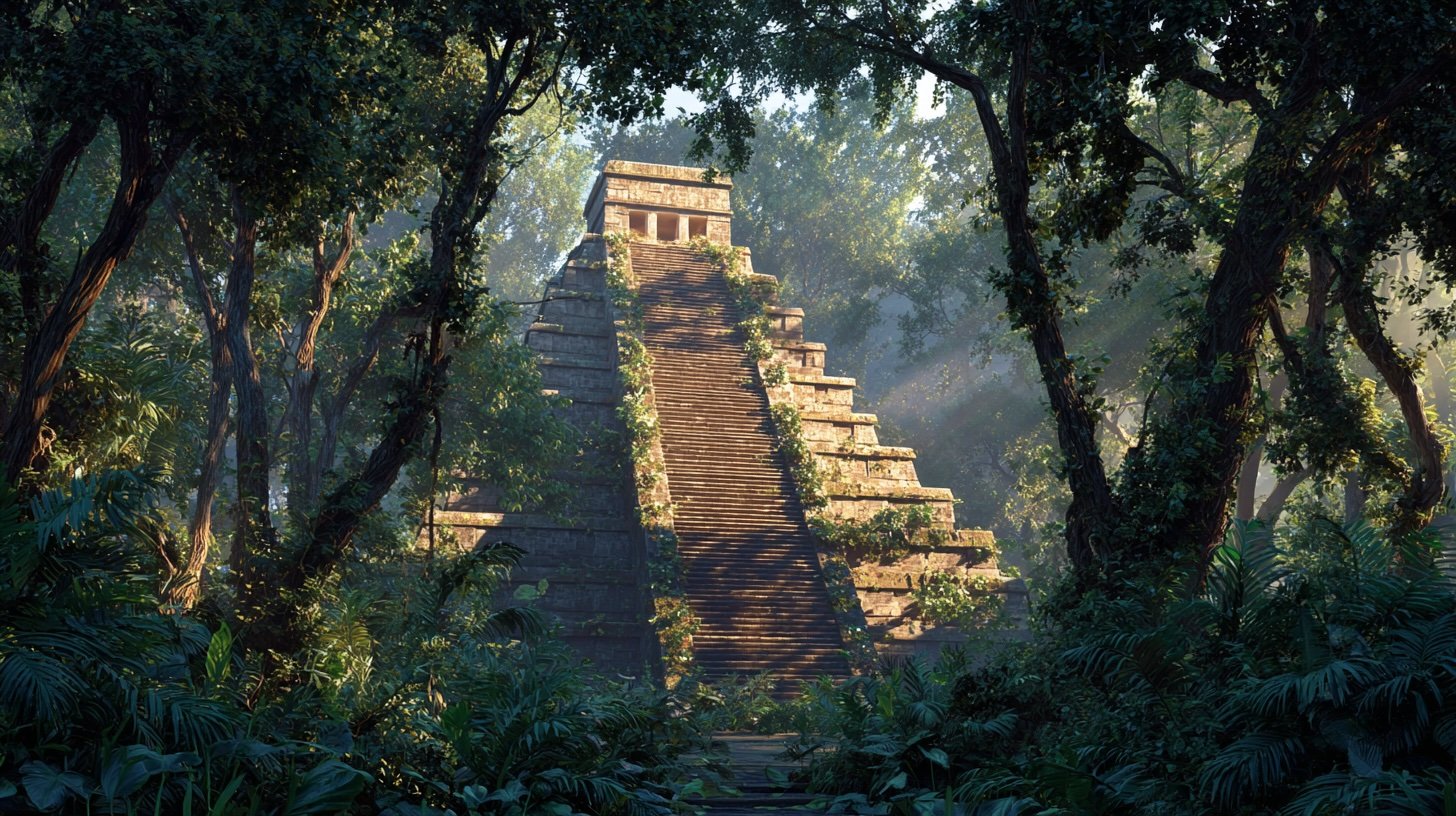
Walking through Maya ruins today can feel misleadingly calm. Vines drape temples. Howler monkeys shout from the canopy. The stones look eternal. In reality, these places once rang with voices, arguments, music, footsteps, and the nervous energy of political life. Markets bustled. Messengers ran. Farmers worried about rain. Rulers watched the sky and their rivals with equal intensity.
The Maya civilisation rewards patience. It resists tidy arcs and dramatic finales. It stretches across millennia, survives catastrophe, absorbs change, and leaves records precise enough to argue with us centuries later. That combination of adaptability and stubborn clarity explains why the Maya still unsettle easy narratives. They were neither mystical caricatures nor doomed geniuses. They were people who built an extraordinary world and lived in it, with all the messiness that implies.
Seen that way, the Maya civilisation feels less like a lost chapter and more like an unfinished conversation, one written in stone, soil, and stars, still waiting for readers willing to slow down and listen.