Silver Arcs in the Dark: The Strange Beauty of Moonbows
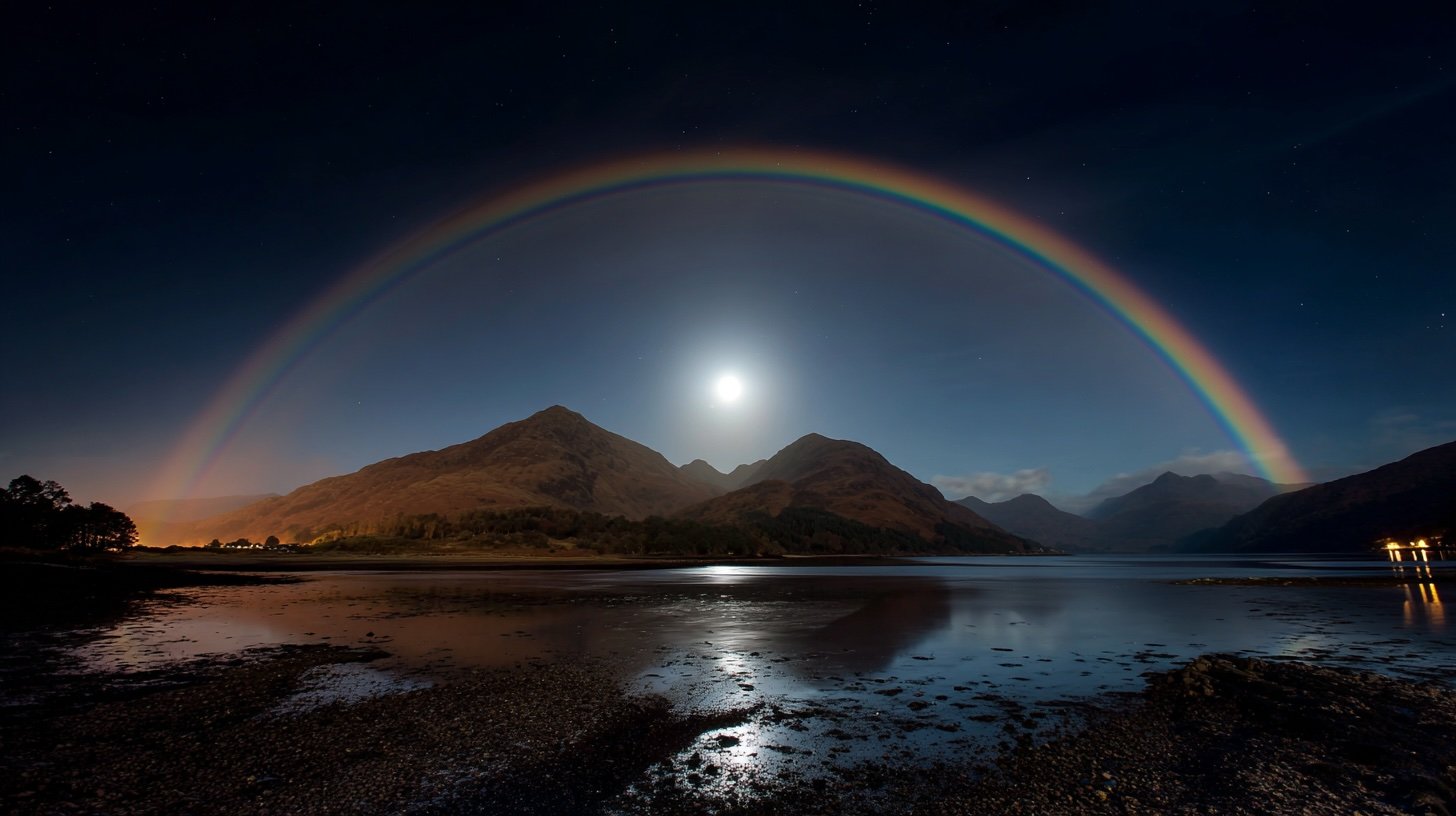
Moonbows sound like the sort of thing someone invented after a long evening in a mountain cabin, when the fire crackles, the tea goes cold and every story gets just a little too dramatic. People picture glowing arches floating across the night sky, whispering cosmic secrets. The real thing behaves куда разумнее. It works exactly like an ordinary rainbow, only fuelled by moonlight instead of sunlight. That shift changes everything. Colours turn into soft suggestions, the brightness drops to near zero, and the whole experience feels far more like a private performance than nature’s usual technicolour show.
Stand near a waterfall on a clear night and you might notice a pale curve hanging in the mist. It looks faint enough to ignore. The eye insists it’s just a blur, yet a camera cheerfully disagrees. A long exposure reveals reds, greens, blues, all hiding inside what seemed nothing more than a ghostly smudge. The contrast between what you see and what the lens unveils creates a strange thrill. You realise the full spectacle happened in front of you the whole time, but your eyes simply refused to cooperate. Moonbows demand an audience that pays attention.
The recipe remains familiar: light enters droplets, bends, scatters and returns towards the observer as a spectrum. Only moonlight refuses to behave like the arrogant show‑off that sunlight can be. It arrives in a calmer mood, travelling from the Sun to the Moon, bouncing off its dusty surface and swimming through the night sky until it hits a wall of spray. The result looks restrained and elegant, like a rainbow that completed a course in minimalism. People see the pale arc and assume it lacks colour. It doesn’t. The colours stay there, simply too shy for the human eye in low light. Cameras, as always, gossip.
Waterfalls offer the perfect stage for this performance because they create a reliable mist. Yosemite became the unofficial headquarters for moonbow hunters. On certain nights each spring, the falls roar with enough force to spray a shimmering cloud into the air. Visitors arrive carrying tripods, headlamps and more optimism than sleep. They walk the trails in near silence, waiting for the Moon to climb above the cliffs. When it finally clears the granite edge, that pale curve begins to take shape. Some people gasp. Others stare quietly as if they’ve stumbled into a secret meeting between the Moon and the water. The whole scene feels cinematic, just without the orchestra.
The moment the first camera shutter clicks, things escalate. A few seconds later the screen reveals a full rainbow glowing in impossible colours. The very same people who stood in the dark insisting they saw nothing now stare at the screen in disbelief. The photograph looks almost too perfect, as though someone added the curve with a particularly gentle brush. Yet nothing gets fabricated. The Moon simply paints with subtle strokes. The camera gathers each stroke and shows the audience what their own eyes refused to process.
Victoria Falls takes the concept and turns it into theatre. The spray there rises in colossal plumes, thick enough to soak anyone standing too close. During full moon nights in the high‑water season, the air transforms into a floating cloud of droplets. People gather along the viewpoints, listening to the thunder of the falls while moonlight sweeps across the gorge. Suddenly a faint band materialises above the mist. It doesn’t appear all at once. It creeps into existence, gaining shape as the Moon shifts. Once again the eye barely senses colour, yet cameras reveal a glowing arc, so saturated it almost looks painted. Everyone ends up drenched and delighted.
Long before photography turned moonbows into shareable proof, they lived in folklore. Some African stories pictured them as bridges for spirits. Others believed they appeared only for people with particularly sharp perception. Sailors once claimed they predicted a change in weather. Even in Europe, wanderers returning from misty nights near waterfalls tried to explain the strange pale arches they’d seen. Neighbours listened politely and blamed exhaustion. Without photographs, moonbows lived on the border between natural science and very creative storytelling.
Modern travellers take the opposite approach. They trust the phenomenon completely and spend nights chasing it. Some check lunar calendars months in advance. Others track humidity, wind direction and water flow rates. Dedicated photographers treat moonbow sightings like an exam they swear to pass: exposure settings, tripod angles, lens selection, everything rehearsed. The funniest part appears when the arc finally emerges. People freeze, worried that even breathing too loudly might ruin the moment. Then everyone takes hundreds of shots of the exact same curve, because night magic has no respect for restraint.
Moonbows do appear away from waterfalls, though much less frequently. A misty lake, a lingering rain shower or even fine sea spray can recreate the right conditions. People stumble upon them accidentally and argue afterwards about whether the faint arc counts as the real thing. It does. If the light bends, the droplets scatter and the curve appears opposite the Moon, the job gets done. Still, nowhere competes with waterfalls. Nature set up those places as its preferred night stage.
What makes moonbows charming is the very thing that makes them elusive. They don’t knock on your attention like sunlight rainbows do. They whisper. They sit quietly above the roar of water, waiting for someone patient enough to look twice. Most people walk past without noticing. A few curious souls stop, tilt their heads and catch a glimpse. That tiny moment of recognition feels like finding a secret door hidden in full view. The arc isn’t bright, yet it carries that gentle shimmer which makes the night feel a little more alive.
When people talk about moonbows afterwards, the stories always sound slightly exaggerated. Not in the sense of adding dragons or magical omens, but in the way memory polishes subtle experiences into tidy narratives. They say the arc appeared suddenly, though it actually grew over several minutes. They describe the colours as vivid, even though they relied on a camera to see them. They claim the moment felt profound, and in fairness it probably did. The combination of darkness, water, silence and that pale curve creates an atmosphere that encourages reflection. Nature performs in slow motion.
Some find moonbows more enchanting than their daytime relatives. Sunlight dazzles; moonlight soothes. Daytime rainbows shout from across the sky. Moonbows speak in half‑sentences. Their subtlety becomes part of their charm. People love them not because they overwhelm the senses, but because they reward patience. You stand still, breathe in the cool air and let your eyes adjust. It feels less like watching a spectacle and more like noticing something usually overlooked.
Every moonbow sighting shares one final detail: the ending. The arc doesn’t vanish dramatically. It fades like a polite guest leaving quietly. The Moon climbs higher or disappears behind a cloud. The mist changes direction. The curve loosens, loses shape and dissolves into the darkness. People stay for a moment longer, staring at the space where it used to be. No one rushes away. Everyone savours the last hint of brightness before the scene returns to ordinary night.
Moonbows remind people that beauty doesn’t need to shout. It can whisper from a cliff edge or hang above a river in the smallest shimmer of pale light. It can live inside droplets so tiny you barely feel them on your skin. It can hide in plain sight, waiting for that one person who decides not to hurry. A quiet arc of moonlight becomes a gentle nudge from the world, suggesting that even the darkest hours carry colour.
This subtle spectacle encourages a different way of looking at things. When the night sky paints a silver arc above a roaring waterfall, nobody talks about productivity or deadlines. People wrap themselves in the moment and let the quiet magic wash over them. They leave with damp clothes, cold hands and a story that sounds almost unbelievable. Yet the phenomenon stays perfectly real, hiding in the soft glow that moonlight scatters across the mist.
Moonbows never try to rival sunlight rainbows. They exist for a different audience, one that prefers quiet wonder over visual fireworks. Anyone who has seen one carries the memory like a small souvenir from the night. A reminder that the world holds surprises even when it chooses a softer palette. A whisper of colour stretched across the dark.