Sikhism: A History of Faith That Chose Responsibility Over Comfort
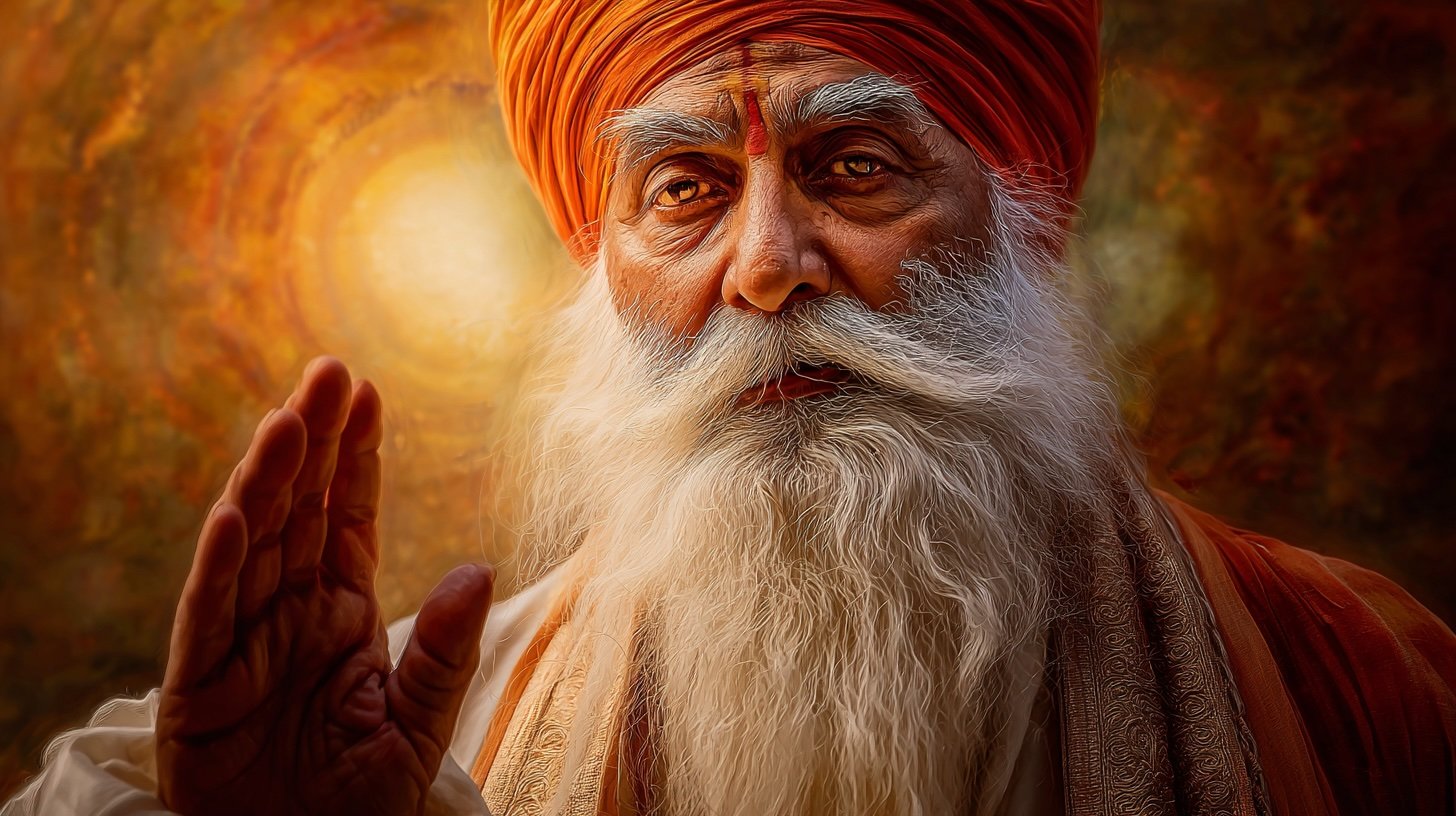
Sikhism takes shape in the fields, markets, and riverbanks of fifteenth‑century Punjab, a region where empires overlapped and religions argued loudly about who owned truth. Spiritually, it was a noisy place. Hindu devotional movements were questioning priestly authority, while Islamic mystics were preaching direct experience of God. At the same time, caste rules shaped everyday life with brutal efficiency. Into this setting stepped a man who calmly suggested that most people were asking the wrong questions.
Guru Nanak showed little interest in winning debates or founding an institution. Instead, he sang, travelled, and argued with ascetics, mocking hollow rituals while refusing to accept that God cared about labels. At the core sat a disarmingly simple idea: there is one universal, formless divine reality, and remembering it matters far more than outward performance. Consequently, God was not owned by temples or mosques. Rather, the divine was present while farming, trading, cooking, and walking.
That idea carried consequences. If there is one divine presence, then dividing people by caste, gender, or religion makes little sense. For this reason, Nanak rejected ascetic withdrawal and insisted that spiritual life should unfold inside ordinary existence. Earn an honest living. Share what you have. Keep the divine in mind. Importantly, these were not metaphors. They were practical instructions.
Over time, Nanak’s travels became legendary. He moved across South Asia and beyond, engaging with Hindu priests, Muslim scholars, yogis, and rulers. These journeys were less missionary campaigns and more philosophical stress tests. Wherever he went, he challenged certainty. Meanwhile, his verses, composed in local languages, carried humour, provocation, and sharp moral clarity. They criticised religious hypocrisy without offering a new priesthood to replace the old ones.
When Nanak died, the movement might have dissolved into memory and song. Instead, he chose a successor based on spiritual alignment rather than blood. As a result, Sikh history took a decisive turn. Authority would rest on ethical insight and lived practice, not inheritance. The Guru was a guide, not a monarch.
As leadership passed to the next Gurus, the Sikh community grew steadily. With growth came a practical problem. How do you preserve a message built on openness without letting it dissolve into vagueness? Gradually, structure arrived. A script was standardised so hymns could be written, shared, and remembered. Alongside this, community spaces emerged where worship, music, and food intertwined.
One institution, in particular, embodied this shift: the langar, the communal kitchen. It became one of Sikhism’s most quietly radical practices. Everyone ate together on the floor, and status disappeared temporarily. Kings and labourers shared the same meal. In effect, this was theology served on metal plates. Equality stopped being an abstract virtue and became a daily habit.
As Sikh teachings spread, so did the need for coherence. Sacred hymns were collected and compiled, including not only Sikh voices but also devotional poets from different religious backgrounds. In this approach, truth was not proprietary. Wisdom could come from unexpected places. Accordingly, the resulting scripture was treated with deep reverence, not as a relic, but as a living guide.
This period of consolidation soon collided with imperial politics. The Mughal Empire, confident in its authority, grew suspicious of any community that refused easy classification. Sikh leaders attracted followers across social boundaries, which made them visible. Inevitably, visibility invited pressure.
The execution of Guru Arjan marked a rupture. It demonstrated that spiritual independence could provoke lethal consequences. From this point, Sikh identity absorbed a new dimension. Devotion alone would not protect the community. Defence became necessary.
Yet this response was neither sudden nor reckless. Guru Hargobind articulated a balance between spiritual responsibility and worldly authority. He wore two swords, symbolising the inseparability of inner discipline and social action. As a result, Sikhism did not become militaristic, but it accepted that injustice sometimes requires resistance.
This duality shaped the decades that followed. Sikhs faced harassment, executions, and forced conversions under various rulers. Even so, their response was unusually principled for the era. Resistance was framed not as revenge, but as protection of dignity and freedom of belief. When Guru Tegh Bahadur was executed for defending the religious rights of others, the principle hardened into memory. Sikhism would stand for freedom of conscience, even when it proved inconvenient.
Everything shifted most dramatically at the end of the seventeenth century. Guru Gobind Singh reshaped Sikh identity in public and irreversible ways. He founded the Khalsa, a disciplined collective bound by shared commitments rather than ancestry. Through initiation, caste distinctions were erased and moral responsibility reinforced.
The visible symbols adopted by initiated Sikhs served multiple purposes. On one level, they created unity. At the same time, they demanded accountability. Crucially, they removed the option of hiding belief when it became dangerous. Sikh identity stepped into daylight and accepted the risks.
Guru Gobind Singh also made a decision that stabilised Sikhism permanently. He ended the line of human Gurus, and authority passed to the scripture and the collective community. Consequently, charisma would no longer drive succession. Interpretation would remain anchored to a shared text and shared responsibility.
By the eighteenth century, this structure faced its most severe test. Sikhs endured systematic persecution and near‑annihilation. Communities scattered, regrouped, and adapted. As leadership became decentralised, armed bands protected villages, pilgrims, and supply routes. In this way, faith survived through mobility, memory, and stubborn resilience.
Out of this instability emerged a new political reality. Sikh confederacies gradually gained control over Punjab. Eventually, a unified Sikh state formed under Maharaja Ranjit Singh. His empire did not impose religious uniformity. Instead, Muslims, Hindus, and Europeans held senior roles, while places of worship received protection regardless of faith. At its best, Sikh rule reflected pluralism rather than domination.
Colonial rule later disrupted this balance. British annexation ended Sikh sovereignty and reframed Sikh identity through administrative categories. On the one hand, the empire admired Sikh martial reputation and recruited heavily. On the other, colonial bureaucracy froze fluid traditions into rigid definitions. Religion became something to be measured, classified, and managed.
The twentieth century delivered further upheaval. The partition of India tore Punjab in two, unleashing violence and displacing millions. Sacred geography fractured overnight. Nevertheless, Sikhs rebuilt their lives across a newly drawn border, carrying memory, trauma, and tradition into unfamiliar cities and countries.
Post‑independence politics added new strain. Debates over language, autonomy, and religious rights intensified. The events of 1984, including military action at the Golden Temple and the violence that followed, left deep scars that still shape Sikh political consciousness.
Today, Sikhism exists across continents. Gurdwaras stand in London, Vancouver, Nairobi, Melbourne, and countless other cities. Daily, the langar feeds strangers. Meanwhile, the scripture remains central, and the original principles continue to exert pressure on modern life.
Looked at closely, Sikh history does not read like the steady rise of an institution. Instead, it feels like a continuous negotiation between conscience and power. Its founders resisted empty ritual without rejecting community. Likewise, its leaders embraced discipline without abandoning compassion. Its followers accepted visibility in a world that often punishes it.
In the end, what began as songs sung by a restless traveller became a global tradition built on memory, service, and ethical stubbornness. Sikhism never promised safety. Rather, it promised responsibility. That promise, kept across centuries of disruption, remains its most defining inheritance.