Septimius Severus: The African Who Ruled Rome
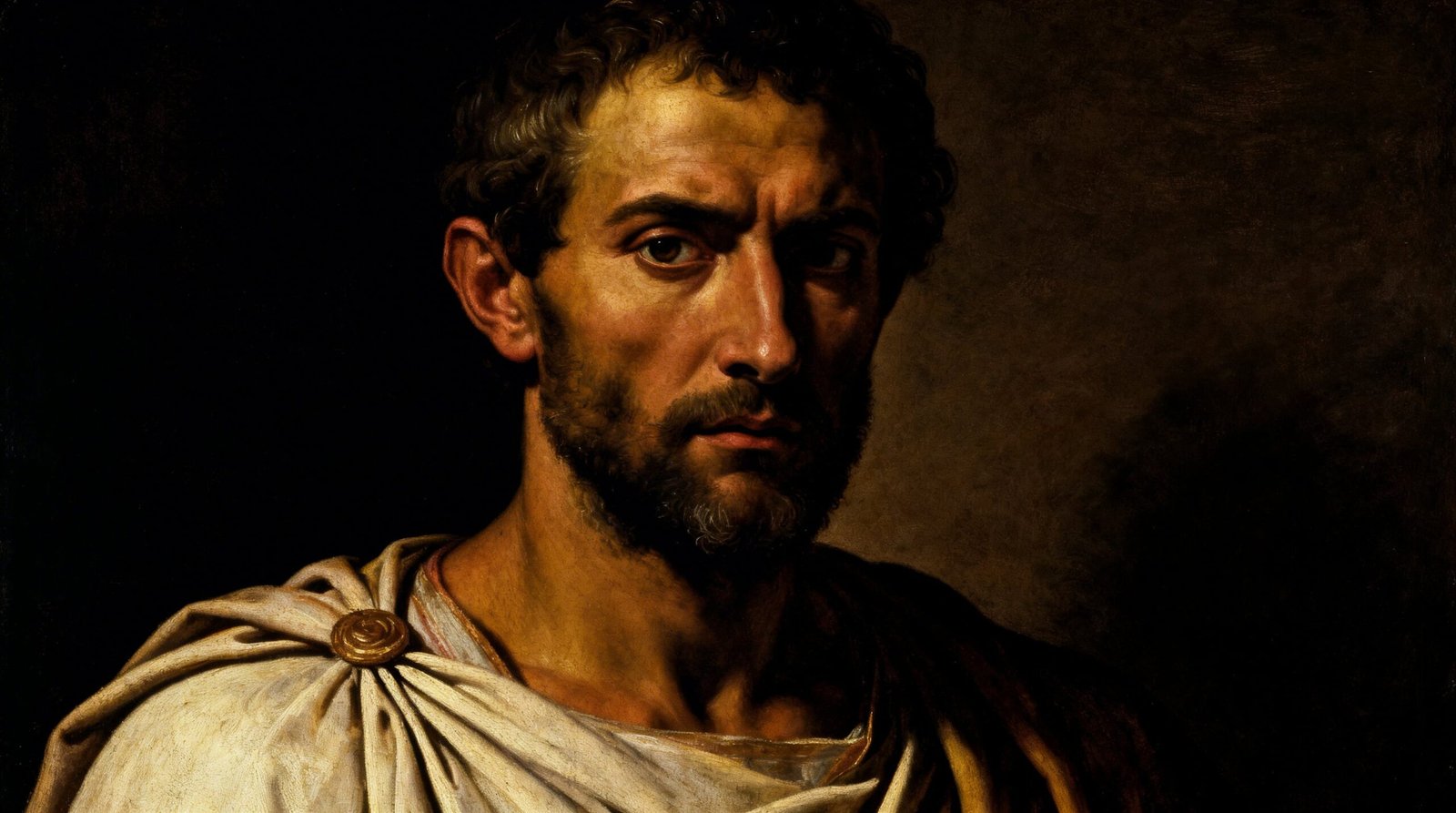
Rome liked to imagine itself as the centre of the world, the place where civilisation radiated outward and everyone else was, in one way or another, arriving late. Then along came Septimius Severus, a man born not in Italy, not in the old heartland of the Republic, but in Leptis Magna on the North African coast, in what is now Libya. He did not merely make a career in Rome. He seized the imperial throne, founded a dynasty, and helped push the empire into a new political age. In doing so, he quietly forced Rome to confront a truth it had spent centuries building toward without fully admitting: Roman power no longer belonged only to Rome.
This is what makes Severus so fascinating. He was not a curious outsider who briefly slipped through the cracks of the system. He was the system’s logical next step. By the late second century, the empire had long since outgrown the fiction that true Roman greatness had to be Italian. Wealth, education, military command, and administrative talent were spread across the provinces. North Africa was not some remote margin in Severus’s day. It was rich, urban, connected, and very Roman in its own way, while also remaining proudly local in language, culture, and memory. Leptis Magna itself was one of the jewels of Roman Africa, a city of trade, ambition, and polished stone. Severus grew up there speaking Punic, then mastered Latin and Greek, and carried that layered provincial background with him all the way to the top.
That background mattered. Severus was born in 145 or 146 into a prosperous family of equestrian status. He was not poor, romantic, or improbably discovered by fate in a market square. Rome was still Rome, and elite advancement usually required family standing, money, contacts, and education. He had all of those, though not in the old aristocratic Roman packaging that senators in the capital most admired in one another. His father was not a great political force. His real advantages came from a wider network of ambitious relatives and from the fact that the empire increasingly had room for talented provincial men who knew how to move through its bureaucracy. Severus did exactly that. He followed the cursus honorum, held offices under Marcus Aurelius and Commodus, governed provinces, and built the kind of military reputation that suddenly becomes extremely useful when emperors start dying inconveniently fast.
And in 193, emperors were dying at a rate that made Roman politics resemble organised panic. Commodus was gone. Pertinax was murdered. The throne was auctioned off to Didius Julianus in one of those episodes that makes even hardened Roman historians sound embarrassed on civilisation’s behalf. Several commanders then decided, with varying degrees of confidence, that they should be emperor instead. Severus, commanding troops on the Danube, moved fastest and most effectively. He marched on Rome, had Julianus removed, presented himself as the avenger of Pertinax, and then dealt in turn with his two major rivals, Pescennius Niger in the east and Clodius Albinus in the west. None of this was subtle. It was brutal, efficient, and politically brilliant.
This is the point where Severus reveals one of his great talents. He was not simply a warlord with better timing. He understood theatre, legitimacy, symbolism, and institutional pressure. He adopted the name Pertinax to link himself with a murdered emperor who still commanded respect. He later inserted himself into the Antonine line by claiming a connection to Marcus Aurelius. In other words, he did what many successful rulers do: he arrived by force, then immediately began dressing force as continuity. Rome could accept almost anything provided it could be framed as restoration.
Yet Severus was not restoring the old order. He was remaking it. Ancient writers, especially senators, never quite forgave him for that. From their point of view, Severus weakened the Senate, elevated the army, favoured loyalists, executed opponents, and made the emperor less the first citizen than the commander of a militarised monarchy. From Severus’s point of view, that was probably called realism. The empire had just shown that armies could make and unmake emperors. Severus responded not by pretending this was temporary, but by building a political system around it.
He raised military pay, strengthened the loyalty of soldiers, and relied heavily on the army as the foundation of his power. He also reshaped the Praetorian Guard after entering Rome, dismissing the old guard who had disgraced themselves in the chaos of 193 and replacing them with men loyal to him. This was not administrative tidying. It was a clear message: access to power in Rome would now depend even more openly on command, discipline, and imperial favour. The polite senatorial fiction that emperors merely happened to have armies behind them looked thinner than ever.
That did not mean Severus was a simple man of the camp. One of the more revealing contradictions about him is that he combined military hardness with a serious interest in law and administration. He surrounded himself with notable jurists, and his reign mattered not only because of battles but because it accelerated deeper structural changes in the empire. The Severan period helped move Rome toward a more centralised, more bureaucratic, more explicitly imperial state. He was, in that sense, both a conqueror and a systems builder. Rome has always had a weakness for men who could issue orders in armour and also understand paperwork.
His family politics were equally strategic and equally volatile. His marriage to Julia Domna of Emesa in Syria was more than a personal alliance. Julia came from a prominent priestly family and became one of the most influential empresses in Roman history. Under Severus, the imperial court looked less like a narrowly Italian institution and more like what the empire had actually become: Mediterranean, provincial, hybrid, multilingual. North African roots, a Syrian empress, power secured on the Danubian frontier, campaigns in the east, and finally a death in York. If anyone still wanted to imagine Rome as a city-state that accidentally ruled the world, Severus offered a corrective.
That broader imperial identity is one reason he remains so interesting today. Calling him “the African who ruled Rome” is accurate, but it can also be misleading if we read modern categories too mechanically into the ancient world. Severus was African-born, and that fact mattered. It mattered to his origins, his networks, his patronage, and the image of empire his reign projected. But he was also Roman in the fullest possible political sense. He was not ruling against Rome as an outsider. He was ruling as a product of Roman expansion itself. The real story is not that Rome briefly allowed in someone non-Roman. The story is that Rome had already become something much larger, and Severus made that impossible to ignore.
His attachment to Leptis Magna shows this beautifully. Once emperor, he lavished attention on his home city. He granted it privileges, sponsored building works, and helped turn it into one of the grandest urban showpieces in the empire. The surviving ruins still advertise that ambition: basilicas, colonnades, monumental arches, and all the stone confidence of a city determined to look eternal. There is something wonderfully Roman about this. Reach the top of the world’s most powerful empire, and what do you do? You improve the roads, the forum, and the façade back home. Severus understood that prestige was architectural. Power liked marble.
He also liked victory. After defeating Pescennius Niger, Severus campaigned against Parthia and expanded Roman prestige in the east, famously capturing Ctesiphon. These campaigns mattered immensely for his standing. Success abroad reinforced his legitimacy at home, as it so often did in Roman political culture. An emperor who could deliver triumphs was easier to forgive for all the blood spilled on the road to power. Still, the triumphal image had limits. Severus’s reign was costly. Military expenditure rose. Reliance on the army deepened. The long-term consequence was not immediate collapse, as dramatic storytellers like to imply, but a firmer drift toward a more overtly militarised imperial order.
This is where the myths begin. One common myth is that Severus somehow “caused the fall of Rome”. That is tidy, memorable, and far too simple. He did not topple the empire. Rome after Severus remained formidable. But his reign did sharpen trends that would matter greatly later: the growing political dominance of the military, the weakening of older senatorial balances, and the increasing concentration of authority around the emperor and his court. He was less the destroyer of Rome than one of the architects of late imperial Rome.
Another myth is the opposite one, the temptation to turn him into a modern symbol with no complications attached. Severus is genuinely significant as the first emperor born in Roman Africa and as a ruler whose career demonstrates how provincial the Roman elite had become. But he was not engaged in modern identity politics, nor was he trying to challenge empire from a decolonial angle two millennia before the vocabulary existed. He was an empire man through and through. His achievement lies in how thoroughly he belonged to a Roman world that had already outgrown old Roman assumptions.
His final years took him to Britain, which is one of those historical details so striking it sounds like an overenthusiastic novelist invented it. The man from sunlit Leptis Magna ended his life in Eboracum, modern York, while campaigning deep into the far north of the empire. In 208 he travelled to Britain with his sons Caracalla and Geta to deal with northern warfare beyond Hadrian’s Wall. The campaign was hard, expensive, and punishing. Severus, already ageing and in poor health, kept going. Ancient sources and later historians alike linger on the image because it is too good not to: an African-born emperor, who had remade Rome, dying on the edge of Britain in 211 while trying to impose order on one more restless frontier.
His reported advice to his sons has become famous: live in harmony, enrich the soldiers, and scorn everyone else. Historians love the line because it sounds both brutally honest and suspiciously neat. Whether quoted exactly or polished by retelling, it captures something essential about Severus’s political method. Keep the dynasty intact if possible. Keep the army loyal at all costs. Do not confuse moral approval with actual power.
The tragedy, of course, is that the first part failed almost immediately. Caracalla and Geta hated one another. After Severus’s death, they attempted to rule jointly and quickly turned the palace into a family version of civil war. Caracalla then murdered Geta and went on to rule alone. The dynasty Severus founded survived him, but not with the serene stability one might have wished for after so much hard-headed institution building. That too feels Roman: immense energy spent constructing order, followed by relatives ruining the atmosphere.
And yet Severus’s legacy endured. He stands at a hinge point in Roman history. Before him, emperors could still try to inhabit the old language of principate, the careful performance of modesty that Augustus had invented. After him, that performance looked increasingly strained. The empire was bigger, tougher, more militarised, more provincial, and more openly autocratic. Severus did not invent all of that, but he made it unmistakable.
He also changed the geography of Roman imagination. His life traced a map of the empire in motion: born in North Africa, educated through a cosmopolitan imperial culture, elevated through provincial office, backed by frontier armies, linked by marriage to Syria, victorious in the east, and dead in Britain. This was no longer a Roman world arranged in circles around Italy. It was an interconnected imperial web in which talent, ambition, and force could rise from many directions at once.
So what did Septimius Severus really change? Not simply who could become emperor, though that mattered. He changed what Roman legitimacy looked like. He helped normalise a version of Rome in which the centre could be ruled from its edges, in which provincial identity was not a barrier to supreme power, and in which empire had to understand itself as something wider than the myths of its own origin story.
That is why he deserves more attention than he usually gets. He was not as glamorous as Augustus, not as theatrical as Nero, not as meme-friendly as Caligula, and not as philosophically marketable as Marcus Aurelius. But in terms of what Rome became, Severus matters enormously. He was the African who ruled Rome, yes. More importantly, he was the emperor who showed that Rome had become a world too large to belong to one city alone.
Post Comment
You must be logged in to post a comment.